Show Caption
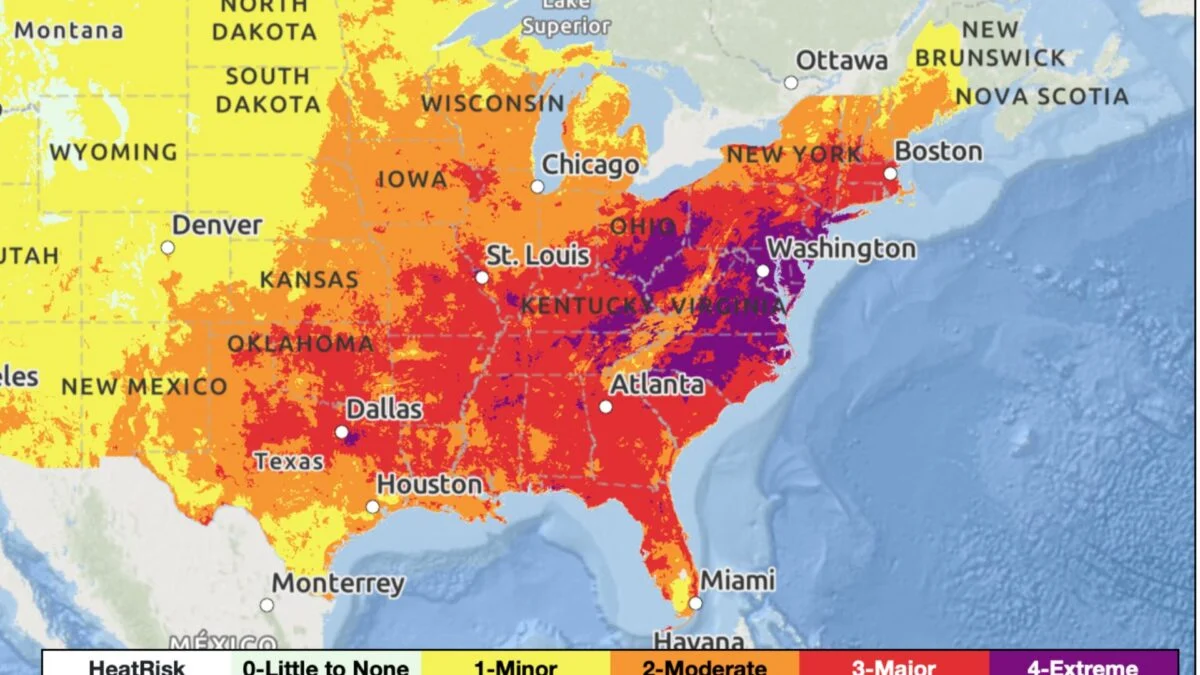
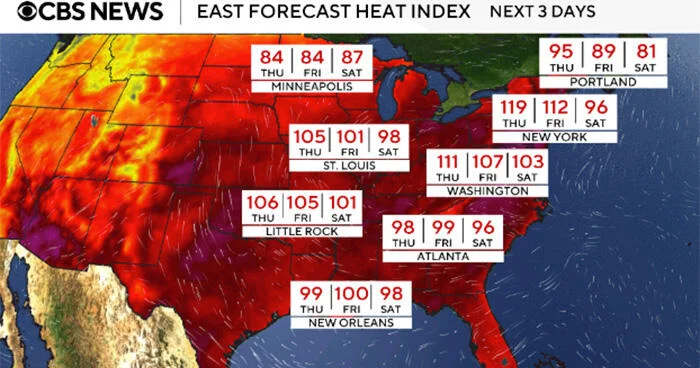
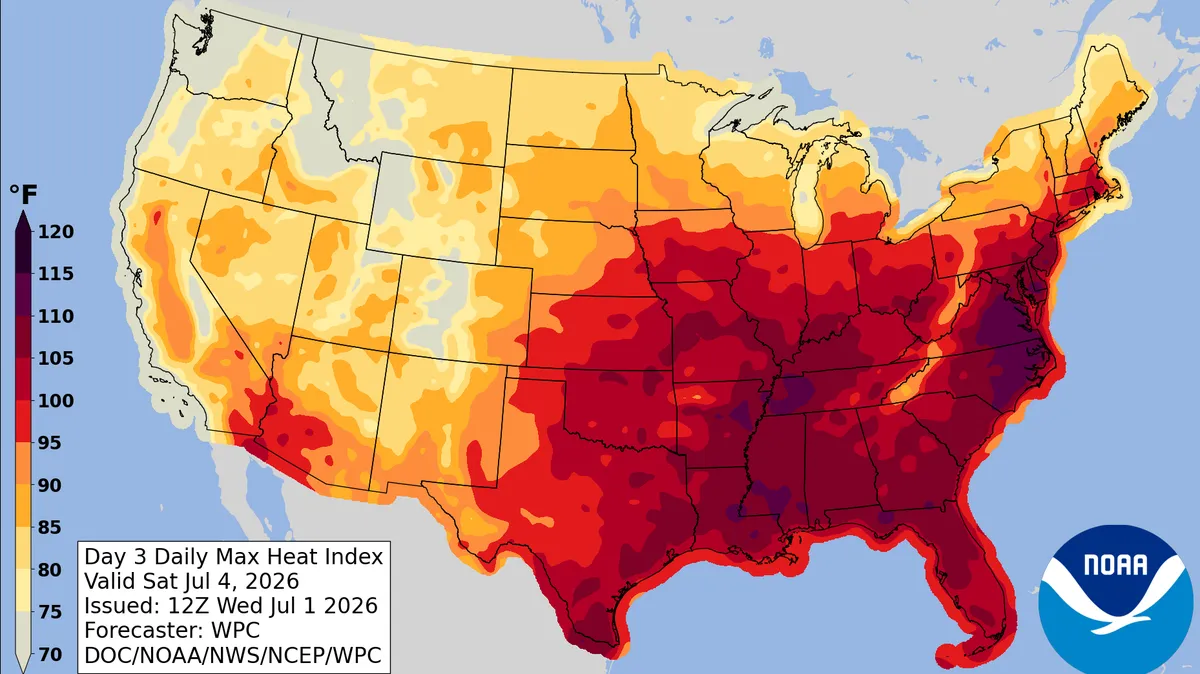
We've heard the warnings and seen the weather maps about the July 2026 heat wave. But meteorologists and heat experts want to be sure people take the warnings seriously because heat really can kill you.Temperatures are forecast to reach dangerous highs on July 3-4 in the eastern United States. It's bad enough when the temperature alone rises above 100 degrees, but when combined with humidity, danger reaches a whole new level, according to the National Weather Service.The timing couldn't be worse. The oppressive heat wave lands at the same time the nation is observing 250 years since our Declaration of Independence was approved by the Continental Congress. July 4th will be far hotter than normal for many and will follow several days in a row of intense heat. And, people will be outside in droves, at cookouts, parades, parties and fireworks shows.To explain what extreme heat feels like to the human body, meteorologists calculate a value of actual temperature combined with humidity. On July 3 and 4, those values are forecast to be over 100 in many locations across the Central and Eastern U.S. and as high as 115, including at the nation's capital.The weather service also cautions the heat index is calculated for shady areas only. Exposure to full sunshine can increase heat index values by up to 15 degrees.When heat index values rise above 103, changes start happening in the human body, which can lead to cramps and heat exhaustion. When the body can't cool itself by sweating, dehydration and overheating become more likely and heat stroke becomes a possibility, according to the Centers for Disease Control and Prevention.Heat is often referred to as the "silent killer," and is responsible for hundreds of deaths in the U.S. each year. Researchers know deaths and illnesses rise during heat waves, but the numbers are hard to track, because there aren't uniform requirements. USA TODAY has previously reported that studies show heat-related deaths are on the rise in the U.S. and likely under-reported.Here's five ways heat can surprise – and kill – you:Heat can sneak up on you because it feels normalExtreme heat isn't just two to three days in a row with temperatures over 90 degrees. It's also when temperatures are much hotter and humid than average where you live.People may not be prepared for that, said Scott Delaney, an epidemiologist who studies extreme heat and health.The heat increases we're seeing in the nation, driven by the warming climate, are "a tough problem to tackle," Delaney said. People expect to to be hot during the summertime - after all, "it's the 4th of July," Delaney says."But it's hot in a different way now," he said, "and the heat can creep up on you if you're not careful."It's important to stay hydrated, even when you feel like you're not thirsty. The CDC recommends that people working in the heat drink 8 ounces of water every 15 to 20 but minutes, but not to drink more than 48 ounces in an hour because too many fluids can delete important chemicals your body needs.Always take extra water and drinks with you if you're getting in the car to drive anywhere when it's hot.Several hot days in a row are more dangerous than one hot day"Prolonged periods of extreme heat are among the deadliest weather hazards in the United States because the impacts build over time," the Weather Prediction Center, part of the National Oceanic and Atmospheric Administration, said on July 2.Streets, buildings and sidewalks that absorb heat during the daylight won't cool off like they typically do when nights remain too warm. "Our surfaces just suck up heat," Delaney said. "They're great in the winter, but our winters aren't that cold anymore."When overnight low temperatures only drop into the 70s, the night provides little to no relief, the weather prediction center's key messages warned on July 2. That lack of nighttime cooling compounds the impacts of a long-duration heat wave and makes them more dangerous.Even trying to cool off indoors can hold its own danger. The CDC advises using fans only when the temperature is below 90 degrees. When a room is warmer than that, a fan can increase your body temperature.Common medications can increase the side effects from heat.Daily medications, either by prescription or over the counter, may interact with heat or lead to dehydration or overheating.Certain medications might interfere with your body's thermoregulation, said Delaney, and make you more vulnerable to extreme heat. For example, certain diuretics, antihistamines or stimulants may increase the risk of side effects from heat, according to the CDC. And certain combinations of drugs may also increase the risk of harm. Other medications, including certain antibiotics, can increase the skin's sensitivity to the sun.It's a good idea to review potential side effects of your medications, or speak with your doctor or pharmacist to lower your risk of side effects.The CDC also advises not to leave medicine in a hot car, because heat can make medications less effective or cause unintended side effects.The people most at risk aren't always who you thinkBe mindful that heat really can cause major health problems not only for kids and babies, and folks that are aging, but also for many others, Delaney said. "Our biggest concern a lot of times is the folks who labor outside."For example, he points to construction workers, as well as public safety and law enforcement officers who will be on duty for traffic and crowd management on July 4, wearing hot uniforms and bullet proof vests. "All these officers are going to be standing outside for hours and hours and hours, baking in the midday sun," he said. "It's definitely something we should be mindful of."Hot cars can become deadly in minutes.Never leave children, elderly adults or pets in a parked car or truck, even for a few minutes, even if the windows are open, public safety agencies warn. Temperatures in a vehicle, especially one sitting on hot, sunny pavement, can quickly heat up to dangerous levels that can lead to heat stroke and death.High temperatures inside a car, even when no one is in it, can lead to some dangerous or messy surprises. Cans of soda or aerosol sprays can explode. Batteries for devices can cause a fire risk, or rupture if left in the intense heat inside a car. That can ruin phones, laptops and other devices. For the same reasons, don't store lighters in the car either.How can you help prevent heat-related illness and death?Know what the temperature is going to be where you are, which you can find by entering your zip code on the CDC website.Familiarize yourself with the symptoms of heat-related illnesses.Watch closely for signs of heat distress in yourself and others, including your neighbors and the elderly, Delaney said. Then find indoor air-conditioned space at the first sign of trouble.Dinah Voyles Pulver, a national correspondent for USA TODAY, writes about violent weather, climate change and other news. Reach her at dpulver@usatoday.com or @dinahvp on Bluesky or X.