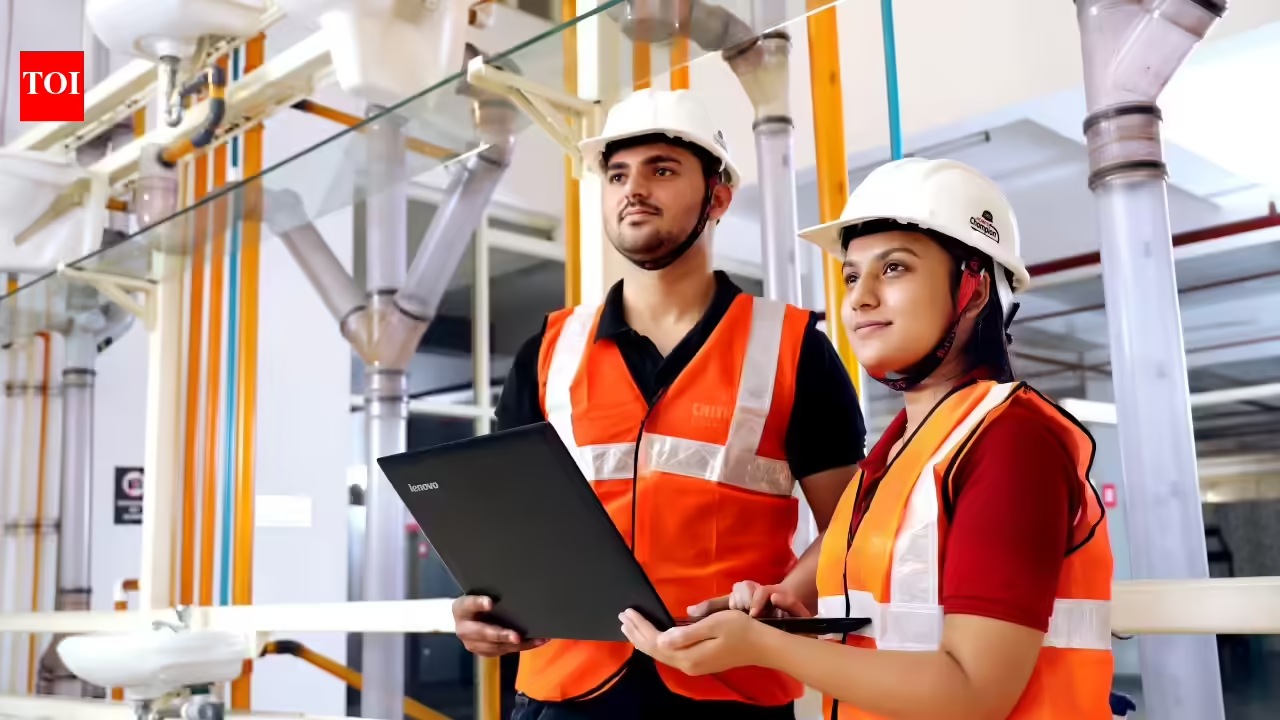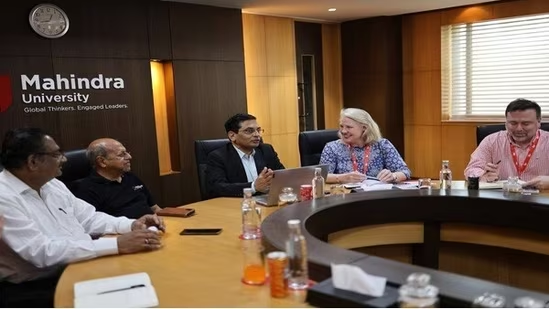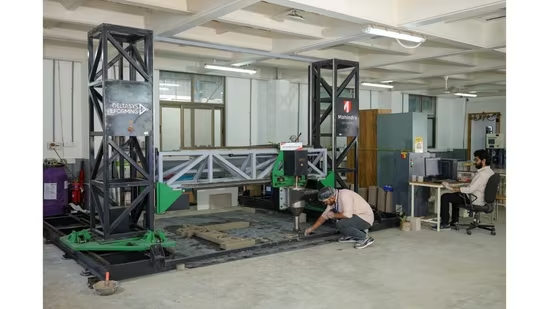
Sustainability has moved far beyond being an environmental conversation. Today, it is influencing the way countries build infrastructure, businesses manufacture products, cities consume energy and industries prepare for the future. Governments are investing heavily in clean energy, companies are committing to net-zero goals and sectors such as construction, mobility and manufacturing are under increasing pressure to reduce their environmental impact. According to the International Energy Agency, global investment in clean energy is expected to remain significantly higher than investment in fossil fuels, making green technology one of the biggest drivers of innovation and economic growth.Engineers Are Building the Green Tech RevolutionThis shift is changing the role of engineers. They are no longer expected to solve only technical problems; they are also expected to build solutions that are efficient, sustainable and designed for the future. Mahindra University is responding to this change by bringing together Civil, Electrical and Materials Engineering through a common focus on sustainability. Instead of treating sustainability as a separate subject, the university has woven it into teaching, research and innovation, allowing students to work on challenges that industries and communities are facing today.Engineering better cities begins with better materialsWhen people think about sustainable engineering, renewable energy often comes to mind first. Yet some of the biggest changes are happening in the materials that make up our roads, bridges and buildings.The construction industry is responsible for a significant share of global carbon emissions, prompting engineers to rethink how infrastructure is built. Around the world, researchers are developing materials that last longer, require fewer repairs and have a lower environmental impact. Self-healing concrete, which uses bacteria to seal tiny cracks before they become major structural problems, is one such example. Carbon-negative building materials and waste-to-wealth construction technologies are also changing the way engineers think about construction by turning industrial waste into useful resources instead of landfills. .Students at Mahindra University explore these ideas through the Centre for Sustainable Infrastructure and Systems, where they study sustainable urban development, resilient infrastructure and resource-efficient construction. The focus goes beyond classroom learning, encouraging students to examine how engineering decisions can improve the way cities grow and function.Building an energy system that thinks smarterThe world's energy needs are changing just as quickly. As renewable energy becomes a larger part of the electricity mix, traditional power grids are giving way to smarter, more connected systems. Unlike conventional grids that deliver electricity in one direction, smart grids can monitor demand in real time, integrate renewable energy sources more efficiently and support technologies such as rooftop solar systems, battery storage and electric vehicles. The result is an electricity network that is more reliable, flexible and better equipped for a low-carbon future.Supporting this transition requires engineers who understand not just electrical systems, but also the intelligent technologies that make them work together. At Mahindra University's Smart and Cyber Physical Systems Lab, students work at the intersection of the physical and digital worlds, exploring intelligent systems that combine sensors, embedded technologies, automation and real-time data to solve complex engineering problems. From connected infrastructure to smart energy applications, the lab equips students with the skills to design systems that are more efficient, responsive and sustainable.Engineering is no longer about what we build. It is also about what happens after.A product's journey does not end when it reaches the consumer. Increasingly, engineers are expected to think about what happens when that product reaches the end of its life. Can it be repaired? Can its materials be reused? Can it be recycled instead of discarded? These questions are driving the rise of circular engineering, an approach that considers the complete lifecycle of a product from the design stage itself. Industries across the world are adopting circular economy practices to reduce waste, improve resource efficiency and make manufacturing more sustainable. As a result, engineering education is also changing to reflect these priorities.At Mahindra University, sustainability is integrated across departments instead of being confined to a single course. Students are encouraged to approach engineering problems by combining ideas from different disciplines, preparing them for the kind of work they will encounter in industry.The future belongs to engineers who can work across disciplinesThe biggest sustainability challenges cannot be solved by one branch of engineering alone. Take electric vehicles as an example. Improving their efficiency requires expertise in battery technology, advanced materials, electrical systems, manufacturing and data analytics. Similarly, designing greener cities calls for collaboration between civil engineers, materials scientists, environmental experts and energy specialists.This is why interdisciplinary learning has become an important part of engineering education. At Mahindra University, students have access to research facilities such as the Smart and Sustainable Materials Lab and the Electric Vehicle Research Labs, where they work on areas including sustainable materials, waste-to-wealth construction technologies and improving the performance and efficiency of electric vehicles. These experiences help students understand how different engineering disciplines come together to solve complex sustainability challenges.A new generation of engineers for a changing worldIf you are planning to study engineering today, you are entering the profession at a defining moment. Across industries, employers are looking for engineers who understand clean technologies, sustainable design, renewable energy and circular manufacturing alongside strong technical fundamentals. The problems that engineers are being asked to solve are becoming broader, and so are the skills they need.Universities have an important role to play in preparing students for this future. By integrating sustainability across its curriculum, research centres and laboratories, Mahindra University is giving students the opportunity to work on ideas that are relevant to today's industries and tomorrow's challenges.The green technology revolution is already changing the way we live, build and innovate. The next chapter will depend on engineers who can turn sustainable ideas into practical solutions. For students choosing engineering today, that makes sustainability not just an area of study, but one of the most exciting opportunities to shape the future.Note to readers: This article is part of HT's paid consumer connect initiative and is independently created by the brand. HT assumes no editorial responsibility for the content, including its accuracy, completeness, or any errors or omissions. Readers are advised to verify all information independently.Want to get your story featured as above? click here!
How Engineers Are Building the Green Tech Revolution
Mahindra University embraces sustainability in engineering, promoting interdisciplinary collaboration to address global challenges.
1,023 words~5 min read