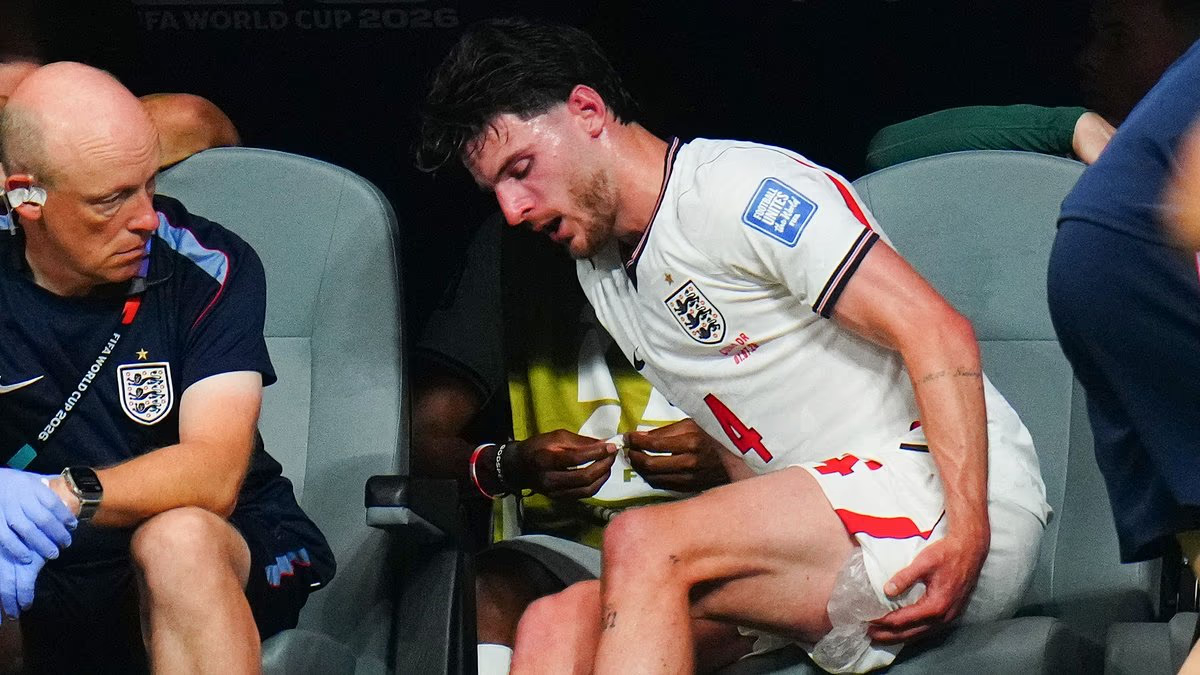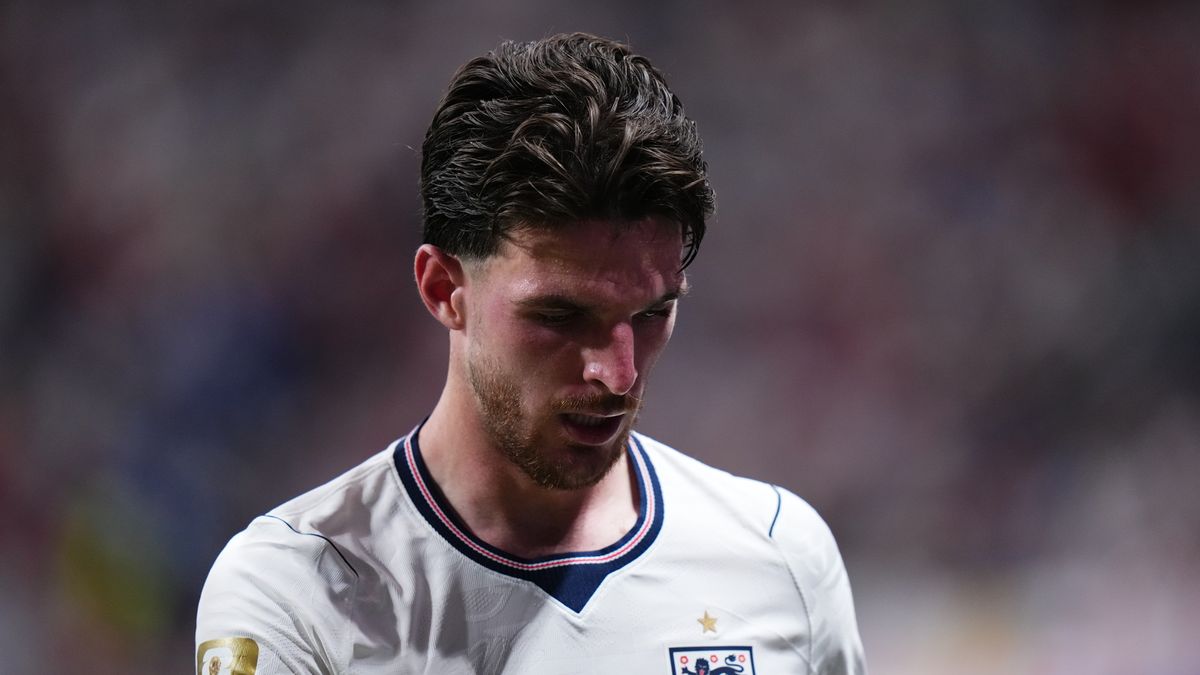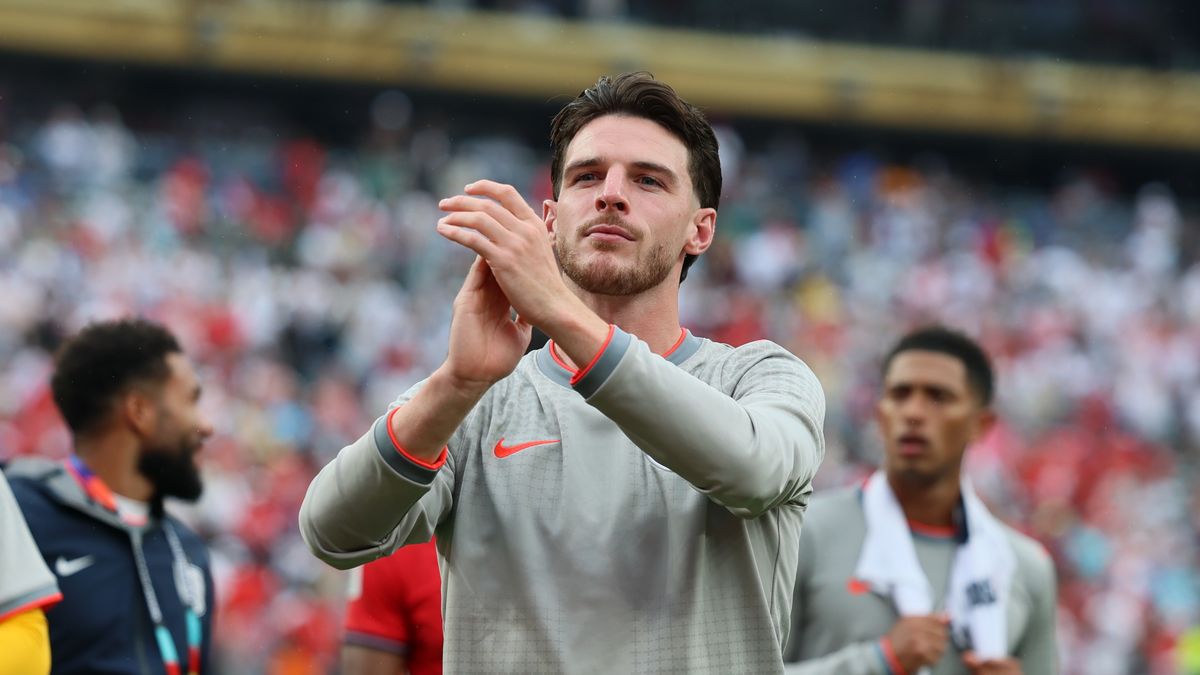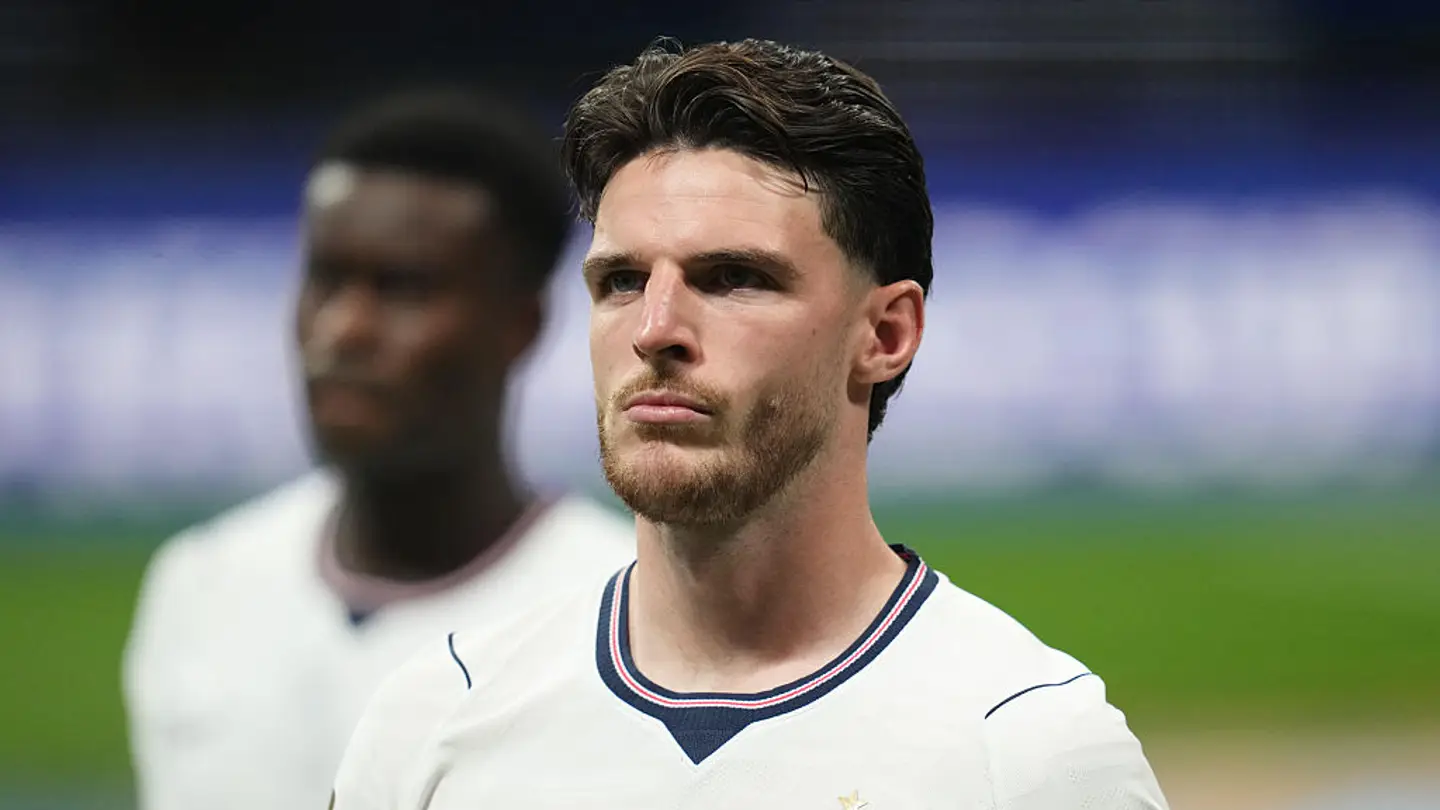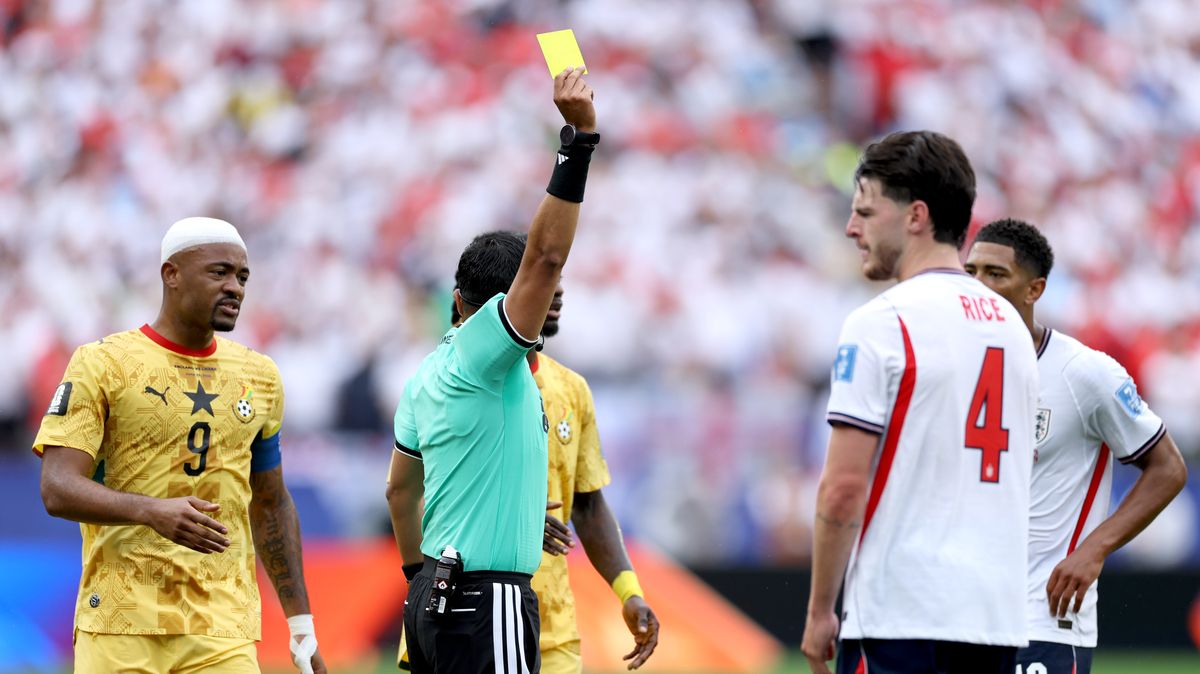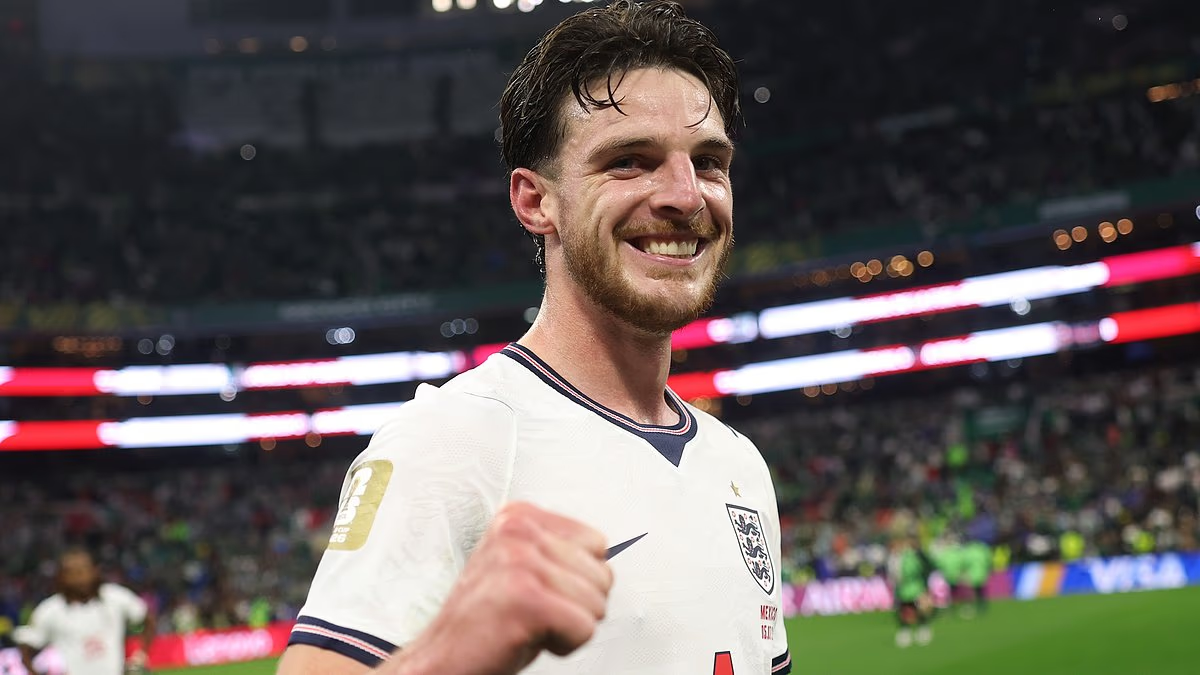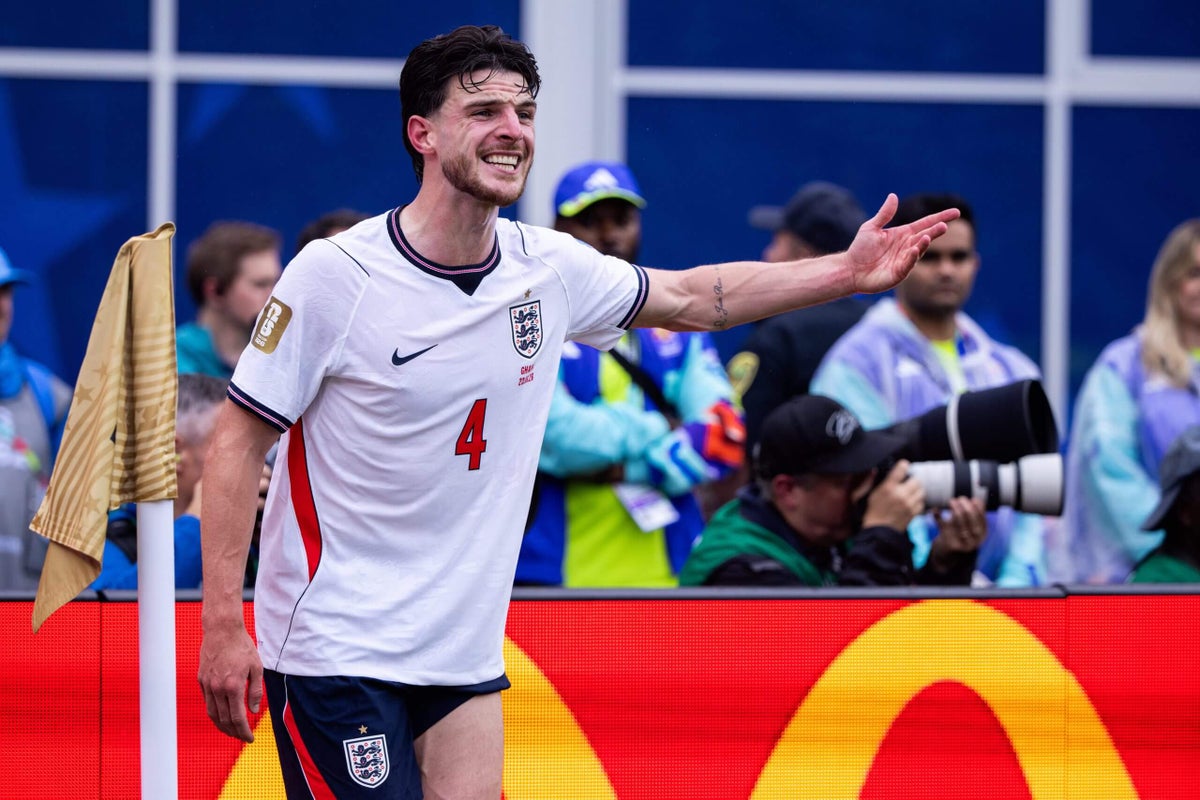
Last Saturday, during England’s 0-0 group stage draw with Ghana, Declan Rice rocked up to the corner flag. Then, the England and Arsenal midfielder rolled up, one navy short leg at a time, a double flash of sinewy, pale footballing flesh for all of Boston Stadium and the world to behold.Exactly what compelled Rice to hike up his England shorts to such salacious heights became a matter of online debate that eventually spiralled into conspiracy. What did Rice’s particular degree of short lift signal? Did one short leg indicate an inswinger? A double-hike outswinger? Exactly how proportional was quad exposure to ball placement?If you find the time to scroll through FIFA’s most recent annual equipment regulations code (a meaty, 100-plus page dossier that spans everything from hair bands and undergarments to balls and substitute bids), you’ll discover the world governing body has five pages dedicated exclusively to shorts. The regulations are impressively exhaustive. There’s the rudimentary requisite that all players must actually wear shorts, followed by a more scrupulous description of an accepted pair of shorts (a left and right leg, a lateral or outer seam and a waist edge). Zippers, pockets and untucked drawstrings are verboten, as are multiple “dominant colours” and players’ names. A player’s number must be adorned on one of the front legs and, according to section 14.4.1.3, “entirely visible when the Shirt is untucked and hanging loose over the Waist Edge”. Nowhere does FIFA stipulate an exact limit for short length. Neymar Jr hikes his short leg. as he prepares to come on as a substitute against Scotland (Photo: Megan Briggs/Getty Images)Which is good news for Rice and others who prefer the sensation of wind on the thighs for whatever reason. And there are plenty of them knocking about. Chuck in a request to any of your football-feasting group chats for players who have loved or still love to rock a self-imposed short short (as this writer did) and the deluge arrives quickly: Manchester City’s Jack Grealish, former Germany international Lukas Podolski, former Brazilian left-back Marcelo, most of the United States women’s team. Leeds United’s Dominic Calvert-Lewin has been known to request shorts a size too small in pursuit of the perfect fit. Brazil star Neymar is a serial hiker. We could go on. Yet the motivations for going short are — like those who practise the art — myriad and nuanced. Code sending is potentially one, at least according to a Women’s Super League set-piece coach in the United Kingdom, who chose to remain anonymous to protect relationships. Baseball and American football have historically used signs for pitch delivery or route calling, with opposition teams attempting (often illegally) to steal them. Then there’s fashion and personal aesthetic to basic functionality and performance psychology. Rafael Leao after Portugal’s draw with Colombia (Photo: PATRICIA DE MELO MOREIRA / AFP via Getty Images)According to Martin Turner, a sport and exercise psychologist with more than 15 years of experience working with various sporting clubs in the UK, the psychological dimension to short hiking is one of the greatest factors.Football, he explains, is a sport of “open skills” (self-expression) and “closed skills” (controllable, static movements such as free kicks, penalties or corners). Adjusting one’s shorts can act as a kind of grounding exercise for the brain, a means of consciously tapping into our sporting subconscious.
Ronaldo, Neymar, Rice: Why do male footballers pull up their shorts during matches?
Clever corner signalling, psychological tic or fashion statement? We try to find out
1,632 words~7 min read