Introduction
As data volumes continue to grow, running aggregation queries directly on raw datasets becomes increasingly expensive. Business dashboards, analytics platforms, and reporting systems often execute the same calculations repeatedly—such as total sales, daily active users, page views, or revenue trends. While ClickHouse® is designed to process analytical workloads at remarkable speed, repeatedly scanning billions of records still consumes valuable CPU, memory, and storage resources.
This is where AggregatingMergeTree proves its value.
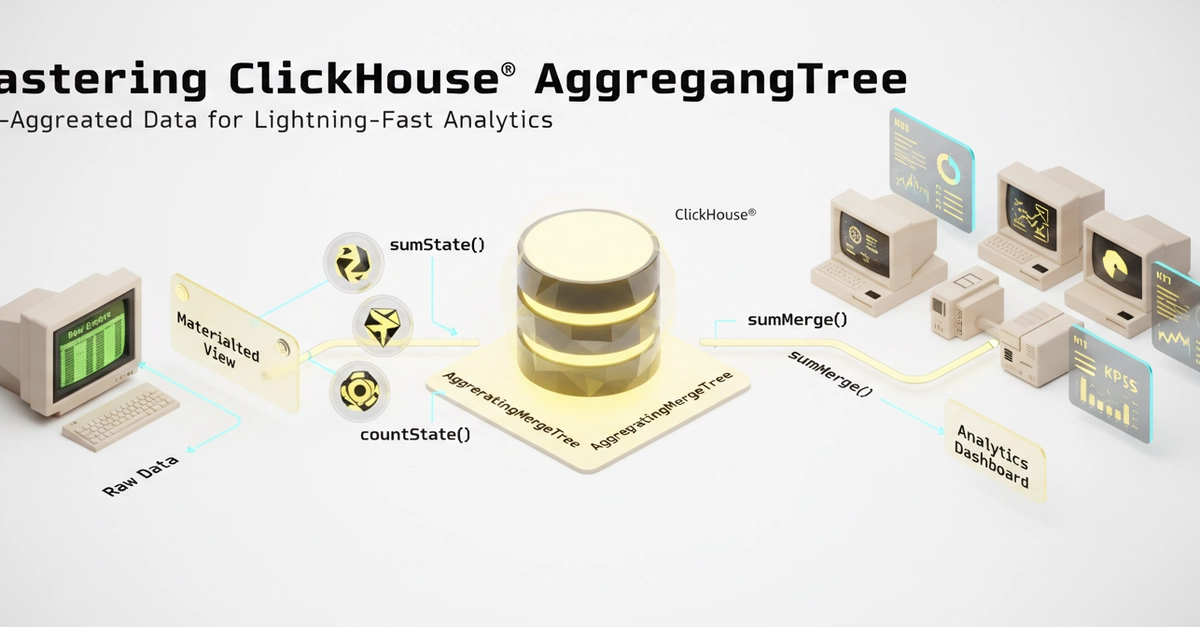
Rather than calculating aggregates every time a query is executed, AggregatingMergeTree stores intermediate aggregation states that are merged automatically in the background. This approach allows analytical queries to read compact, pre-aggregated datasets, resulting in dramatically faster response times and reduced infrastructure costs.
In this guide, you'll learn how AggregatingMergeTree works, why aggregate states matter, how to build an automated aggregation pipeline using Materialized Views, and when this engine is the right choice for your ClickHouse® workloads.