As data volumes grow from gigabytes to terabytes and eventually petabytes, a single database server often becomes a bottleneck. Storage limitations, CPU constraints, memory pressure, and network bandwidth can all impact performance. Scaling vertically by upgrading hardware helps only to a certain point. Beyond that, horizontal scaling becomes essential.
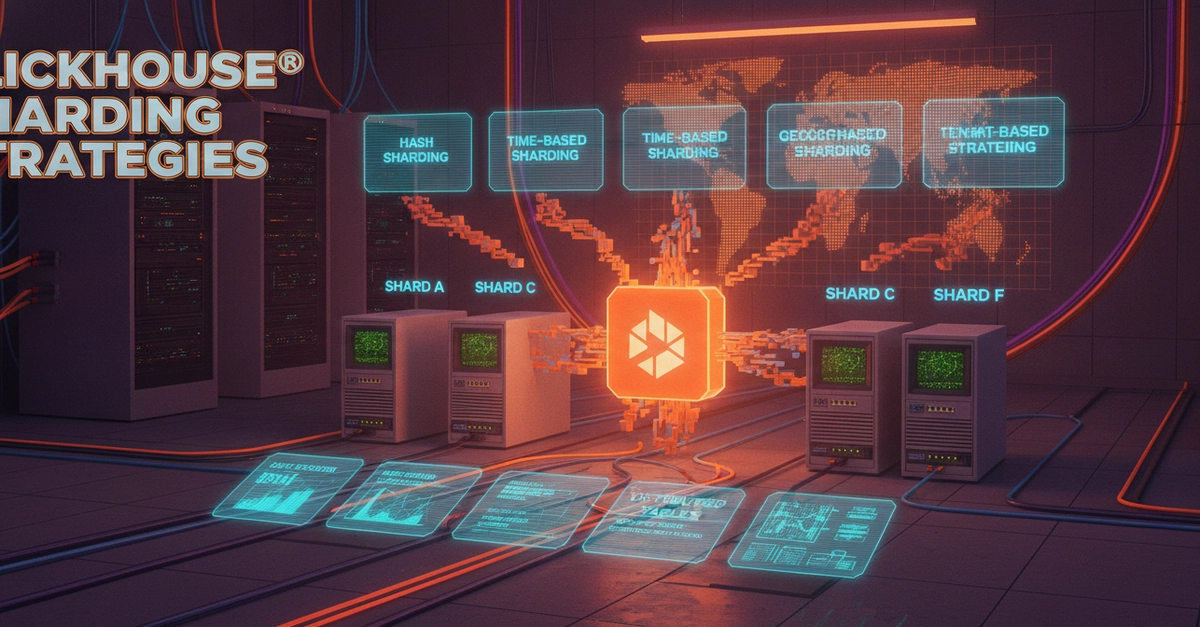
ClickHouse® is built with distributed analytics in mind. One of its most powerful scalability features is sharding, which distributes data across multiple servers while enabling parallel query execution. With the right sharding strategy, organizations can build clusters capable of handling billions or even trillions of rows while maintaining fast analytical performance.
In this article, we'll explore how sharding works in ClickHouse®, the most common sharding strategies, their advantages and disadvantages, and best practices for designing a scalable distributed cluster.
What is Sharding?
Sharding is the process of dividing a large dataset into smaller, manageable pieces and distributing those pieces across multiple servers known as shards.