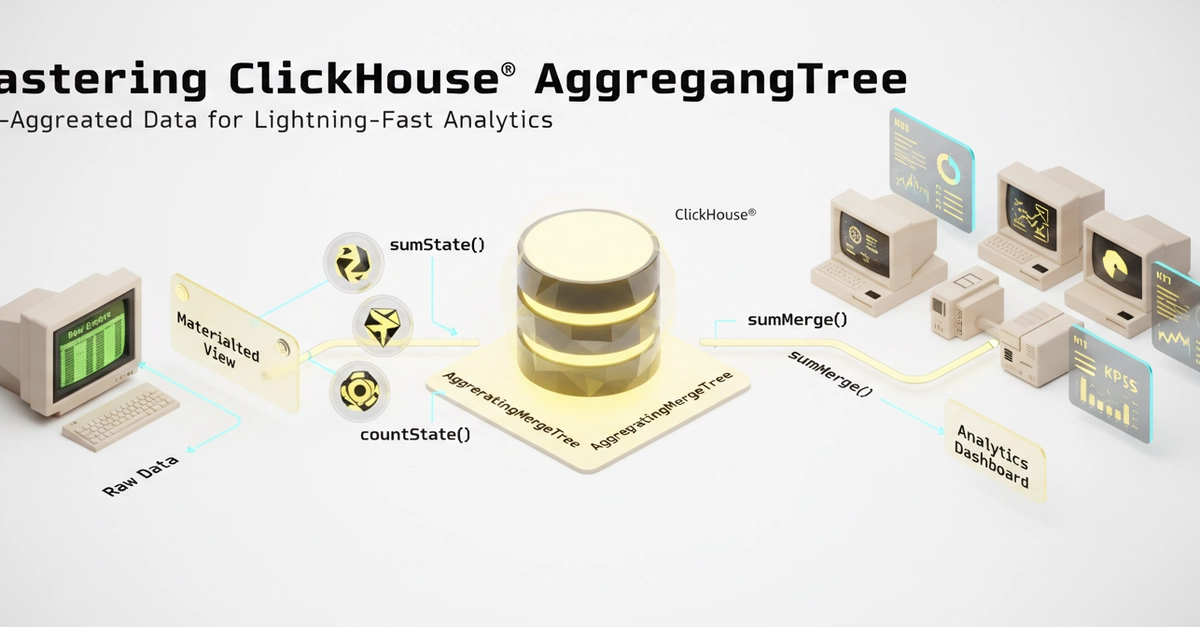
One of the reasons ClickHouse delivers exceptional analytical performance is its ability to optimize data in the background. While users focus on writing fast SQL queries, ClickHouse is continuously performing maintenance tasks such as merges and mutations to keep storage efficient and queries fast.
These background operations are essential, but they're also one of the least visible aspects of running ClickHouse in production. Without proper monitoring, they can silently become bottlenecks, leading to slower queries, delayed data processing, and even production errors.
In this article, we'll explore how merges and mutations work, why they're difficult to monitor, and what teams can do to improve observability.
Understanding Merges
ClickHouse stores data in immutable parts. Every INSERT creates a new data part instead of modifying existing files.