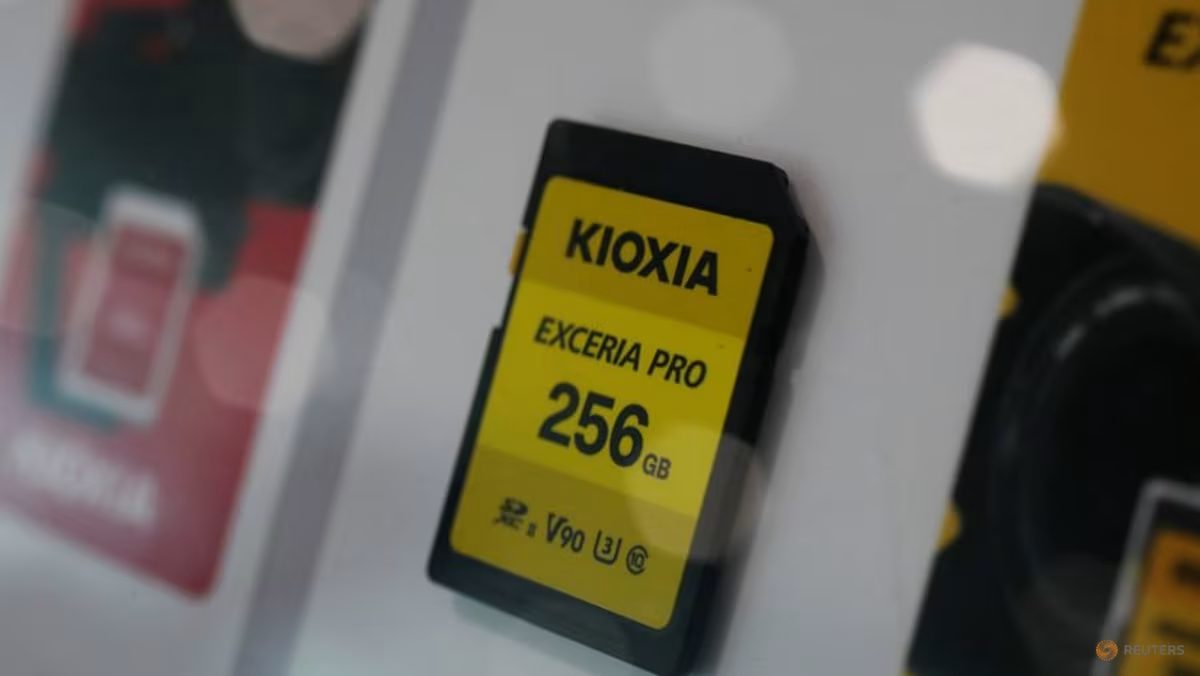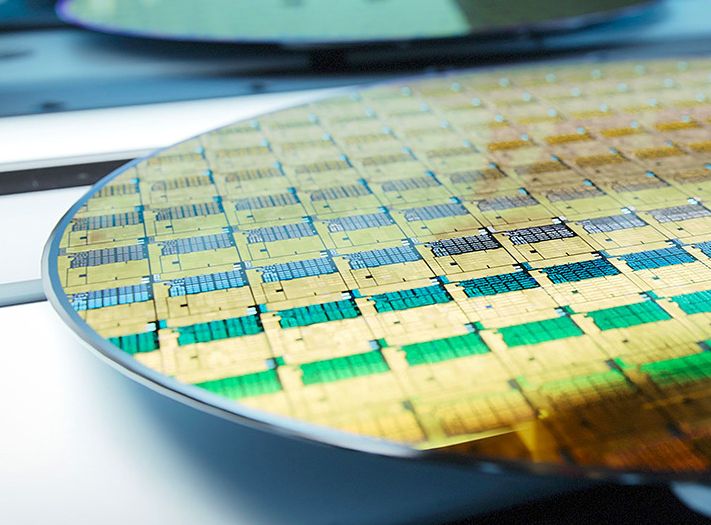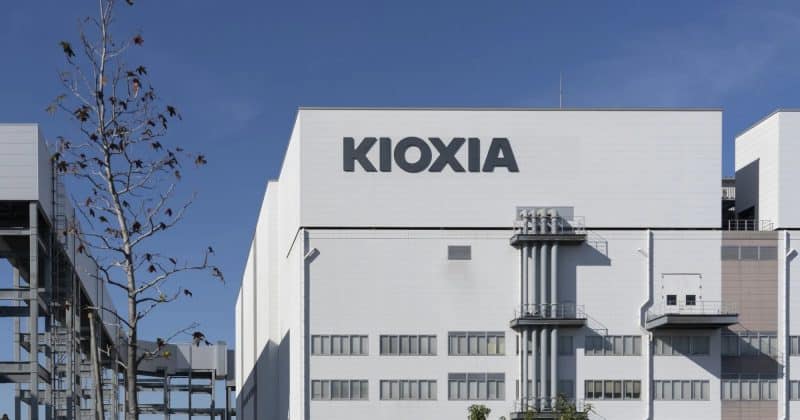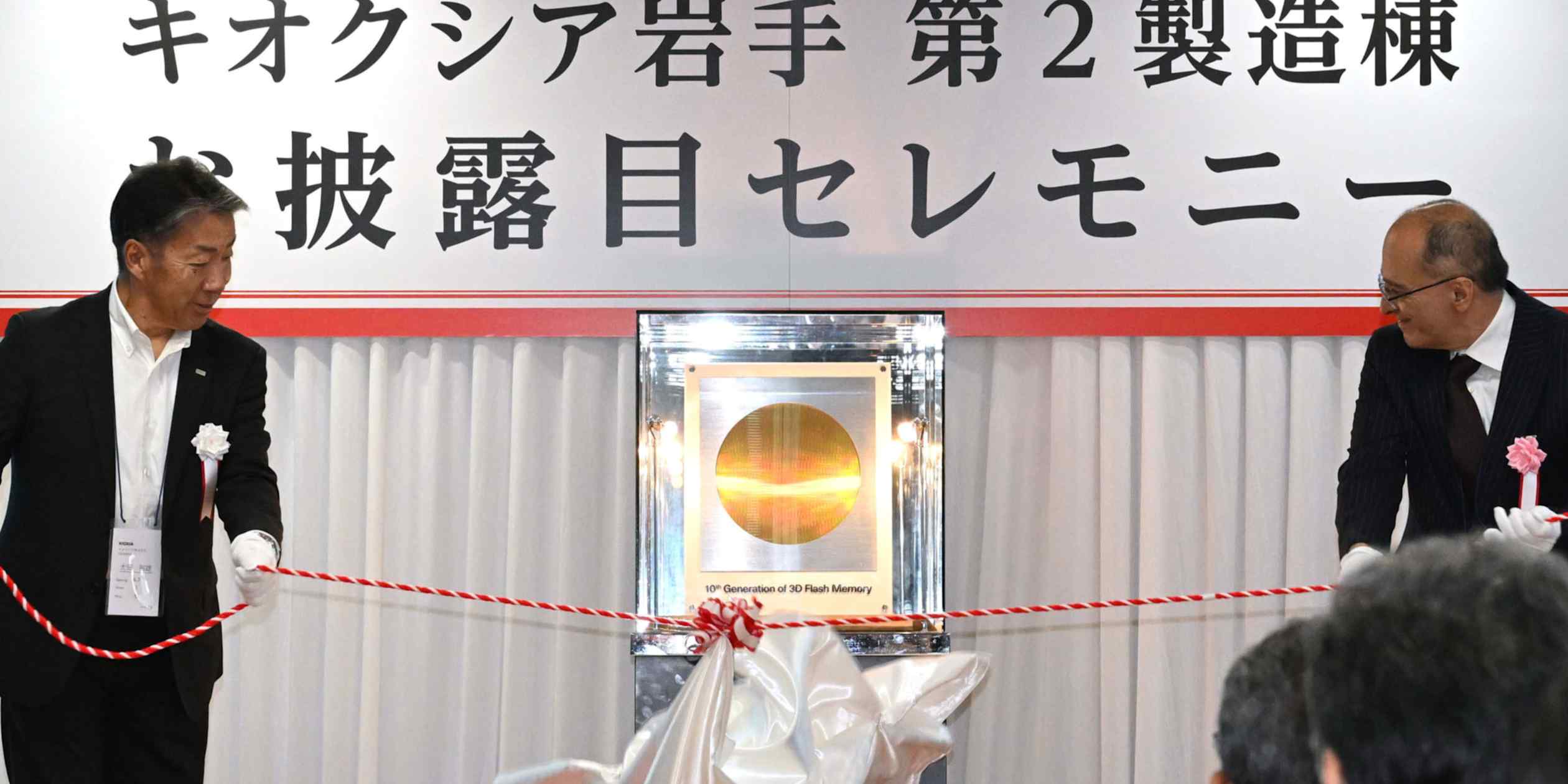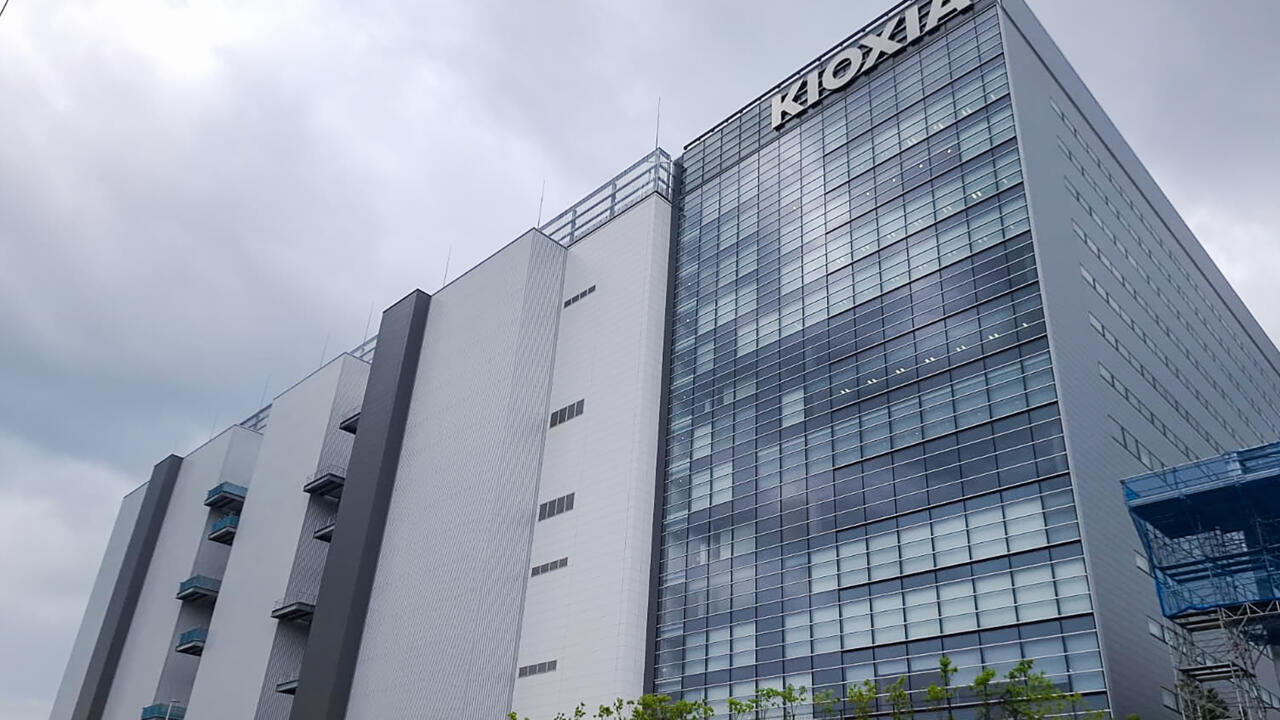
Kioxia on Friday held a ceremony at its fab in northern Japan as the chipmaker, whose shares have rocketed due to the AI investment boom, begins shipping samples of its next-generation memory.The growth of AI has fueled a remarkable turnaround for Kioxia, which was previously seen as an example of Japan's chipmaking struggles but whose stock price has surged more than sevenfold this year to a market capitalisation over $250 billion, exceeding Toyota Motor's.Kioxia's shares have been volatile in recent days as the market debates the resilience of AI spending and the impact of chipmakers expanding production capacity.Formerly Toshiba Memory, Kioxia was acquired from beleaguered industrial conglomerate Toshiba by a Bain Capital-led consortium in 2018 for 2 trillion yen ($12 billion).The company, which invented NAND flash memory in the 1980s, was buffeted by a downturn in memory prices that forced Bain to push back plans to take the company public to late 2024.In the early stages of the AI boom, manufacturers of DRAM memory chips used to store data were seen as the main beneficiaries, in particular SK Hynix, a pioneer of high-bandwidth memory (HBM).However as AI usage has expanded from training models on large volumes of data to inference, the process of answering queries, demand for high-capacity NAND memory has grown.Chipmakers "prioritised DRAM so much that they put NAND investment and development on the back burner," said Satoru Oyama, a consultant who worked at Tokyo Electron."They haven't been able to respond to the current NAND boom at all. That is why demand is now concentrated on Kioxia alone," he said.Kioxia is manufacturing 10th-generation BiCS Flash memory, which was developed with California-based Sandisk, at its fab at Kitakami in Iwate prefecture, north of Tokyo."We will expand production at Fab2, which is furnished with state-of-the-art equipment, to fully meet growing market demand," said Hiroo Ota, CEO of Kioxia.The fab is a symbol of the technology partnership between the U.S. and Japan, said Alper Ilkbahar, chief technology officer at Sandisk.Kioxia is two to four years ahead of rivals with NAND performance and power consumption due to strengths such as its wafer bonding technology, said Kazuyoshi Saito, an analyst at IwaiCosmo Securities.Japan aims to rebuild chip industryThe chipmaker has said it is considering a stock split and aims to list American depositary shares on a U.S. exchange early in the next financial year, which begins in April 2027.South Korea's SK Hynix is also planning a U.S. listing and aims to raise up to $29.4 billion as Asian companies look to access a deeper pool of capital.The South Korean chipmaker said this week it will spend 80 trillion won ($52 billion) on a new NAND fab to increase supply.Prime Minister Sanae Takaichi's government in March announced the goal of boosting sales of domestically produced chips fivefold by 2040.Japan controlled half of the global chip market in the 1980s but its market share has collapsed to less than 10%."International competition is extremely unsparing," said Satoshi Nohara, an official at Japan's powerful industry ministry."Kioxia maintaining and strengthening its global competitiveness is very important from the perspective of the national interest and securing stable supply chains for allies and like-minded countries," he said.
Chipmaker Kioxia ships next-gen memory samples as AI boom fuels dramatic comeback - The Economic Times
The growth of AI has fueled a remarkable turnaround for Kioxia, which was previously seen as an example of Japan's chipmaking struggles but whose stock price has surged more than sevenfold this year to a market capitalisation over $250 billion, exceeding Toyota Motor's.
526 words~2 min read