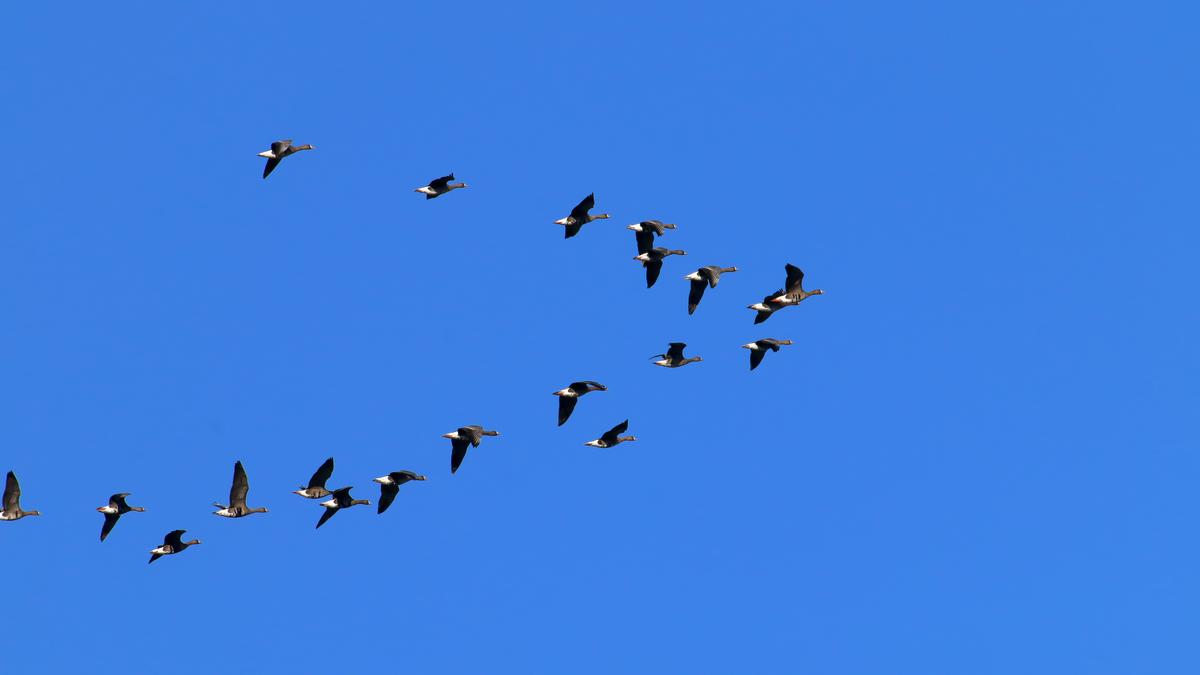
A flock of geese flies in a V-formation
| Photo Credit: Getty Images/iStockPhoto
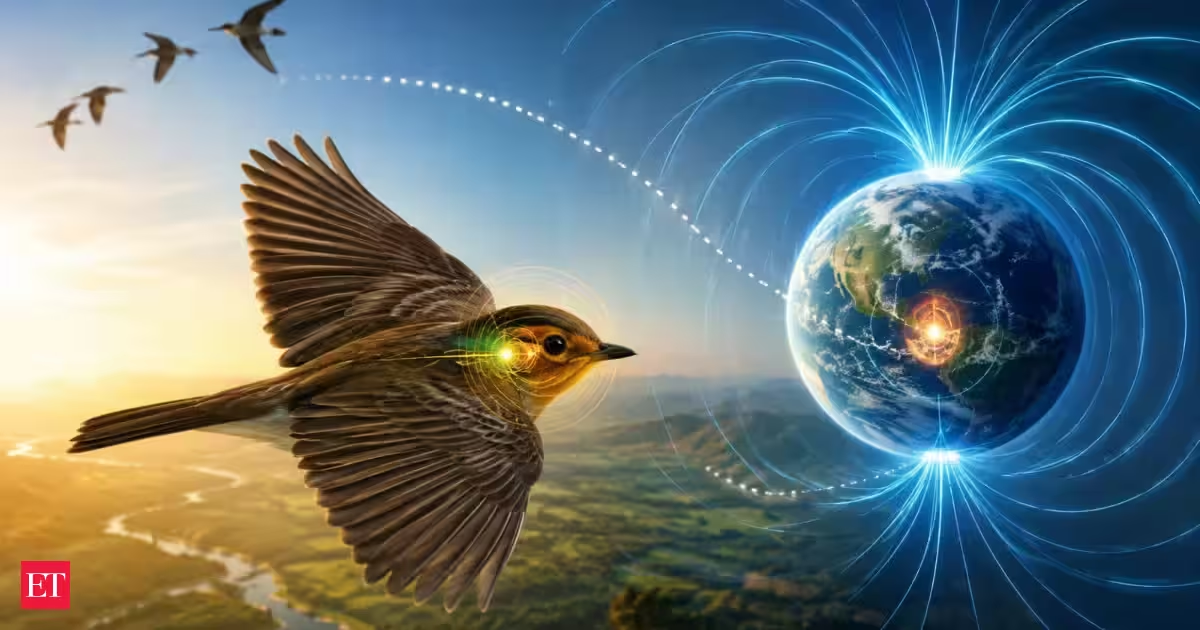
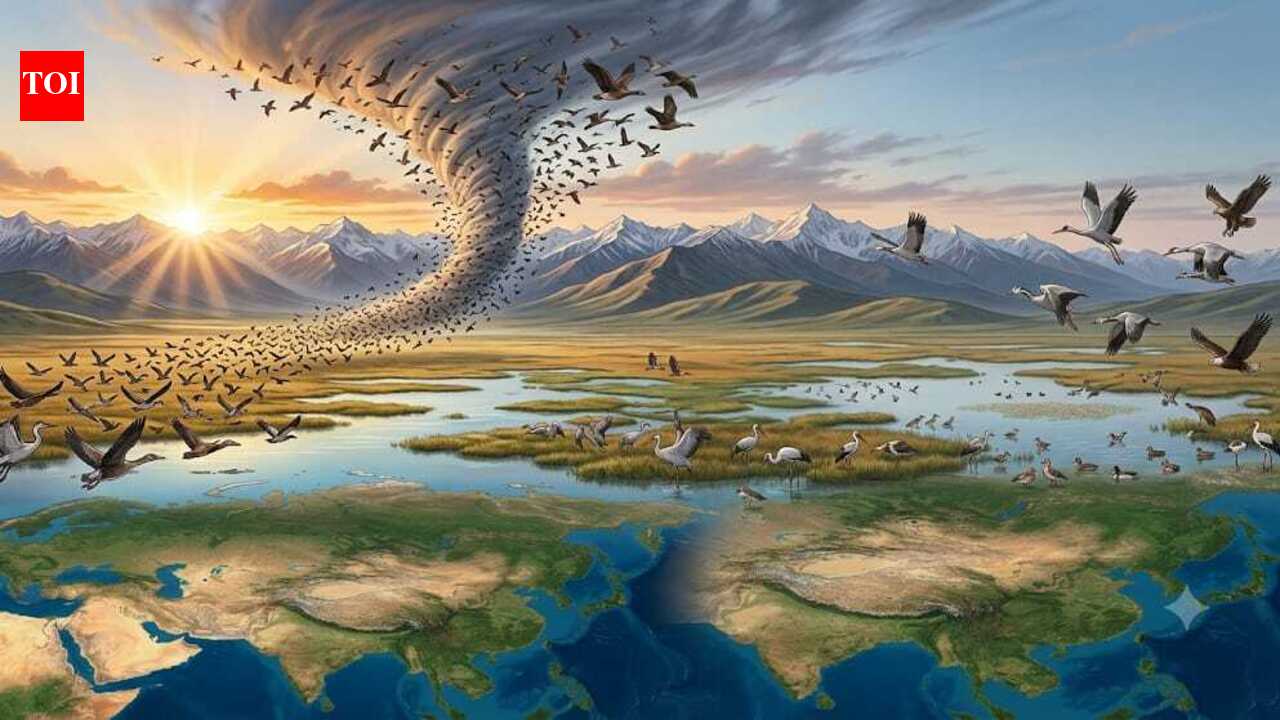
When I was growing up, I used to notice groups of birds with long, slender necks flying in a perfect V-formation high in the sky. These birds were especially noticeable during the winter months. I used to wonder where they were going and what kind of birds they were. Later, I learned that these were migratory birds called bar-headed geese.Bird migrationFrom November to February every year, birds like the bar-headed goose fly from places that have harsh winters, like Siberia and Europe, to the warmer South-Asian countries, and fly back when the winter season ends. Some birds take a short rest in western India before embarking on a long flight across the Indian Ocean to reach Africa. Migratory birds follow routes that can take them over mountains, wetlands, and even long stretches of ocean. They seem to return to the same places year after year, almost as if they are following a hidden map.But birds can’t use Google Maps, so how do they accurately find their way every year? When we humans need to find the North direction, we take out a compass, but it turns out that these birds have a built-in compass that detects the direction by sensing the Earth’s magnetic field! This special sense is called magnetoreception.How it worksScientists are still speculating that there are different ways in which magnetoreception works. Some say that these birds have special cells in their retina called cryptochromes that allow them to ‘see’ the magnetic field in a way that guides them towards the correct direction.Another possible way may be by using tiny magnetite particles present in their beaks. These particles are made out of iron and behave like tiny compasses that help the bird ‘smell’ the magnetic field. But whether they ‘see’ or ‘smell’, the fact remains that these birds are experts at navigating with their unique magnetic map. They cross huge distances with accuracy, returning to the same regions every year with the help of clues we cannot see.Other animals