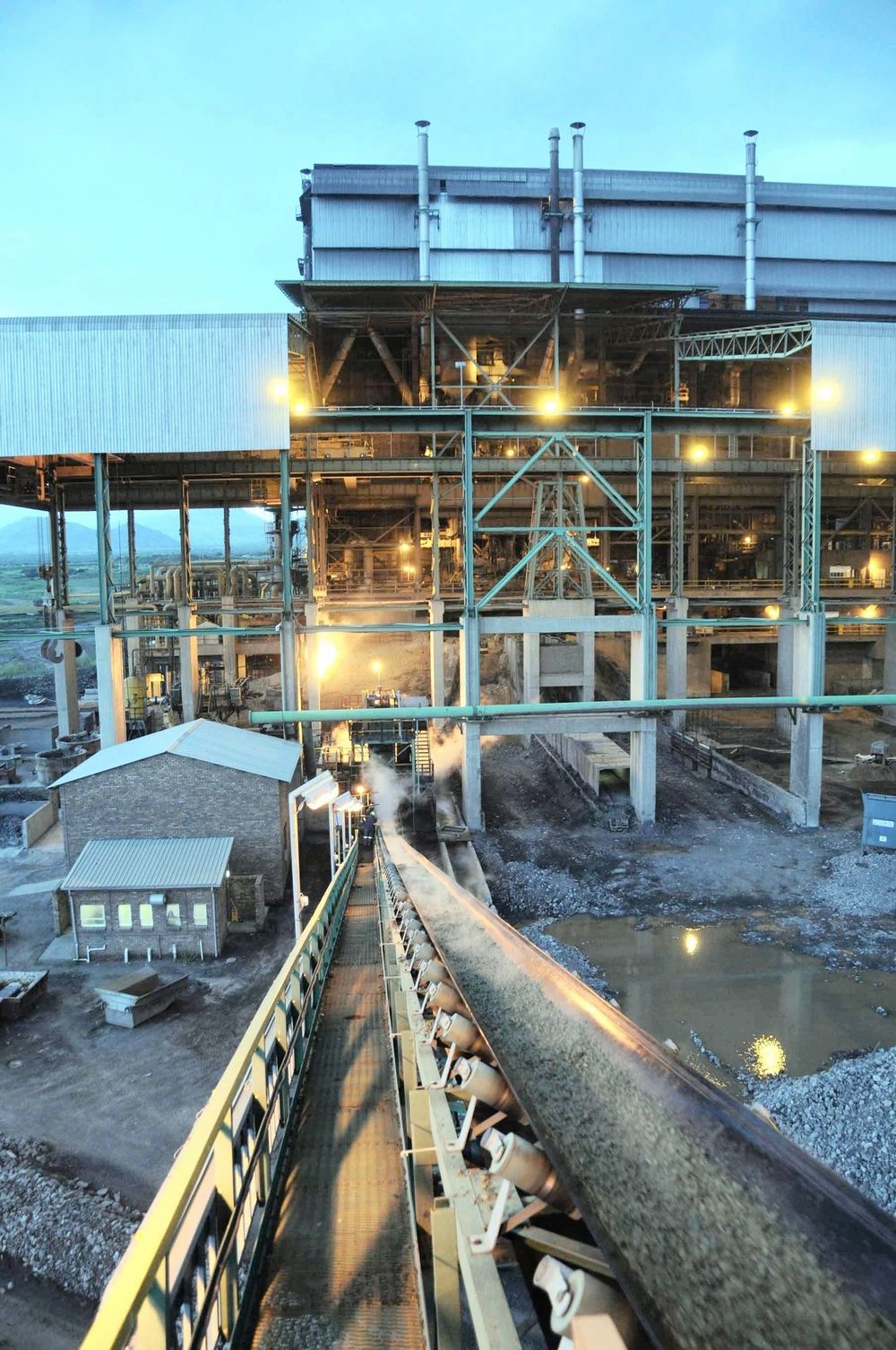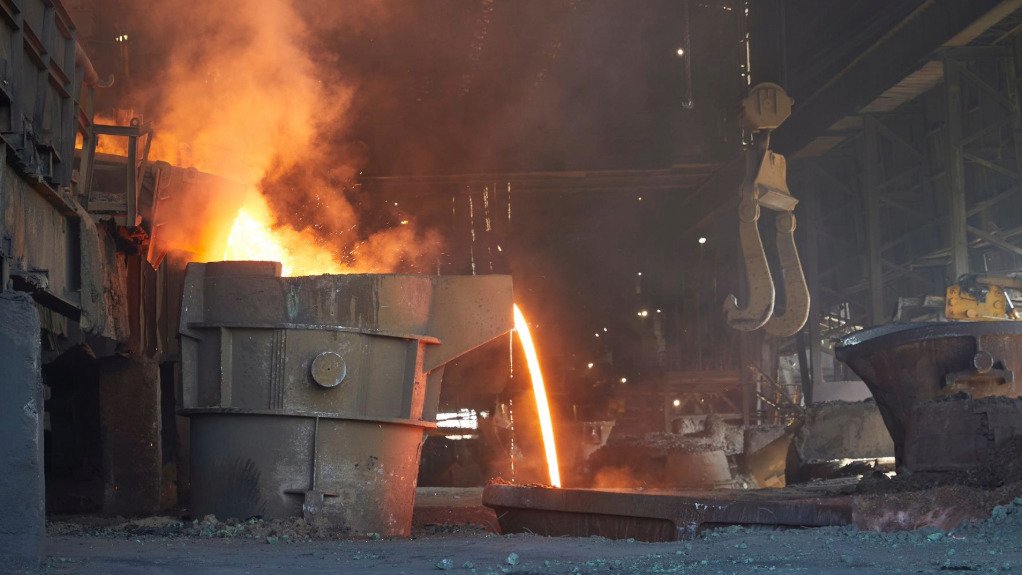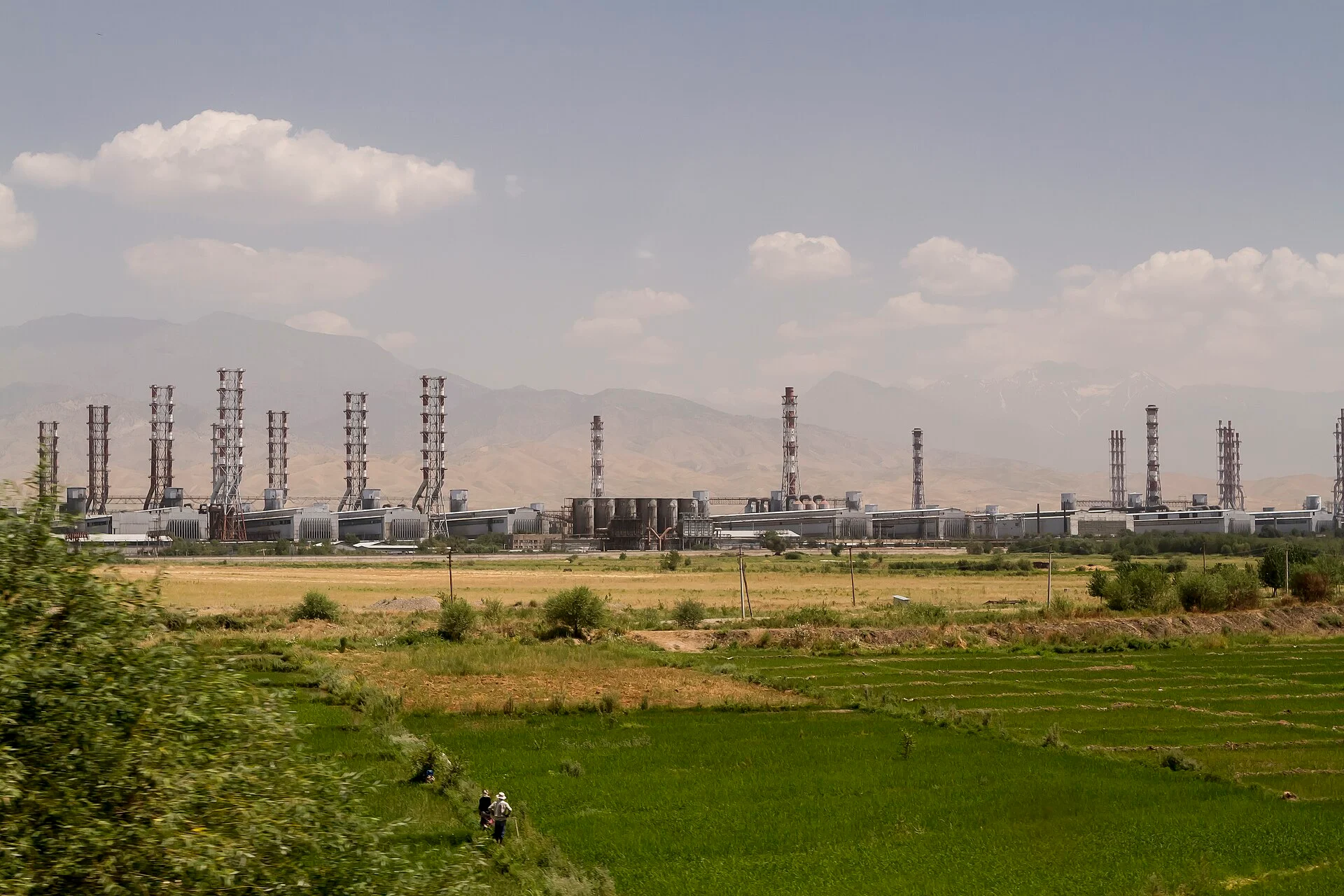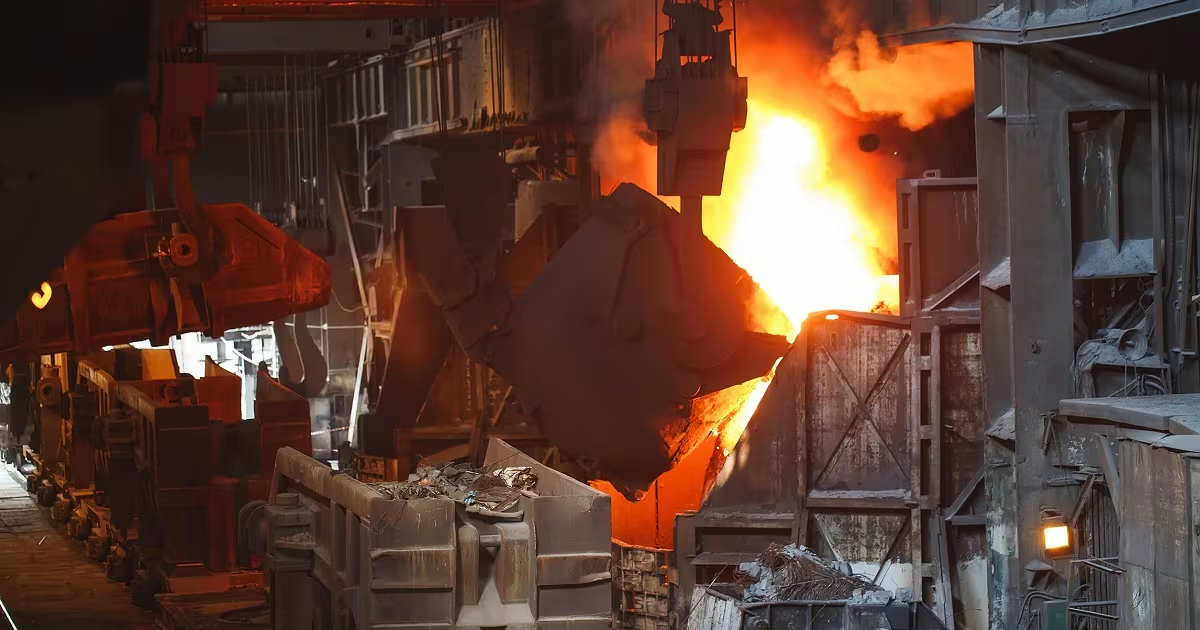
South Africa’s last manganese smelter, Transalloys, has ceased production as high electricity prices continue to batter the country’s industrial base, with companies queuing at Eskom’s door for tariff relief.Transalloys is one such company. On Wednesday, however, it ceased production at its facility in Mpumalanga, frustrated by what it deems the slow pace at which authorities are moving in granting it tariff relief.The contemplated mothballing of the plant puts about 600 jobs on the line, with 7,000 downstream roles also at risk.Transalloys’ board chair and CEO Konstantin Sadovnik said the company is disappointed that the same relief granted to its ferrochrome counterparts, Samancor and the Glencore-Merafe, has not been made available to Transalloys despite its facing similar energy cost challenges.Read: Electricity deals were meant to save heavy industry — they have not, says NersaHe said the company was left with no choice but to shut down its furnaces “after years of mounting financial losses” while negotiations over electricity tariffs with Eskom and the government continue. It is not asking for special treatment, just the same terms granted to the ferrochrome producers.“Our business has been losing substantial amounts of money for the past three-and-a-half years. We have done everything possible to reduce costs, conserve cash, raise awareness, and engage the government, Eskom and the regulators to find and implement a sustainable electricity tariff solution,” he said.“Now, effectively, our destiny is in the hands of Eskom, the national energy regulator and the department of electricity & energy. They are to determine whether Transalloys lives or dies. Further procrastination will amount to a death sentence.”Samancor and Glencore were this year granted 54% tariff relief after intense lobbying, which eventually averted thousands of job losses and the resumption of production.Sadovnik put pressure on authorities, saying that unless a permanent solution is found by the end of this month, the plant would face permanent closure and R6bn in investment would be wiped out.“We are pleased that our colleagues in the ferrochrome sector have reached a solution and can now focus on rebuilding their businesses,” Sadovnik said. “What we do not understand is why that same blueprint cannot now be extended to the remaining non-ferrochrome smelters, namely manganese and ferrosilicon, representing only 11% of the ferroalloys sector in terms of power consumption.“There are only three of those smelters left outside of the scope of the solution, all of them a lot more energy-intensive than ferrochrome smelters and financially distressed. “We intentionally waited for the ferrochrome negotiations to conclude before seeking the same solution. Now that the framework exists, it is difficult to understand why the rest of the sector continues to face lengthy negotiations with no certainty or timeline.”Business Day reported in April that Eskom had asked the National Energy Regulator of South Africa (Nersa) for a temporary amendment to the negotiated pricing agreement (NPA) take-or-pay terms applicable to Transalloys’ manganese ferroalloys smelter for six months.In the application, Eskom noted that the high electricity costs have rendered Transalloys uncompetitive, leading to a significant build-up of unsold stock whenever the plant operates at full capacity. In December 2025, Transalloys suspended three of its furnaces, reducing its operational capacity to about 57%.The challenges facing Transalloys illustrate how far the sector has fallen behind. In the early 2000s, South Africa was home to several smelters with a capacity to churn out about 850,000 tonnes of manganese alloys annually. Transalloys is the only player still standing, with the capacity to produce about 160,000 tonnes a year. This is despite South Africa being home to more than 75% of the world’s identified manganese ore reserves, ceding the advantage to other players and hurting the industry’s beneficiation efforts.The move by Transalloys comes just days after Nersa said the NPAs entered into between Eskom and industrial majors have fallen short in providing tariff relief for South Africa’s industrial base, threatening Eskom’s sales and the existence of industry.These are observations made by Nersa in its draft report related to the regulator’s market inquiry into the impact of fixed charges levied by municipalities and the unbundled generation charges recently introduced by Eskom.The paper notes that electricity tariffs have increased by more than 1,100% since 2003, resulting in industrial electricity sales plunging from a peak of 71,629 GWh in the 2004/05 financial year to 43,153 GWh in 2024/25 — a drop of about 40%.To lessen the burden on energy-intensive industries, which are central to South Africa’s industrial economy, supporting output, employment, exports and downstream value chains, Eskom has over the years entered into NPAs.Read: South32 to sell Richards Bay smelter as part of R92bn dealHowever, Nersa’s interim report says these agreements have not been the panacea they were thought to be in significantly reducing the cost of energy for industrial stalwarts.“NPAs, once designed to protect trade-exposed users, have not insulated them from cost pressure. NPA tariffs for smelters increased by 200% over four years, rising from 37.65c/kWh to 112.64c/kWh, while standard tariffs continued climbing,” the report reads.“The combination of high volumetric rates and expanding fixed-cost recovery creates a non-linear cost burden. Firms cannot optimise costs meaningfully through consumption cuts or technological substitution alone, since both variable and fixed charges erode financial sustainability. “These dynamics raise long-term concerns about plant closures, reduced investment and deindustrialisation, with direct consequences for employment, exports and Eskom’s own revenue base as large users contract or exit the system.”The country’s only producer of high-grade electrolytic manganese metal, Manganese Metal Company (MMC), is the latest to have its relief application received favourably by Eskom. To this end, Eskom has asked Nersa to grant MMC two years of tariff relief.ArcelorMittal South Africa, which spends about R3.5bn a year on electricity, is also engaged in high-level discussions with Eskom to secure a favourable tariff.
SA’s last manganese smelter halts production over crippling power costs
Transalloys warns procrastination on tariff relief a 'death sentence', with 7,600 jobs on the line
948 words~4 min read