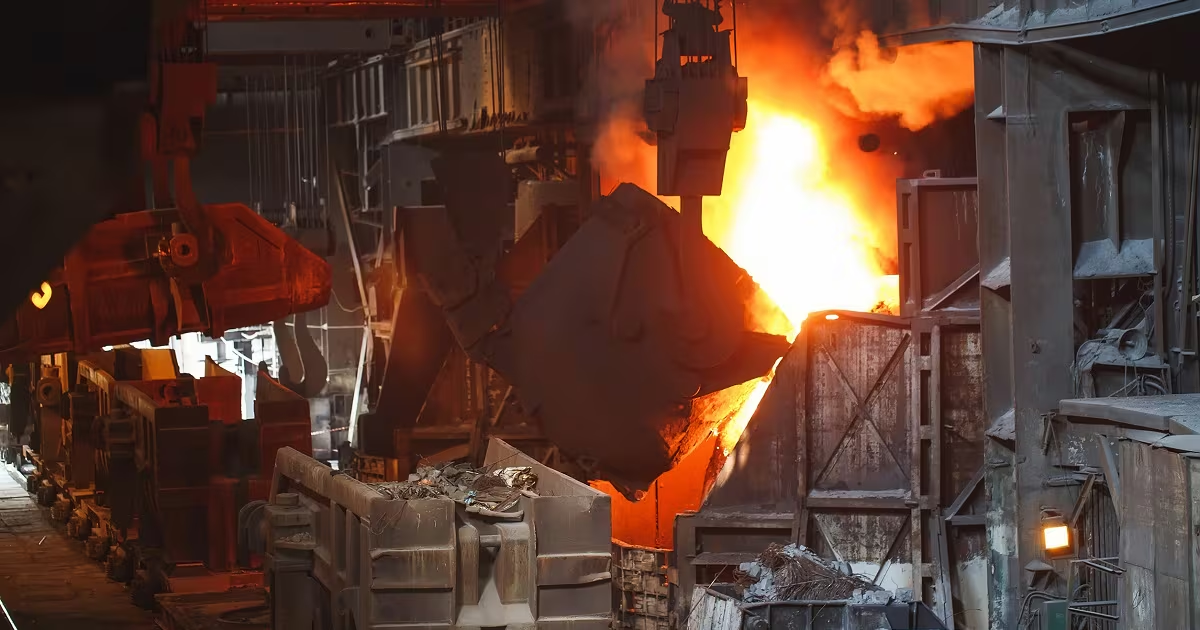
The National Energy Regulator of South Africa (Nersa) has finally approved the terms of a dramatic electricity tariff cut to South Africa’s remaining, and struggling, ferrochrome smelters, bringing their electricity costs down from more than R1.30/kWh to just 62c/kWh. The decision has allowed the two main remaining smelters, Glencore and Samancor, to lift section 189 redundancy notices to thousands of staff, including many highly skilled workers. While news of the Nersa decision has been greeted by sighs of relief, it is, as Winston Churchill said at the end of 1942 after the Allied forces had defeated the Nazis at El Alamein in Egypt, “not the end; it is not even the beginning of the end. But it is, perhaps, the end of the beginning.” South Africa is home to the world’s largest chromite ore reserves. The mineral is essential in the production of stainless steel. More than 20 years ago we were also the largest smelters of the ore, but high electricity prices have closed down most of the industry, driving the smelting of the ore mainly to Asia, mainly China. Those prices have been the direct result of years of mismanagement at Eskom and catastrophic political oversight by the ANC, which cheered Eskom on as its labour force increased well beyond what it had previously required to be competitive. In the 2007/08 financial year Eskom produced 239,109GWh of electricity with 32,954 employees. Ten years later, now with 46,600 staff, it managed only 209,319GWh. When former president Jacob Zuma declared 2011 “the year of the job” he meant it ― public sector and civil service employment shot up ― but he never had any idea of the consequences. All he did was increase the tonnages of mined rock directly exported, despite holding fast to old ANC promises to “beneficiate” minerals at home before exporting them. By the time Glencore issued its section 189 notices last November only a fraction of the furnaces at local smelters were still operating ― about 11 in all, from almost 60 at the industry’s peak. A deal has now been reached on power prices after months of grinding public sector hand-wringing, but there will be no quick return to production. For a start, shuttered furnaces will have to be scrubbed and recommissioned. That could take months. Then their ore stocks will have to be processed before more is required from the mines. Suppliers of everything from coal, machinery and spare parts, chemicals and reductants will have to be brought back online ― if they have survived this long without doing business. And while this is happening both Glencore and Samancor will continue to negotiate final terms outside the tariff. When he announced an agreement three months ago electricity minister Kgosientsho Ramokgopa said the arrangement would not only include requiring the smelting companies to restart all their furnaces by the end of the year but that Eskom would expect to be compensated should ferrochrome prices rise enough to lift smelter profits significantly. Initially Glencore and Samancor had intended to run only up to 24 or so furnaces. Ramokgopa appeared to be asking for almost 50 to be in operation by the end of the year. That will surely not be possible without triggering a competitive response from far more muscular Asian ― and particularly Chinese ― smelters, which picked up work from South Africa as the local industry declined. The hard facts do not make for pretty politics, but the ANC is desperate to place itself at the vanguard of a great “reindustrialisation” of the South African economy. Not only is the ferrochrome crisis heaven-sent in that regard, but it feeds that ANC craving for more local beneficiation. But reality will possibly bite here too, as Glencore and Samancor simply cannot fight the Chinese on price even though Samancor is now Chinese-owned. And there are other sources of chromite Asian smelters could turn to if pushed. Of the two local companies still operating, it is also a fact that Glencore would probably be better off shutting down all its furnaces in South Africa. Refining and processing are not its core business. It is fundamentally a giant commodities trading group. If Ramokgopa and Eskom continue to ask for more in return for the 62c tariff than the companies feel they can pay, they could simply walk away. The best hope for the 35,000 or so South Africans who are dependent in one way or another on the ferrochrome business as it stood a year ago is that the government, whatever its appetite and however much it might want to convert its industrial fantasies into votes come 2029, keeps itself grounded. • Bruce is a former editor of Business Day and the Financial Mail.
PETER BRUCE | Firing up furnaces requires Churchillian-like sagacity
Future of about 35,000 jobs uncertain due to competitiveness and political intervention
786 words~4 min read