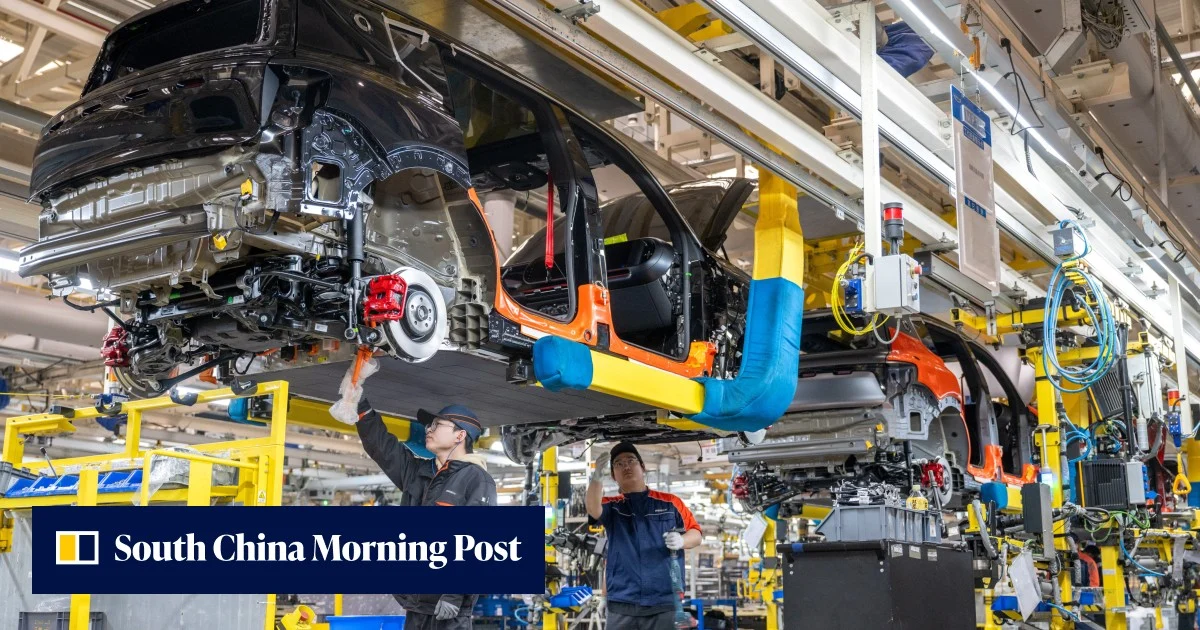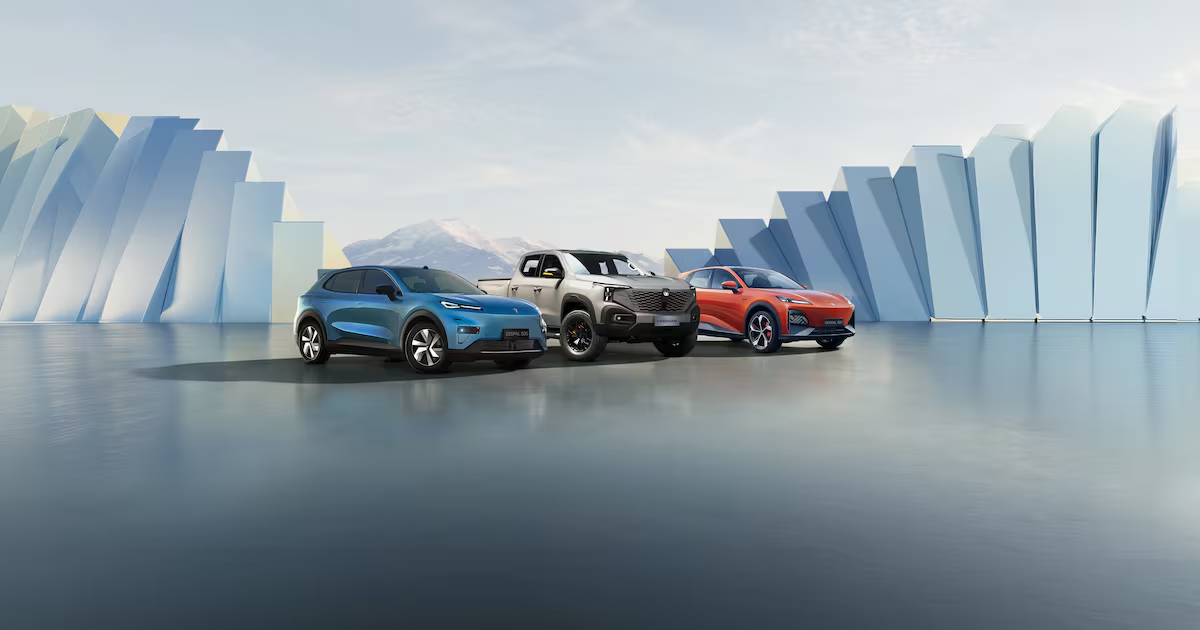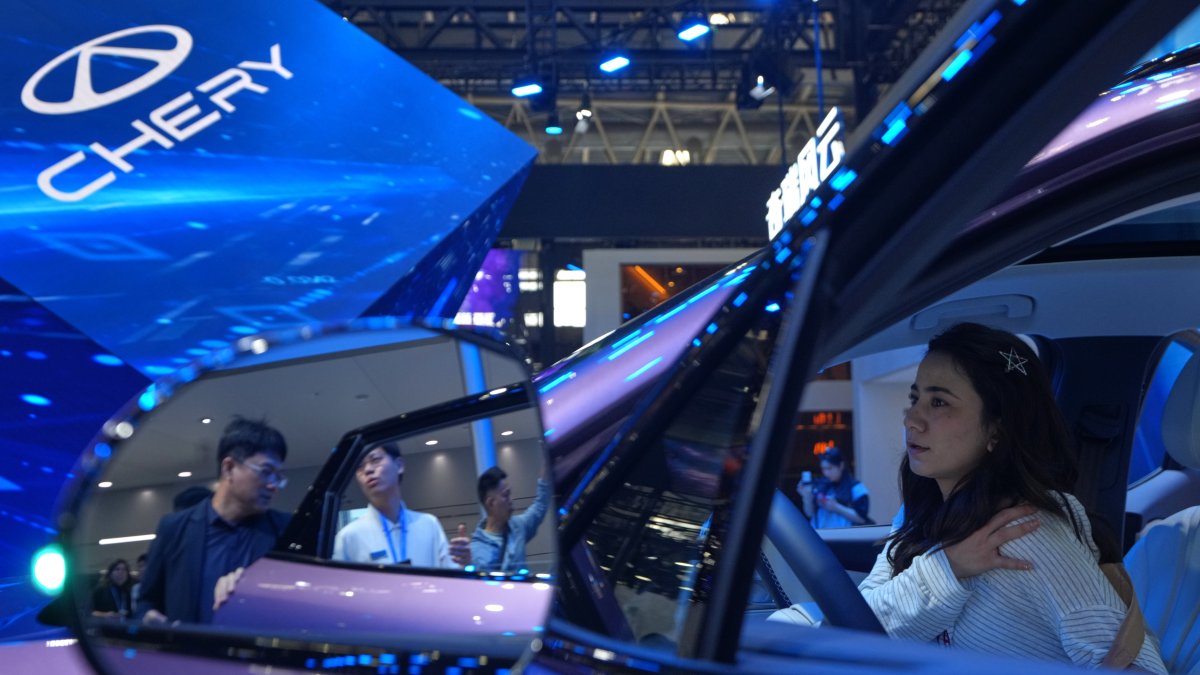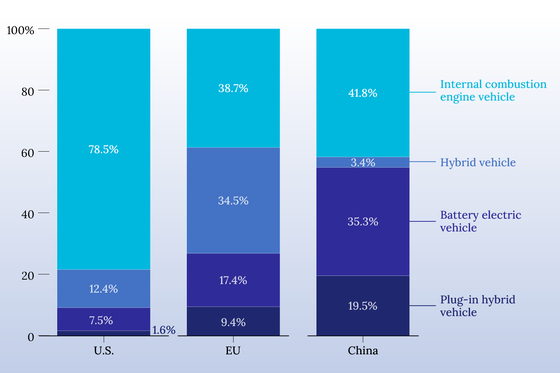
China’s carmakers are widening their focus beyond fully electric vehicles, pouring resources into hybrid technology as competition in the global vehicle market shifts.Changan International, which laid out its hybrid electric vehicle (HEV) strategy at a presentation to African media in Chongqing, southwest China, on Thursday, believes hybrids could play a far bigger role as consumers move from internal combustion engines to electrified mobility, not as a stopgap but as a long-term option.Changan’s HEV approach pairs a petrol engine with a smaller battery and electric motor, improving fuel efficiency while keeping the driving feel of a conventional car. The system doesn’t require external charging; all the vehicle’s energy comes from fuel, with the electric motor stepping in to assist during acceleration and low-speed driving, enabling the engine to operate more efficiently.Staking a claim in territory that’s been dominated for years by Japanese manufacturers, state-owned Changan says it has built dedicated hybrid architecture, which is engineered around high-pressure fuel injection, combustion optimisation and improved thermal efficiency.WATCH | Chinese car brands gain ground in South AfricaChangan rates its latest hybrid engine’s thermal efficiency above 44%, a figure that positions it among the industry’s best and developed to solve the tension between fuel economy, emissions and affordability.The pitch to drivers is built around familiarity. Changan frames HEVs essentially as the electrification of the internal combustion engine for existing petrol and diesel drivers; no behavioural shift is required. Smaller battery packs also mean lower costs relative to full battery-electric vehicles. The company is layering in AI-based energy management to optimise how power moves between engine and motor, depending on terrain, traffic and driving conditions.The strategy is emerging while carmakers worldwide are recalibrating their electrification bets, with some doubling down on full EVs and others broadening their hybrid line-ups for markets where infrastructure and consumer habits do not yet support a clean break from fossil fuel-powered vehicles.Deliberate strategy Chinese manufacturers particularly are eyeing emerging markets where charging networks remain thin and fuel efficiency is becoming a sharper purchasing factor. South Africa fits that description well, and the numbers back up Changan’s thesis. Interest in hybrid vehicles rose to 39% in the first quarter of 2026, up from 30% in the previous three months. That makes hybrids the leading electrified option among local consumers, according to reports, ahead of battery-electric and plug-in hybrid interest, which sat at 26% each.Hybrids have gained ground locally precisely because they offer fuel efficiency without demanding charging infrastructure. Drivers can fill up at any petrol station and still benefit from lower consumption.That preference is shaped by infrastructure realities Changan would not want to ignore. EV charging infrastructure in South Africa remains in a formative stage, defined by policy ambiguity, limited rollout and market uncertainty. Charging access remains concentrated in metro areas, with rural coverage negligible, while power outages create uncertainty whether plug-in stations will even be operational when the lights go out.Locally, plug-in hybrids accounted for 70% of new-energy vehicle sales last year, an inversion of the global trend, driven by grid anxiety and the demands of long-distance driving, according to ChargePoint SA. Buyers want electric efficiency for the daily commute and petrol backup for the December holiday run to the coast.Stiff competitionThe competition is intensifying. Chinese car sales grew 75% year on year in the first quarter of 2026, outpacing the 2% growth of traditional brands. Chinese brands now account for almost 20% of new passenger and light commercial vehicle sales. Changan opened a flagship branch in Pretoria last year through distributor Jameel Motors South Africa and plans to expand the dealership network from 25 to 40 by year-end. But it is not alone; Geely has also re-entered the market, adding further pressure to the same hybrid-bridge segment. Toyota remains a tough force in conventional hybrids, though, holding a big stake of the local segment.Government and industry response has been cautiously enabling rather than aggressively interventionist. A 150% tax deduction for new-energy vehicle manufacturing investment came into effect in March, prompting Chinese carmakers to respond with local commitments. Chery’s acquisition of Nissan’s former Rosslyn plant signals a long-term bet on local assembly. The challenges for full EVs remain structural rather than cosmetic: thin charging coverage outside major centres, a national grid still prone to load-shedding and affordability pressure compounding. For Changan and its Chinese peers, hybrids are not simply a hedge against slow EV uptake; they could be an acknowledgement that South Africa’s route to green vehicles is likely to run on fuel-flexible technology for years, not away from it.
ANALYSIS | Chinese carmakers see hybrids, not EVs, driving SA’s transition
Changan is looking to hybrids to fill the gap between internal combustion and fully electric models
749 words~3 min read