Story audio is generated using AI
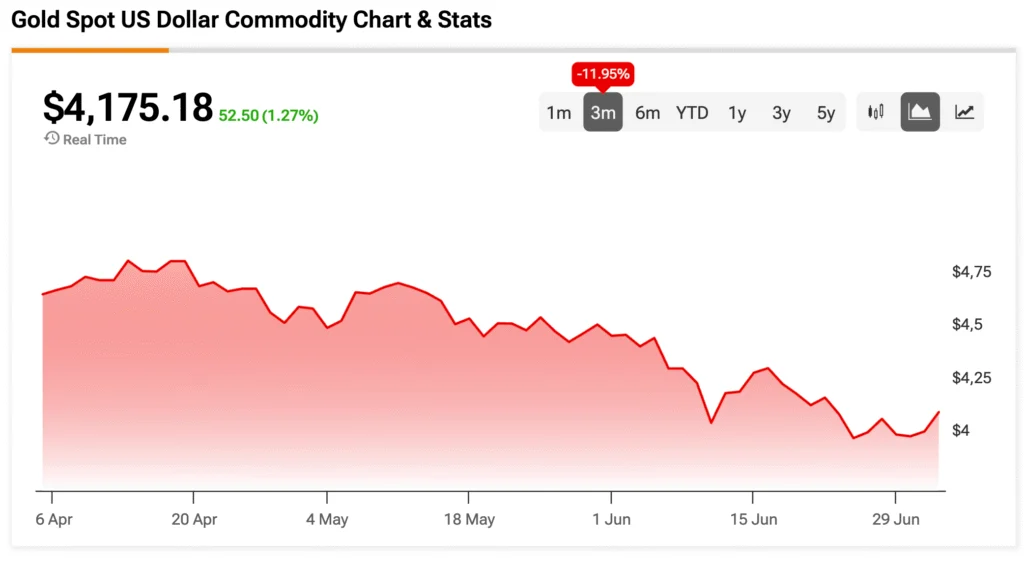
This may shape up to be the toughest year for gold miners since 2022, with the industry’s flagship trade association predicting prices will remain rangebound until the end of the year as investors brace for a more hawkish US Federal Reserve.Barring any major shift in sentiment or a fresh outbreak of war, the World Gold Council expects the price of gold to trade within 5% of present levels of just above $4,000/oz — a far cry from the record of about $5,600 it reached in January.The prediction points to a sustained slump, which could dent mining company profit expectations or delay investment into new mines and acquisitions.After a sharp correction in the wake of the Iran war, gold is now 4.6% lower than it was at the start of the year. If prevailing prices remain, 2026 might be the first year since 2022 that the metal’s price closes lower than at the start of the year. (Dorothy Kgosi) Gold posted its sharpest quarterly drop in 13 years in the three months to end-June as inflation concerns stemming from the war boosted expectations that the Fed might hike rates later this year. Higher rates tend to make gold less attractive than bonds, which pay interest.That has triggered a bloodbath on the JSE, with the precious metal & mining index losing nearly a quarter of its value in the second quarter. AngloGold Ashanti lost 19%, Gold Fields 27% and Sibanye-Stillwater plunged by nearly a third.At this level, gold is priced “broadly in line with a global backdrop of moderate growth, cooling but still elevated inflation, and expectations of further — but limited — central bank tightening”, said the council.In other words, there is little reason for gold to meaningfully change from where it is now.But there are situations in which it could. A worsening economy, renewed geopolitical shocks or a shift towards lower interest rate expectations, for example, could lift gold back up towards $4,500 or higher.There is plenty of reason to hold out hope for renewed shocks in the era of US President Donald Trump.Trump has repeatedly threatened to take Greenland and, more recently, implied he might take military action in Cuba. Both moves would surely warrant safe-haven buying. His recent interventions in Venezuela and Iran show that the president can make good on these threats.Read: Mining giants hammered as inflation fears spread to copperThen there is profit-taking: “A wave of dip buying ... could reignite gold’s momentum,” said the council.That could come from opportunistic investors or from central banks, whose hunger for the metal has driven prices to record highs in recent years.In a separate survey of 76 reserve managers earlier this year, nearly all respondents said they expect central bankers to buy more gold over the coming year. Nearly half of them said they planned to increase their own reserves, while about three-quarters expected a drop in dollar holdings over the same period.“I wouldn’t ignore the continued accumulation of gold reserves by central banks — that demand remains a structural positive for gold,” said MP9 Asset Management chief investment officer Aheesh Singh.However, as elevated oil prices continue to drive up input costs, mining companies may face further market headwinds as their margins are squeezed.Even though fuel prices are expected to drop in July, the Minerals Council South Africa’s latest data shows they will still be at least 20% higher than pre-war levels on average.“Precious metal miners are price takers, which doesn’t bode well when falling metal prices meet rising operating and energy costs,” said Singh.“If investors are obligated to have exposure to gold and platinum miners, I’d be very selective and focus on the lowest-cost, best-run producers that can withstand this cost squeeze and still generate cash.”