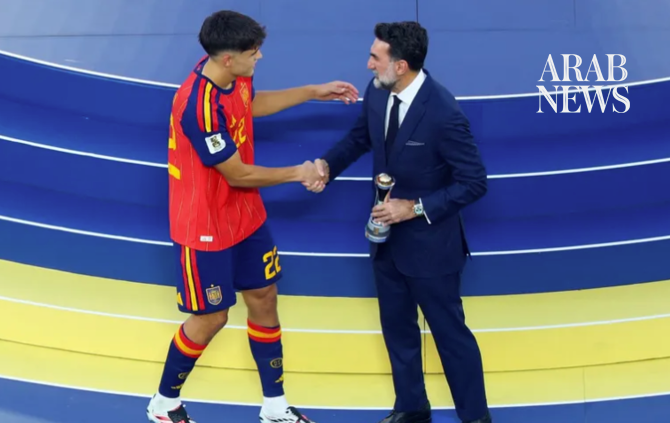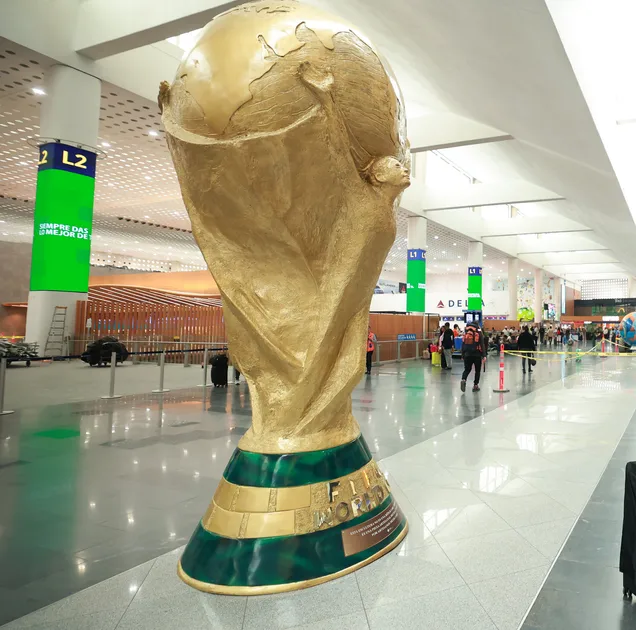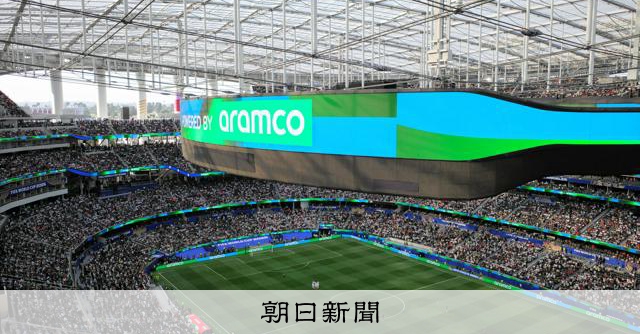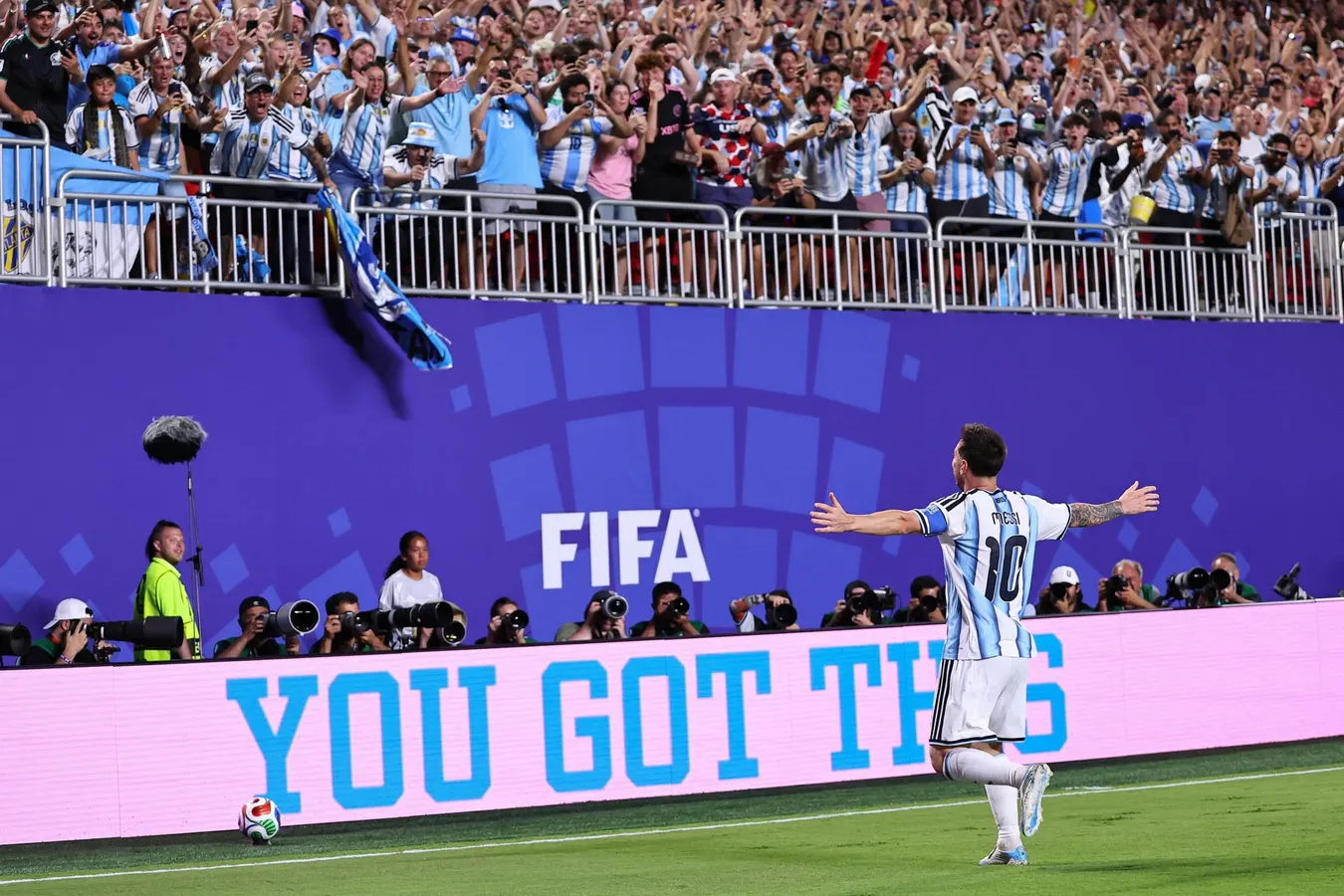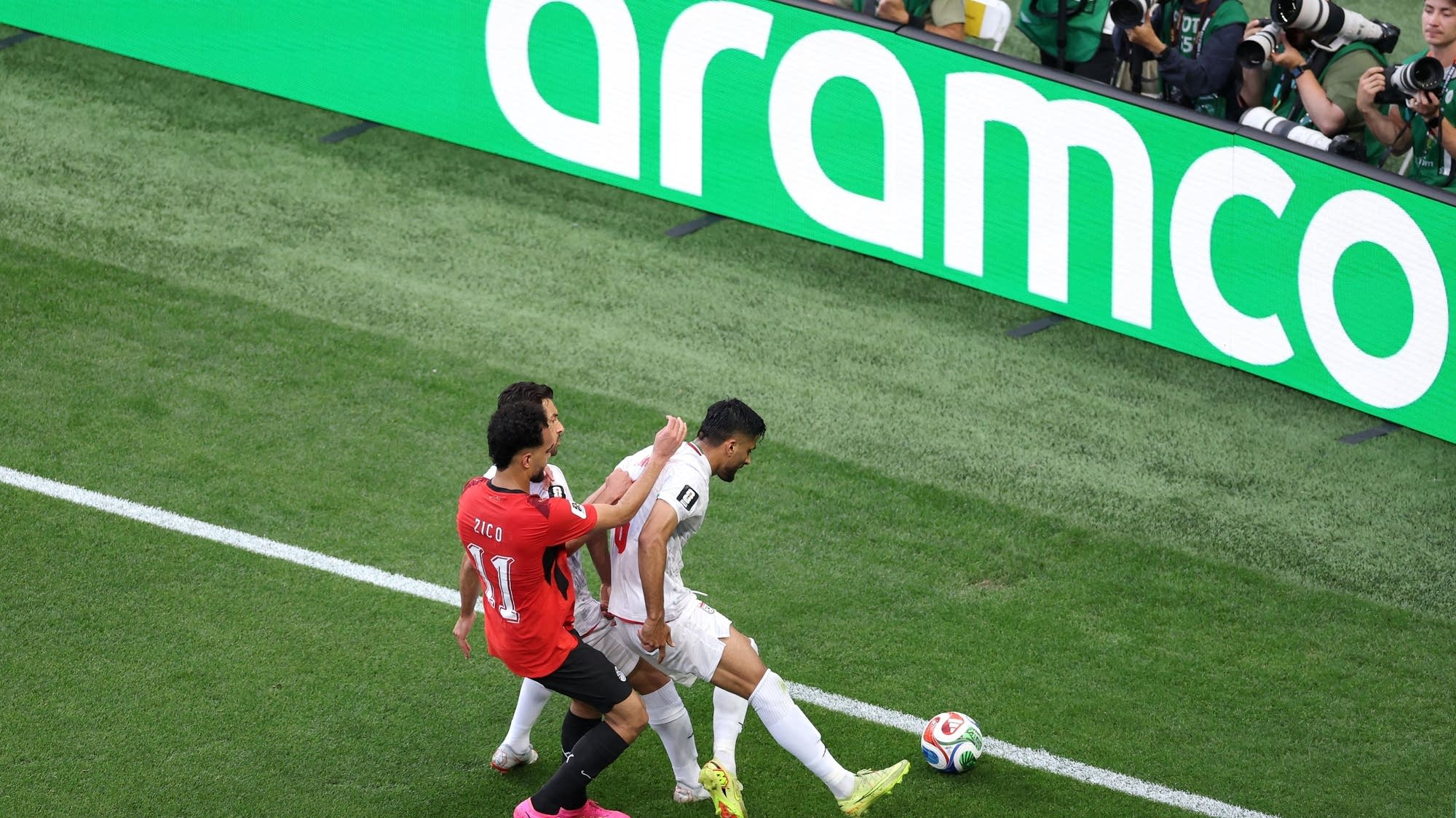
More than 10,000 minutes of soccer will be broadcast internationally during the World Cup this summer — from Paraguay eliminating Germany in a penalty shootout to Lionel Messi becoming the tournament’s all-time top scorer.But accompanying each of those replayable World Cup moments is an elite tier of brands that paid tens of millions of dollars to appear in nearly every shot. One of them is Middle East oil giant Saudi Aramco.But World Cup fans don’t buy crude oil like they might beer or soda. So why does Saudi Aramco pay so much to sponsor the world’s biggest sporting event? Experts say the partnership isn’t about consumers — it’s about shaping the reputation of Saudi oil. “Saudi Aramco is the world's biggest oil company, they're the Saudi state oil company,” said Frank Huisingh, founder of Fossil Free Football, which has led a global campaign to oppose Aramco’s partnership with the World Cup. “They want to pump up oil and sell oil for as long as they can, but they have a bad reputation because they're a fossil fuel company,” Huisingh said. “And when you have a bad reputation, what's better to associate yourself with than the most popular event in the world?” Despite its oil dominance, Saudi Aramco has billed itself as the “Global Energy Partner” of this World Cup, not the “Global Oil Partner.” That’s no accident. “Oil is a bit of a negative brand,” said Tim Calkins, professor of marketing at Northwestern University. “I don't think a lot of people go out and say, ‘I love oil,’ but everybody appreciates energy.” Kristian Coates Ulrichsen, fellow for the Middle East at Rice University’s Baker Institute, agreed.“They're clearly trying to position themselves as part of the energy transition, as sort of more than just an oil company,” he said.Coates Ulrichsen said what Aramco and other brands are doing is often described as sportswashing. “They try to change the way that people talk, so you're not focusing on negative stuff, you're focusing on sport, on positive things,” Coates Ulrichsen said. “Sport has an appeal like no other.” While most World Cup viewers don’t know or care whether their gasoline comes from Saudi Aramco, the company’s FIFA partnership isn’t about selling oil to soccer fans. “Aramco needs to have great relationships with regulators and big customers around the world,” Calkins said. “Having a positive perception of the Aramco brand is really important when it comes time to negotiate big deals.” Aramco’s status as a World Cup partner makes the company more attractive to potential employees, business partners, or investors. “Forming the relationships is really important for Aramco,” Calkins said. “When you're on the world stage like that, if Aramco calls an important government regulator, it might be more likely to take the phone call.”Saudi Aramco declined Marketplace’s request for an interview, but Calkins said the Aramco partnership with FIFA is also about something else. “The other piece, though, is this is largely connected to the bigger story around the brand of Saudi Arabia,” Calkins said. He noted Saudi Arabia is in the midst of a major rebranding project. Ellen Wald, author of “Saudi, Inc.,” agreed.“[I] wouldn't be surprised if there was kind of a nudge from the kingdom, as like, ‘this would be a good thing also for us,’” Wald said. “Because Aramco is like one of the great crown jewels of Saudi Arabia.”She said the company Saudi Aramco likely has a more favorable public image than the country of Saudi Arabia. “Is it sportswashing?” she asked. “Absolutely.”People simply talking about sports and Saudi Arabia helps the country’s rebranding effort. “They're trying to use sport to change the way that people think about Saudi, so it's not Yemen, it's not human rights, it's not Jamal Khashoggi, it's not 9/11,” Coates Ulrichsen said. “Now, you talk about Saudi in terms of football.”Saudi Arabia will host the men’s World Cup for the first time in 2034. The country has been investing in soccer and other sports in recent years. “I think in Saudi Arabia, they see the sports industry as a growth area,” said Ben Cahill, director of energy markets and policy at the University of Texas at Austin. “If you think about all the investment in soccer, the number of famous soccer stars who've come to play in the Saudi Pro League, like Cristiano Ronaldo and Neymar and Karim Benzema.”He said this is part of Saudi Arabia’s vision for the future.“Sports is seen as one of those growth industries to diversify the economy and create a new source of growth and revenue and investment,” Cahill said. Saudi Arabia’s Vision 2030 imagines the country as more than a petrostate. Aramco’s partnership with the World Cup helps advance that effort. Every replay and postgame interview is a chance to associate the country — and its state oil company — with something other than oil.
Why this World Cup is covered in Saudi oil
Saudi Aramco's sponsorship isn't about selling more crude oil. Experts say it's about building influence, burnishing the company's reputation and supporting Saudi Arabia's broader ambitions on the world stage.
808 words~4 min read