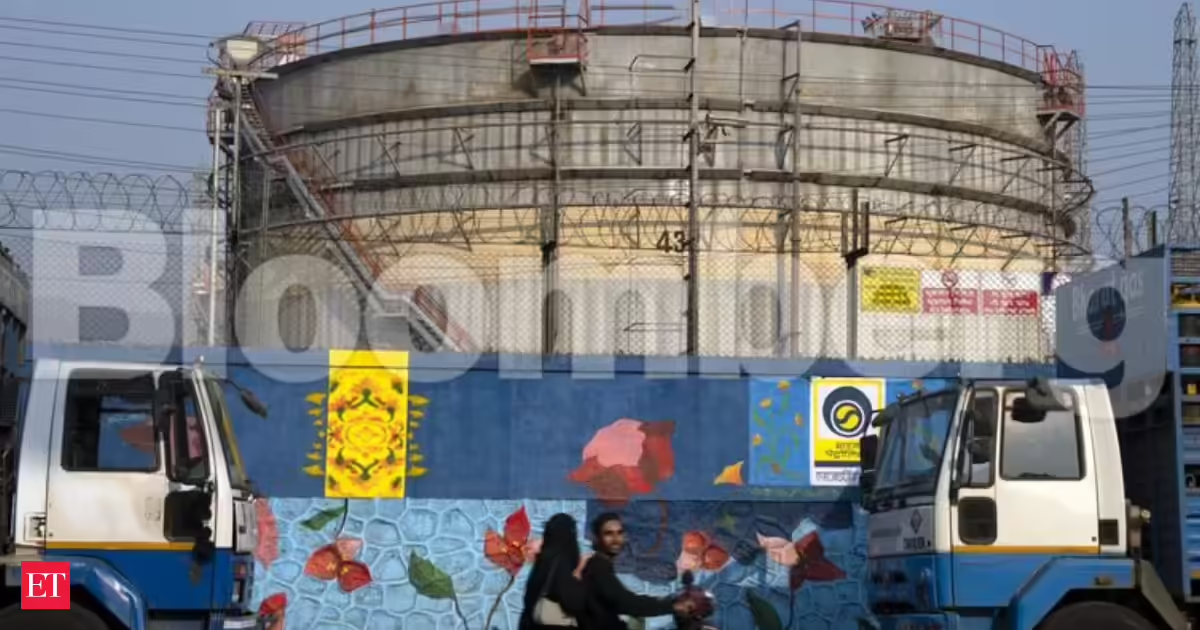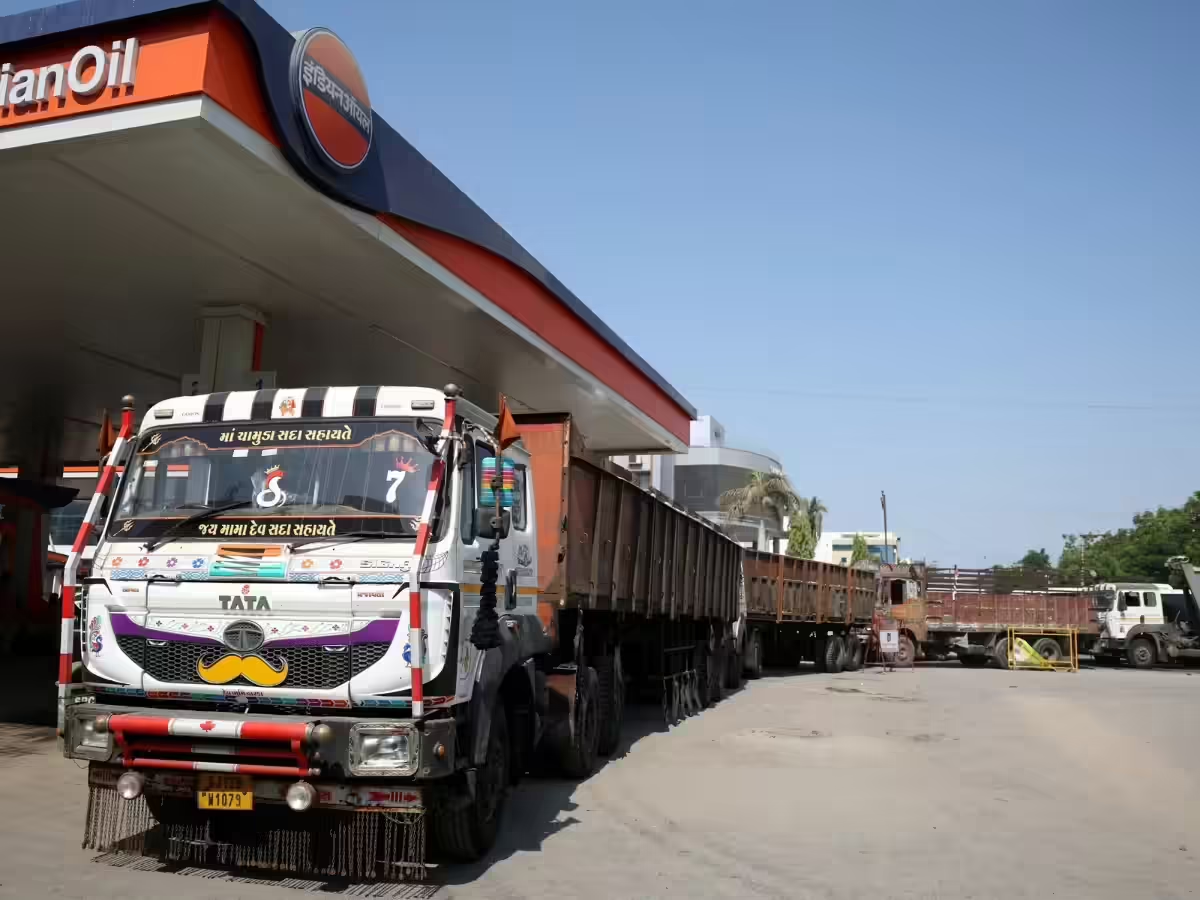
India has found itself surprisingly awash in crude oil thanks to a decade-old sourcing strategy that has enabled the country to weather what is said to be the worst global energy supply shock in history. New Delhi, acutely sensitive to high fuel prices for consumers, called on state refiners to spend what they must to keep crude supplies robust, even as prices spiked during the monthslong near-closure of the Strait of Hormuz. Combined with groundwork laid years ago to diversify suppliers and update refining infrastructure, India now finds itself well positioned — even as the US-Iran struggle over Hormuz enters a new phase and brings fresh uncertainties to the market. While the Hormuz shutdown in early March cut off India's access to nearly half its oil imports, refiners were able to pivot to other crude sources, particularly in the Americas and wider Atlantic Basin. As a result, India's overall crude imports have stayed relatively flat in the first half of the calendar year compared to 2025, averaging about 4.86 million barrels per day in the 2026 period, according to data from shipping analytics firm Kpler. Indian crude imports were down 1 million b/d year on year in March, but then increased by almost 350,000 b/d in April and by 108,000 b/d in May compared to a year earlier, Kpler data shows. While the Mideast and Russia still contributed meaningful volumes, India imported crude from 21 different countries in April alone, per the latest customs data. Imports from Brazil rose to 255,000 b/d in March-May compared to 95,000 b/d in the 2025 period, while flows from Venezuela increased from 21,000 b/d in June 2025 to an estimated 288,000 b/d in June 2026, Kpler data shows. That has allowed refinery runs to remain remarkably consistent throughout the recent crisis, helping keep fuel prices in check as New Delhi has directed, despite weighing on refiner margins. Indian throughput averaged 5.3 million b/d in April-May, on 5.8 million b/d of installed capacity, Energy Intelligence data shows, while other major refining hubs, particularly in China, slashed runs.
Decade of Planning Pays Off for India Amid Supply Squeeze
India is reaping the benefits of a crude oil sourcing strategy years in the making based on nurturing trade relationships to enhance supply diversity.
342 words~2 min read