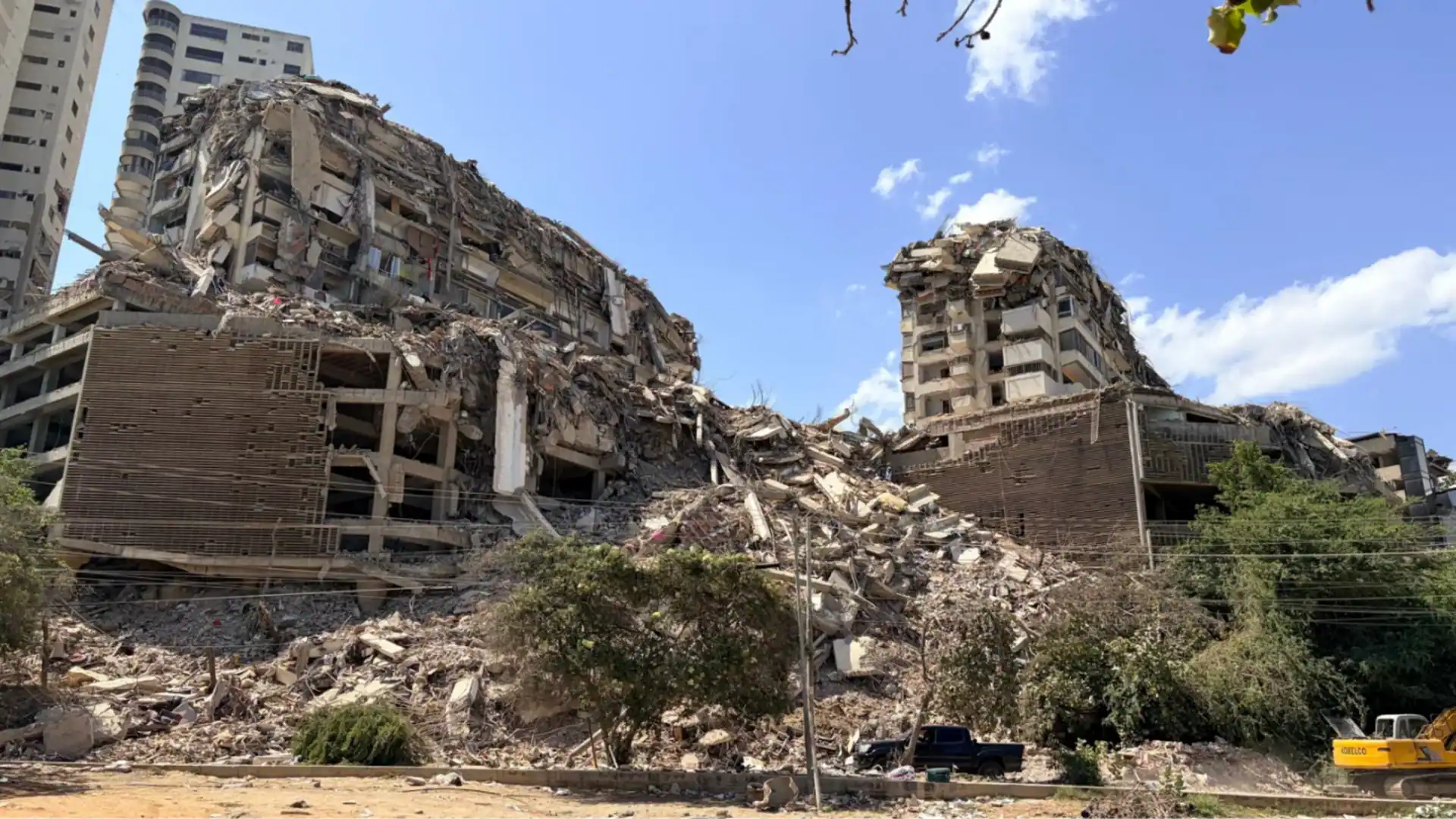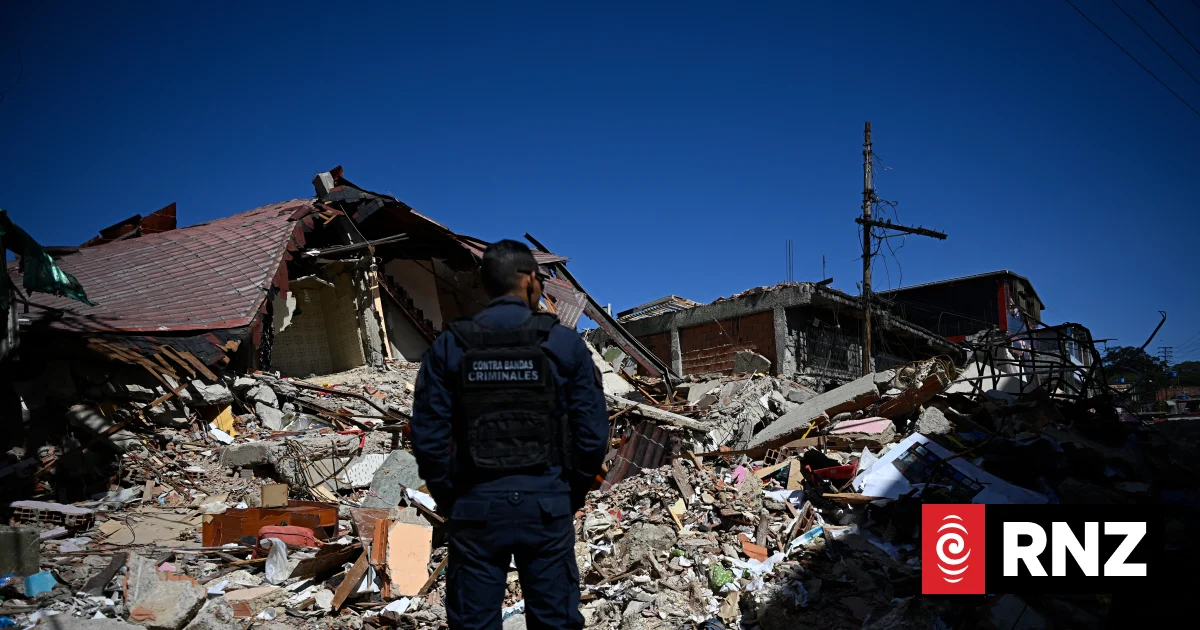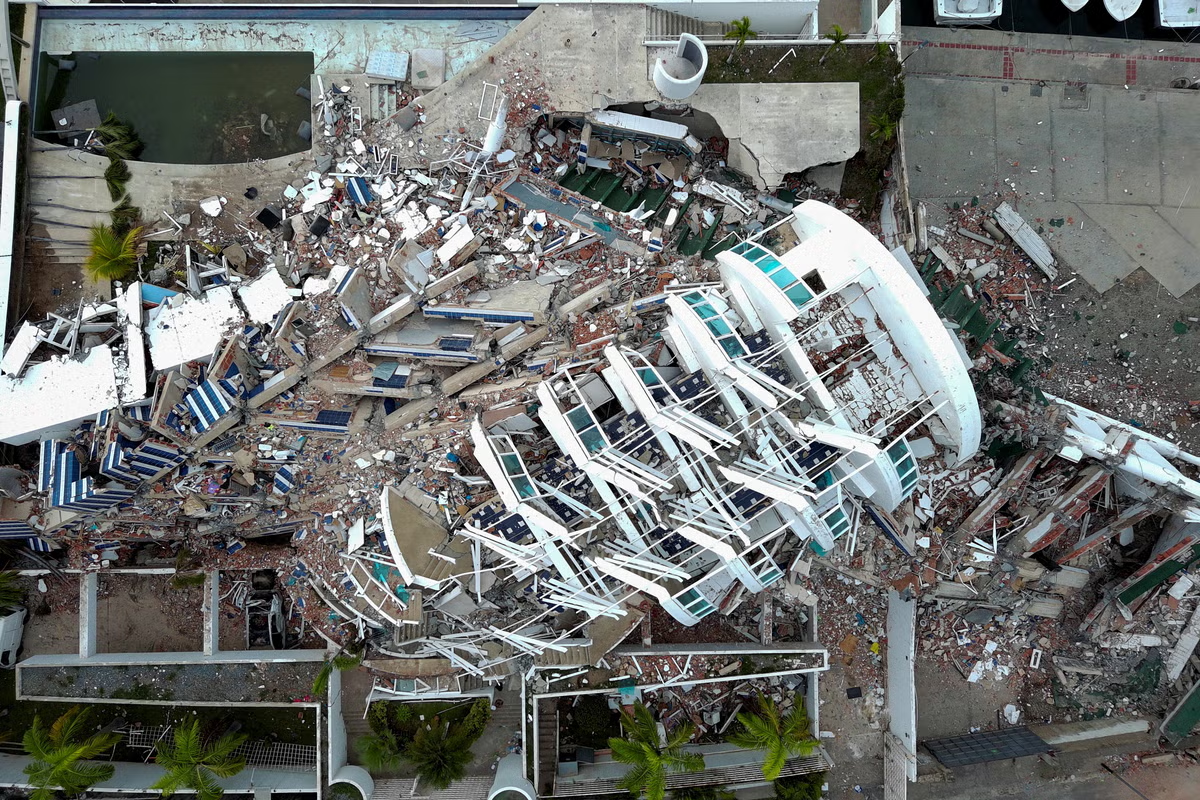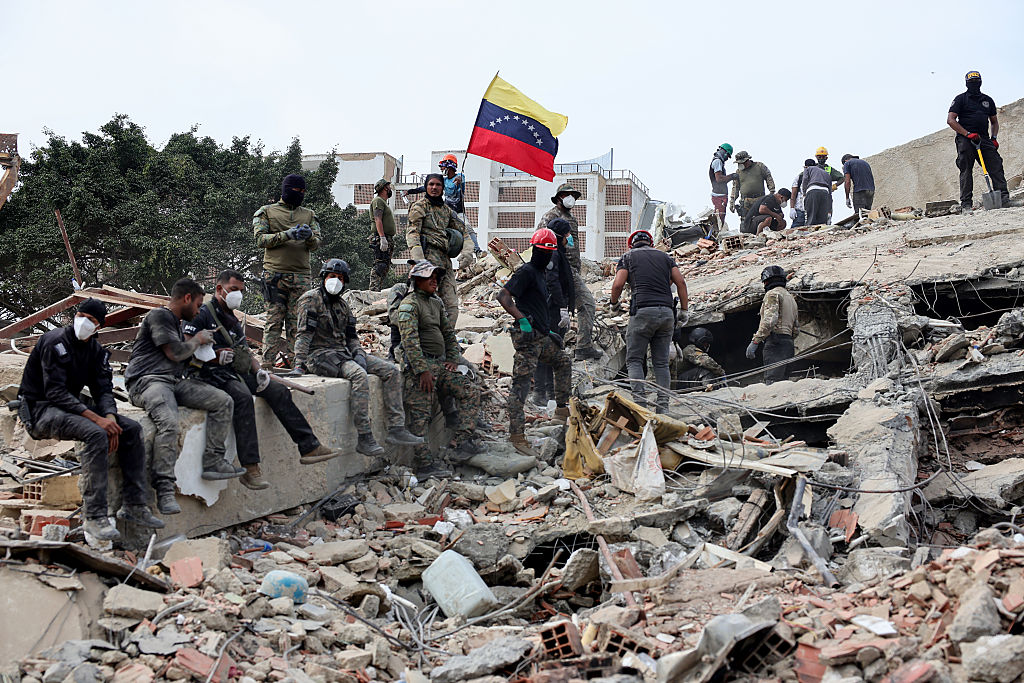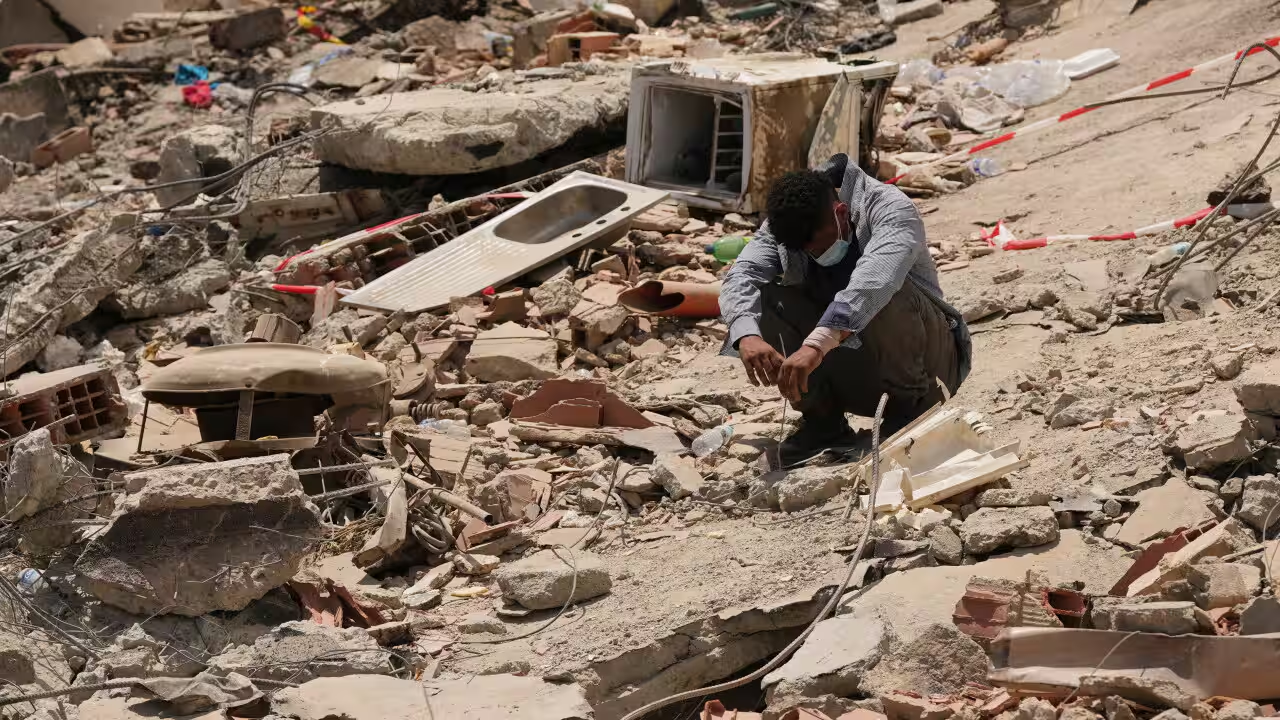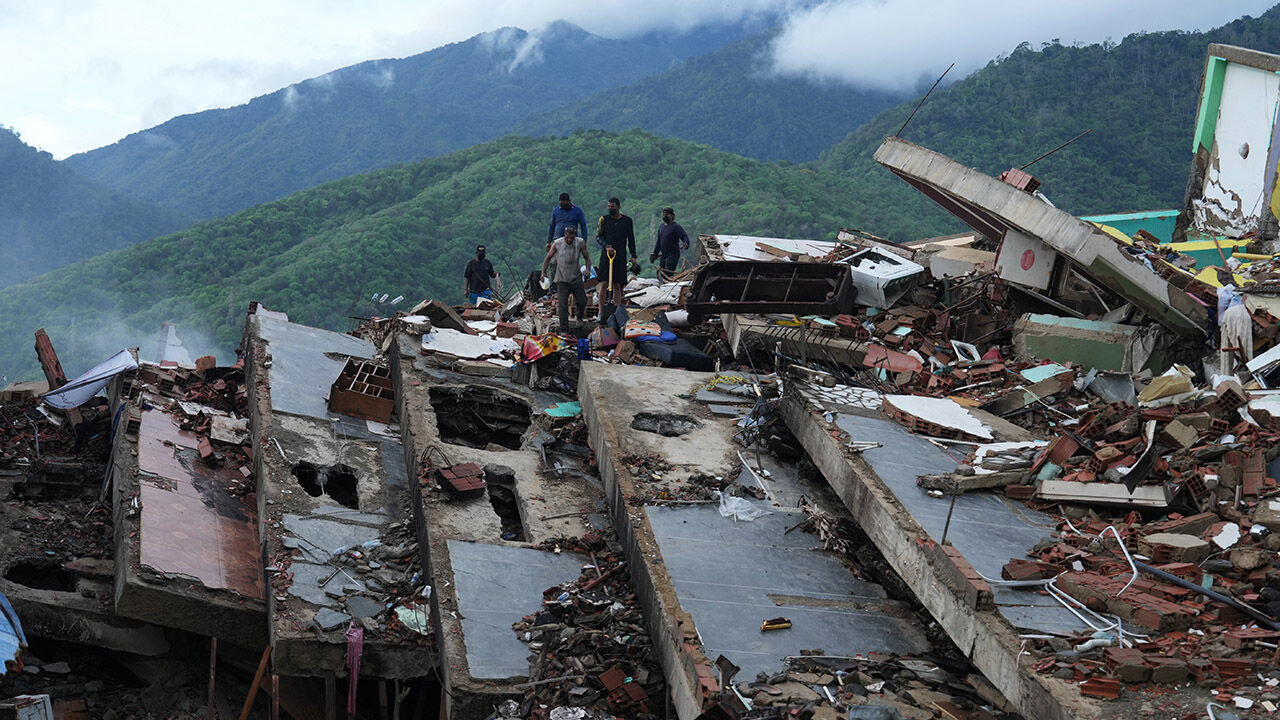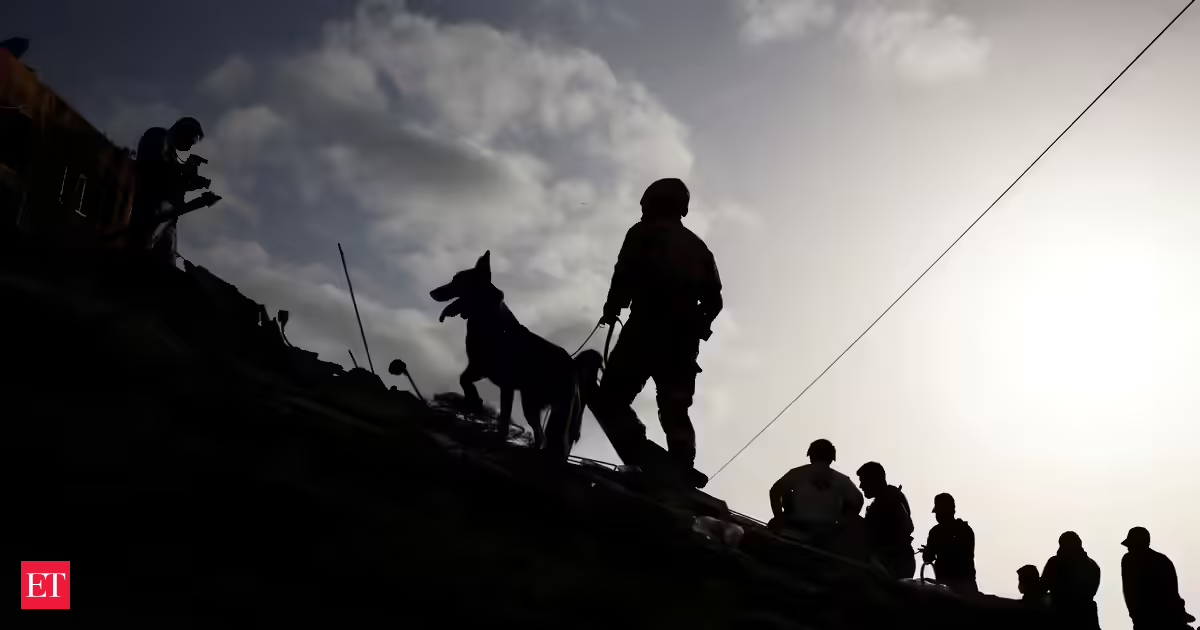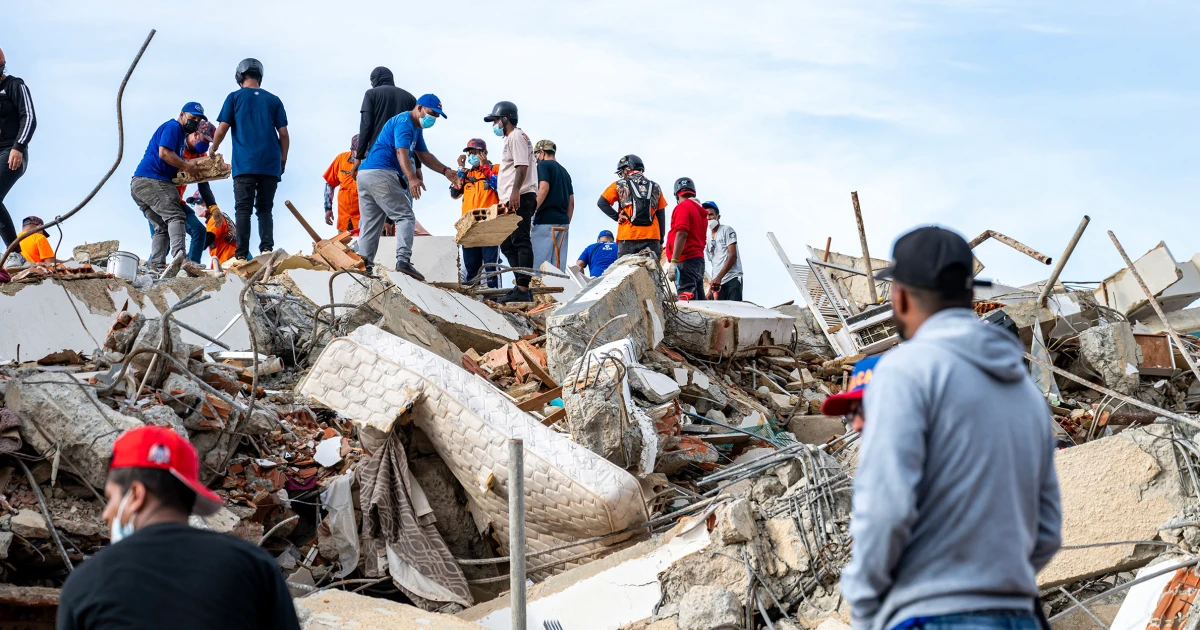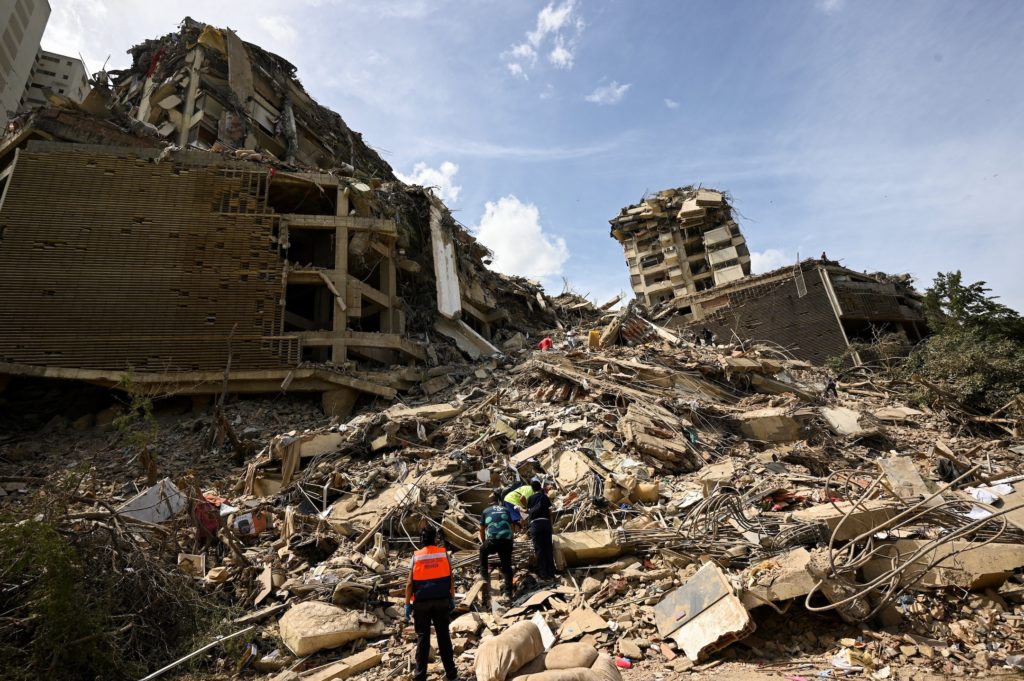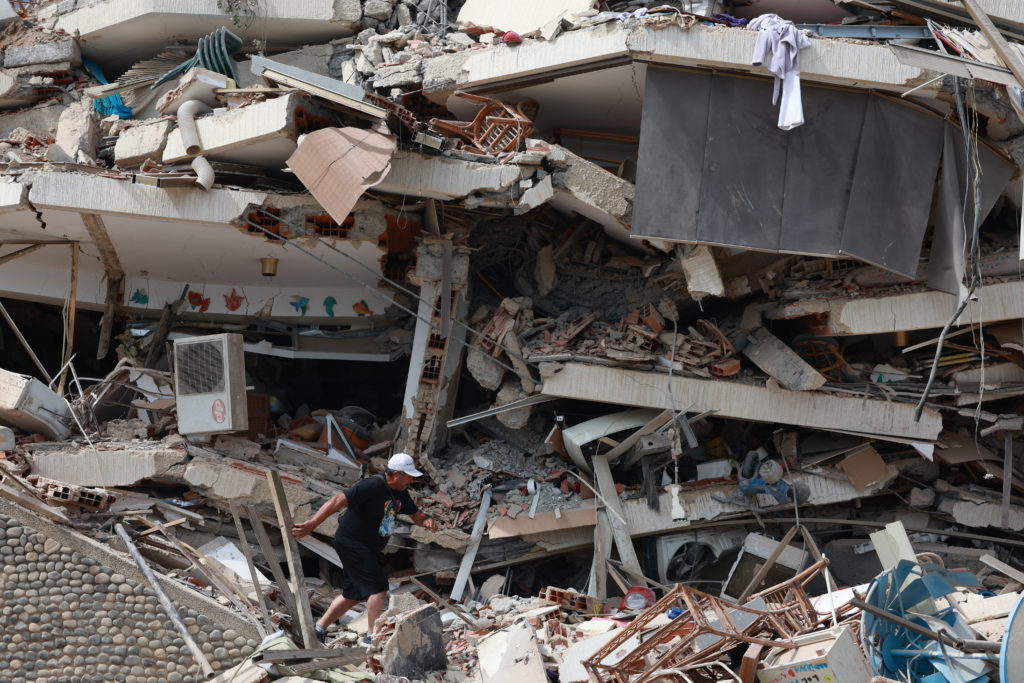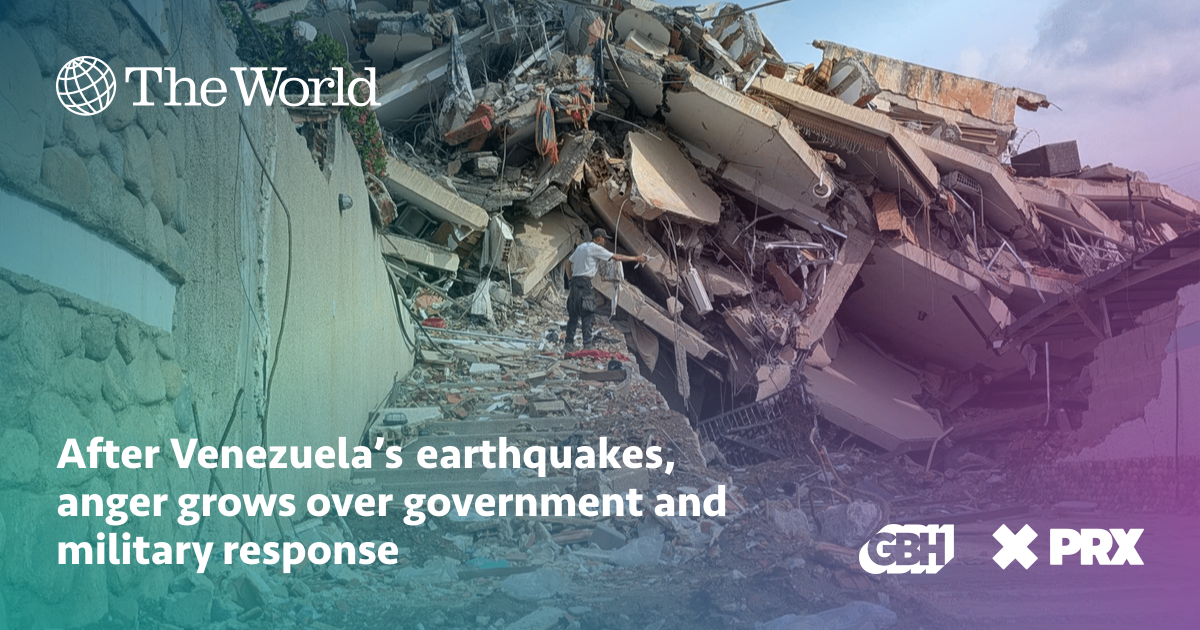
Public radio’s longest-running daily global news program.AboutContactDonateMeet the TeamPrivacyTerms of use©2026 The World from PRXPRX is a 501(c)(3) organization recognized by the IRS: #263347402.After Venezuela’s earthquakes, anger grows over government and military responseFollowing twin earthquakes last week, Venezuelans are struggling to rescue survivors and recover. Many people say they’re not getting enough from their own government. But the disaster is also testing the United States’ role in the country. Natural disastersJuly 2, 2026Updated: July 3, 20266:21Rescue efforts continue in La Guaira, the coastal state north of the Venezuelan capital Caracas, which was hardest hit by back-to-back earthquakes last week.In Venezuela’s earthquake zone, many people are furious.In one widely shared video circulating online, a civilian rescue worker yelled at members of the Venezuelan military who were standing near the rubble with long rifles.“Why did you bring weapons?” he shouted. “You should have brought a shovel, a pickaxe. We’re not at war. We’re in an emergency.”The anger is easy to hear in La Guaira, the coastal state north of the capital, Caracas, that was hardest hit by back-to-back earthquakes last week. According to official counts, more than 2,000 people were killed, and at least 10,000 were left homeless. The numbers, though, are considered an undercount.The disaster is also testing the US role in Venezuela. This Friday marks six months since former Venezuelan President Nicolás Maduro was removed from power with US support. Since then, Washington has become deeply involved in Venezuela’s internal affairs. But in the hardest-hit areas, many Venezuelans are focused first on a more immediate frustration: what they describe as a slow, uneven and disorganized response from their own government.At one collapsed apartment complex, families were still waiting in a tent outside for news of loved ones buried inside.Angélica Colmenares lived there with her family. She managed to survive, but her younger child and two nephews were trapped inside.“We’ve received a lot of civilian help,” Colmenares said. “From relatives, neighbors, local firefighters and foreign rescue teams.”Angélica Colmenares says that the Venezuelan military has not played a role in the earthquake rescue efforts.Tibisay Zea/The WorldWith uniformed patrols nearby and a helicopter passing overhead, Colmenares said the military was not involved in rescue efforts.In another affected part of La Guaira, people demanded equipment and help.“We want support, we want machines,” one rescue worker said, crying. “Help us. I’m not the only one in this situation.”He said families were still trying to pull people from the rubble themselves.“They haven’t helped us move a single piece of debris,” he added. “We don’t have action, we don’t have help. We want support.”Some of the heavy machines that were there, were not operational because they didn’t have fuel, according to people at the scene.For many Venezuelans, the frustration goes back decades.The country’s military has been at the center of civilian life for years. Soldiers have run ministries, food programs, infrastructure projects and security operations. They have also been visible during crackdowns on protests.But after the earthquakes, especially in the first few days, some survivors said they did not see that same force mobilized to rescue people.A flyer of a missing person is seen next to ongoing rescue efforts to find survivors from twin earthquakes in Venezuela.Tibisay Zea/The WorldFernando Barrio, a volunteer rescuer from Lara state and a former military member, said uniformed forces have been providing some support.“Maybe they’re not inside the buildings with us,” Barrio said. “But they’re bringing us logistics. They’re bringing us water, ice, and clothes. They’re taking care of us.”Survivors say that in an emergency of this magnitude, the National Guard and the military should be ready to act wherever needed.David Smilde, a Venezuela researcher at Tulane University, said the earthquake has exposed a deeper weakness in the Venezuelan state.“They’ve had the capacity to repress people and jail people,” Smilde said, “but they don’t seem to be in a position to offer even some of the most basic elements of disaster relief.”The military is one of the most powerful and well-funded parts of the Venezuelan state. But Smilde added that it has been shaped less around emergency response than around regime survival.“What we’ve seen with the military over the years is that they really focused on, sort of, coup-proofing,” he said.That means preventing internal plots, keeping different parts of the military divided and protecting political power.Smilde said the response also shows the limits of the interim government led by acting President Delcy Rodríguez.“It has not been able to put its act together and regroup and mobilize its forces and a state that they control to the last detail,” he said.Smilde said Rodríguez’s government moved quickly at first — declaring a state of emergency, communicating with allies and accepting aid offers from different countries, including former political foes. But what came after, he said, revealed a government with very little capacity to deliver basic disaster relief.Rescue workers unload humanitarian aid for earthquake survivors in La Guaira, Venezuela, July 2, 2026.Matias Delacroix/APNow, there is another question: what role will the United States play?Some Venezuelans are turning their hopes toward Washington.Irania Meréndez, a survivor staying in a shelter in La Guaira, said she trusts US help.“If it has to be this way for the improvement of my country, then let it be this way.”She said US involvement could bring a better chance for recovery.That is a widespread view in parts of La Guaira, where frustration with the Venezuelan state is high.US military personnel walk after landing in La Guaira, Venezuela, three days after earthquakes struck, June 27, 2026.Matias Delacrox/APThe Trump administration has pledged $300 million in aid and has sent hundreds of rescue workers. US teams also helped with repairs at Caracas’ international airport.In a recent press release, the US State Department said that it is “working closely with the United States Southern Command (SOUTHCOM) [which] is supporting relief logistics on the ground, leveraging unique American air, naval and logistics capabilities to power a coordinated and effective international response.”Smilde said the disaster is a major test for Washington.“This is a moment in which sustained cooperation, resources, but also political agreement and a national project” are needed, he said, so aid can turn into reconstruction “instead of squabbling, corruption and wasted money.”He added that Venezuela will need housing, healthcare, heavy equipment and a credible reconstruction plan. Without that, Smilde said, Venezuela could remain a hollowed-out state.
After Venezuela’s earthquakes, anger grows over government and military response - The World from PRX
Following twin earthquakes last week, Venezuelans are struggling to rescue survivors and recover. Many people say they’re not getting enough from their own government. But the disaster is also testing the United States’ role in the country.
1,050 words~5 min read