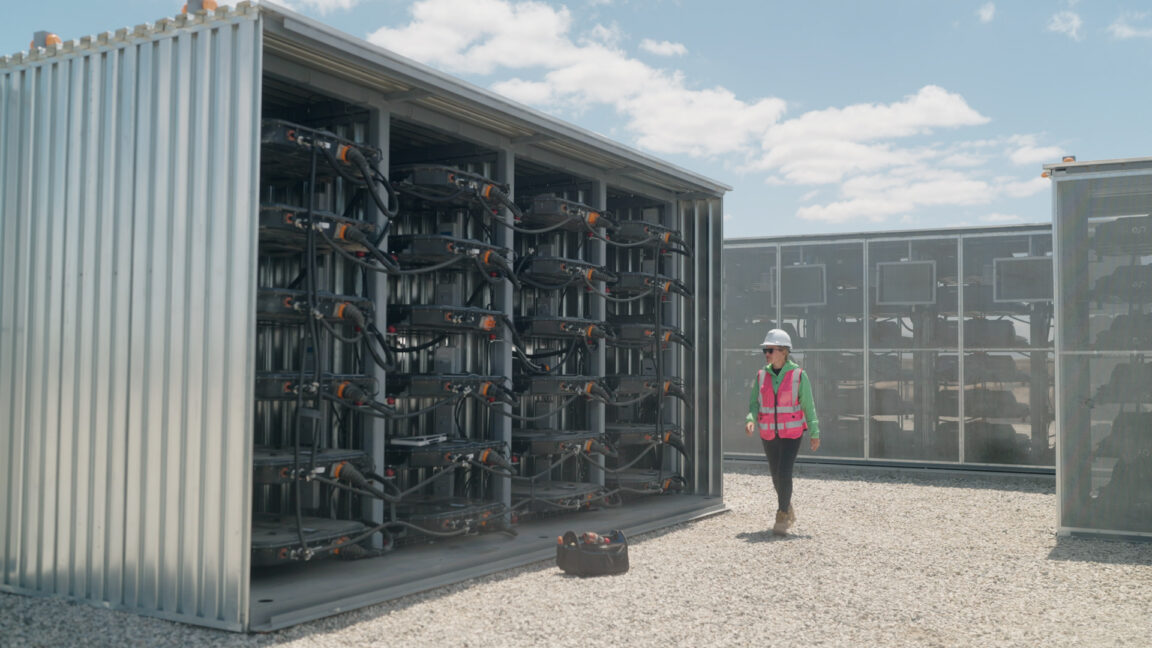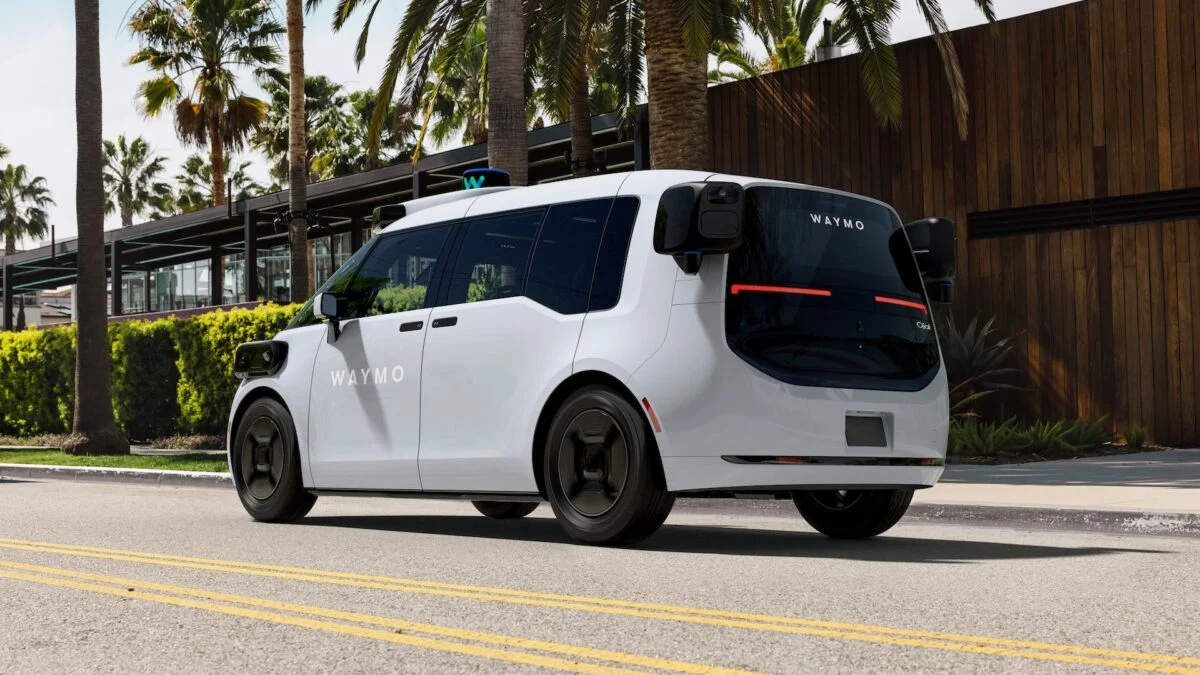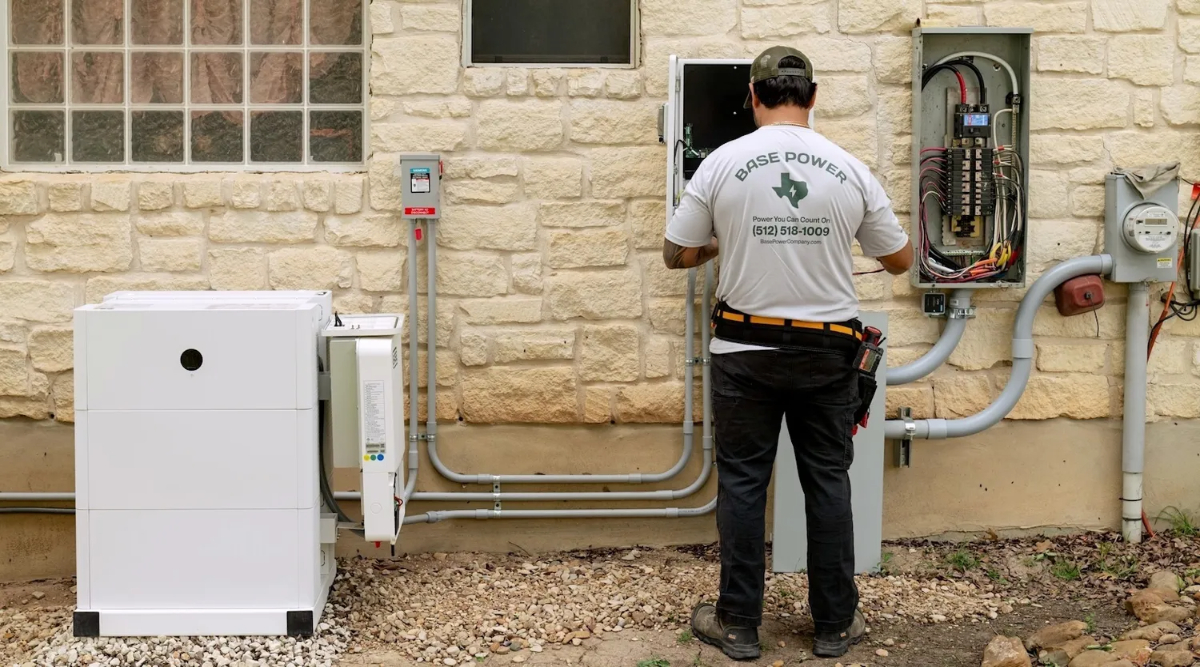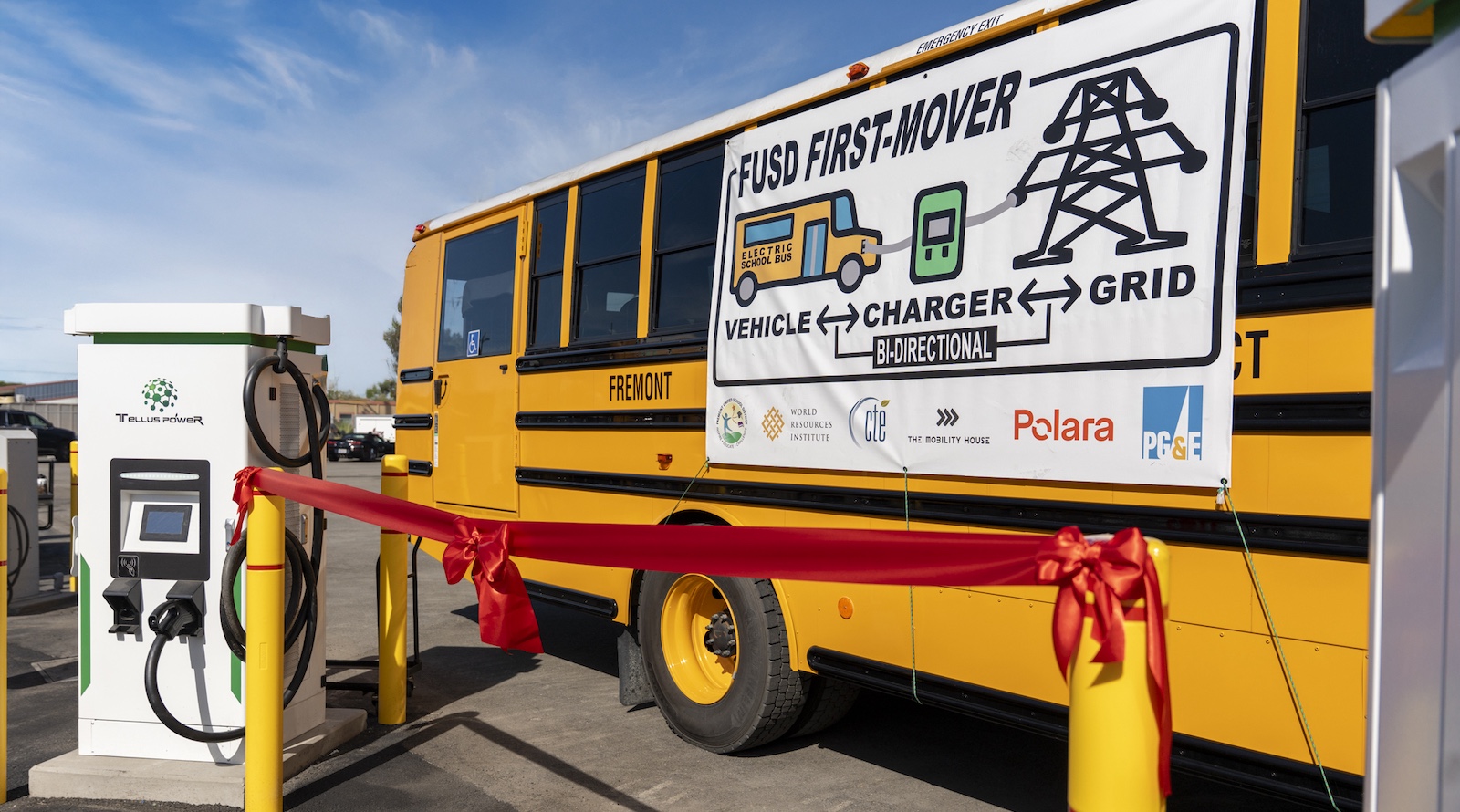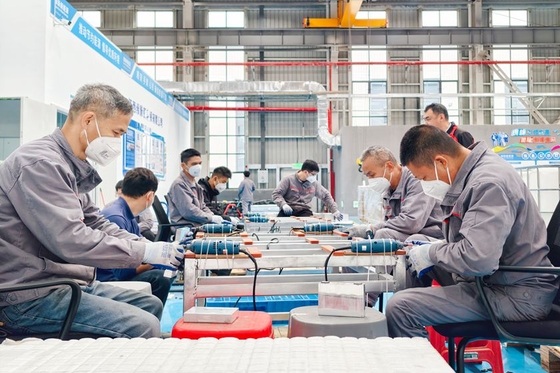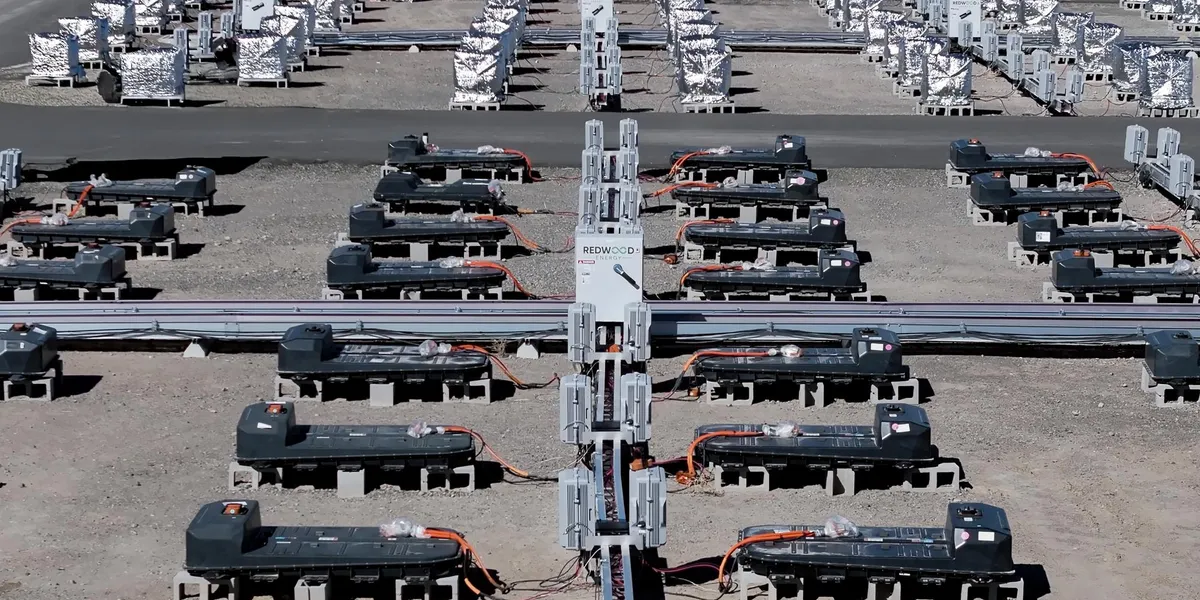
Spent batteries from older electric vehicles are starting to pile up, but a handful of companies are repurposing them in a novel way: as energy storage for the grid.These batteries are retired from EVs after their capacity falls 70 to 80 percent; that’s too low to satisfy drivers, but leaves enough juice for many stationary storage applications. With some clever engineering, hundreds of retired battery packs can be assembled into megawatt-scale energy storage systems.June was a busy month for this nascent industry in the United States. On 4 June, Los Angeles-based B2U Storage Solutions announced it would repurpose used batteries from Waymo robotaxis for stationary grid storage. Two weeks later, Carson City, Nevada-based Redwood Materials unveiled a plan to combine about 100 used batteries from General Motors vehicles to provide 1.5 megawatts to one of the automaker’s plants in Michigan. And a week after that, Vancouver-based Moment Energy completed construction of what it says is the world’s largest EV battery repurposing facility.The efforts address two significant needs in the energy industry: Grid operators need somewhere to store valuable excess energy from renewables, and the auto industry needs somewhere for old EV batteries to land. Second-life battery companies could satisfy both needs, if they can get the engineering worked out.The first mass-market all-electric vehicles arrived in the early 2010s, and those batteries are starting to retire in increasingly large numbers. 130,000 EVs were sold globally in 2012, and that’s since skyrocketed to more than 20 million in 2025.Sending spent batteries to landfills wastes valuable materials and years of remaining electrochemical life. Recycling—recovering metals such as lithium, nickel, cobalt, and copper to manufacture new batteries—is one option, but researchers have long argued that many batteries could provide additional value in less demanding applications, like second-life stationary storage, before being dismantled.Stationary storage cycle more predictably and can tolerate slower charging and discharging rates, and a lot less current runs through them. Second-life uses include commercial backup power, microgrids, EV charging infrastructure, and, increasingly, grid-scale energy storage, such as storing excess renewable energy for later use and reducing demand during expensive peak hours.Over the last decade, the second-life EV battery industry has been trying to move beyond small pilot projects and demonstrations into commercial deployment. But progress was slowed by a lack of retired batteries, labor-intensive testing and engineering, and uncertain economics that often made recycling or investing in new batteries more attractive.In the last few years, diagnostic tools and testing procedures for evaluating battery health have improved, allowing companies to identify suitable batteries faster, more accurately, and at lower cost. On top of that, demand for grid-scale energy storage is soaring, driven mainly by the need to bank excess wind and solar power. This combination of forces has prompted companies to invest big in battery energy storage systems (BESS) from second-life EV batteries.This confidence “was not there three or four years ago,” says Simona Onori, a professor of energy science and engineering at Stanford University. Much of the confidence stems from field data showing that the remaining capacity of retired lithium-ion EV batteries is sufficient for other uses. “Batteries retired with 70 to 80 percent of their original capacity...can be excellent candidates for grid storage,” she says. That’s true as long as the batteries show no signs of abnormal degradation, have low internal resistance (meaning the battery can still charge and discharge efficiently without generating excessive heat), and limited cell-to-cell variability (so that individual cells within the battery pack perform similarly rather than some degrading much faster than others).How Is EV Battery Health Tested?Turning a car battery into a grid asset is more complex than just giving it a stationary address. Different chemistries, architectures, and usage histories leave batteries in varying states of health. They have to be tested and analyzed to make sure they’re fit for repurposing, then must be wired together so they can be managed as one system.One of the first steps is determining a battery’s remaining capacity. A battery’s age “by itself is a weak signal,” of its capacity, says Anurag Srivastava, a professor of electrical engineering at West Virginia University. “Two battery packs that are the same age can have very different states of health depending on their depth of discharge history, fast charging frequency, and temperature exposure in their EV life,” he says.To evaluate the health of a battery, B2U follows UL 1974, the standard for safely repurposing EV batteries. It directs engineers to look at remaining capacity, internal resistance, consistency among cells, and signs of damage or abnormal degradation.“We inspect the battery itself, making sure visually, structurally, and mechanically it has integrity,” says Freeman Hall, B2U’s president, who walked IEEE Spectrum through the company’s process. Company researchers then establish communication with the battery management system (BMS), an onboard computer that records operating data like voltage, temperature, charging history, and fault conditions.The most surefire way to know a battery’s state of health is through direct capacity testing, which runs batteries through controlled charge-discharge cycles to see how much charge they can still hold. The problem with this method is that it’s slow; a full cycle can take hours, which gets unwieldy and expensive when dealing with thousands of batteries. B2U CEO Freeman Hall [left] and technician Donte Terrell inspect battery cabinets at a facility in Lancaster, Calif.Awarded GoodsHowever, engineers can combine BMS data with rapid tests such as electrochemical impedance spectroscopy, which sends a small alternating electrical signal through a battery and measures how it responds. Advances in data analytics and machine learning let researchers build models that can estimate battery health faster and more consistently.Batteries Combine for Grid-Scale Energy StorageAfter testing and weeding out incoming batteries, the next step is to integrate them. A stationary storage system combines dozens or hundreds of battery packs that need to work together as one. That means grouping batteries with similar chemistries and performance characteristics, connecting them electrically, and integrating them with battery management software, cooling systems, and other controls that monitor their operation.B2U uses a matrix architecture, where batteries of the same chemistry are wired together in parallel strings inside shipping-container-sized enclosures called cabinets. Each cabinet has voltage and temperature limits tailored to the chemistry of the batteries it contains. B2U sets the high-end voltage threshold below the optimal operating voltage level for safety. “The weaker batteries will hit their upper voltage limits earlier, and then they can disconnect and not inhibit the stronger batteries from reaching their higher voltage limit,” says Hall, adding that “there’s a lot of software required to do that well.”Once the system is brought online, a new challenge arises: every battery needs to be monitored continuously in real time for performance and safety. “We’re monitoring voltage and temperature not just at the pack level, but at the cell level,” Hall says. The matrix architecture makes it easy to disconnect a battery if there are any issues; with over 500 batteries in a system, one or a few coming offline doesn’t impact the performance of the site. “We make sure everything is healthy, then reconnect it the next time those batteries come through at the right voltage level,” Hall says.At its facility in Lancaster, California, B2U receives retired EV battery packs, evaluates their condition, and reconfigures suitable batteries into containerized energy storage systems for deployment on regional power grids. The company’s operating projects in California and Texas use hundreds of second-life battery packs to provide grid-scale storage.Will EV Batteries Get Repurposed or Recycled?While the supply of second-life EV batteries is sure to grow in the coming years, so will the quality of the competition. The cost of new batteries is falling, and second-life systems will have to deliver enough savings to offset the expense of testing and integrating them. And some types of second-life batteries are more valuable if they’re recycled. Recent research by Onori and her colleagues suggests that iron-based LFP batteries are often better candidates for repurposing, while batteries containing larger amounts of nickel and cobalt may generate more value through recycling.“I do expect a much larger wave of batteries to become available over the next several years as more EVs reach the end of their automotive life,” says Onori. “At that point, whether a battery is repurposed or recycled will come down to its condition and the economics.”For now, second-life batteries are a small part of the storage market—Srivastava estimates they account for just two to three percent of deployed capacity. However, he believes they could “become 20 to 25 percent of deployed capacity in the next decade, if recycling stays expensive and diagnostics keep improving.”
Old EV Batteries Find a Second Life Backing Up the Grid
Combining old packs creates megawatt-scale energy storage
1,424 words~6 min read