Story audio is generated using AI
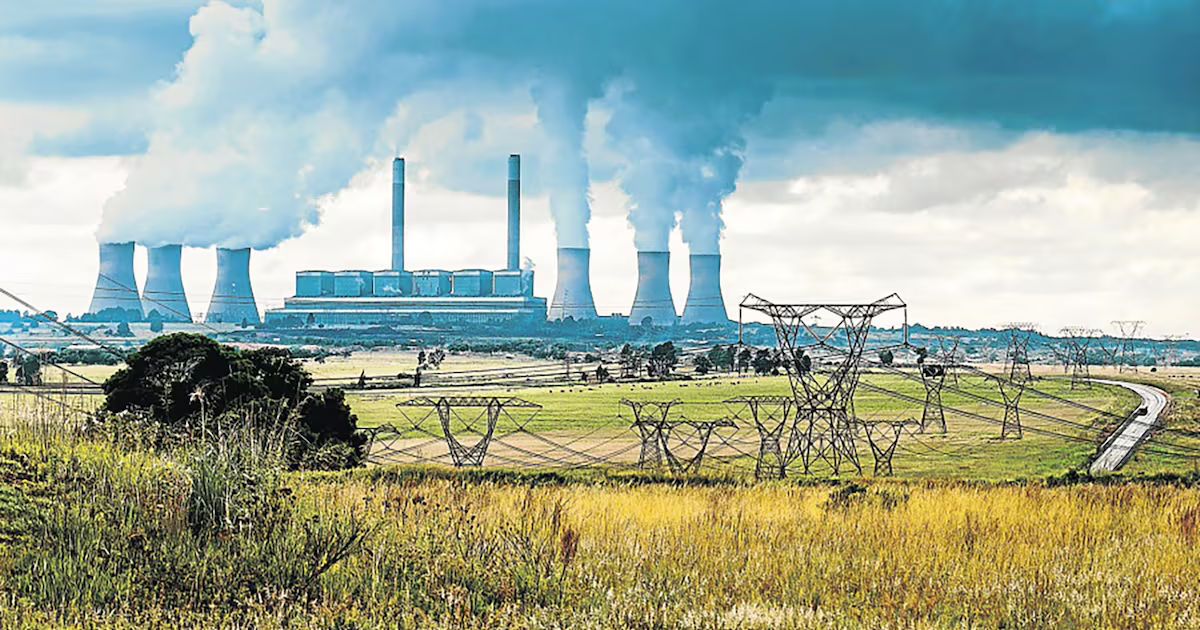
Electricity generation in the country decreased 9% year on year in May but was up 0.6% compared with April, Stats SA said on Wednesday.Seasonally adjusted electricity generation fell 2.2% in the three months ended May compared with the previous three months.The amount of power distributed across the nine provinces fell 4.3% in May versus the same month last year, led by the Northern Cape, which saw a 24.3% slump, while delivery to the North West was down 15.5% and that to Limpopo fell 10.9% year on year. Deliveries to the Western Cape, Free State, Mpumalanga and KwaZulu-Natal were also down on an annual basis during the month, but Gauteng and the Eastern Cape saw increases of 0.2% and 1.1%, respectively, in distribution.Seasonally adjusted electricity distribution — or consumption — was up 1.5% month on month in May, after contractions of 1.4% in April and 2.3% in March. Distribution rose 1.7% in the three months ended May compared with the previous three months, Stats SA said.Electricity generation has improved significantly with the addition of independent capacity to buoy supply from Eskom, which has traditionally produced about 86% of the country’s needs and 20% of the electricity generated on the continent.In April the power utility said its ability to generate electricity had improved significantly over the past two years.Independent power producers now contribute 10%-15% of electricity to South Africa’s national grid after the launch of the renewable energy independent power producer procurement programme in 2011.The country also imports electricity through the Southern African Power Pool, most of which comes from Mozambique, specifically from the Cahora Bassa hydroelectric power plant, and Zambia.Depending on domestic supply conditions, it also exports to neighbouring countries, including Botswana, Namibia, Lesotho, Eswatini and Zimbabwe.According to Stats SA, electricity inflows from South Africa’s neighbours were up 23.2% year on year in May, while outflows slumped 62.2%.However, despite improved supply in recent years, South African consumers have had to contend with often hefty tariff increases, which in 2026 have added to the pressure of higher fuel costs due to the Middle East conflict, weighing on household finances.In Joburg, municipal utility City Power implemented an 8.63% increase from Wednesday, approved by the National Energy Regulator of South Africa (Nersa).Acting City Power CEO Charles Tlouane defended the move, saying revenue generated through tariffs enables the entity to maintain and upgrade ageing infrastructure, strengthen the electricity network, improve reliability and continue to protect vulnerable households through targeted interventions and the free basic electricity programme.In a recent draft report on a market inquiry into the impact of fixed charges levied by municipalities and the unbundled generation charges recently introduced by Eskom, Nersa said the negotiated price agreements between the power utility and companies have fallen short in providing tariff relief for South Africa’s industrial base.The paper notes that electricity tariffs have increased by more than 1,100% since 2003, resulting in industrial electricity sales plunging from a peak of 71,629 GWh in the 2004/05 financial year to 43,153 GWh in 2024/25 — a decline of about 40%.