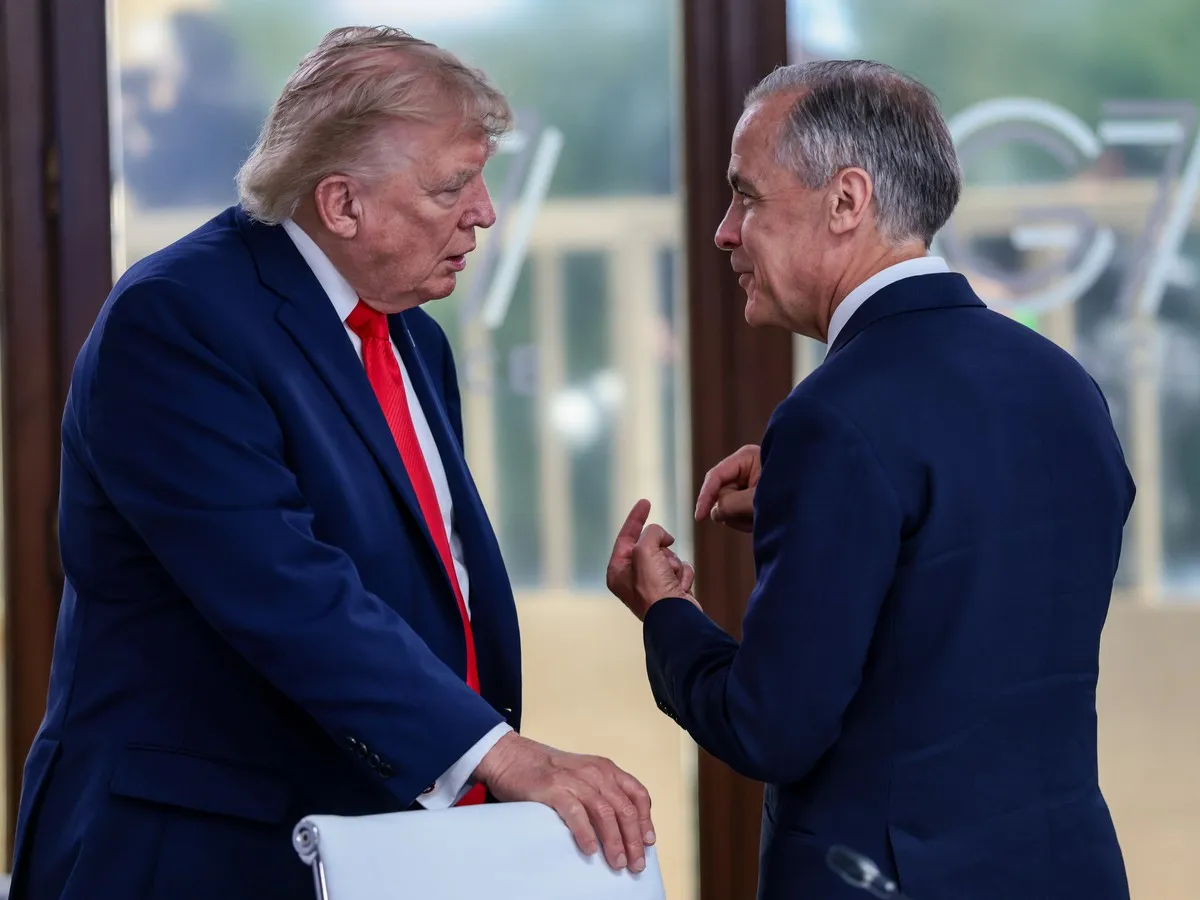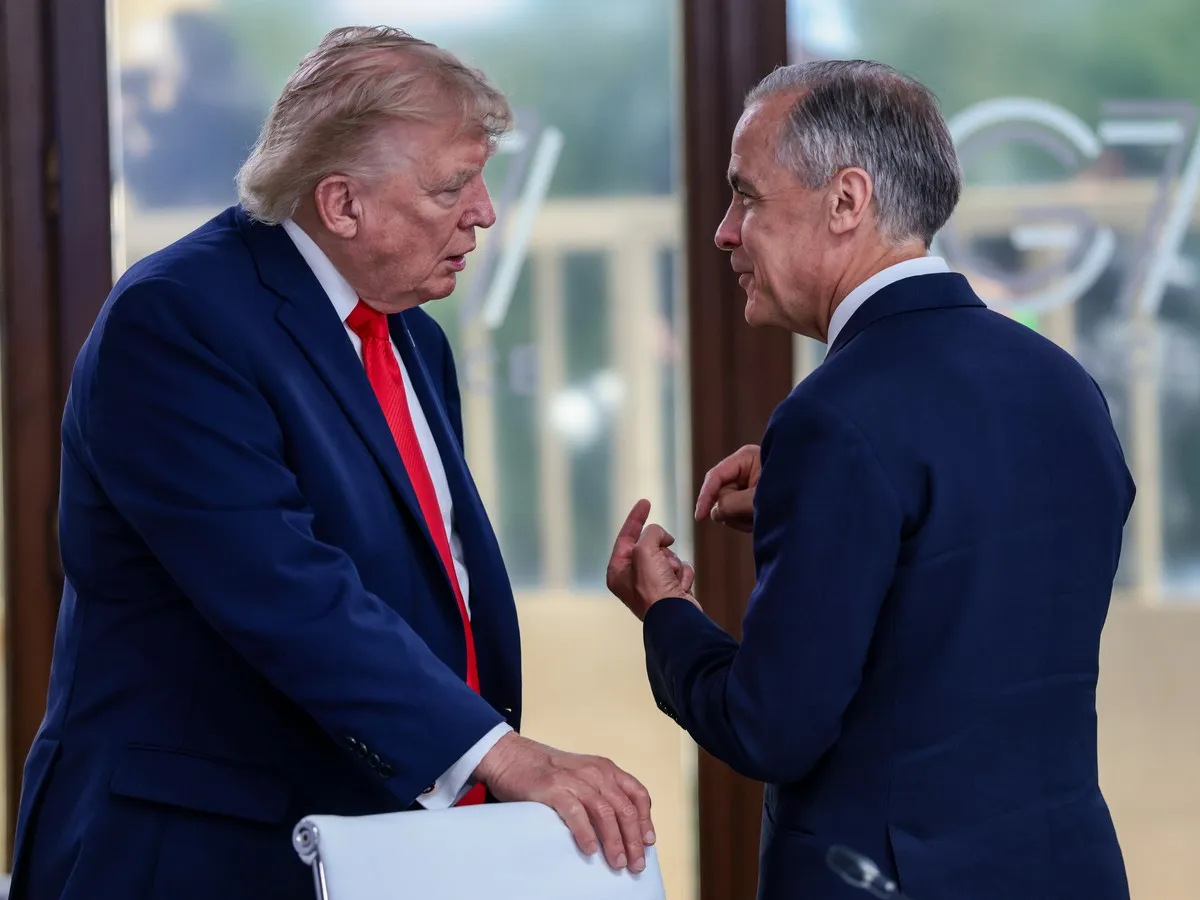
Skip to Content Subscribe Our Offers My Account Manage My Subscriptions FAQ Newsletters Canada Canadian True Crime Canadian Politics Health World Israel & Middle East Financial Post NP Comment Longreads Puzzmo Diversions Comics NP News Quiz New York Times Crossword Horoscopes Life Eating & Drinking Style Sponsored Play for Ontario Travel Travel Canada Travel USA Travel International Cruises Travel Essentials Culture Books Celebrity Movies Music Theatre Television Business Essentials Advice Lives Told Tails Told Shopping Buy Canadian Home Living Outdoor Living Kitchen & Dining Tech Style & Beauty Personal Care Entertainment & Hobbies Gift Guide Travel Guide Amazon Prime Day Deals Savings National Post Store More Sports Hockey Baseball Basketball Football Soccer Golf Tennis Driving Vehicle Research Reviews News Gear Guide Obituaries Place an Obituary Place an In Memoriam Classifieds Place an Ad Celebrations Working Business Ads Archives Healthing Epaper Manage Print Subscription Profile Settings My Subscriptions Saved Articles My Offers Newsletters Customer Service FAQ Newsletters Canada World Financial Post NP Comment Longreads Puzzmo Diversions Life Shopping Epaper Manage Print Subscription HomeNewsCanadaCanadian PoliticsWhat we know (and don't) about Canada's 'tightly guarded secret' gift for America's 250th birthdayHernandez-Roy said the list of presents to stay away from is easier to come up with, given the tariff spat between the two countriesLast updated 4 minutes ago You can save this article by registering for free here. Or sign-in if you have an account.U.S. President Donald Trump speaks with Canadian Prime Minister Mark Carney at a working lunch with leaders of G7 and the Middle East, on June 16, 2026 in Evian-les-Bains, France. Photo by Pool /Getty ImagesOTTAWA and WASHINGTON, D.C. — On June 16, 1976, in the Rose Garden of the White House, then Canadian prime minister Pierre Elliott Trudeau presented U.S. President Gerald Ford with Canada’s gift to America for the celebration of the Declaration of Independence’s bicentennial.Enjoy the latest local, national and international news.Exclusive articles by Conrad Black, Barbara Kay and others. Plus, special edition NP Platformed and First Reading newsletters and virtual events.Unlimited online access to National Post.National Post ePaper, an electronic replica of the print edition to view on any device, share and comment on.Daily puzzles including the New York Times Crossword.Support local journalism.Enjoy the latest local, national and international news.Exclusive articles by Conrad Black, Barbara Kay and others. Plus, special edition NP Platformed and First Reading newsletters and virtual events.Unlimited online access to National Post.National Post ePaper, an electronic replica of the print edition to view on any device, share and comment on.Daily puzzles including the New York Times Crossword.Support local journalism.Create an account or sign in to continue with your reading experience.Access articles from across Canada with one account.Share your thoughts and join the conversation in the comments.Enjoy additional articles per month.Get email updates from your favourite authors.Create an account or sign in to continue with your reading experience.Access articles from across Canada with one accountShare your thoughts and join the conversation in the commentsEnjoy additional articles per monthGet email updates from your favourite authorsSign In or Create an AccountorIt was a book of photographs, titled Between Friends/Entre Amis, and comprised photos taken within 30 miles of the Canada-U.S. border, by Canadian photographers: from the Arctic and down the panhandle of Alaska, across the Rockies and Prairies, and east to the Great Lakes, Quebec, and the Maritimes. The project was spearheaded by the National Film Board of Canada, which commissioned 26 prominent Canadian photographers to contribute.Over 50 years later, it’s hard to envision Canada going to quite the same lengths to celebrate America’s 250th birthday, given the souring relations brought on by a trade war, a blocked cross-border bridge, and President Donald Trump’s talk of making America’s northern neighbour the “51st state.” But Canada needs to keep the lines of goodwill open with Washington, and the possibility of entirely snubbing the occasion is a dangerous thought.This year, 27 EU ambassadors each donated to the U.S. Library of Congress an English-translated book from their country that reflects its national spirit or connections to the U.S.Japan donated 250 cherry blossom trees to the U.S. to mark the 250th anniversary, and France’s air force acrobatics team recently staged a flyover above the Statue of Liberty.National Post asked the Prime Minister’s Office and Global Affairs Canada about their plans for this year, and a ministerial spokesperson would only say that details on the commemoration will be shared eventually. The anniversary is on Saturday.One source offered a clue about what could be Canada’s plan to commemorate America’s semiquincentennial.“The gift is a tightly guarded secret,” said the source, who attended Wednesday’s Canada Day Breakfast with Ambassador Mark Wiseman at the Canadian Embassy in Washington.The source said that a senior diplomat told them it would “involve a Maple Leaf, Niagara Falls, lights, and themed colours.”That might suggest perhaps a gesture like lighting up the famous falls, at least on the Canadian side. Colin Robertson, former Canadian diplomat and senior fellow at the Canadian Global Affairs Institute, said these gifts are usually planned years in advance, but given the relations between the two countries over the last 15 months, the government’s approach may have changed. The matter is delicate, with Ottawa presumably needing to walk a fine line to reflect Canada’s long, deep friendship with the U.S. while not seeming to break solidarity with many Canadians furious at the way they feel the country has been disrespected by the current president.“(Prime Minister Mark Carney) is in a tough spot,” because “the public hates Trump, said Stephen Nagy, senior fellow at Macdonald-Laurier Institute.But then, America’s 200th anniversary also came after a negative turn in the relationship between the U.S. and Canada.The publication of the commemorative photo book in 1976 happened a few years after the introduction of a 10 per cent tariff by President Richard Nixon in 1971 on U.S. trading partners, including Canada.Robertson, who represented Canada in the U.S. from 2000 to 2004, said the photography book helped serve a purpose: signalling respect and reinforcing ties between the two countries far beyond the 1970s.“In fact, we used one of the pictures of the little girl and little boy (shown in the book) … when I was posted in Washington in (the 2000s), and we hadn’t gone to Iraq,” to join the U.S. war effort, said Robertson, recalling another time the relationship had been tested.“We took the picture from the book and called it ‘Friends, Neighbours, and Allies,’ and made a gigantic poster of it, and it’s hung in front of the embassy almost every year,” he added.For Pierre Trudeau, the book’s photographs were an emblem of how close the two countries were to each other, both geographically and spiritually. Standing beside president Ford, Trudeau remarked on the closeness between the two countries.“By the pictures, we see that Canadians and Americans on both sides of the border in their institutions, in their way of life, in their physical aspects, are very close together,” said Trudeau at the ceremony.In response, Ford said the American people were very proud of their relationship with Canadians, and he looked forward to looking at the pictures of the U.S.-Canada boundary.“It’s a boundary of peace. It’s a boundary that I hope will set an example for nations throughout the world,” Ford added.The Canadian National Railway Company has introduced two commemorative locomotives in tribute to the 250th anniversary. Meanwhile, the Château Ramezay museum in Montreal is hosting an exhibit on the 1775-1776 invasion of Quebec by the American Continental Army.Christopher Hernandez-Roy, acting director and senior fellow of the Americas Program at the Centre for Strategic and International Studies in Washington, said that ideally the gift should symbolize “the enduring deep ties between the two countries, despite the problems at the political level.”He suggested a “nonpartisan piece of art that might describe some moment of joint U.S.-Canada co-operation,” for example after 9/11.Hernandez-Roy noted the recent comments made by Homeland Security Secretary Markwayne Mullin about the two nations: that “we need each other, and we need to work together.”“That was a different note than we’ve heard from the administration generally,” Hernandez-Roy said, noting how a gift that “points to that message would be appropriate at this time.”He also joked that he could easily list gifts Canada should definitely not offer, given the trade tensions.“Anything that has any alcohol base would definitely be a no-no given the U.S. insistence on Ontario putting alcohol back on the shelves” as the province’s liquor board continues to boycott American products, he said. “Certainly no Canadian whiskey, that’s for sure.” National Post Our website is the place for the latest breaking news, exclusive scoops, longreads and provocative commentary. Please bookmark nationalpost.com and sign up for our newsletters here. Join the Conversation This website uses cookies to personalize your content (including ads), and allows us to analyze our traffic. Read more about cookies here. By continuing to use our site, you agree to our Terms of Use and Privacy Policy.
What we know (and don't) about Canada's 'tightly guarded secret' gift for America's 250th birthday
Canada celebrated America's bicentennial with a lavish photo book celebrating the ties between both countries. What will it do this year?
1,480 words~7 min read