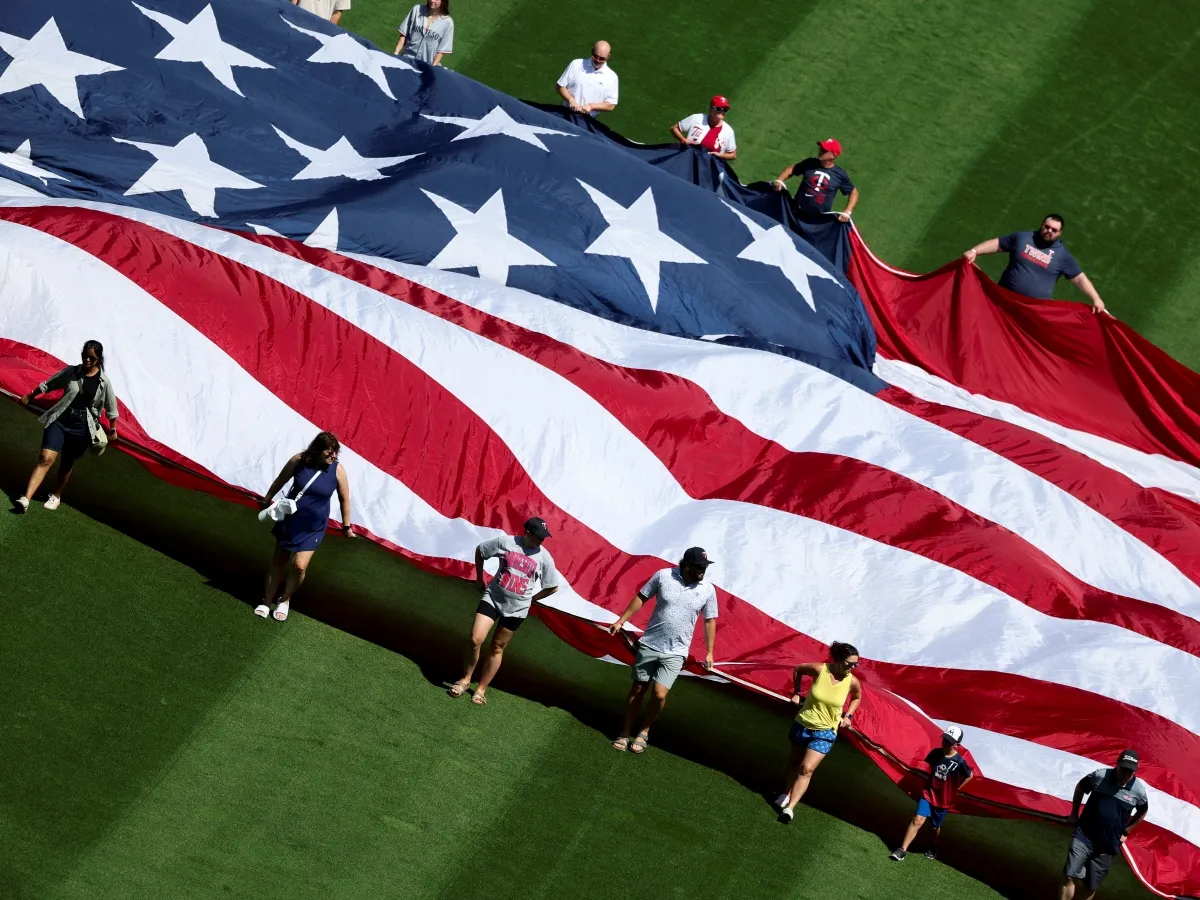
Skip to Content Subscribe Our Offers My Account Manage My Subscriptions FAQ Newsletters Canada Canadian True Crime Canadian Politics Health World Israel & Middle East Financial Post NP Comment Longreads Puzzmo Diversions Comics NP News Quiz New York Times Crossword Horoscopes Life Eating & Drinking Style Sponsored Play for Ontario Travel Travel Canada Travel USA Travel International Cruises Travel Essentials Culture Books Celebrity Movies Music Theatre Television Business Essentials Advice Lives Told Tails Told Shopping Buy Canadian Home Living Outdoor Living Kitchen & Dining Tech Style & Beauty Personal Care Entertainment & Hobbies Gift Guide Travel Guide Amazon Prime Day Deals Savings National Post Store More Sports Hockey Baseball Basketball Football Soccer Golf Tennis Driving Vehicle Research Reviews News Gear Guide Obituaries Place an Obituary Place an In Memoriam Classifieds Place an Ad Celebrations Working Business Ads Archives Healthing Epaper Manage Print Subscription Profile Settings My Subscriptions Saved Articles My Offers Newsletters Customer Service FAQ Newsletters Canada World Financial Post NP Comment Longreads Puzzmo Diversions Life Shopping Epaper Manage Print Subscription HomeNP CommentJoel Kotkin: Why the Fourth of July is relevant to Canada, tooOur histories are entwined, and so are our problems — including our vulnerability to self-sabotaging ideologyLast updated 16 minutes ago You can save this article by registering for free here. Or sign-in if you have an account.Fans roll out the American Flag on Independence Day before a game between the Minnesota Twins and the Tampa Bay Rays at Target Field on July 4, 2025 in Minneapolis, Minnesota. Photo by Ellen Schmidt/Getty ImagesThe United States approaches its 250th anniversary deeply divided. Pride in the country, at roughly 40 per cent, has dropped to a historic low, notes Gallup, a trend most evident among younger, educated people.Enjoy the latest local, national and international news.Exclusive articles by Conrad Black, Barbara Kay and others. Plus, special edition NP Platformed and First Reading newsletters and virtual events.Unlimited online access to National Post.National Post ePaper, an electronic replica of the print edition to view on any device, share and comment on.Daily puzzles including the New York Times Crossword.Support local journalism.Enjoy the latest local, national and international news.Exclusive articles by Conrad Black, Barbara Kay and others. Plus, special edition NP Platformed and First Reading newsletters and virtual events.Unlimited online access to National Post.National Post ePaper, an electronic replica of the print edition to view on any device, share and comment on.Daily puzzles including the New York Times Crossword.Support local journalism.Create an account or sign in to continue with your reading experience.Access articles from across Canada with one account.Share your thoughts and join the conversation in the comments.Enjoy additional articles per month.Get email updates from your favourite authors.Create an account or sign in to continue with your reading experience.Access articles from across Canada with one accountShare your thoughts and join the conversation in the commentsEnjoy additional articles per monthGet email updates from your favourite authorsSign In or Create an AccountorTo be sure it depends where in the U.S. you go. There used to be little difference between the parties, as was evidenced in the 1976 centennial. But, again predating Donald Trump, the gap between Republicans and Democrats has widened, with the latter generally not proud of their country. In deep blue areas like California and New York, celebrations are muted; even the traditional Fourth of July fireworks show in Long Beach, Calif., has been cancelled. Don’t expect much celebratory treatment in left-dominated Hollywood either.No doubt these phenomena will please some Canadians, for whom hostility to America has created a kind of negative sense of identity. After all, they, and most European countries, are still considerably less patriotic than Americans.This newsletter from NP Comment tackles the topics you care about. (Subscriber-exclusive edition on Fridays)By signing up you consent to receive the above newsletter from Postmedia Network Inc.We encountered an issue signing you up. Please try againA key factor in the diminishment of patriotism lies with an education system, in almost all western countries, that stresses western nations’ perfidy. In academia, history has been reduced to the paradigm of a settler-colonial mantra that essentially sees former colonies, as well as former colonial powers, as inherently illegitimate.These views have penetrated our culture to an astounding degree. In Canada, allegations of unmarked graves containing First Nations children at the site of a former residential school have been largely debunked, but not in the eyes of most media. Rather than celebrate Canada’s great achievement of providing a better life for millions of immigrants, the new mentality states that the country, like the U.S. or the U.K., is fundamentally evil and illegitimate.This kind of thinking defines the cultural elites in both countries. Stars like Billie Eilish routinely claim that “no one is illegal on stolen land,” although I doubt she plans to hand back her manse to the Tongva, the original inhabitants of Los Angeles.To be sure there is much ugliness in the past of all nations. America’s embrace of slavery in the South and often brutal treatment of Indigenous populations need to be acknowledged, as should the arguably more muted, but also repressive, attitude of Canadian governments towards its First Nations.But pride in country is important, even more so as both of our societies become dominated by more recent immigrants from primarily non-western countries. Unless you embrace the notions of the global socialist commonwealth, our sense of identity is tied to our embrace of a past we all can honour.The intellectuals and artists who demean western civilization have a particularly toxic impact on newcomers from autocratic lands. Muslims, notes the Manhattan Institute’s Reihan Salam, may not come here radically anti-western, but their children’s exposure to the current academic and media culture has bred hostility to the West. This is evident in the numerous antisemitic rallies, particularly in Canada, as well as the rise of young, affluent, educated cosmopolitans like Hasan Piker and New York’s new boss, Zohran Mamdani.The 250th anniversary is also a good time to recognize, and maybe celebrate, the fundamental differences between our countries. America emerged as a revolutionary power that emboldened many peoples to rebel against monarchism; there were even some Canadians swept up in what historian R.R. Palmer called the age of “democratic revolution.”Ultimately Canada rejected the American model. The ideal of democracy offended the British overlords and also threatened the Catholic seigneurs of Quebec, who had little use for revolutionary ideology, particularly coming from “anti-Papist” New England Protestants. Twice, in 1775-76 and during the War of 1812, the U.S. invaded Canada, expecting an embrace, but was met with indifference and even hostility.This conflict later shifted to the economic sphere. As historian William Appleman Williams suggests in his magisterial The Roots of the Modern American Empire, for much of the 19th century, the U.S. and Canada were at odds over access to European markets and control of key waterways like the Great Lakes and the Columbia River.But by the 20th century, these conflicts were largely resolved. Canada’s growing independence from England made it easier for the countries to act as independent players with shared fundamental values of democracy and law. This alliance became ever more relevant during the World Wars, in which we became very close allies.Today, with the end of the Cold War and the weakening of American ties to Europe, our countries seem to be drifting apart, not to the benefit of either. For the U.S., to alienate Canada is to be deprived of an invaluable strategic ally; meanwhile, the U.S. is easily Canada’s largest trade partner. As I can personally attest, familial ties remain very strong. Roughly 800,000 Canadians live in the U.S., while over 1 million Americans reside in Canada.Geography suggests no real alternative to our remaining closely aligned. Britain sought to steer Canada’s economy away from the U.S., but that turned out to be like making “water go uphill,” noted the progressive historians Charles and Mary Beard.Today some Canadian nationalists dream of getting away from the U.S. dynamo. But distancing from America is no antidote for an economy that seems permanently in the doldrums. In contrast, Americans, despite all our problems, remain more optimistic about the future than Canadians.The alternatives to America are bleak. Canada could become just another vassal of China, essentially morphing into a resource colony for the Communist party cadres. Or Canada could identify with Europe, as Prime Minister Mark Carney seems to feel. It could adopt Europe’s green-tinged “anti-growth agenda” amidst calls to expand its welfare state. The result so far in Europe: sinking productivity, economic growth, investment and wealth per capita.To be sure, America certainly is not on its best foot with Trump, but despite the cries of media and academic hysterics, his time is limited by statute and his hold even on his own party is clearly weakening. The U.S. is not becoming a fascist state, as some might allege. Anti-Trump forces still dominate in the media, academia and the culture industries; the only blackshirts we see on the streets are from groups like Antifa.Canadians should not celebrate the polarization that is damaging America. The same ideology that undermines America’s self-belief also works against Canada. As the common national narrative is deconstructed, Canada is arguably more liable for a split-up, given perennially alienated Quebec and, increasingly, Alberta. Every nation needs an inspiring and unifying mythology to keep it together.So please unfurl your Maple Leaf flags as most Americans, at least outside the big cities, will do with the Stars and Stripes on Saturday. Citizens of both countries should embrace their heritage, even if we detest our leaders.National Post Join the Conversation This website uses cookies to personalize your content (including ads), and allows us to analyze our traffic. Read more about cookies here. By continuing to use our site, you agree to our Terms of Use and Privacy Policy.
Joel Kotkin: Why the Fourth of July is relevant to Canada, too
Our histories are entwined, and so are our problems — including our vulnerability to self-sabotaging ideology
1,624 words~7 min read