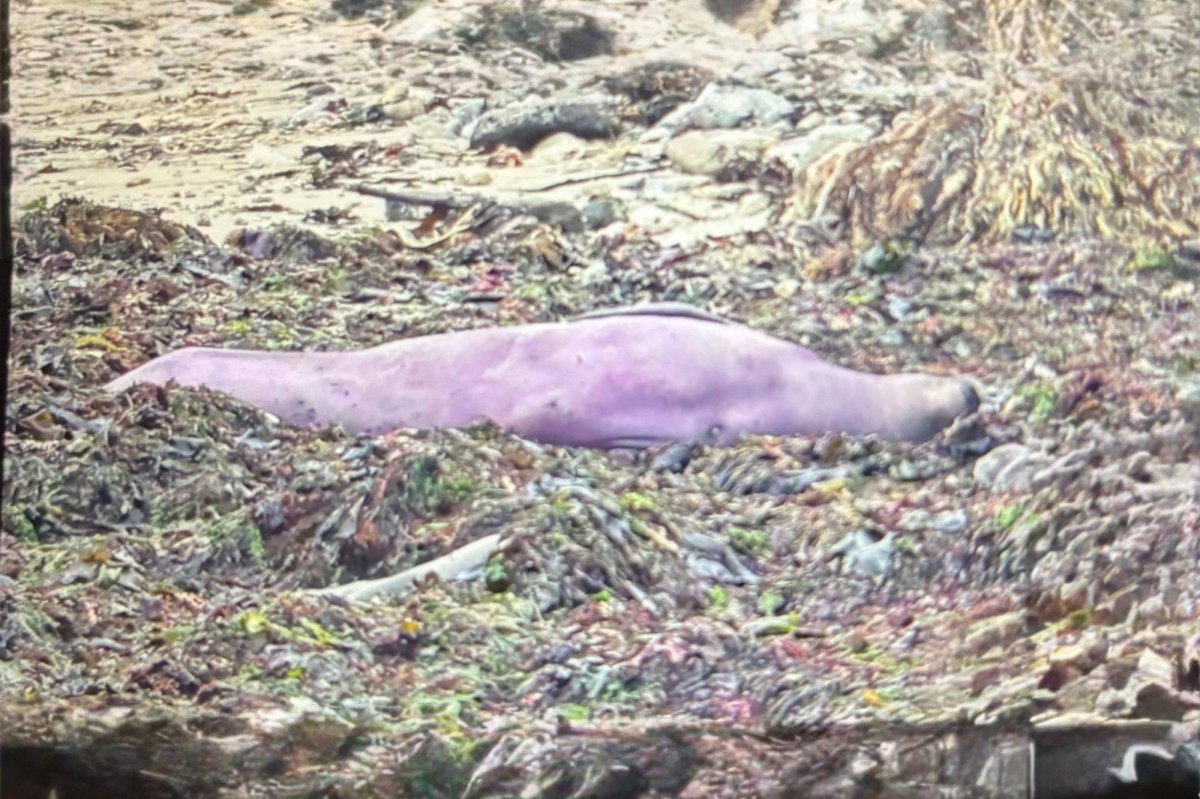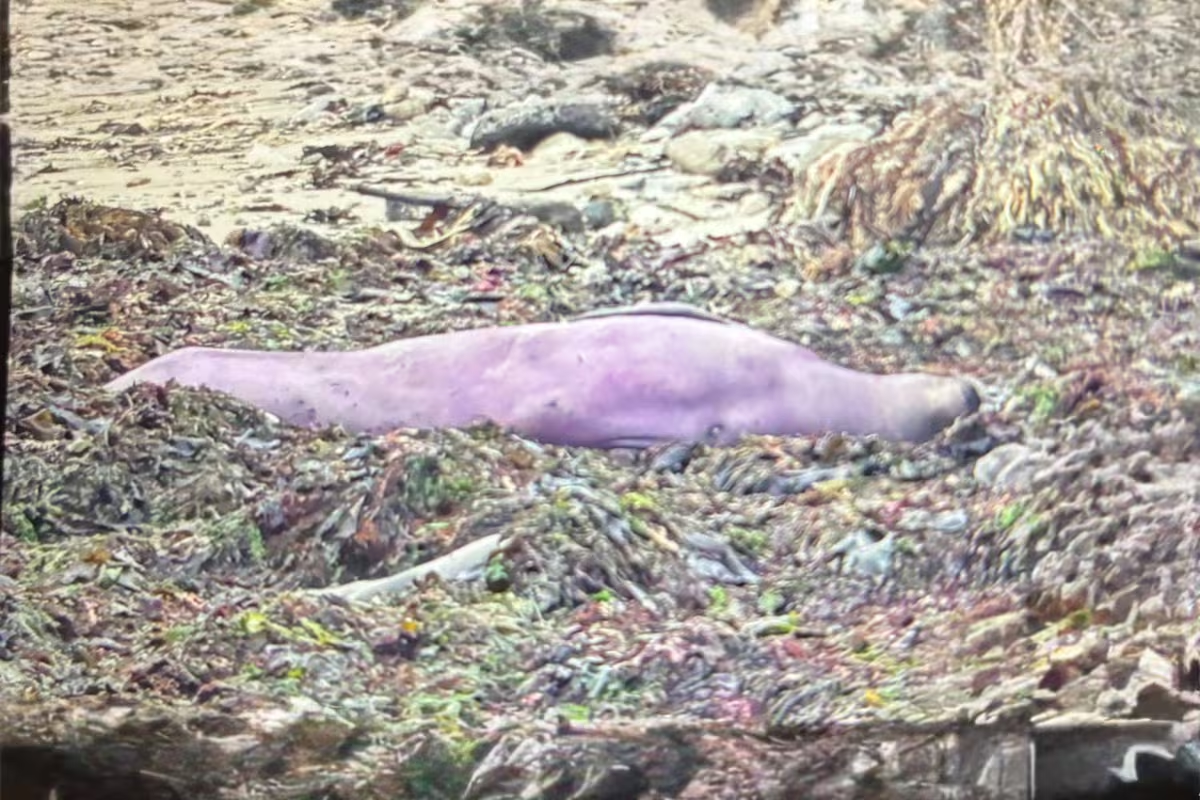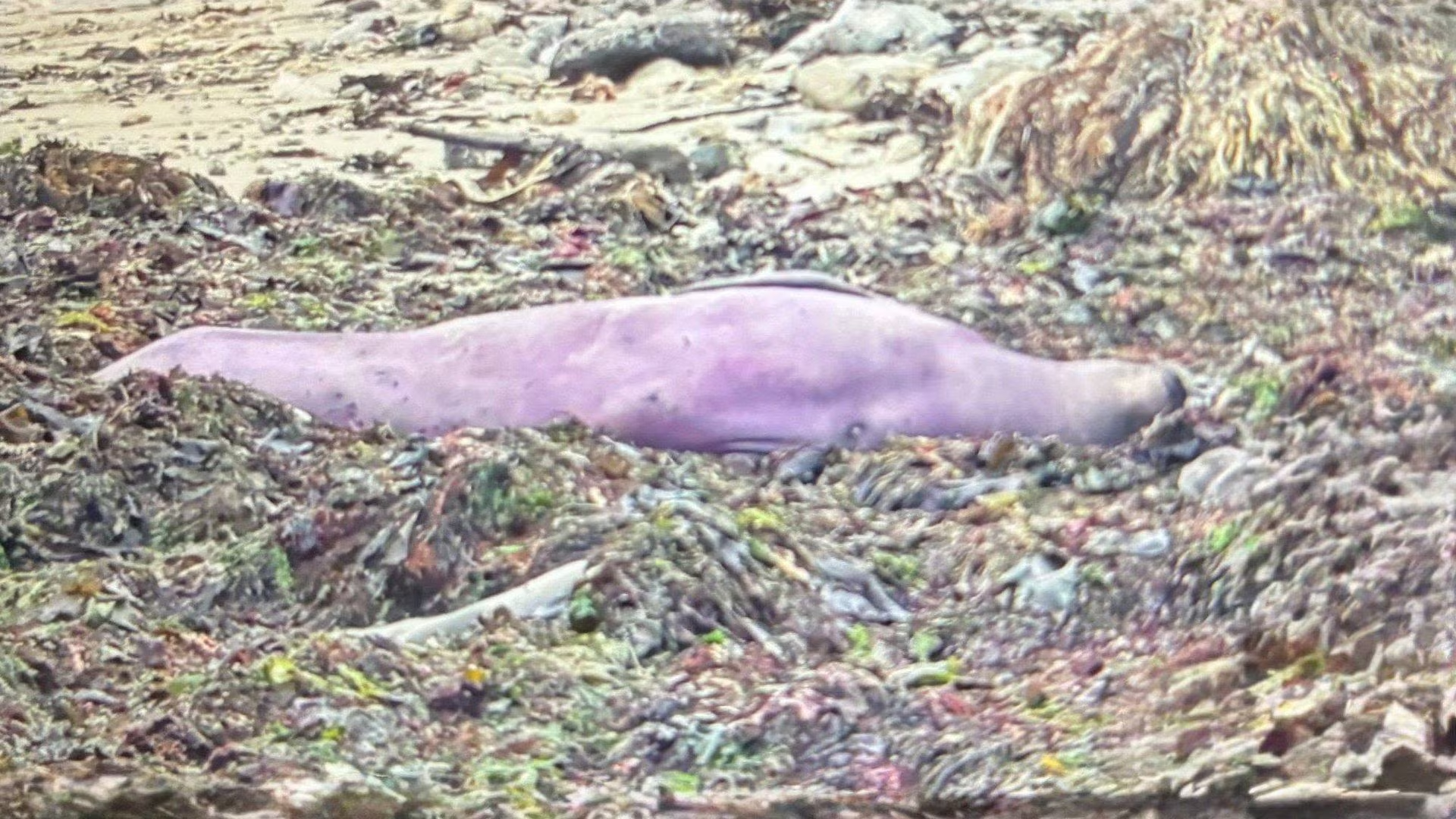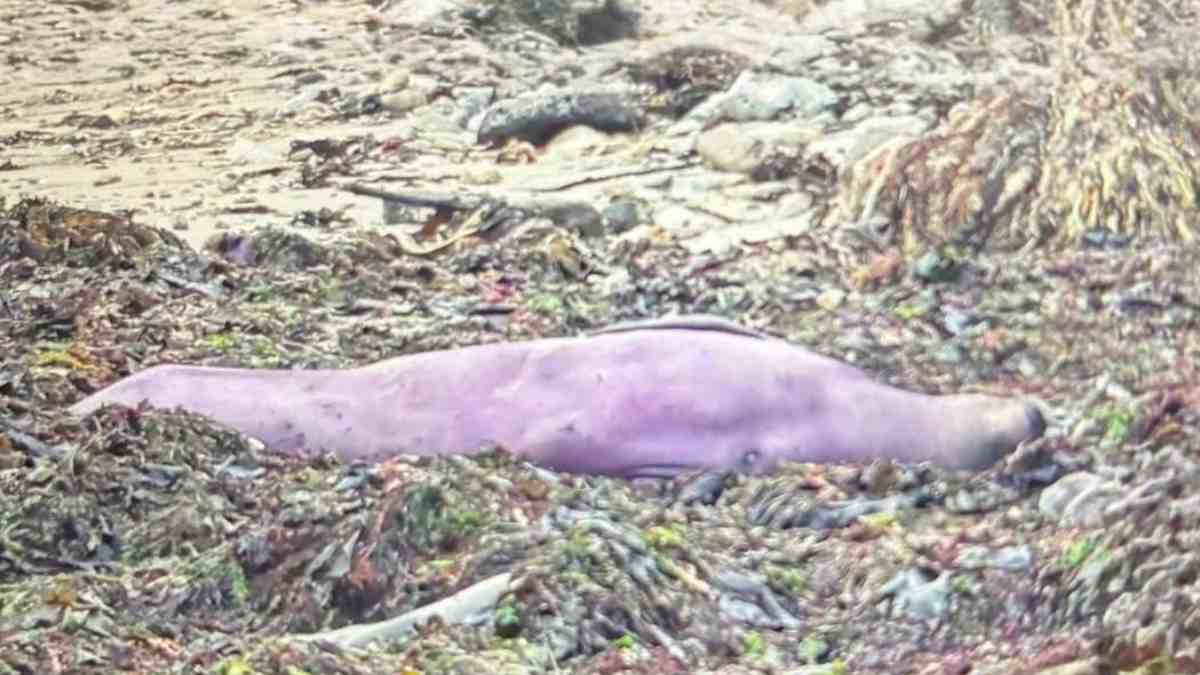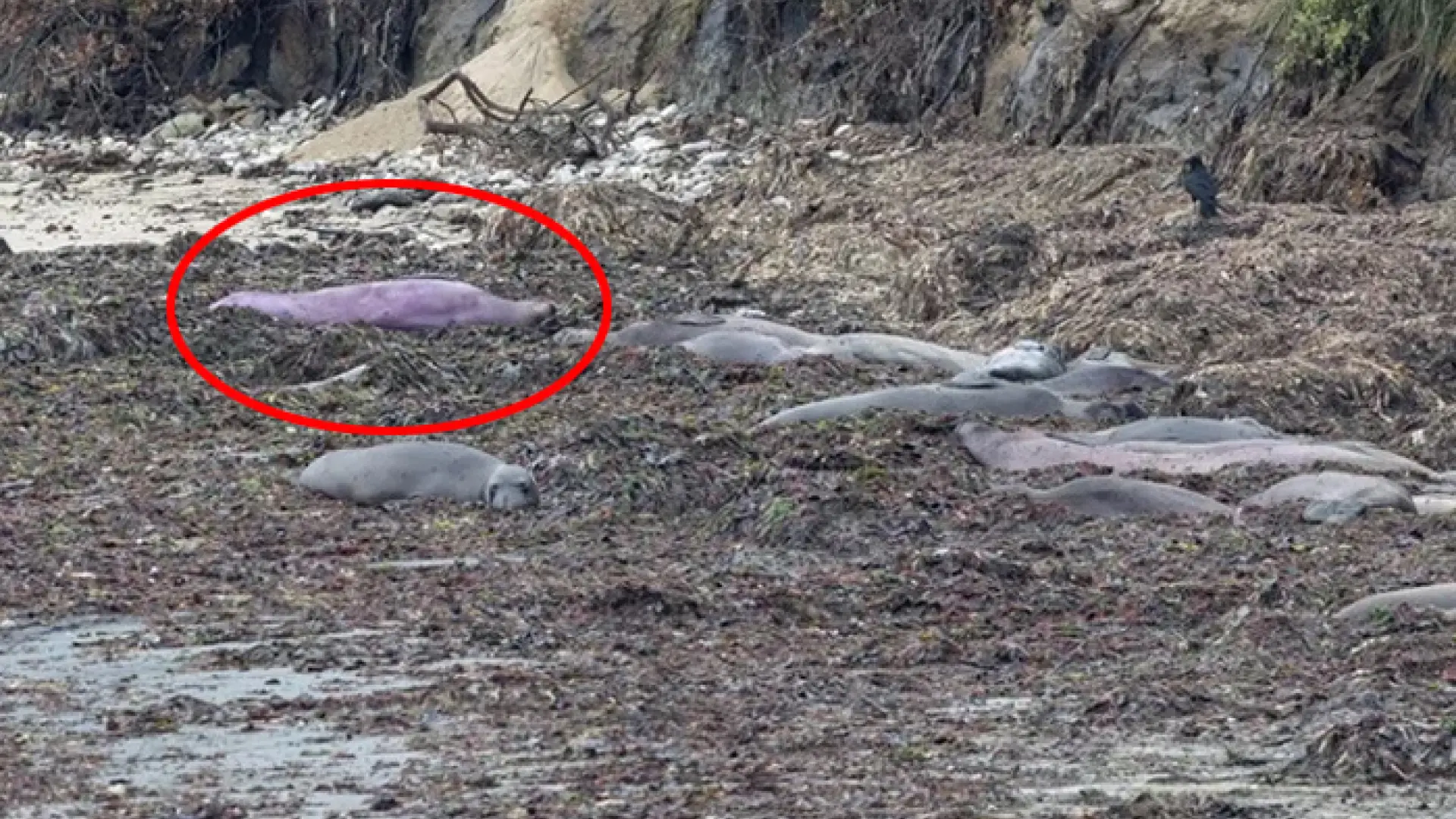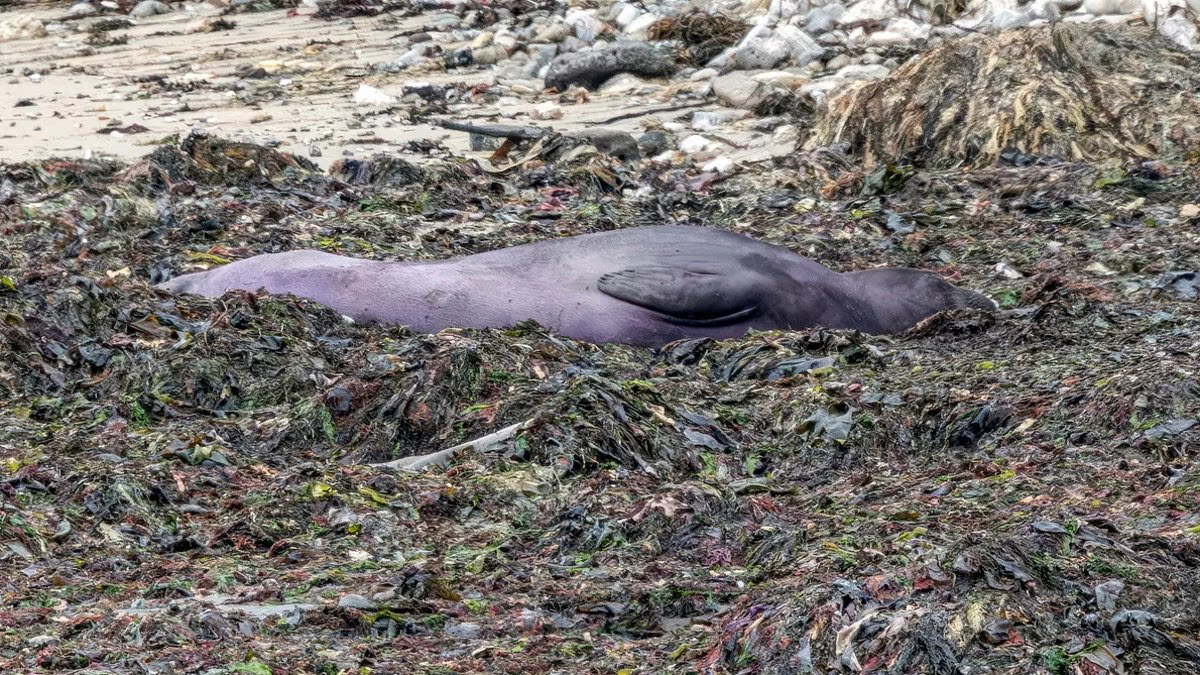
Locals at a California beach have been baffled after spotting a large elephant seal with a very unusual colouration.While these giant ocean-going mammals are usually a beautiful slate grey, one fashionable pinniped appeared to have turned bright purple.The brightly-coloured seal was spotted at Año Nuevo State Park in California by park guide Irene Reti earlier this month.Ms Reti watched in amazement as the purple elephant seal lay calmly alongside its grey relatives as if nothing was out of the ordinary, despite its peculiar lilac hue.In a post on social media, Año Nuevo State Park said: 'Ever seen an elephant seal that looks like it took a bath in grape juice?'However, while it might look unnatural, the park insists that this striking transformation is not the product of any toxic chemical spill or genetic mutation.Nor is the elephant seal's purple coat a product of its diet, like the pink feathers of a flamingo.Instead, seal experts say that the vibrant colour is caused by naturally occurring red algae. Beachgoers were baffled to discover a bright purple elephant seal lying out on a beach in California Northern elephant seals: Quick facts Scientific name: Mirounga angustirostrisWeight: 590-2,000 kilogramsLength: 3-4 metresHabitat: Alaska and the West Coast of AmericaConservation status: Least ConcernThese are the largest of the 'true seals' in the northern hemisphere. In the 1880s, Northern elephant seals were thought to be extinct due to relentless hunting for their blubber. However, populations increased from the early 1990s, and there are now robust populations in the US.Every year, more than 10,000 northern elephant seals make their way to the beaches along the Año Nuevo State Park to breed, moult, and give birth.Visitors can come and watch the seals from special viewing platforms, and yet sightings of purple seals remain exceptionally uncommon. The unusual sighting immediately caused a stir with park staff, who soon began to speculate what might have caused this striking purple look.Some suggested that the change could have been caused by a genetic mutation that affected the seals.Changes to genes which control pigments in the skin and fur can cause striking colour variations in some animals, often turning otherwise black animals bright white.In one exceptionally striking case, scientists found a nurse shark which had been turned from grey to luminous orange by a random mutation in its genetic code.Meanwhile, other park workers suggested that the purple colouration could be caused by a diet of sea urchins.These prickly marine animals are covered in a thick shell that is rich in purple pigments, which can survive being digested and build up in their predators' bodies. The bright purple animal was spotted in Año Nuevo State Park, where over 10,000 northern elephant seals return each year to breed, moult, and give birth on the coast Why did the seal turn purple? Experts say that the seal was temporarily dyed purple by red algae.At the same time that the elephant seals come ashore to moult, warmer weather also leads to blooms of red algae.This algae washes up on the shore where the seals are resting and coats the ground.If a seal spends a long time lying in the red algae, its new summer coat absorbs the pigments and picks up a purple colour. Sea otters, for example, are known to spend so much time feasting on purple urchins that their bones turn a bright shade of pink.This is a very similar process to the buildup of pigments called carotenoids in flamingos, which eat lots of brine shrimp and microscopic algae.However, the park's seal experts soon dismissed this speculation and revealed the real reason for the elephant seal's purple complexion.Dr Patrick Robinson, director of the Año Nuevo State Park, told IFL Science: 'The late spring and early summer is when most elephant seals moult. It is also when there is an abundance of algae that washes up on the beaches.'When they lay on the algae for long periods, this colour can be more extreme. Various species of red algae discolour the fur and are particularly striking!'By resting on red algae washed up on the beaches, this seal has temporarily dyed its new summer coat bright purple.However, there is no indication that this causes any problems for the seal - other than making them stand out from the crowd.This comes as the elephant seal viewing areas at Año Nuevo State Park finally reopen to visitors. Experts say that the colouration is caused by red algae that washes up on the coast during moulting season, temporarily dyeing the seal's coat For the last six weeks, these areas have been closed due to an outbreak of H5N1 avian bird flu that infected the seal population.According to NBC Bay Area news, this was the first time that the H5N1 bird flu variant had been detected in elephant seals on the West Coast.Scientists believe that this outbreak, which was detected in February, killed around 16 elephant seals.Roxanne Beltran, a professor in Ecology and Evolutionary Biology at UC Santa Cruz, said: 'Given the catastrophic impacts observed in related species, we were concerned about the possibility of the virus infecting northern elephant seals for the first time, so we ramped up monitoring to detect any early signs of abnormalities.'Park officials now say that the virus has subsided and that no cases were detected over a two-week period.However, restrictions could be implemented again if any new cases are detected.
Locals baffled after spotting a large PURPLE seal in California
Locals at a California beach have been baffled after spotting a large elephant seal with a very unusual colouration.
892 words~4 min read