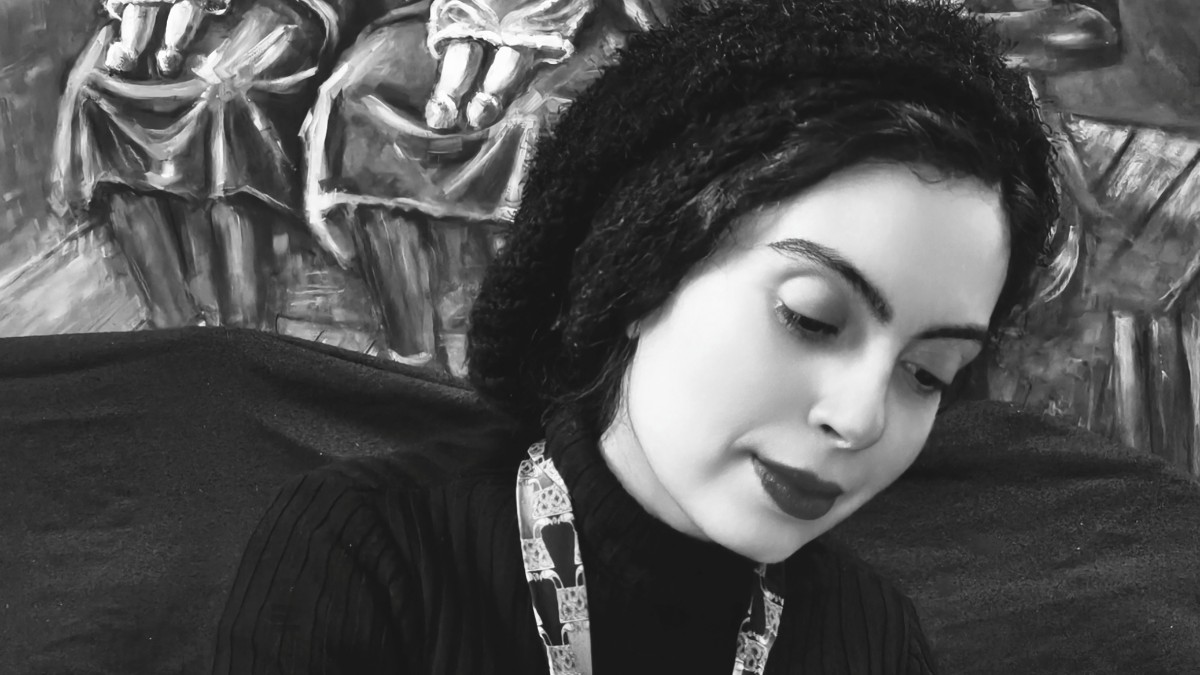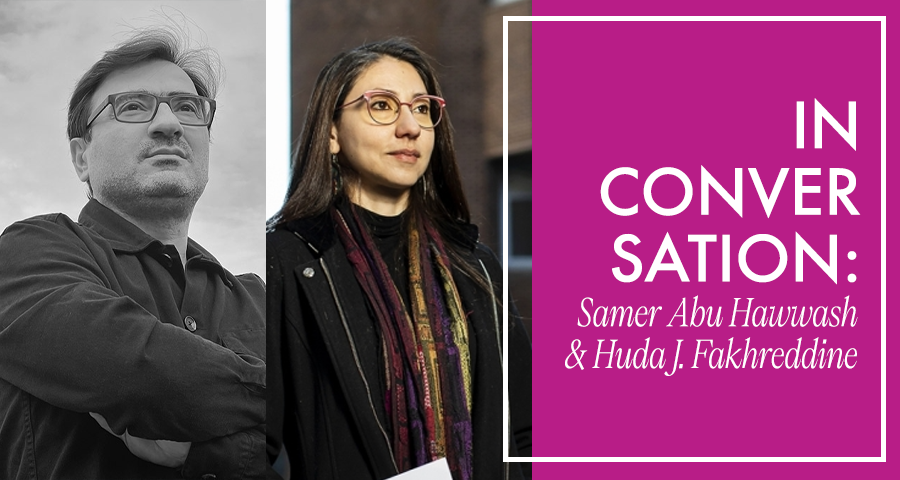
Born in Beirut to a Palestinian refugee family, Samer Abu Hawwash has produced a body of work comprising eleven volumes of poetry, five novels, and notable Arabic translations of Elizabeth Bishop, Bob Dylan, Mark Strand, Louise Glück, and Florence Ai Ogawa, alongside The Book of Tea and Native American folktales. A selection of his recent original poetry can now be found in Ruins and Other Poems (World Poetry Books, 2025), translated by Dr. Huda J. Fakhreddine, which unfolds with these elegiac lines: ‘There, on a land, we were told was not our land, / under a sky, we were told, was not our sky, / my people live their death.’
In her translator’s note, Dr. Fakhreddine positions Abu Hawwash in a timeless tradition. Like the quintessential poet of the aftermath, he ‘journeys, turns away from the site of ruin, and sets off into the desert, the inventory of meanings and images, searching for a language to break the silence, a language to reconstruct a world in place of the lost one’.
In this conversation, I spoke with Abu Hawwash and Dr. Fakhreddine about the contours of Palestinian poetry at a time of genocide, and how there can remain ‘but the poem, the witness, the triumph against time, the signpost in the wasteland of history’.