At just 20, the poet is one of the most vivid witnesses to the conflict. She talks about dreams of Oxford, the deaths of friends and how tragedy has shaped the person she has become
B
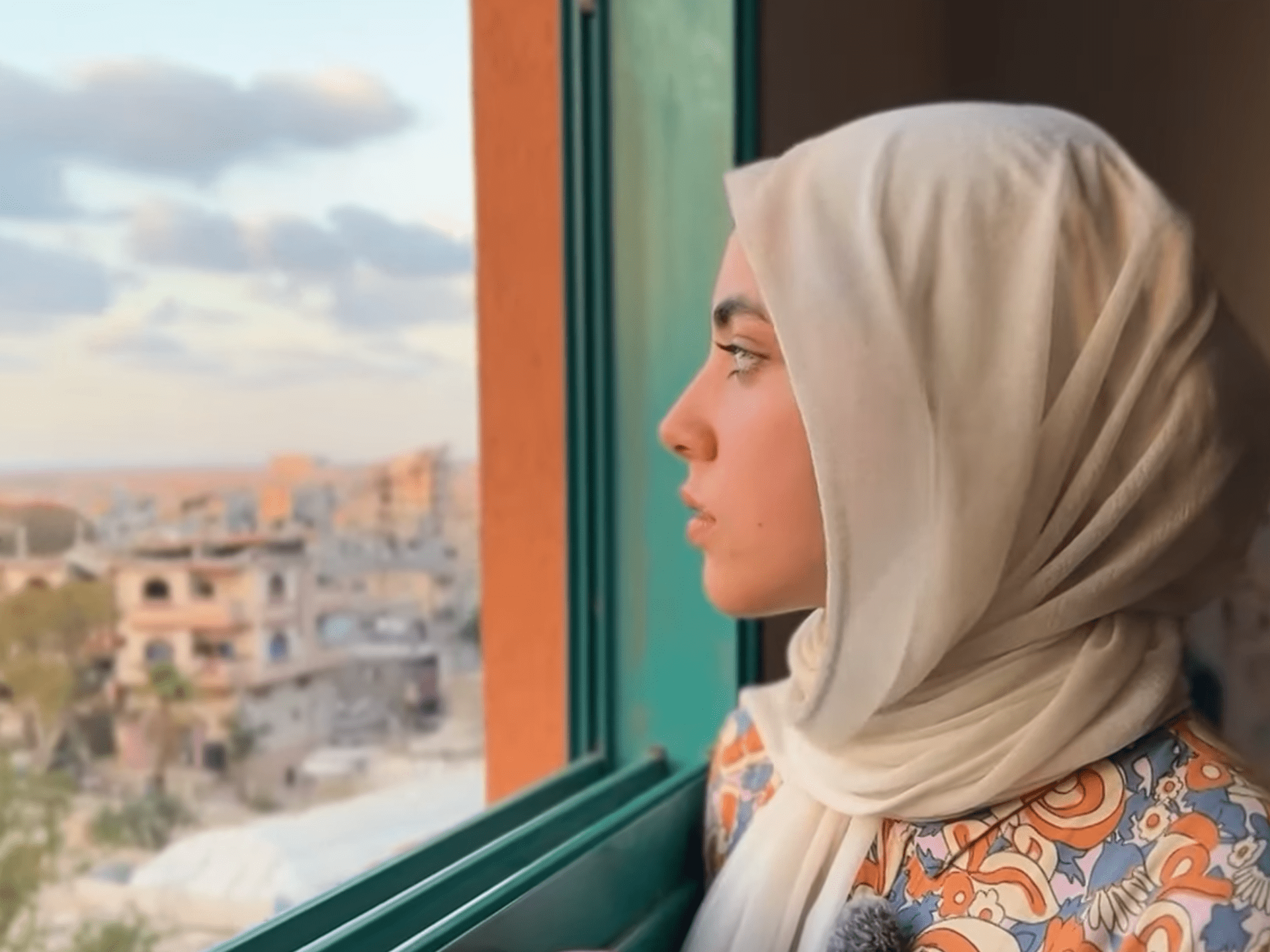
atool Abu Akleen was having lunch in the seaside apartment that has become the latest refuge for her family of seven, when a missile struck a nearby cafe. It was the last day of June, an ordinary Monday in Gaza City. “I was holding a falafel wrap and looking out of the window, and the window shook,” she says. Within an instant, dozens of men, women and children were dead, in an atrocity that was reported around the world. “It doesn’t feel real sometimes,” she adds, with the nonchalance of someone numbed by living with horror.
But this impression is misleading. At just 20 years old, Abu Akleen is becoming one of Gaza’s most vivid and unstinting witnesses, whose debut poetry collection has already won accolades from the novelist Anne Michaels, the playwright Caryl Churchill and the poet Hasib Hourani, among others. She has thrown her whole being into finding a language for the unspeakable, one capable of articulating its surrealism and absurdity as well as its daily tragedies.
In her poems, missiles are fired from Apache helicopters, fleetingly referencing both the US’s role and its history of annihilation; an ice-cream vendor sells frozen corpses to dogs; a woman wanders the streets, carrying the dying city in her arms and trying to buy a secondhand ceasefire (she can’t, because the price keeps going up). The collection itself is titled 48Kg. This, Abu Akleen explains, is because it consists of 48 poems, each representing a kilogram of her own weight. “I consider my poems to be part of my flesh, so I collected my body, in case I was smashed and there was no one there to bury me.”