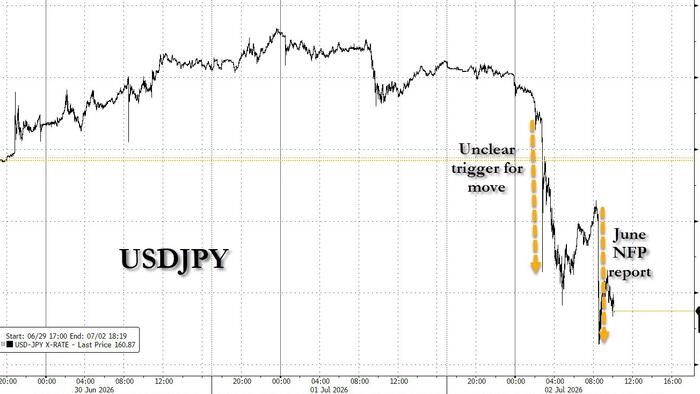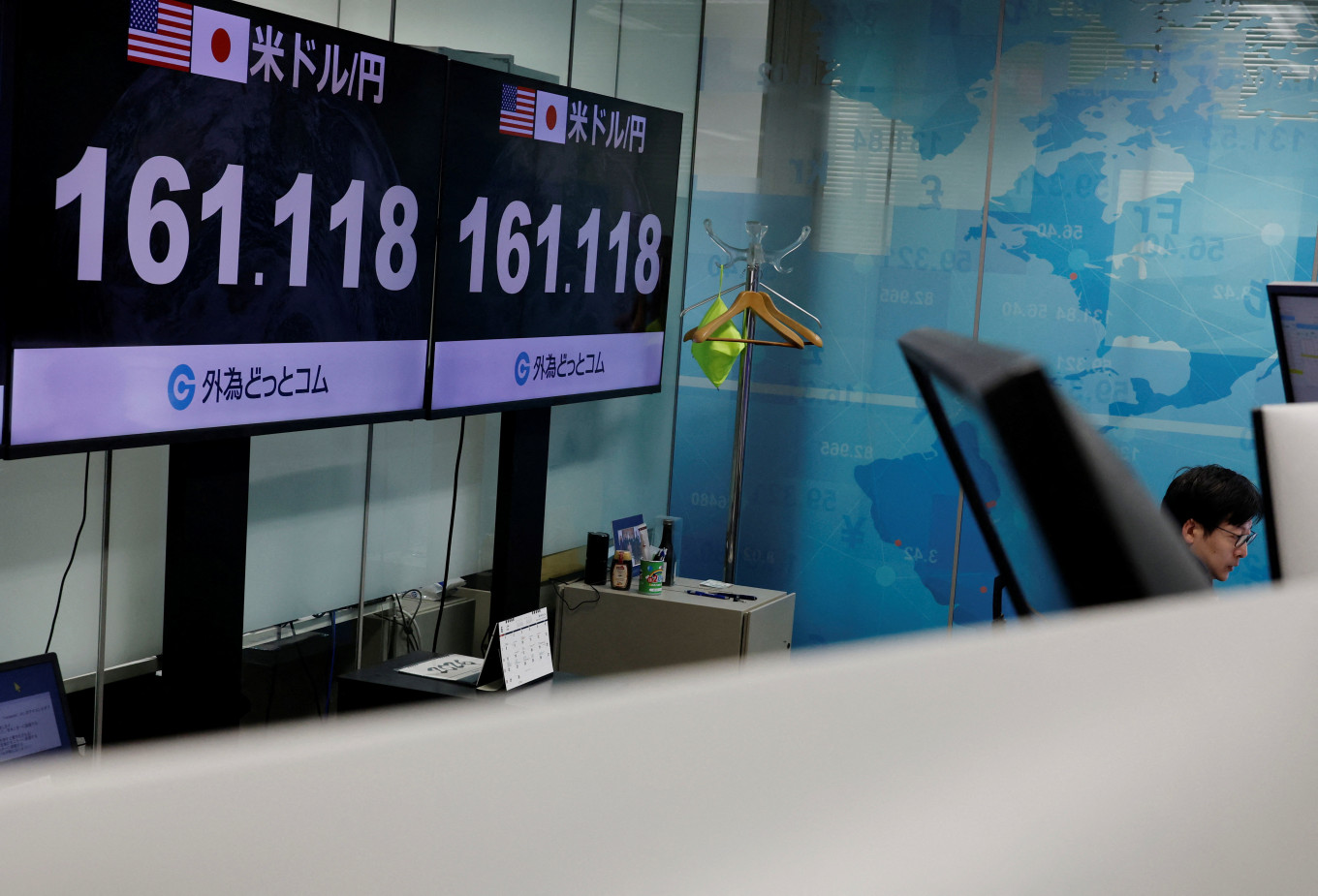
LONDON – The yen jumped suddenly against the US dollar on July 2, with traders alert to the prospect of intervention from Japan to prop up its stubbornly weak currency.The Japanese currency rose as much as 0.9 per cent to 161.115 per US dollar and was trading at 161.55, up 0.6 per cent at 3.45pm Singapore time.Against the Singapore dollar, the yen jumped 0.5 per cent to 124.868. A day earlier, the yen had slid to new all-time lows past 125.7 against the Singapore currency.It was not immediately clear what drove the market move or whether Japanese authorities were in the market. It appeared smaller than that after previous bouts of intervention.“The initial move looked like somebody was in the market, but the current way it is trading higher, we’d question it and I’d lean towards the rate-check rumour,” said Bart Wakabayashi, branch manager at State Street in Tokyo.“The market is nervous, and that move just proved that the market is nervous, which is good news for the Ministry of Finance.”The abrupt move came as traders await US jobs figures later on July 2, which have the potential to move the dollar-yen currency pair. A US holiday on July 4 creates thin trading conditions that would likely amplify the impact of any intervention.“Liquidity is expected to decline during the afternoon session in New York on July 3, when US markets will effectively be closed for the Independence Day holiday,” said Masayuki Nakajima, senior currency strategist at Mizuho Bank in London. “If major US economic releases, such as the employment report, were to come in weaker than expected and trigger broad dollar selling, intervention could become tactically more effective.”Reuters earlier reported that Japanese officials may abandon telegraphing their intentions to the market, which would be unlike the case with the intervention that happened on April 30 following ample warnings. Such a new tactic could be effective in wiping out speculative bets against the currency, according to the report.In an interview with Bloomberg on July 1, Japan’s top currency official, Atsushi Mimura, refrained from spelling out the finance ministry’s standard currency stance, including its readiness at any time to take “bold action” – meaning intervention.Intervention “has always carried an element of surprise”, said Rodrigo Catril, a strategist at National Australia Bank. “The MOF is seemingly trying a new tactic of reverse psychology, but in practice there isn’t a great deal of difference between what they have been doing in the past.”Options traders are ramping up hedges against sharp yen swings, with a gauge of one-month dollar-yen butterfly spreads at an elevated level, suggesting that concerns about possible market intervention are increasing.Japan spent a record 11.73 trillion yen (S$93.5 billion) between late April and early May to prop up the yen, according to Finance Ministry figures.But the yen unwound all of its gains, even after the Bank of Japan (BOJ) raised its benchmark interest rate to the highest in 31 years on June 16. The currency remains pressured by persistent US dollar strength and growing expectations of a Federal Reserve rate hike in 2026, while the BOJ is expected to maintain its gradual approach to policy tightening.“The prospect of surprise intervention should make speculators think twice before adding to bearish yen positions,” said Carol Kong, a strategist at Commonwealth Bank of Australia.“However, US yields remain the dominant driver of USD/JPY. If tonight’s US payrolls report surprises to the upside again, the pair could still push to fresh highs despite the risk of intervention.” REUTERS, BLOOMBERGWith additional information from The Straits Times
Yen jumps suddenly with traders on high alert for intervention
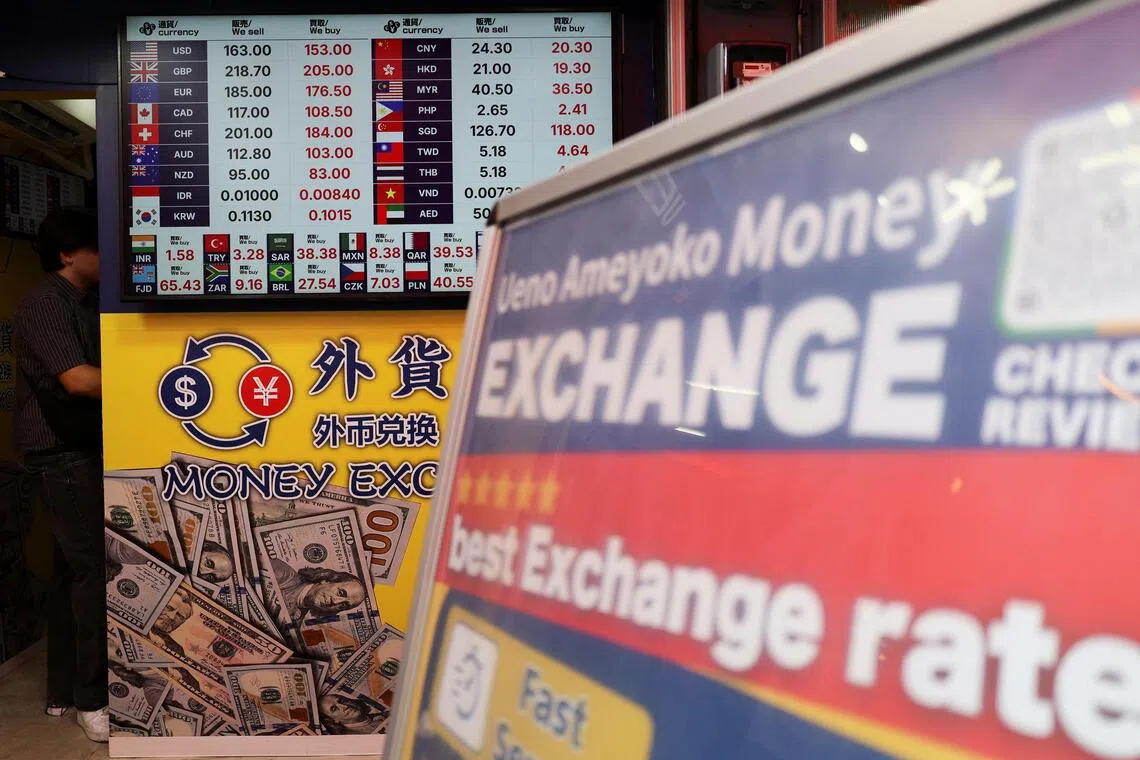
Against the Singapore dollar, the yen jumped 0.5 per cent to 124.868 as at 3.45pm on July 2. Read more at straitstimes.com. Read more at straitstimes.com.
588 words~3 min read