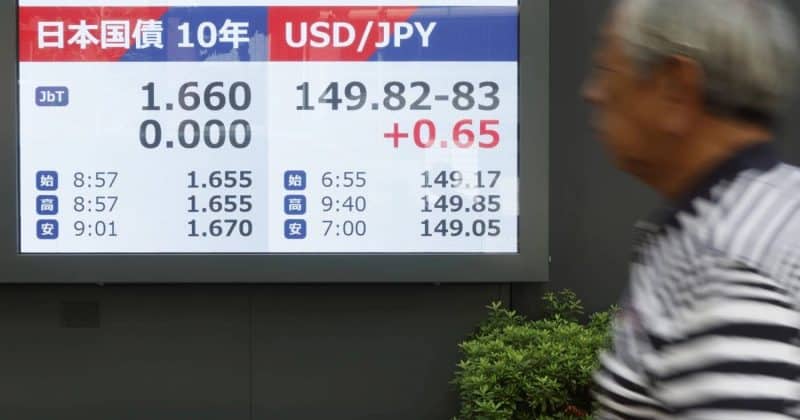
Japan’s government bond market is flashing warning signs, and the rest of the financial world is paying attention. The country’s latest 10-year bond auction drew weaker demand than its trailing average, continuing a pattern that has quietly unsettled investors across asset classes.
The February 2026 auction for the 10-year Japanese Government Bond posted a bid-to-cover ratio of 3.02, slipping below the 12-month average. A bid-to-cover ratio measures how much demand exists relative to the bonds on offer.
Why Japan’s bond market is struggling to find buyers
The demand problem is not isolated to 10-year paper. June’s 30-year JGB auction recorded a bid-to-cover ratio of 2.94, the weakest reading since mid-2025, against a 12-month average of roughly 3.4.
Investor hesitation stems from a few converging pressures. Looming elections and fiscal policy uncertainty have made buyers cautious about locking into long-duration debt. Meanwhile, the Bank of Japan has been stepping back as a buyer, cutting its monthly JGB purchases to ¥2.9 trillion in the first quarter of 2026, down sharply from ¥5.7 trillion in August 2024.