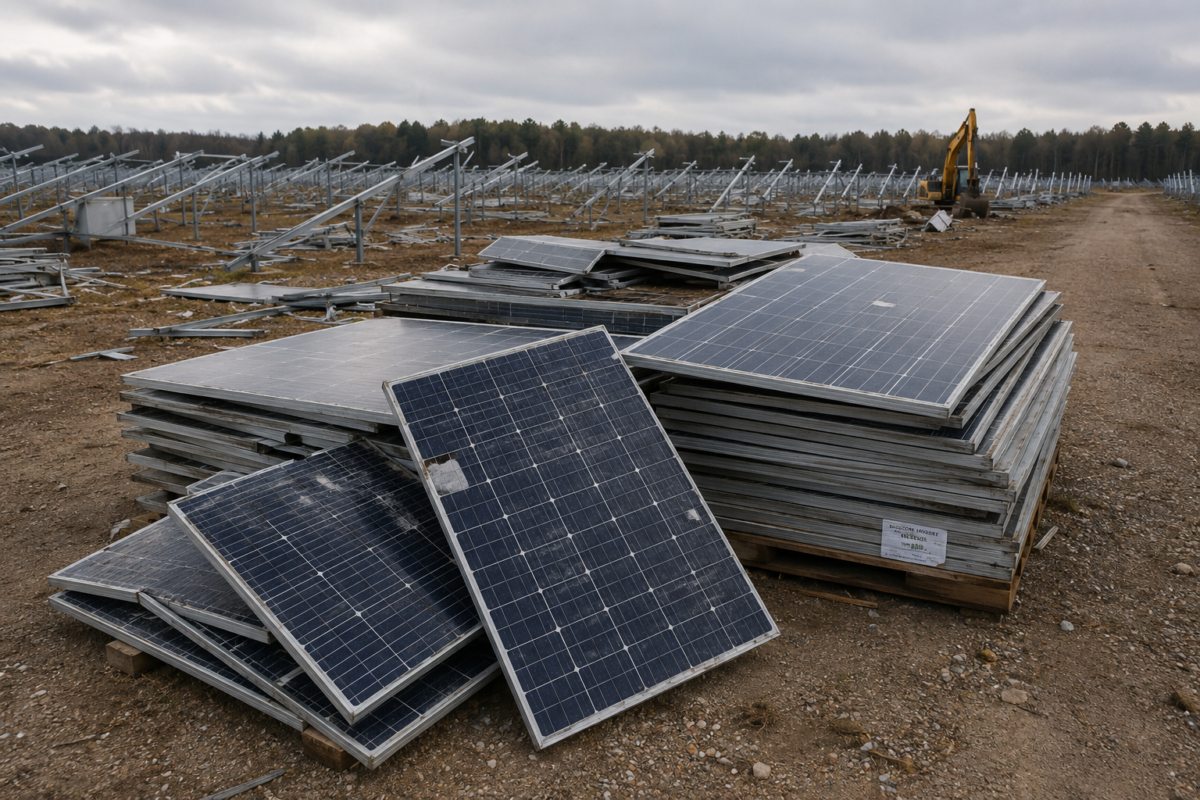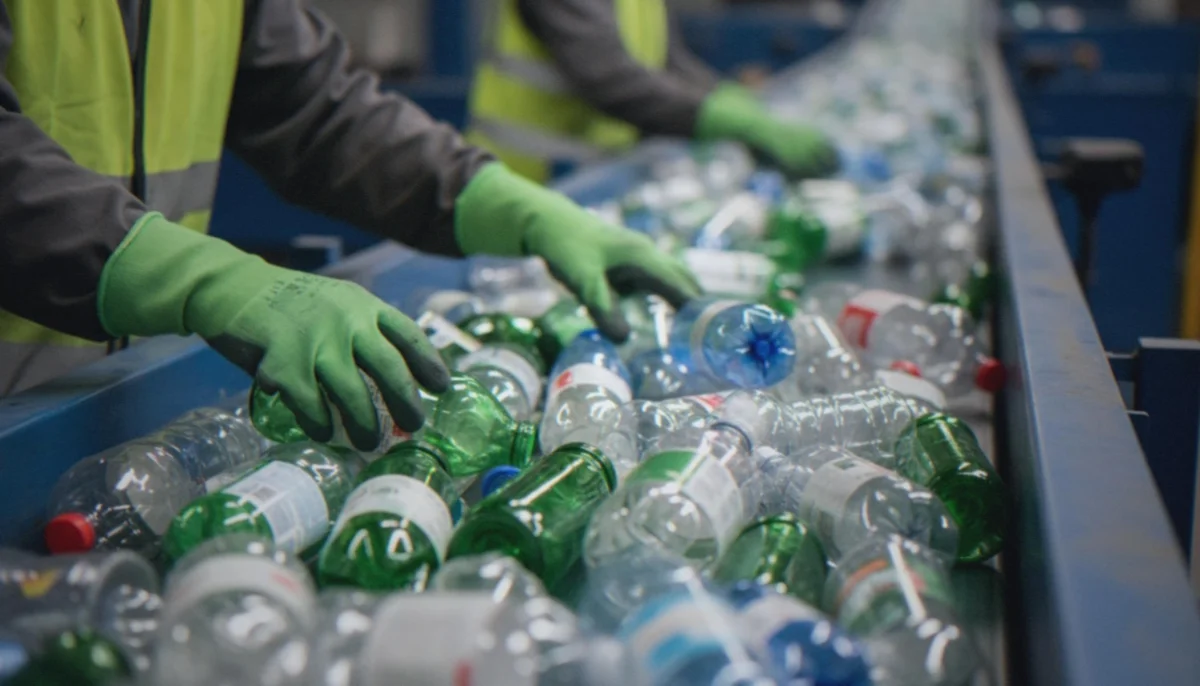
Raw material from waste: A team from the University of Cambridge has developed a process to produce hydrogen from plastic waste using sunlight. According to the researchers, they have built a demonstrator that can be scaled for commercial application.
The reactor, which the team around Ariffin Bin Mohamad Annuar describes in the journal Nature Chemical Engineering, consists of solar modules that do not generate electricity. Instead, they initiate a chemical reaction that breaks down plastic, yielding hydrogen and other valuable organic chemicals.
The reactor consists of a glass plate with a side length of one meter. Various coatings are sprayed onto it. At the bottom is a light-absorbing layer. Above it is a catalyst layer containing cobalt and zirconium, among other elements.
The University of Cambridge team with its solar module
(Image: University of Cambridge)