Story audio is generated using AI
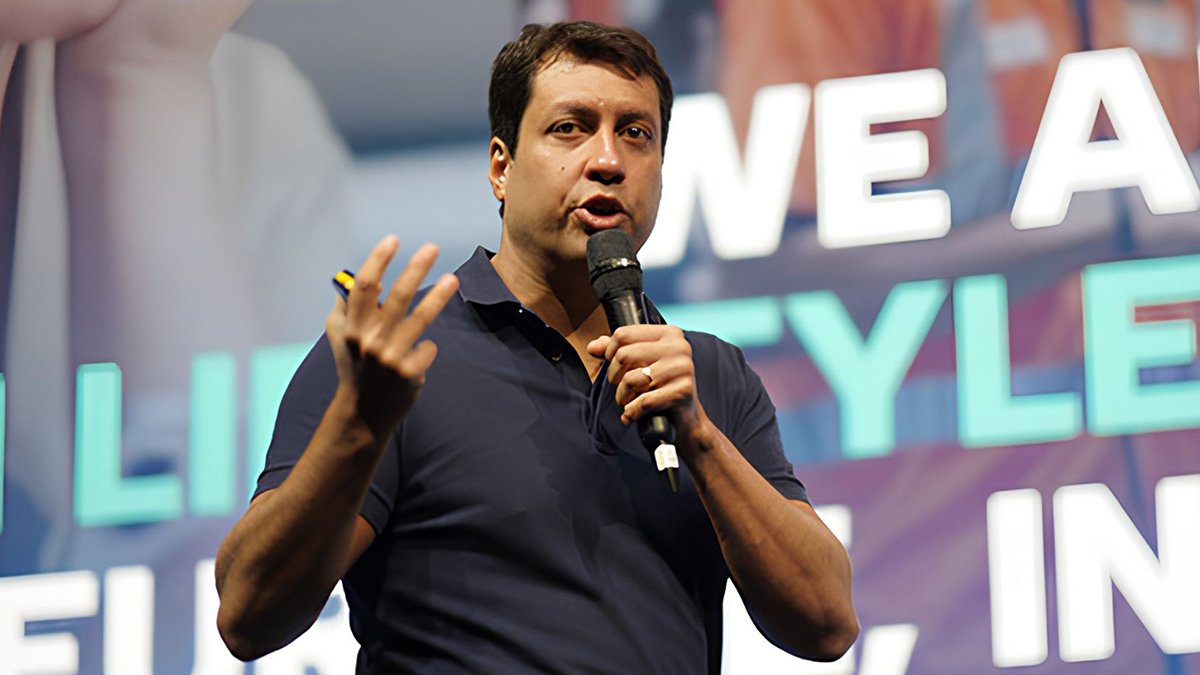
Pick n Pay CEO Sean Summers has forfeited 1-million performance-based shares he was awarded two years ago after the group’s turnaround plan met headwinds, forcing it to push back its core supermarket trading profit break-even target to the 2029 financial year.Summers was brought back to steady the ship in 2023 after the exit of Pieter Boone, who pursued a disastrous strategy that led to the group posting its first loss in its existence.To spur growth and return to profitability, Pick n Pay dangled a 4-million performance-based share incentive to turn around the ship quicker.The shares were worth about R100m at the time. Half of these shares vested in October 2025 after the successful implementation of a new leadership and operating structure. The other 1-million shares are set aside for the successful development and implementation of the CEO succession plan.The forfeited shares related to the missed break-even target have a market value of R21m.“Recent vesting outcomes have reflected the challenges experienced in the business. The financial performance conditions attached to the Pick n Pay segment have not been achieved for a number of years, with these portions of the awards forfeited,” Pick n Pay said in its annual report published on Tuesday.“The 1,000,000 performance-based shares issued to the CEO in July 2024 have been forfeited. As disclosed in the FY25 remuneration report, the CEO’s fixed-term contract has been extended to May 2028 to support continuity through the turnaround and an orderly succession process. In line with the group’s remuneration policy, the CEO remains eligible to participate in the restricted forfeitable share plan scheme.”Read: Sean Summers delays Pick n Pay recovery target after raising R4.7bnPick n Pay’s turnaround programme has led to a salary freeze for senior management and support office employees in the 2023 and 2024 financial years and again for senior executives in the 2026 financial year.Summers was paid R25.2m. The group reported a gaping pay gap between its highest-paid employees and its lowest-paid staffers. Its top five highest-paid employees earned on average R1.22m, while the bottom 5% came in at R72,000.“Pick n Pay recognises the income disparities that exist within the retail sector. These disparities are driven by the large number of unskilled and semi-skilled employees employed across the group’s retail stores, distribution centres and support operations, compared to a relatively small number of specialist, management and executive employees,” it said.“Our workforce profile is characteristic of the retail industry, where higher levels of pay are associated with skilled, specialist and senior management roles.”Summers has often turned to Boxer to free up cash to fund the protracted turnaround. This included the spinning off of Boxer in 2024, a move that raised R8.5bn for Pick n Pay. It was this year followed by a sale of 12.5% stake in Boxer for R4.7bn last month, with the group retaining a majority stake in its fast-growing subsidiary.The recent Boxer transaction came after Pick n Pay reported a trading loss after lease interest of R2bn in the 2026 financial year, a bigger loss than the R1.7bn reported in the previous year.Summers and his team have identified key areas for the group to return to profitability. Chief among these is the requirement to grow like-for-like sales and remove inefficiency, duplication, and waste wherever it exists.The group also wants to improve productivity and strengthen execution across the business and, more importantly, slash its cost base, “including the need for a more competitive and flexible store labour model.”To this end, the retailer whose share price has plunged 60% over the past five years is looking to cut staff costs via the section 189A process.“Pick n Pay has made a comprehensive proposal to avoid any job losses and is not proposing reductions to hourly rates of pay and remains committed to providing competitive remuneration for employees.”