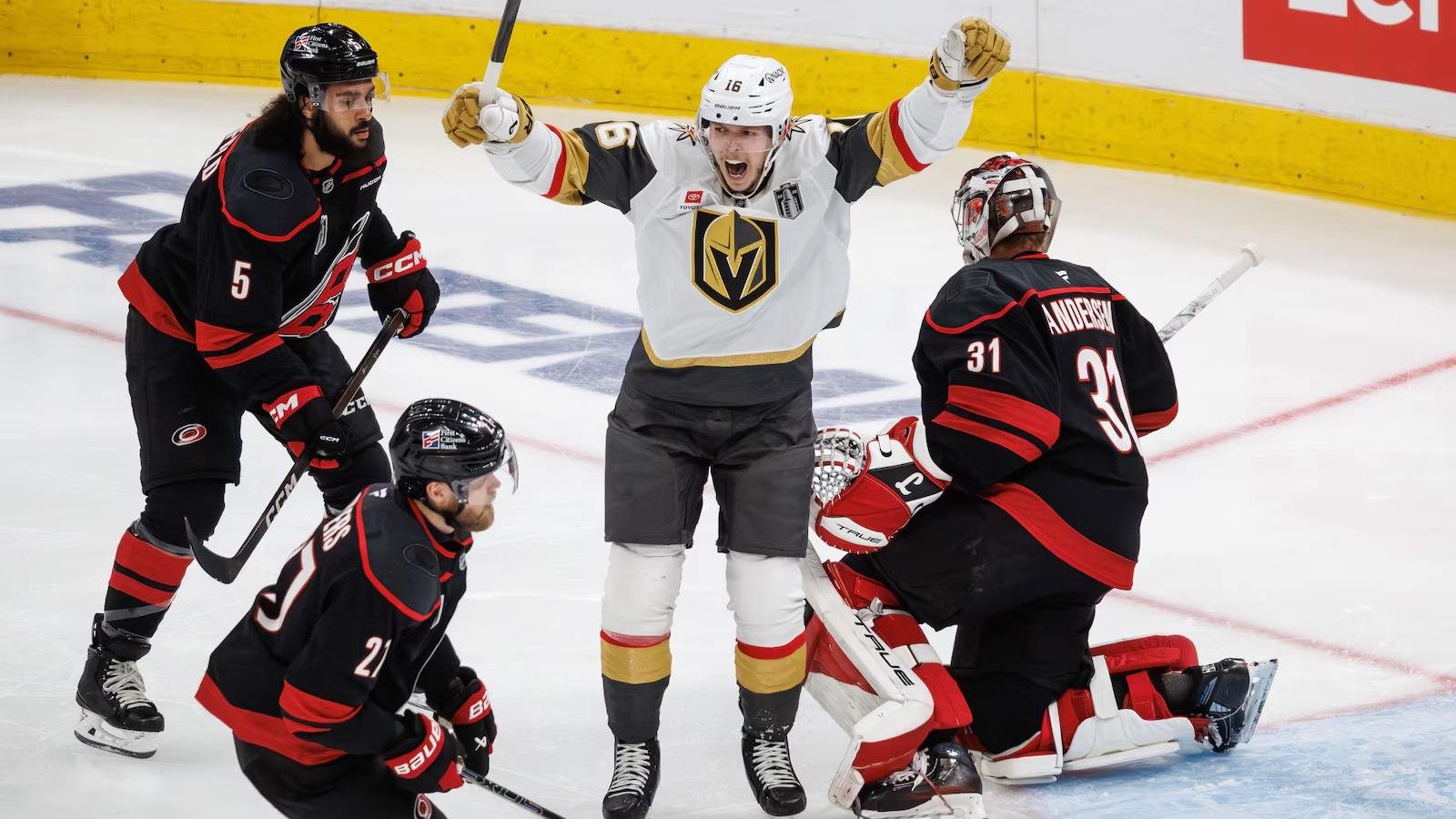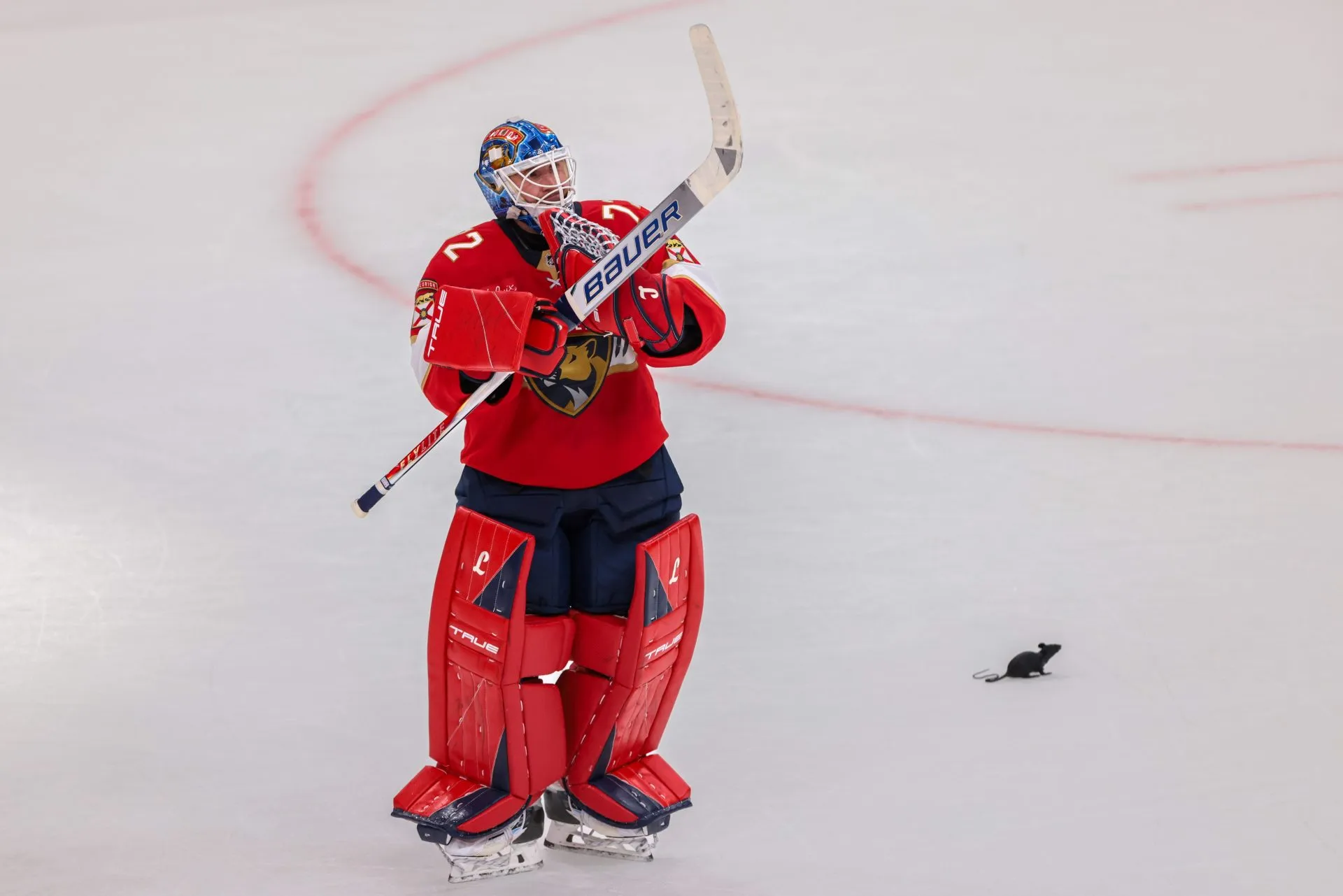
In today’s NHL, free agency isn’t the place to build a team. It’s become a source of secondary talent that can round out the fringes of the lineup — and in a rising cap world, that often comes with an exorbitant price.Sometimes, the big winner is the team that finds a player under the radar at the right price. But this year, it’s the team that has been able to sit out July 1 altogether so far. Let’s dive into the winners and losers of Day 1 of NHL free agency. Who are the top five NHL players to hit free agency?WinnersCarolina HurricanesThe reigning champs weren’t built entirely without the free-agent market. Nikolaj Ehlers was a splashy signing last July 3. It’s how the team acquired Shayne Gostisbehere and Sean Walker, too. If Carolina dips into this year’s free agent pool in the coming days or weeks, it won’t suddenly make this team a loser, either. The key is that the Hurricanes haven’t had to be over-reliant on July 1 signings to be successful. All free agent adds have been complementary to players drafted and developed in Carolina or added via trade. And while this team was set to have a handful of players looking for extensions today, general manager Eric Tulsky’s proactive approach built cap flexibility. Logan Stankoven was extended on an eight-year deal worth $6 million a year, on average, before he blossomed into this team’s 2C or a playoff difference-maker. Jackson Blake’s eight-year deal with a $5.63 million AAV was signed way in advance, too. Had the Canes waited, their Stanley Cup rings could have cost the team a pretty penny this summer. Instead, they have maintained cap flexibility and trade assets to work with to keep getting better. Montreal’s core contractsNick Suzuki’s Montreal extension took some heat in the early years, but it has since aged like a fine wine as he developed into a Selke-caliber center. Having Cole Caufield locked in for another five years at $7.85 million is another win for the Canadiens, especially with the going rate of scoring wingers in today’s NHL. Juraj Slafkovský’s breakout over the last year makes his eight-year, $7.6 million AAV contract look even more cost-effective.The same goes for Lane Hutson, who has leveled up into the Norris Trophy conversation before his eight-year, $8.85 million per year contract even kicked in. And for context on that one, Jacob Trouba just signed for $8.25 million a year in San Jose, while Rasmus Andersson signed for $8.5 million.Now add another great core contract to the mix with Ivan Demidov’s extension that starts next July. An eight-year deal worth $9.15 million a year is fantastic value for a rising-star winger, who projects to be worth an average market value of $11.2 million over that span. Incoming cap growth will make that number even more cost-effective, especially in those later years. Those later years are important because if the team waited to sign this contract, it wouldn’t have been able to tack on that eighth year under the new CBA.The Canadiens are only in the early stages of what should be a long playoff window. So to have this many core players signed to great value deals, through their primes, is just incredible work. The future is bright in Montreal.Free-agent fourth-linersNo team has gone completely off the rails like the Oilers did last summer with an eight-year, $30.8 million contract for Trent Frederic. But a lot of cap and term have been handed out to a handful of fourth-line players.A.J. Greer got the trifecta of term, cap and trade protection with a four-year deal in Anaheim. It pays to shoot 16 percent in a contract year and have a Stanley Cup ring. So did Beck Malenstyn, with a six-year deal carrying a $2.92 million AAV. Toronto handed out three multi-year deals to fourth-line caliber players in Teddy Blueger, Brandon Duhaime and Colton Sissons (and the latter came with a pretty steep price tag of $4.25 million). Jeffrey Viel cashed in on a breakout postseason with a five-year deal in Tampa Bay, worth $2.5 million on average.Fourth-liners have a thin free agent class and a rising cap world to thank for these contracts. While none are back-breakers for their respective teams, overspending on bottom-six talent can prove costly. Sometimes, those dollars and cents can be what stops a team from acquiring top-end talent when it’s available.Florida PanthersSigning Radko Gudas until he’s 42-years-old obviously doesn’t scream winner of the day, but 1) the $1.5 million cap hit is extremely manageable, 2) this team knows how to maximize his game within its system and 3) knowing Florida, management will find a way to bury the contract when the time comes. Instead, it’s the rest of the Panthers’ work that lands them here. It starts with the decision to let Sergei Bobrovsky walk, instead of signing a soon-to-be 38-year-old to a multi-year contract with a $7 million AAV. A Jacob Markstrom-Akira Schmid tandem isn’t without its risks. Markstrom is coming off a tough year in New Jersey and isn’t that much younger than Bobrovsky. But his contract is shorter and cheaper than Bobrovsky’s ask. Schmid has potential, and this team doesn’t need to over-invest in goaltending, anyway. The Panthers can be such a dominant team in front of the blue paint that they just need average enough goaltending in the regular season to get by. Florida moved out contracts and cap from its surplus of forwards in the Markstrom trade and flipped Greer’s signing rights to avoid an overpayment on a fourth-liner to make room for Eetu Luostarinen’s next contract (which lines right up with his market value). Sunny Mehta and the New Jersey DevilsFlip to the other side of the Markstrom trade, and the Devils are having a really strong start to the offseason. Sunny Mehta, formerly of the Panthers, has come into New Jersey and quickly addressed major areas of need. It starts with the decision to dismiss Dave Rogalski, the Devils’ goaltending coach, considering how many netminders have either struggled after joining the team or left to succeed elsewhere. Management could have waited on the Markstrom trade to see if he could rebound with some new direction. But goalie trades are pretty difficult to pull off in-season, and had Markstrom struggled out of the gates, it could have tanked his value. Instead, the Devils have a clean slate for a new No. 1 goaltender, much-needed forward depth in Evan Rodrigues and Jesper Boqvist, and assets from the Šimon Nemec trade to do some more damage this summer. Then the team kicked off July 1 with a very cost-effective extension for captain Nico Hischier, who is a pivotal part of this team’s attack on both ends of the ice. New Jersey still has a lot of work to do this summer, but this is a really promising start for a team that seriously disappointed last year. LosersChicago BlackhawksThe Blackhawks already took a lot of flak for the Bowen Byram trade last week. It was an incredibly imbalanced trade that centers around the idea of Byram being able to develop into a true No. 1 defenseman, even though he doesn’t have a track record playing that role. Living up to the cost of acquisition, which included the No. 4 pick in this year’s draft, was always going to be a challenge. This contract extension puts the pressure level in another stratosphere. It’s not like the Blackhawks didn’t know a $10-plus million price tag was coming, and Byram had a lot of leverage post-trade. But a $12.5 million cap hit is beyond that — it’s outright reckless spending for a team that has not seen what he can do in Chicago, or in this capacity. It makes even less sense with the Blackhawks’ timeline in mind. If the chances of Byram playing up to this value already feel slim in his prime, how will this look when Chicago finally turns the corner into a playoff team?Dallas StarsBefore Zach Werenski announced that he wants to stay with the Blue Jackets, one team already became collateral in the fallout of that situation: the Stars.The Jason Robertson situation was already a knock for Dallas this summer. The team isn’t willing to pay fair value for one of its most important players and can’t seem to figure out an agreeable trade path, either. The Kraken are also collateral in that situation, and come out as free agency losers for 1) Robertson turning down a $15 million offer because the team has been spinning its wheels over the last few years, and 2) thinking they are a Robertson away from contending. But the Kraken aren’t facing the same pressure as a contender like the Stars, who need to start showing something for this playoff window. And the failed Werenski deal, on top of the Robertson situation, just opened up a second can of worms.It’s not just that Werenski wasn’t willing to accept a deal to Dallas, which would have solved a lot of problems; that could have given the Stars the cap savings to pay Robertson a little more while bringing in an ace on the blue line. The problem is now that the team’s willingness to trade Thomas Harley, before his extension even kicked in, is officially public. So management may now have to deal with whatever waves that just created for someone signed to be a very important part of this window of contention. Ken Holland and the KingsLosing to the Oilers year after year didn’t teach the Kings enough. Apparently, neither did a Round 1 exit to the Avalanche because Ken Holland is at it again with more contracts for aging players.Erik Haula helps address the Kings’ need for help down the middle, but he’s 35 years old. Corey Perry still has some game as a net-front presence, but he’s 41. Mats Zuccarello’s one-year contract is the exception to this because his contract is great value, but it doesn’t change the fact that he will be 39 when the season starts. It’s a continuation of a concerning trend in Los Angeles under Holland, after Cody Ceci (32) and Brian Dumoulin (34) signed multi-year deals, joining Joel Edmundson (33) and Drew Doughty (36). And it’s the wrong direction for a team that ranked in the 17th percentile in speed bursts over 20 miles per hour. The NHL is only getting faster, and the Kings simply haven’t been able to keep up. San Jose SharksSan Jose almost made it out of this unscathed after the Jacob Trouba contract, which was one of the worst free agent signings of the day. And then the team traded for Darnell Nurse, as well. If you separate Nurse from his pricey $9.25 million cap hit, there is some bottom-four value there. He doesn’t have a ton of puck skills, but he has a long reach, is a good skater and is pretty battle-tested. San Jose actually made sense as a landing spot with that in mind. The Sharks only had three defensemen signed heading into today, a lot of cap space to work with, and some experience with reclamation projects out of Edmonton. Nurse could help absorb big minutes so the Sharks can shelter their up-and-comers without necessarily blocking anyone’s path to a more meaningful role. And if he doesn’t appear to be a long-term fit in San Jose but gains some value there, the team could retain some salary and flip him to a playoff team closer to the deadline. But once the Sharks acquired Trouba, another battle-tested, overpaid veteran defenseman, a Nurse trade stopped making sense. Now, the team has almost $18 million tied up in these two for the next four seasons. It’s just poor cap management before this playoff window officially started. — Data via Evolving-Hockey, HockeyViz, HockeyStatCards, All Three Zones, Dom Luszczyszyn, Natural Stat Trick, CapWages, PuckPedia and AFP Analytics. This story relies on shot-based metrics; here is a primer on these numbers
NHL free agency winners and losers: Fourth-liners cash in, Kings keep getting older
The Hurricanes, Panthers and depth players are free agency winners while the Kings and Sharks are losers.
1,994 words~9 min read