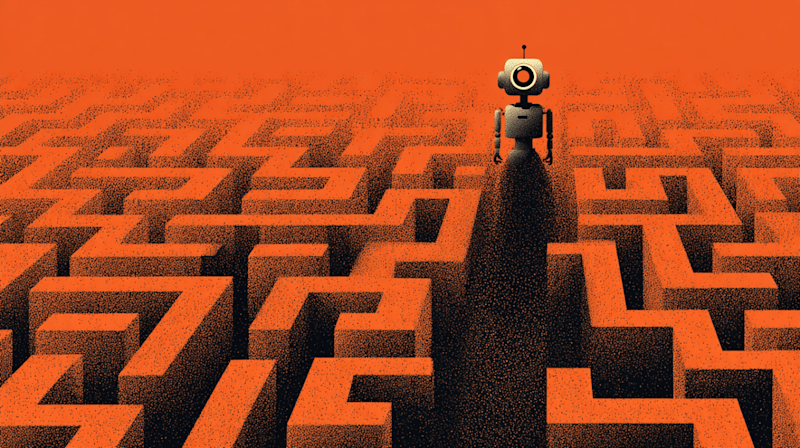
Here’s a fun paradox: make an AI model smaller and more efficient, and it starts overthinking everything. Not in a productive, let-me-consider-all-angles way. More like a student who writes the right answer on an exam, stares at it, convinces themselves it’s wrong, and then erases it.
That’s the core finding from a new study by Meta AI’s FAIR team, which discovered that aggressively compressed reasoning models abandon correct answers at an alarming rate. The paper, titled “Quantized Reasoning Models Think They Need to Think Longer, but They Do Not,” reveals that up to 52% of failures in these compressed models happen even though the model had already arrived at the right answer during intermediate reasoning steps.
The compression trade-off nobody expected
The study, published May 29, 2026, examined what happens when you apply post-training quantization to reasoning models. Quantization is the process of shrinking a model’s numerical precision to make it cheaper and faster to run. Think of it like compressing a high-resolution photo into a JPEG: you lose some detail, but it takes up way less space.
The FAIR team tested distilled DeepSeek-R1 variants and QwQ-32B, with model sizes ranging from 1.5 billion to 32 billion parameters. They validated their findings across five benchmarks covering math, coding, and science tasks.