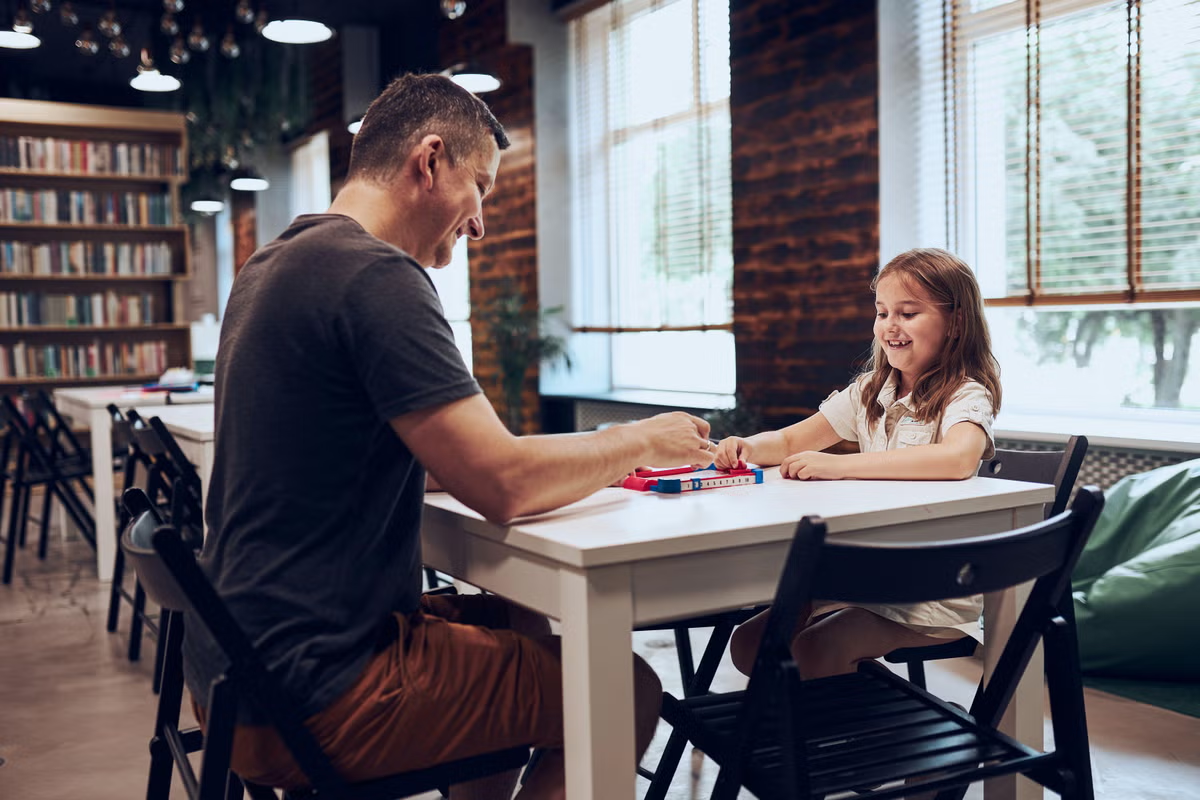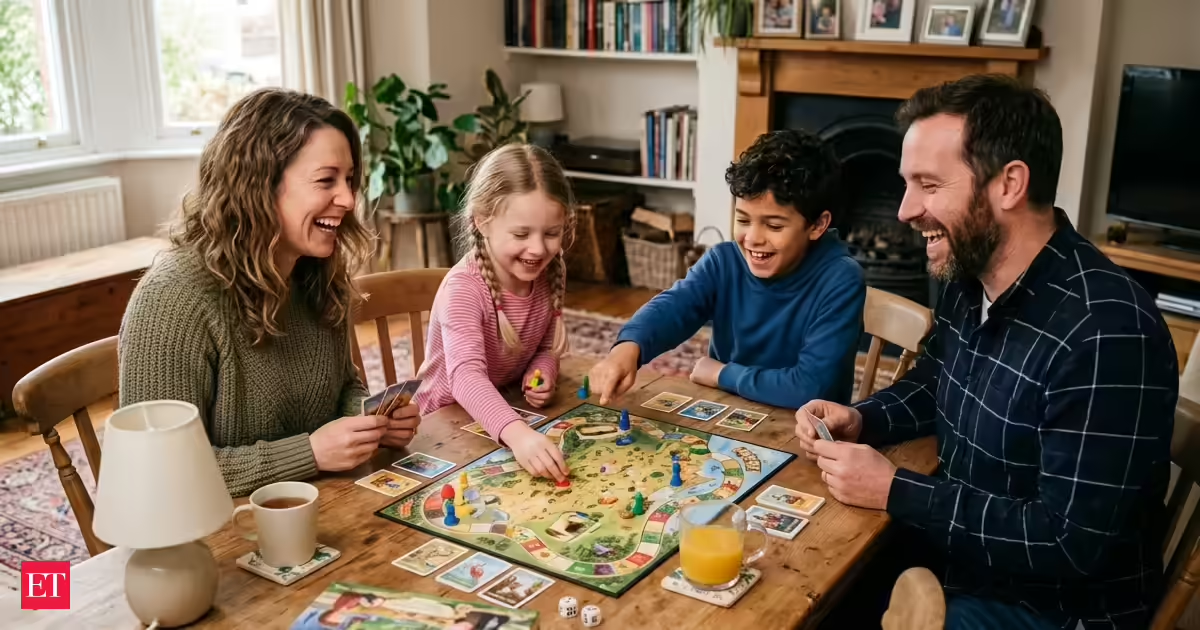
Psychology says parents who like to play board games at home with their kids, friends or family aren't just filling free time. Psychology explains that many parents choose board games because they create opportunities for learning, communication, cooperation, and emotional growth. Every turn, decision, and conversation during a game teaches something valuable. Families spend time together without depending on screens, and children learn important social skills through play. Researchers have found that games improve thinking, memory, teamwork, and self-control. This explains why board games continue to remain part of many households even when digital entertainment is available everywhere.Many people think board games are only meant for fun. Psychology offers another explanation. Parents who regularly play board games often want to create meaningful family interactions. They use games to encourage conversations, teach values, and strengthen relationships.Board games bring everyone to one place. During the game, family members listen to one another, solve problems together, and celebrate achievements. These shared experiences become part of family memories and help children develop confidence.Psychologists explain that children often learn better through play than through direct instruction. Games provide situations where children naturally practice patience, taking turns, following rules, and accepting both success and failure.What psychology says?Psychology views board games as structured social activities that support emotional and cognitive development. They encourage cooperation while also introducing healthy competition. Children learn to wait for their turn instead of demanding immediate rewards. They also learn how to handle disappointment if they lose and how to celebrate without disrespecting others when they win.You Might Also Like:Parents become active participants instead of observers. This shared participation builds trust between parents and children. Psychologists also explain that regular family activities increase emotional security. Children who spend quality time with their parents often develop stronger communication skills because they experience open conversations in relaxed settings.What does this mean?This behavior shows that parents value connection more than constant entertainment. Board games create situations where family members solve problems together. Everyone becomes involved in making decisions, planning strategies, and understanding different viewpoints. Children observe how adults respond to challenges. They copy behaviors such as staying calm, thinking before acting, and respecting rules.The activity also reduces dependence on electronic devices for entertainment. Instead of individual screen time, families experience shared moments that encourage face-to-face communication. Over time, these repeated interactions strengthen family relationships.You Might Also Like:Why is it done?Parents often choose board games because they combine learning with enjoyment. Unlike lectures or classroom lessons, games allow children to learn naturally. They practice counting, reading, planning, memory, attention, and decision-making while enjoying the activity.Parents also use games to introduce important life values. Children learn fairness because everyone follows the same rules. They learn responsibility by accepting the consequences of their choices.They learn persistence because many games require multiple attempts before success. Families also find board games useful because they encourage conversation without distractions from phones or televisions.Which psychology theory explains this behavior?Several psychology theories help explain why board games benefit families.You Might Also Like:Social Learning Theory, introduced by Albert Bandura, explains that children learn by observing other people. During board games, children watch how parents solve problems, control emotions, and communicate respectfully. They often copy these behaviors in everyday life.Lev Vygotsky's theory of social development also explains the importance of shared learning experiences. Children improve their thinking by interacting with more experienced people. Board games provide these learning opportunities in a relaxed environment.Developmental psychology also supports play-based learning. Researchers believe that structured play helps improve reasoning, memory, attention, and social understanding.This psychology study saysMany psychology studies have explored the effects of board games on children and families. Research suggests that board games improve executive functioning. These mental skills include planning, flexible thinking, memory, attention, and self-control. Some studies also report improvements in communication and emotional regulation among children who regularly participate in family games.Researchers have found that cooperative games encourage teamwork, while competitive games help children learn emotional resilience and sportsmanship when guided by supportive adults. Studies further indicate that regular family activities contribute to stronger emotional bonds and better parent-child communication.How board games help people of different generations connect?Research suggests that board games do more than provide entertainment. They create opportunities for children and older adults to spend meaningful time together while building communication and social skills. An observational study involving 11 pairs of older adults and school-aged children found that both cooperative and competitive board games encouraged positive social behaviors. Older adults showed more supportive actions, encouragement, and compliments during gameplay, while competitive games surprisingly led to more prosocial interactions than cooperative ones. The study also found that players experienced positive emotions throughout the sessions, although many older participants reported that the games required greater effort. Researchers believe these findings highlight how board games can strengthen relationships, encourage learning across generations, and support healthy social interaction in family and community settings.The study was led by Pierre Cès along with Anne-Lise Doyen, Mathilde Duflos, and Caroline Giraudeau from the University of Tours and the University of Orléans in France. It was published in the Scandinavian Journal of Psychology in March 2025. The researchers observed 11 pairs of older adults and school-aged children playing both cooperative and competitive board games to examine how these activities influence prosocial behavior and positive emotions.The principle behind itThe psychology behind board games is based on active learning. Children remember experiences better when they actively participate instead of simply receiving information. Games combine thinking, emotions, communication, and decision-making into one activity.Each move requires attention and planning. Every result provides immediate feedback. Winning creates motivation. Losing creates learning opportunities. Repeating this process helps children build confidence while improving problem-solving abilities. The combination of practice and feedback strengthens learning over time.What to learn from it?Parents can use board games as simple learning tools at home. The goal should not always be winning. Instead, families can focus on communication, cooperation, and enjoying shared experiences. Children benefit when parents explain rules patiently and encourage positive behavior during the game.Games also teach flexibility because situations constantly change. Players must adjust their strategies and think carefully before making decisions. Families who regularly spend time together through activities like board games often create routines that support emotional well-being.Life lessons from the behaviorBoard games teach lessons that extend beyond the game itself.Children learn that effort matters more than immediate success.They understand that mistakes help people improve.They discover that listening carefully often leads to better decisions.They learn to respect rules, value teamwork, and appreciate different opinions.Parents also benefit because they gain insight into how their children think, react, and solve problems.The experience strengthens communication and creates opportunities for meaningful conversations.Psychology suggests these simple interactions can contribute to healthy family relationships over time.As technology becomes a larger part of daily life, board games continue to offer something unique. They bring people together around one table, encourage face-to-face communication, and create learning experiences through shared participation. This explains why many parents continue choosing board games as an important part of family life.
Psychology says parents who like to play board games at home with their kids, friends or family aren't simply playing games: What this habit reveals
Psychology says parents who like to play board games at home with their kids, friends or family aren't simply looking for entertainment. Psychology explains that board games help people build trust, communication, patience, emotional control, and problem-solving skills. Research also shows that regular family game sessions support healthy relationships and learning. Understanding this behavior helps explain why many families continue to choose board games in a digital world.
1,160 words~5 min read