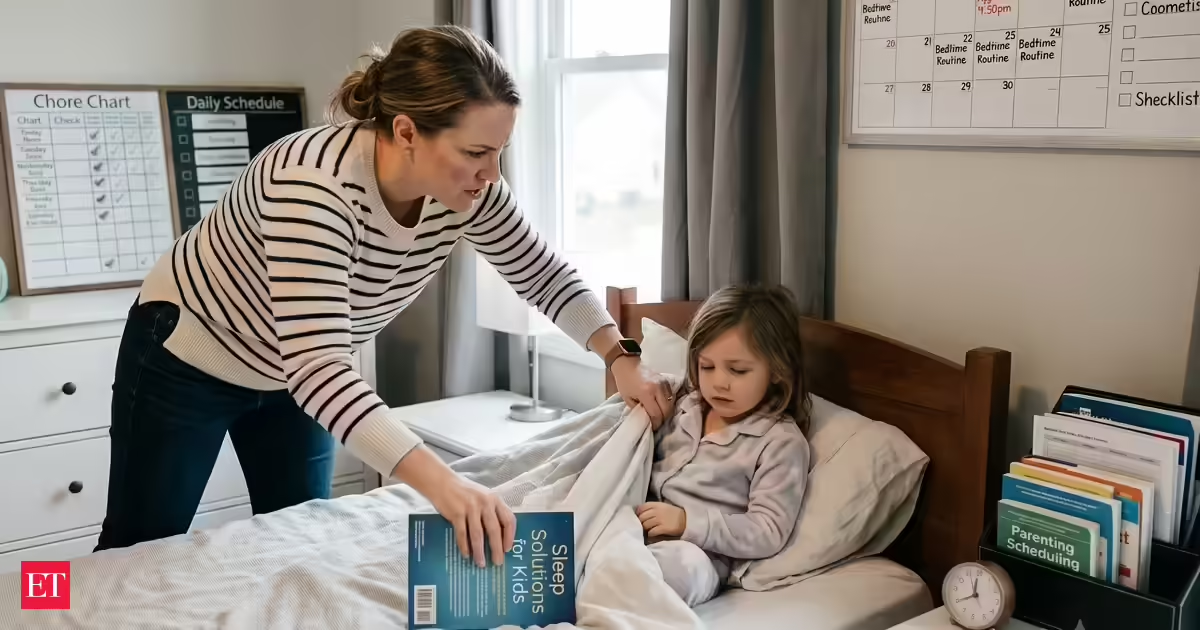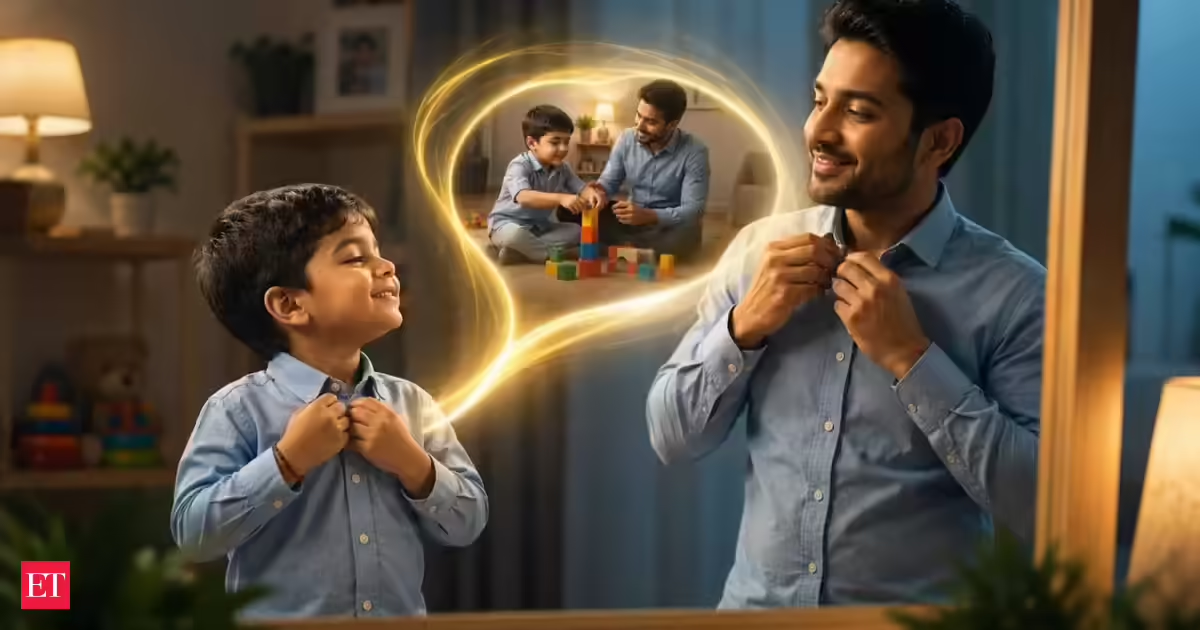
Every parent has experienced this moment. A child pretends to answer a phone exactly like mom. Another crosses their arms the same way dad does. Some children repeat phrases their parents say without fully understanding their meaning. At first, it seems adorable. But psychology suggests something much deeper is happening. Children are not simply playing around. They are collecting information about how to become human. Long before children develop critical thinking skills, they learn by observing the people closest to them. Parents become their first teachers, emotional guides and behavioral blueprints.In many ways, children are constantly asking themselves one question: "How do people like me behave in this world?"Psychology suggests that the answer often comes from home. Here is what may actually be happening.Psychology says kids who copy their parents aren't being mischievous, they're building their identity one habit at a timePsychology says children are natural observers before they become active learnersChildren begin learning long before formal education starts. Their brains are designed to absorb information from their surroundings. Psychologists call this observational learning. Originally developed by psychologist Albert Bandura, Social Learning Theory explains that children learn many behaviors simply by watching other people.Parents become their most influential models. This includes obvious habits such as exercising, cooking and reading. But it also includes subtle behaviors. How parents react to stress. How they speak to strangers. How they apologize. How they treat themselves. Children absorb all of it. Modern examples are everywhere.You Might Also Like:Many toddlers pretend to work on laptops because they regularly see their parents working remotely. Others imitate video calls, fitness routines and even grocery shopping habits. The brain treats these observations as valuable life lessons.Emotional contagion may explain why moods spread inside familiesParents often focus on what they say. Psychology suggests children pay equal attention to emotions. Researchers call this emotional contagion. Humans naturally absorb and mirror the emotional states of people around them.Children are especially sensitive because their emotional regulation skills are still developing. If parents frequently remain calm during stressful moments, children slowly learn that calmness is possible. If parents constantly appear overwhelmed, children may internalize stress as a normal response to life. This does not mean parents must be perfect. It simply means emotions are contagious.Children often learn how to manage feelings by watching adults manage theirs. Researchers from the American Psychological Association have frequently highlighted the importance of emotional environments during child development.Psychology says mirror neurons may help children practice adulthoodScientists have long studied something called mirror neurons. Mirror neurons are brain cells believed to activate both when people perform an action and when they observe someone else performing it.Psychology says kids who copy their parents aren't being mischievous, they're building their identity one habit at a timeAlthough scientists continue researching their exact role, they may help explain why imitation feels so natural. When children see parents laugh, cook or wave goodbye, their brains are essentially rehearsing those actions. The behavior slowly becomes familiar. This is one reason children often mimic everyday activities without being asked. The brain is practicing future behaviors.Attachment theory says safety creates stronger learningAnother explanation comes from Attachment Theory. Developed by psychologist John Bowlby, the theory explains that children learn best when they feel emotionally secure. Parents act as what psychologists call a secure base.A secure base gives children confidence to explore the world while knowing emotional support is available. When trust exists, learning accelerates. This is why simple routines become powerful. Family dinners. Bedtime stories. Morning walks.These repetitive experiences create emotional stability while teaching behavioral patterns. The lesson is often invisible but incredibly powerful.Today's digital world means children are watching parents even more closelyModern parenting looks different than it did 20 years ago. Technology has entered nearly every aspect of daily life. Children are now observing digital habits alongside traditional behaviors. Modern examples are easy to spot.Children imitate taking photos before eating. Some pretend to record videos. Others copy scrolling motions before they can even read. Psychologists increasingly discuss digital modeling, the idea that children now learn technology habits by observing adults.This means children are not only learning how to interact with people. They are learning how to interact with devices too. Researchers from Harvard's Center on the Developing Child have repeatedly emphasized that responsive interactions remain one of the strongest influences on healthy development.Parents do not need perfection — they need consistencyOne of the biggest misconceptions is that parents must never make mistakes. Psychology suggests something different. Children do not need perfect role models. They need authentic ones. In fact, healthy mistakes can become valuable lessons. When parents apologize after losing patience, children learn accountability. When parents admit they do not know something, children learn humility.When parents ask for help, children learn vulnerability is acceptable. The goal is not perfection. The goal is consistency. Children are not looking for flawless adults. They are looking for predictable emotional patterns.Psychology says children are not copying habits — they are building their future selvesPsychology teaches us that everyday habits often have extraordinary influence. Children are not simply mimicking behavior for fun. They are building their identities. Every interaction becomes data. Every routine becomes a lesson. Every emotional response becomes information. In a world full of teachers, influencers and endless digital content, parents still remain a child's most powerful example.Because long before children remember advice, they remember patterns. And perhaps that is why the smallest habits matter the most. Not because children are always listening. But because they are almost always watching.FAQsWhy do children copy their parents so much?Children learn through observational learning. They watch behaviors, emotions and routines to understand how the world works.Is copying parents a sign of healthy development?Yes. In most cases, imitation is a normal and important part of cognitive and social development.
Psychology says kids who copy their parents aren't being mischievous, they're building their identity one habit at a time
Psychology teaches us that ordinary daily habits can have a profound impact on a childs development. Children are not simply copying behaviors for entertainment. They are actively shaping their sense of self. Every interaction provides information about the world around them, and every routine quietly becomes a lesson that helps form their identity.
956 words~4 min read