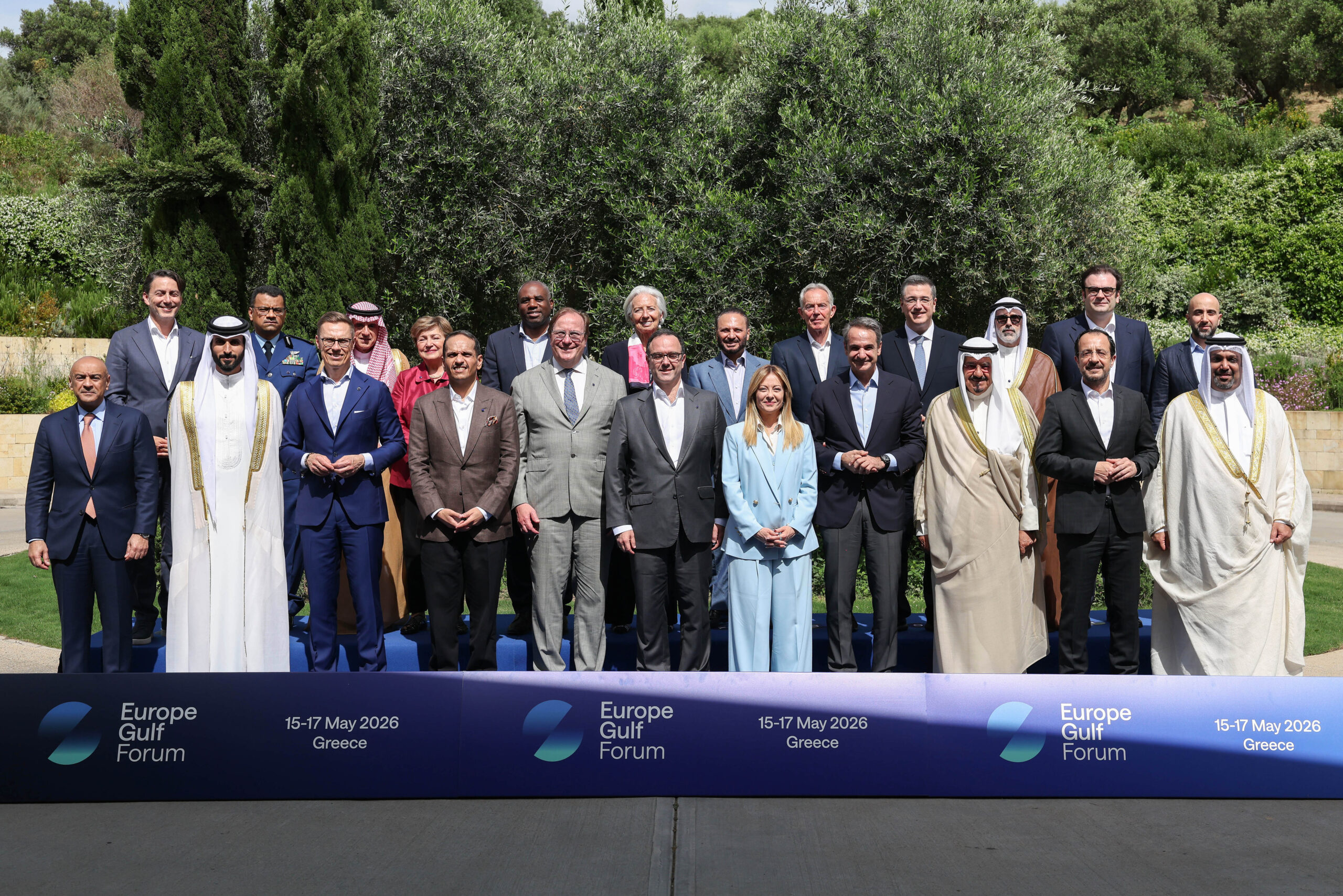
WASHINGTON—Over the past several weeks, I’ve joined discussions with senior leaders from Europe and the Arab Gulf on the future of their strategic relationship. These included the inaugural Europe Gulf Forum, held in Costa Navarino, Greece, in May, as well as June engagements with current and former officials in Washington, Brussels, and the United Kingdom.
The message is clear. The old, international rules-based order was never perfect, with great powers exempting themselves when convenient. But the instability emerging now as the old order recedes is much worse. The US is signaling ambivalence about enforcing the centuries-old principle of freedom of navigation—with President Donald Trump himself threatening to collect tolls from the Strait of Hormuz. Trump’s negotiated sixty-day ceasefire with Iran leaves open difficult questions around whether there will be any limits on Iran’s nuclear program or its control of Hormuz.
Nations in Europe and the Gulf share major interests on these loose ends, given that they are both more in range of Iran’s missiles than the United States and their economies are most jeopardized by a compromised Hormuz. These “middle powers” have little choice but to hedge between global superpowers unless they unite.