https://arab.news/6d8wv
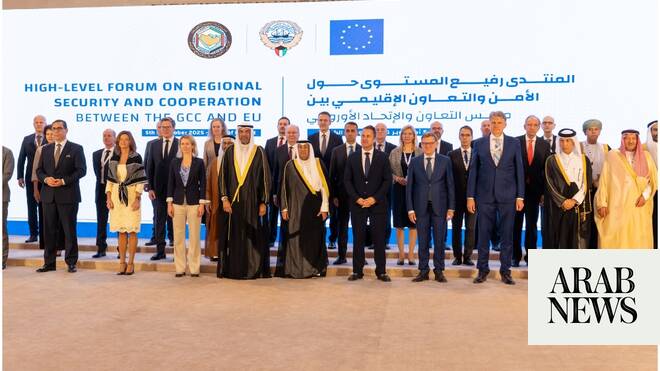
When the Gulf Cooperation Council and EU heads of state and government held their first summit last October, they endorsed the blueprint proposed by their ministers on security cooperation. While the two blocs have been closely engaged for decades, mainly on economic and political issues, it was the first time that they decided to work closely on security, as part of their intention to “elevate their strategic partnership to the next level,” by working together to safeguard “global and regional security and prosperity, including preventing the emergence and escalation of conflicts and resolving crises,” according to the joint communique issued at the time.
Regional security, whether in the Middle East, Europe or elsewhere, has to be anchored in “multilateralism, international law and international humanitarian law, as well as sustainable development and prosperity,” in a reference to the weakening, if not total abandonment, of these principles in many parts of the world.
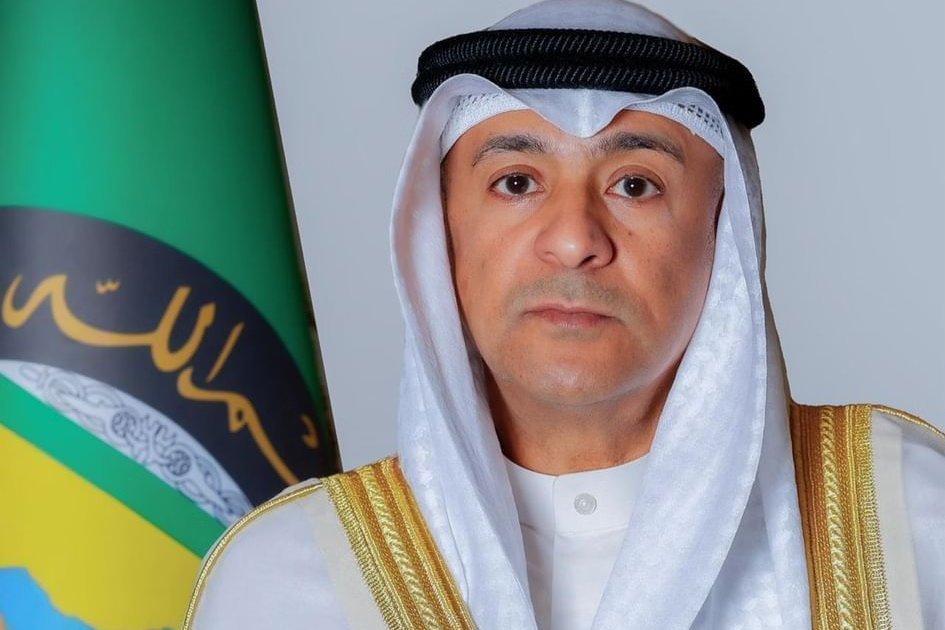
Nine months after that summit was held in Brussels, it is appropriate to assess how much has been done in security cooperation. A meeting of experts was held this week in Cambridge, a neutral territory, to evaluate progress. The meeting was organized by the Gulf Research Center, a well-established Saudi-based think tank. The GRC, celebrating its 25th anniversary this year, is probably the most prolific producer of scholarly and policy-oriented literature on the Gulf. As part of its program, it organizes an annual gathering in Cambridge of academics and policymakers from around the world, to discuss Gulf-related issues over several days of intense deliberations. This year marked the 15th of such convocations; there was more than 400 in attendance. Saudi Foreign Minister Faisal bin Farhan opened the meeting, followed by the GCC Secretary-General Jassem Mohammed Al-Budaiwi, and other senior officials from the two organizations.