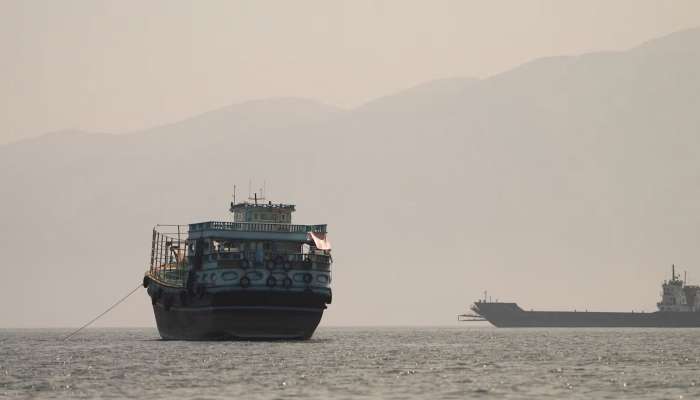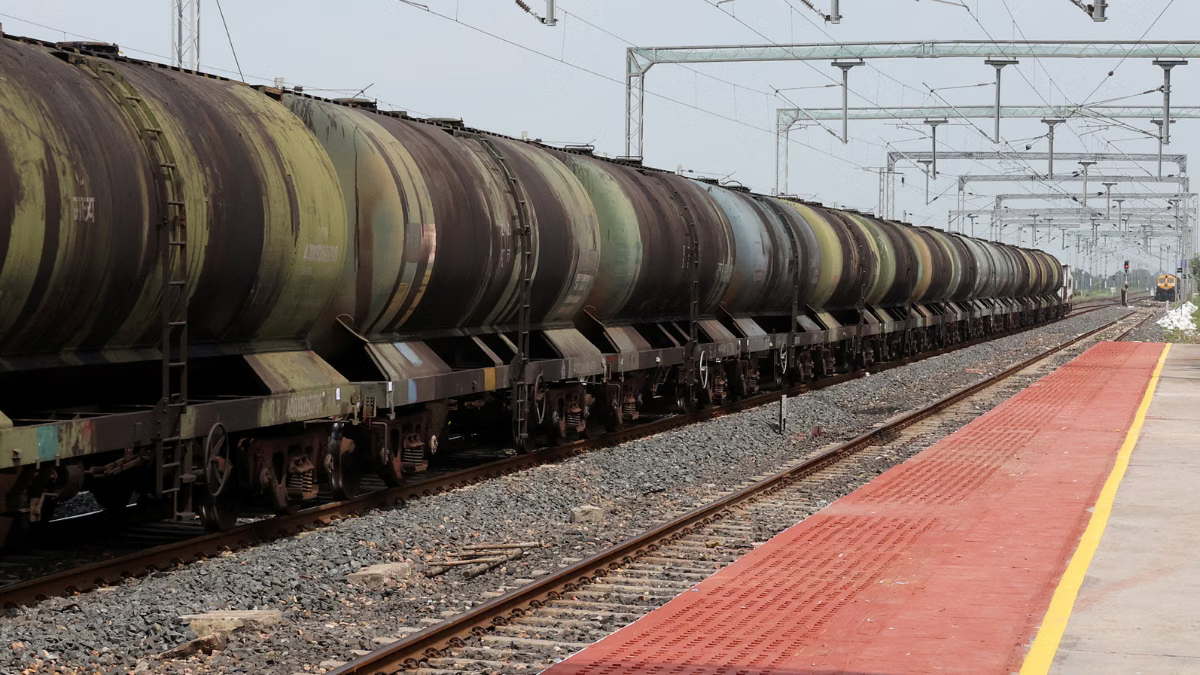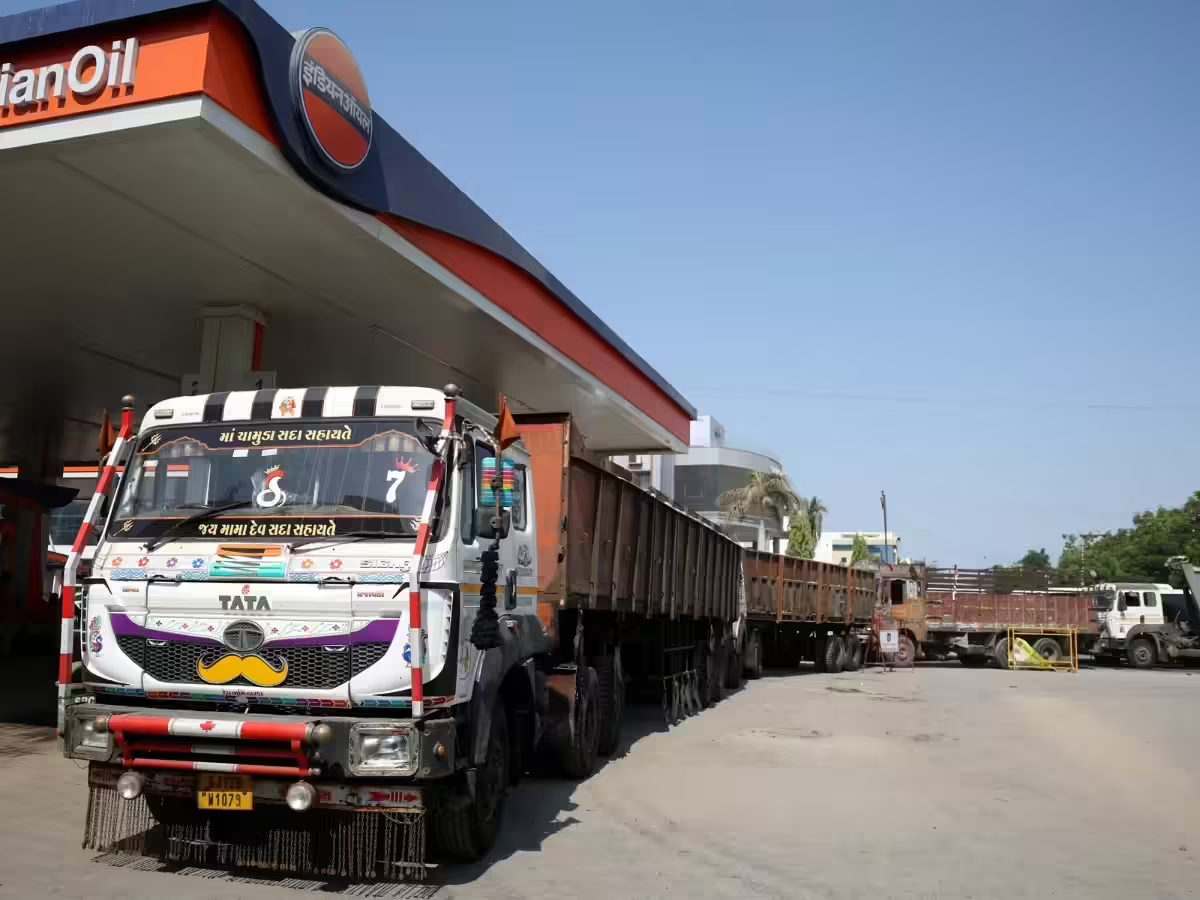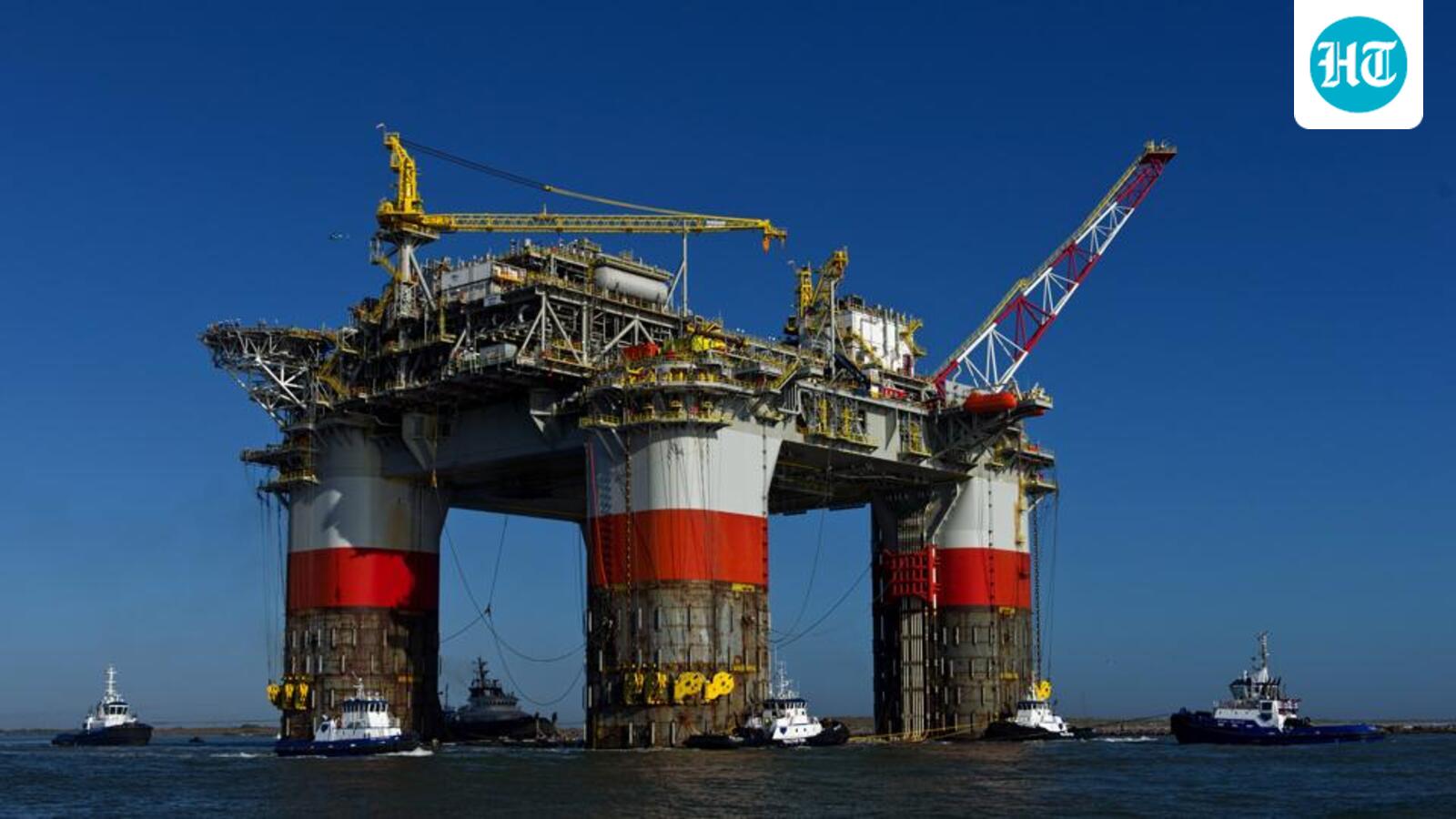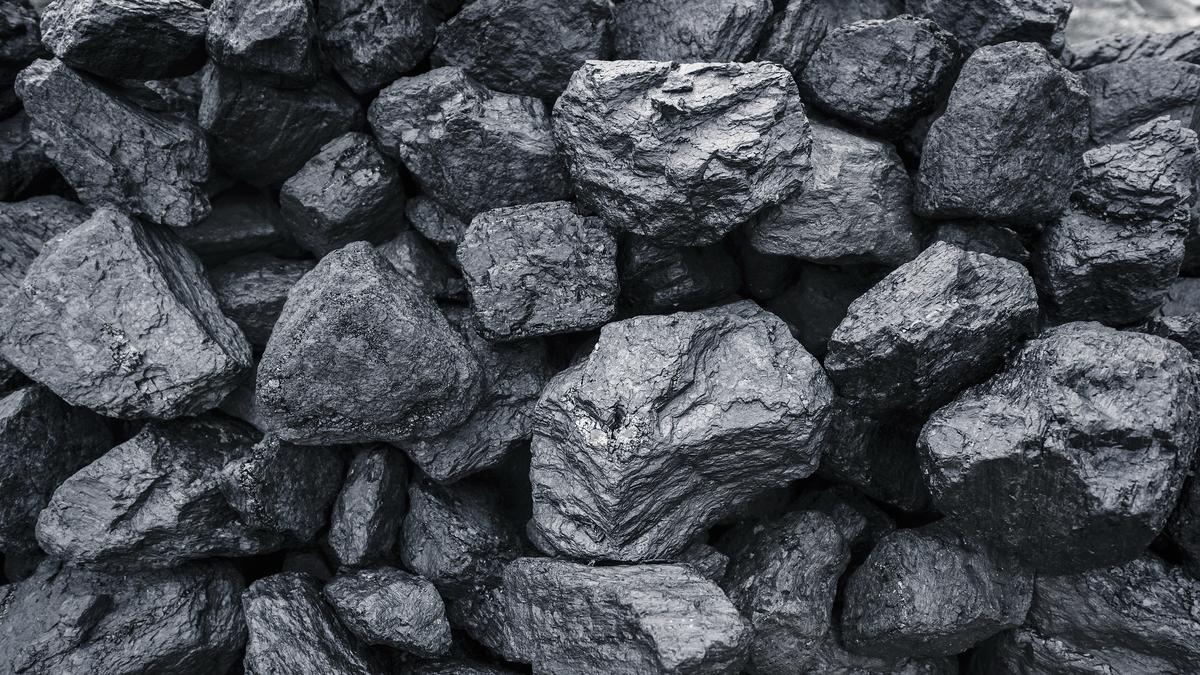
There are two ways a country can survive an energy shock: by managing it skilfully through diplomacy, diversification, and fiscal measures, or by reducing dependence on the disrupted resource. India excelled at the first during the disruption in the Strait of Hormuz in 2026, with its refineries demonstrating exceptional technical flexibility in adapting to crude supply disruptions. The crisis reaffirmed that indigenous scientific capability and technological self-reliance are the decisive forms of insurance against energy market volatility — far more durable than any diplomatic or military arrangement alone. However, India has yet to reduce its underlying dependence, and coal offers a key opportunity to begin.Same discipline for coal chemistryBefore turning to that opportunity, it is worth understanding why refinery flexibility proved so effective, because the same discipline will be required for coal chemistry. India’s supplier base has nearly tripled over the past two decades. Each supplier provides a different crude slate, with distinct density profiles, sulphur content, and viscosity characteristics, and a refinery engineered for only one crude type becomes vulnerable to supply disruptions. Through investments in indigenous research, metallurgical advances, process innovation, and workforce training, India’s refining sector developed the capability to process feedstock across a broad range of specifications. When the Strait of Hormuz closed and sourcing options shifted abruptly, Indian refineries adapted with technical confidence, processing crude from the Americas, the Atlantic Basin, West Africa, Russia, and India’s West Asia partners. That flexibility at scale is the product of indigenous research and development, technical discipline, and engineers who understand their systems as interconnected processes rather than fixed machines.The speed of the transition provides concrete evidence of this capability. Within weeks of the closure, non-Hormuz sourcing increased from 55% to 70% of India’s crude intake. That pivot reflected a decade of upstream diversification combined with the downstream technical flexibility built into India’s refinery fleet. India’s private and public sector refineries had the engineering capability to process multiple crude types, adjust operating parameters at short notice, optimise fractionation patterns for different feedstock specifications, and maintain product quality and safety throughout the transition.This capability was built through sustained investment in process understanding, operator training, and the institutional knowledge that enables a complex industrial system to absorb shocks without fracturing.The liquefied petroleum gas (LPG) story offers a clear example of how indigenous refining capability can absorb a supply shock faster than markets can price it. India’s LPG import infrastructure had roughly doubled over the preceding decade, providing greater distribution redundancy.When the Strait of Hormuz closure threatened LPG availability, the bottleneck was not at the import ports but in how much LPG the existing refinery fleet could produce from the available feedstock. Under the LPG control order, refineries were directed to maximise yields, and within five days, domestic production increased from 35 Thousand Metric Tonnes (TMT) per day to 54 TMT per day, with engineers adjusting fractionation and cracking units in real time. That increase was engineering in action, not an accounting adjustment. It was one half of how India closed the gap; disciplined demand management provided the other. The production side — which is the focus of this article — rested entirely on technical capability built through years of sustained investment.Energy security through moleculesRefinery flexibility solved the problem that the Strait of Hormuz crisis actually presented: how to keep a wide range of crude flowing through a fixed set of plants. It did not, and could not, solve the deeper structural problem the crisis exposed — that India’s LPG dependence is far more concentrated than its crude dependence. A refinery can be engineered to process crude from 40 different countries. LPG, however, cannot be engineered to come from 40 different geographies, because the molecule is overwhelmingly sourced from a handful of Gulf and Atlantic Basin producers. The real long-term solution to LPG vulnerability is not refining the same imported molecule more efficiently. It is producing a domestic molecule that serves the same purpose.That molecule already exists, and India has the raw material to produce it in extraordinary abundance. Dimethyl ether (DME) is a clean-burning gas chemically similar enough to LPG that it can be blended directly into existing cylinders and pipelines, requiring no new distribution network. It can be produced through coal gasification, which converts coal into syngas and then into DME. India possesses some of the world’s largest coal reserves, and the Bureau of Indian Standards has already approved blending up to 20% DME with LPG. One recent industry assessment found that a 20% blend sourced from coal gasification could displace roughly 6.3 million tonnes of LPG imports each year, saving nearly ₹34,000 crore in foreign exchange annually. That is not a marginal gain. It is the kind of structural reduction in import dependence that the Hormuz crisis should have taught India to take seriously.This crisis has demonstrated how India’s investments — in institutions, infrastructure, diplomacy and human capability — can translate into national resilience. Innovation is often equated with breakthrough technologies. In reality, it is equally about creating new ways of integrating people, institutions, and ideas to solve unprecedented problems. The Ministry of Petroleum and Natural Gas’s response exemplified this broader understanding of innovation.From innovation to executionYears ago, scientists at the CSIR’s National Chemical Laboratory developed an indigenous technology for converting methanol into DME, a clean substitute for LPG. During the recent crisis, it was deeply gratifying to see the Centre for High Technology under the Ministry of Petroleum and Natural Gas move with remarkable speed to approve the scaling up of this indigenous pilot technology. It was a powerful reminder that investments in science made years earlier can become strategic national assets when unexpected crises arise.This is exactly how innovation ecosystems should function. Research laboratories generate knowledge, government institutions identify strategic opportunities, and industry scales promising technologies. Together, they build national resilience.That structural reduction is no longer waiting on policy. The Union Cabinet has approved a ₹37,500 crore scheme to promote surface coal and lignite gasification, explicitly citing the West Asia crisis as part of its rationale and targeting 100 million tonnes of coal gasification annually by 2030. The scheme provides an incentive of up to 20% of plant and machinery costs, separate from the DME blending ratio discussed above, and extends coal linkage tenure to 30 years — the kind of long-term horizon certainty that capital-intensive process industries require before committing investment. What remains is execution. India’s coal has a higher ash content than the cleaner coal that underpinned China’s dominant coal-to-chemicals industry, and domestic gasification capacity is still far below the ambition this scheme represents. Closing that gap is now a question of industrial discipline and investment, not policy intent. The intent has already been settled.The remaining work — closing the ash-content gap, scaling gasification capacity, and building the technical depth China has spent two decades accumulating — is the same kind of work India’s refining sector undertook over two decades of investment in metallurgy, catalysis, and process engineering. The lesson of Hormuz is not that India’s refineries were ready and nothing else needs to change. It is that indigenous capability, once built, becomes a permanent strategic asset, and that the policy commitment to building the next one is now in place. The molecule is different, but the discipline required to master it is exactly the same as that which built the refineries that carried India through this crisis.R.A. Mashelkar is a distinguished scientist and former Director General of the Council of Scientific and Industrial Research (CSIR)
The case for building India’s coal chemistry capability
India's refinery flexibility, which has proved to be so effective, also demostrates the very discipline that coal chemistry will require
1,241 words~6 min read