In Focus delivers deeper coverage of the political, cultural, and ideological issues shaping America. Published daily by senior writers and experts, these in-depth pieces go beyond the headlines to give readers the full picture. You can find our full list of In Focus pieces here.At 94, the political philosopher Harvey Mansfield has given the semiquincentennial a bracing interpretation. In a recent Wall Street Journal interview, he describes an America that is both the world’s oldest continuous democracy and a perpetually young nation — one that, in his Machiavellian phrase, must be “continually refreshed” like all regimes. The mechanism is the ballot: We are, he says, a country that renews itself every four years. The young are good, he adds, “because they’re revolutionary.”It is a beautiful account, and a hopeful one for a birthday. But it leaves out the part of the inheritance that elections cannot touch — and that part is where our trouble lies.
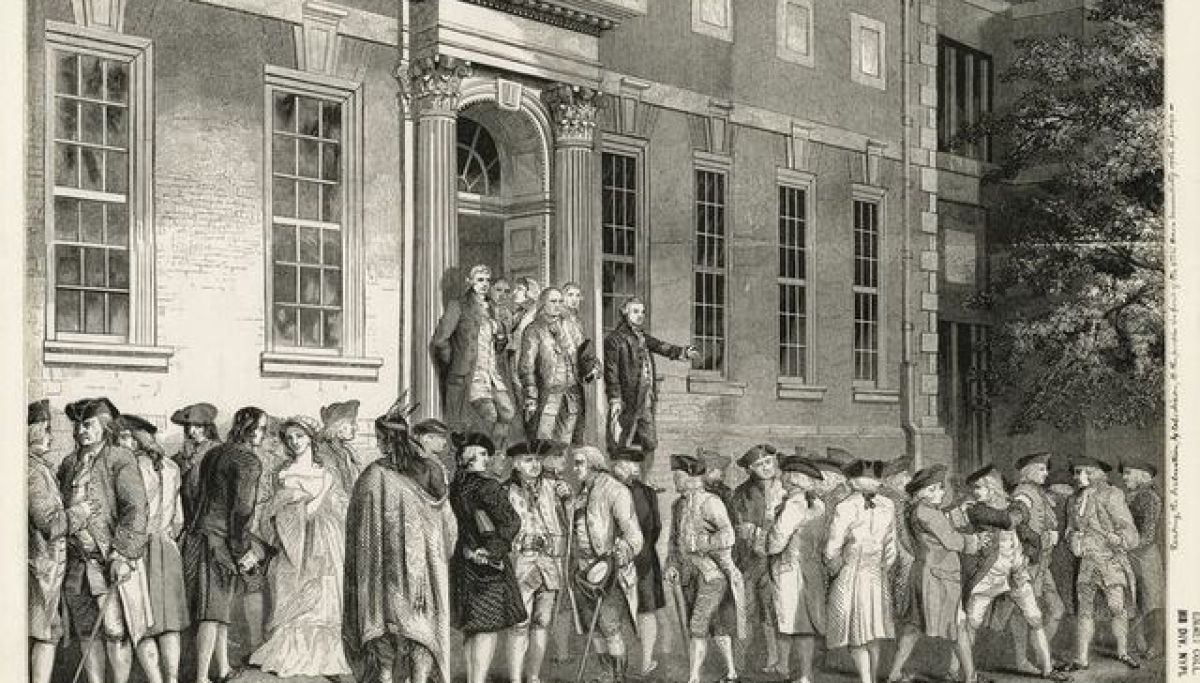
Mansfield himself seems to recognize as much, which is what makes the interview so revealing. Alongside the engine of renewal, he runs a second that pulls against it. He notes that Madison wanted the Constitution to become “venerable,” and he calls that wish “very un-Machiavellian.” He speaks of the founders as a “pantheon” and insists the Constitution “deserves to be venerated, not just accepted.” Renewal says: tear up and begin again. Veneration says: receive, keep, and hand on. These are not the same disposition; they may not even be friends.Mansfield reconciles them with Lincoln’s image of the Declaration as an apple of gold in a frame of silver — revolutionary fervor as the precondition of prudential veneration. It is the right instinct. But the image names a result, not a cause. The harder question is how veneration gets produced, generation after generation. And the answer is not “every four years.”His own account of the founding hints at the answer. The young men who made the revolution — Jefferson at 33, Madison and Hamilton not much older — were, Mansfield observes, “under the watch and supervision of Franklin and Washington.” The revolutionary generation did not trust youth alone to renew the country; it paired youthful energy with elders who had something to hand down. “We kept our young under control,” he says, “and they didn’t go for destructive behavior.” That is not a story about renewal. It is a story about transmission — about the old forming the young, even in the act of revolution.Here is what an election cannot do. Veneration is not a vote; it is a learned attachment, and like everything learned, it must be taught — not as information but as formation. A citizen does not come to revere a constitution by reading it once. He comes to revere it by being raised inside institutions that treat it as authoritative and that model the keeping of it. The capacity Mansfield admires — the willingness to find something venerable — is the slow work of families, congregations, schools, scout troops, communities, and the local associations Tocqueville thought were the real schools of American liberty. They transmit an inheritance by treating it as something received rather than invented, and therefore binding.The light in the Capitol dome cupola is illuminated on Oct. 6, 2021. (AP Photo/J. Scott Applewhite)