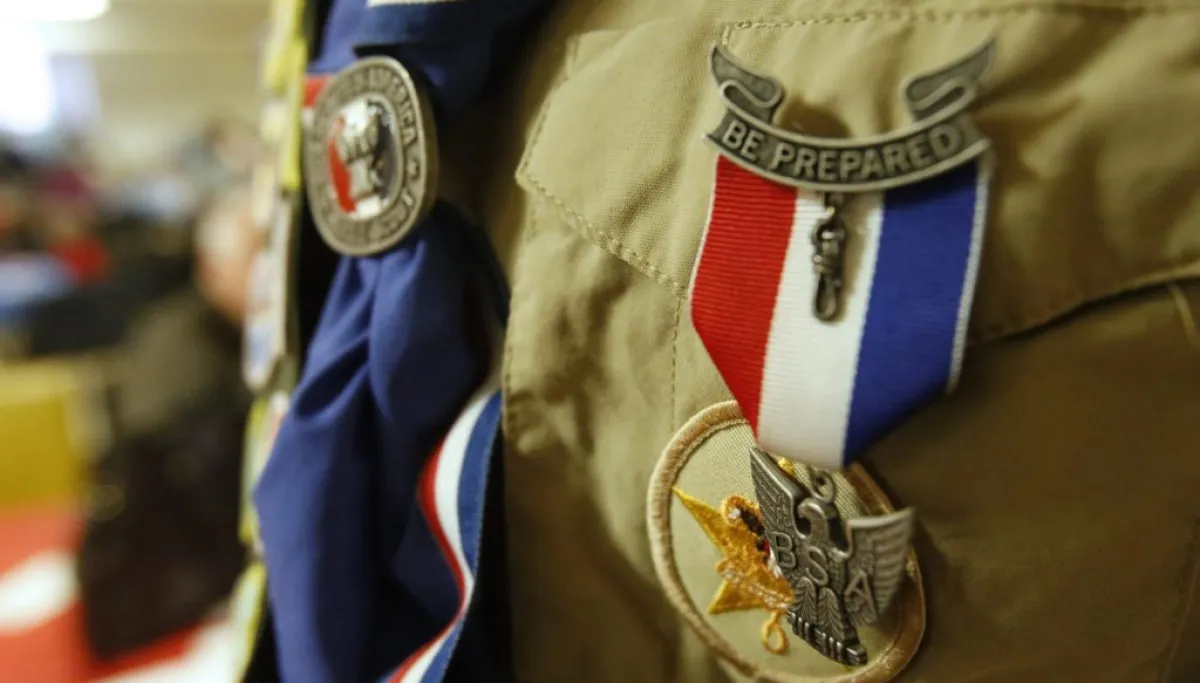
In Focus delivers deeper coverage of the political, cultural, and ideological issues shaping America. Published daily by senior writers and experts, these in-depth pieces go beyond the headlines to give readers the full picture. You can find our full list of In Focus pieces here.American boyhood used to come with company. For most of the past century, a boy could count on rooms full of men who were not his father — scoutmasters, coaches, religious leaders, the fathers of his friends — that were supplied almost automatically by programs such as Y-Indian Guides and the Boy Scouts. Those programs rested on a premise so ordinary that nobody thought to defend it: Boys need sustained, voluntary, intergenerational time with men who are trying. The aesthetics of some of them did not age well. But the premise was never the embarrassing part. The premise is now an empirical question, and the data have an uncomfortable answer.Start with the institutions that used to do this work at scale. The Boy Scouts of America peaked in 1972 at 6.5 million members and remained at 4.8 million as recently as 1998. By 2019, the flagship Cub Scout and Scouts BSA programs were at 1.97 million. By 2020, they had fallen to 1.12 million — a 43% single-year drop. That year, the organization filed for Chapter 11 bankruptcy, facing more than 80,000 sexual-abuse claims. It emerged in 2023 after a roughly $2.4 billion settlement and has since rebranded as Scouting America. The bankruptcy filings put youth membership at around 762,000. Gallup data from 2010 revealed a generational shape: 45% of men 50 and older report having been Boy Scouts, compared with 27% of men aged 18-24. The bankruptcy explains the cliff. It does not explain the slope, which also runs through 4-H, CYO, Big Brothers, the Police Athletic League, and the local YMCA. Whatever one thinks of any individual institution, they were doing something at scale, and they are no longer doing it.
What we lost when we lost the Indian Guides
The communities that used to form men are passing out of existence, and the consequences are making themselves known.
1,352 words~6 min read