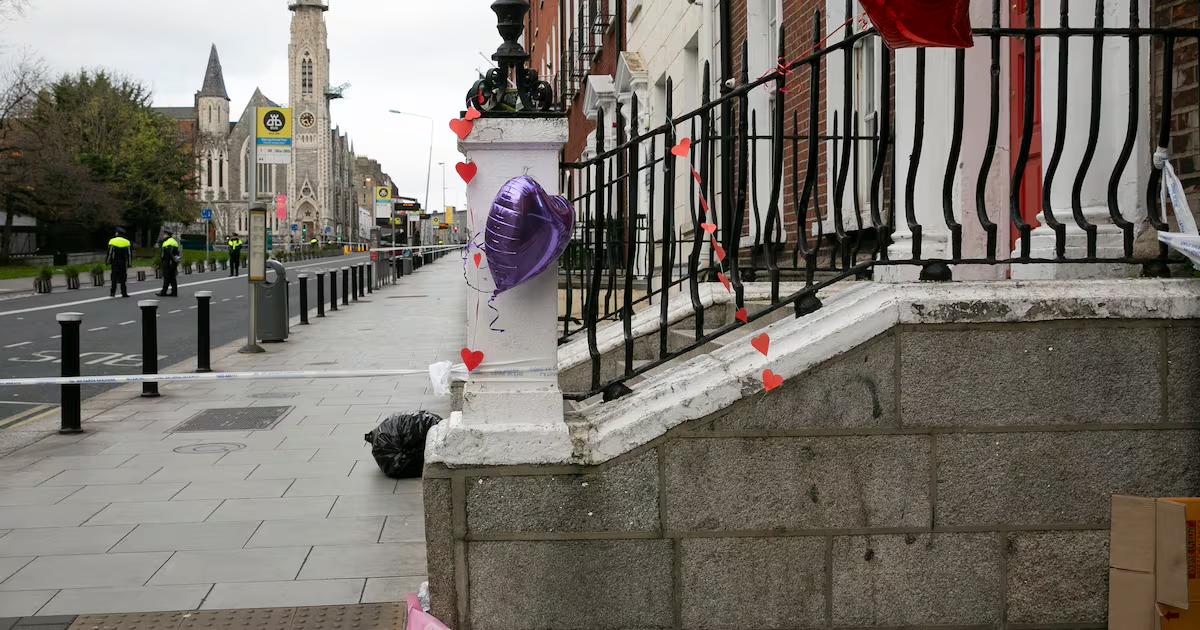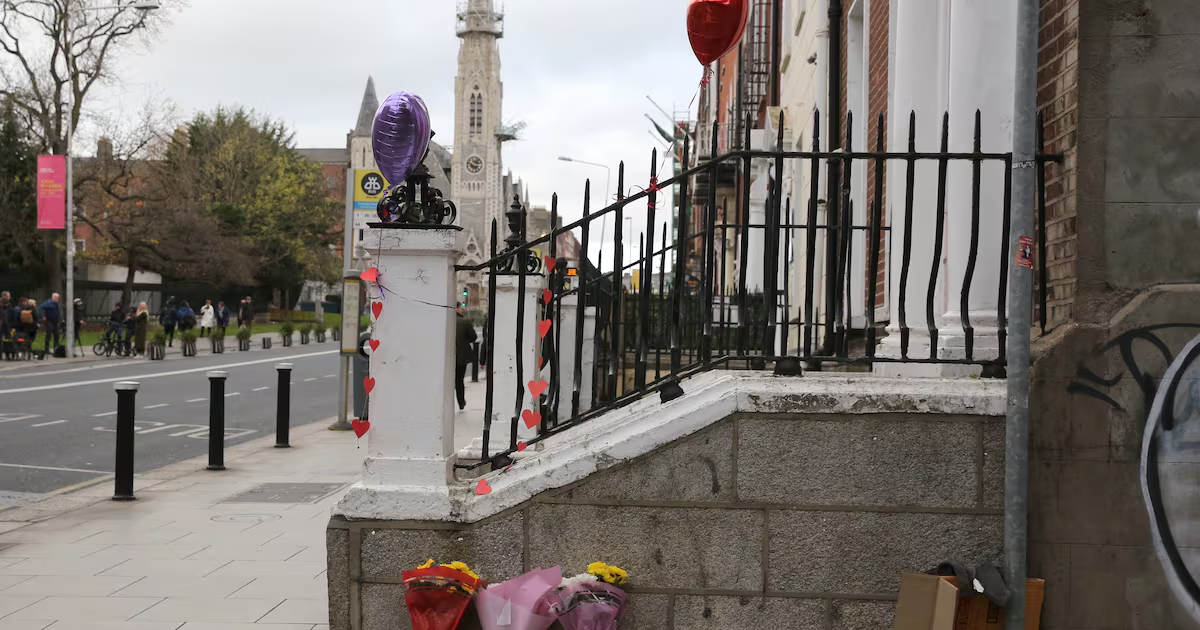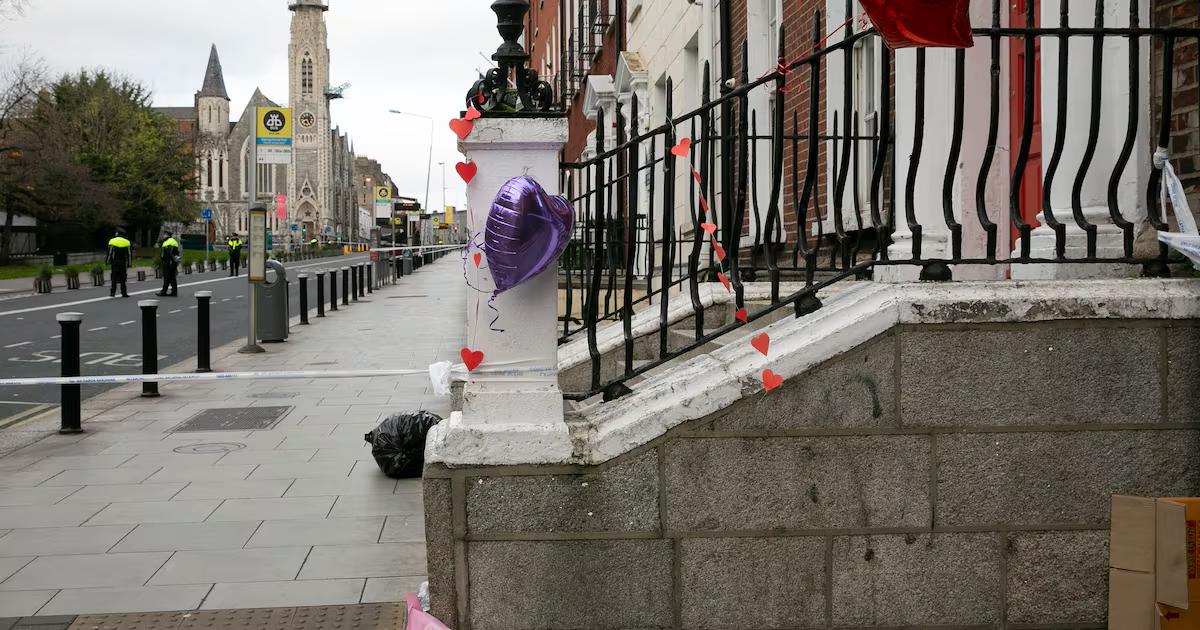
The mother of the young girl who has been left with a lifelong disability after being attacked by Riad Bouchaker has said she does not think there is “anything to forgive”.The woman, who is an immigrant to Ireland, said she did not believe “anybody in their right state of mind” would have carried out such an attack.She was speaking in an interview broadcast after Bouchaker was found guilty on Wednesday at the Central Criminal Court of the attempted murder of three young children at Dublin’s Parnell Square in November 2024.The 52-year-old’s attack, which saw another girl and a boy injured, then aged five and six, preceded violent riots in Dublin city that night.In an interview with Sky News, the mother, who spoke anonymously, said she did not know what her daughter would be like had she “progressed the natural way”.“He stole that from her,” she said.Her daughter, aged five when she was stabbed in the heart, was regarded as clinically dead at the scene, Bouchaker’s trial heard.Now aged seven, she requires 24-hour care for the rest of her life.However, asked if she could forgive Bouchaker, her mother said: “I think that he has to forgive himself first, to be honest, I don’t know if he even understands what he did.Flowers left close to the scene of the stabbing on Parnell Square. Photograph: Gareth Chaney/Collins Photos “I don’t think there is anything to forgive because I don’t think that anybody in their right state of mind would have done that.”The mother also denied feeling anger towards him, saying it would not “change anything”.She remembered blood being “drained from my whole body, like I was about to pass out”, after being informed of the attack, before running to the scene of the incident within minutes.The mother cried as she recalled paramedics tending to her daughter, saying: “I think there were four people holding her body and they had taken her clothes off because of where her injury was.”“It’s burned in my memory,” she said, adding that both she and doctors believed her daughter would succumb to her injuries.Her daughter suffered what doctors described as “lifelong” and “life-limiting” severe brain and other injuries, and had no recollection of the attack.[ The inside story of the Riad Bouchaker trial: Horror and heroism at Parnell SquareOpens in new window ]“It was probably one of the hardest things I’ve had to do, to explain to her,” she said.“I just said that she got hurt, that that’s why she couldn’t move the way that she used to or that she wanted to, or she couldn’t speak to us the way that she wanted to or that she used to.”She recalled her daughter crying for about 20 minutes, though believed she subsequently “made peace with it”.“I said: ‘But we’re here, we’re supporting you and we’re doing our absolute best, so you can get the best chance.’”The attack by Bouchaker, a native of Algeria but living in Ireland and of no fixed abode, sparked widespread and violent riots across the capital after initial protests were organised by anti-immigration figures.Both parents of the girl immigrated to Ireland, with the mother saying she was previously told to “go back home” by passersby as they overheard her speaking her native language in Dublin.“They told me that I didn’t belong,” she said, describing it as “very upsetting” and “concerning”.“I think there has to be some kind of communication or some kind of message that there is space for everybody,” she said.
Mother of child injured in Parnell Square stabbing believes there is not ‘anything to forgive’
Woman, who is an immigrant to Ireland, does not believe ‘anybody in their right state of mind would have done that’
578 words~3 min read