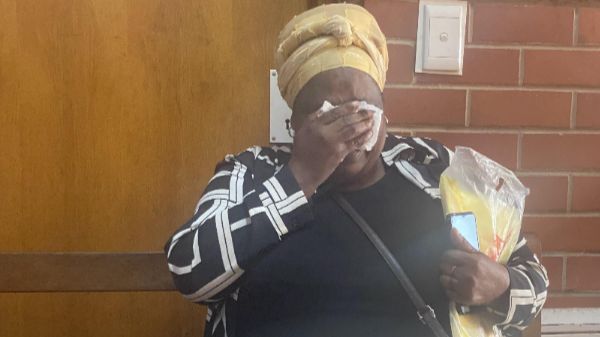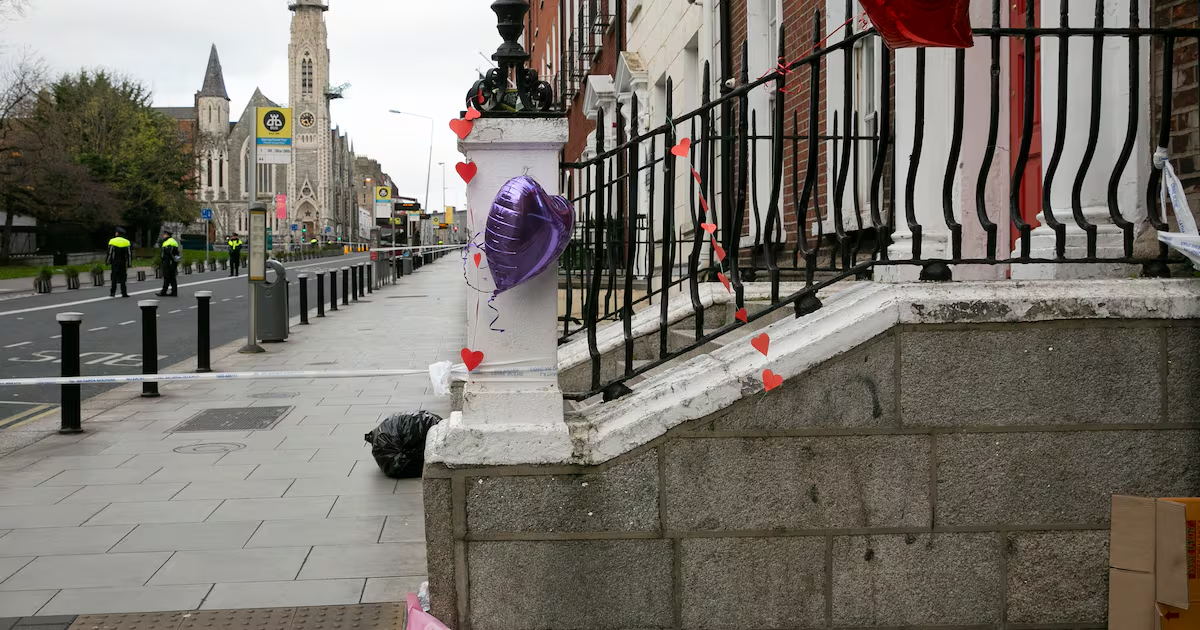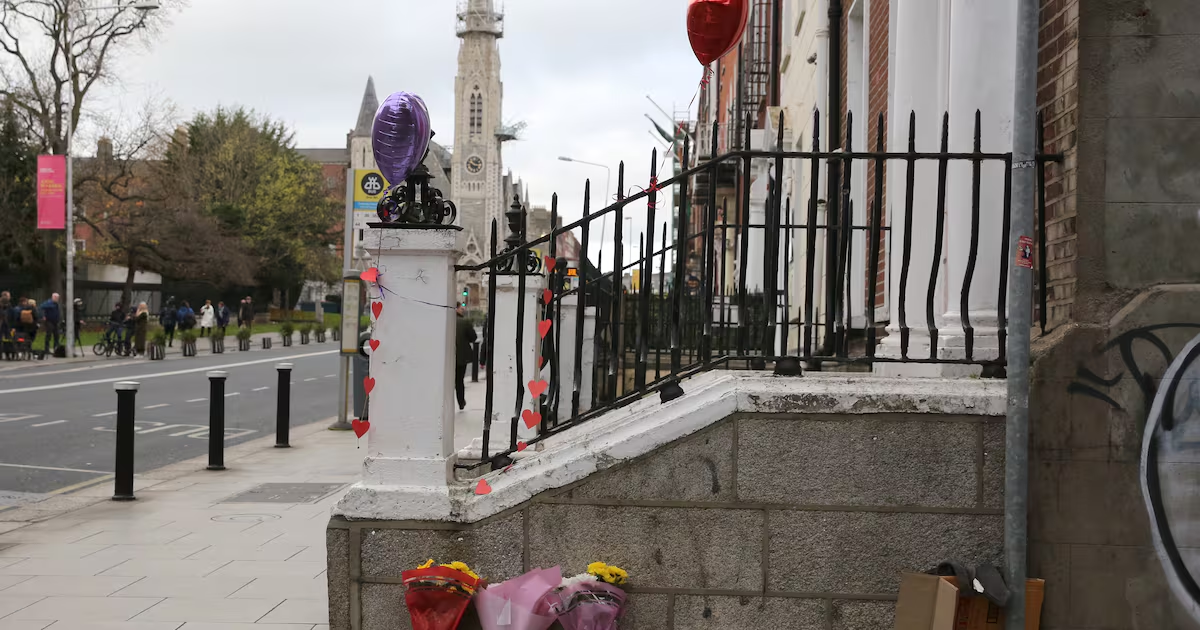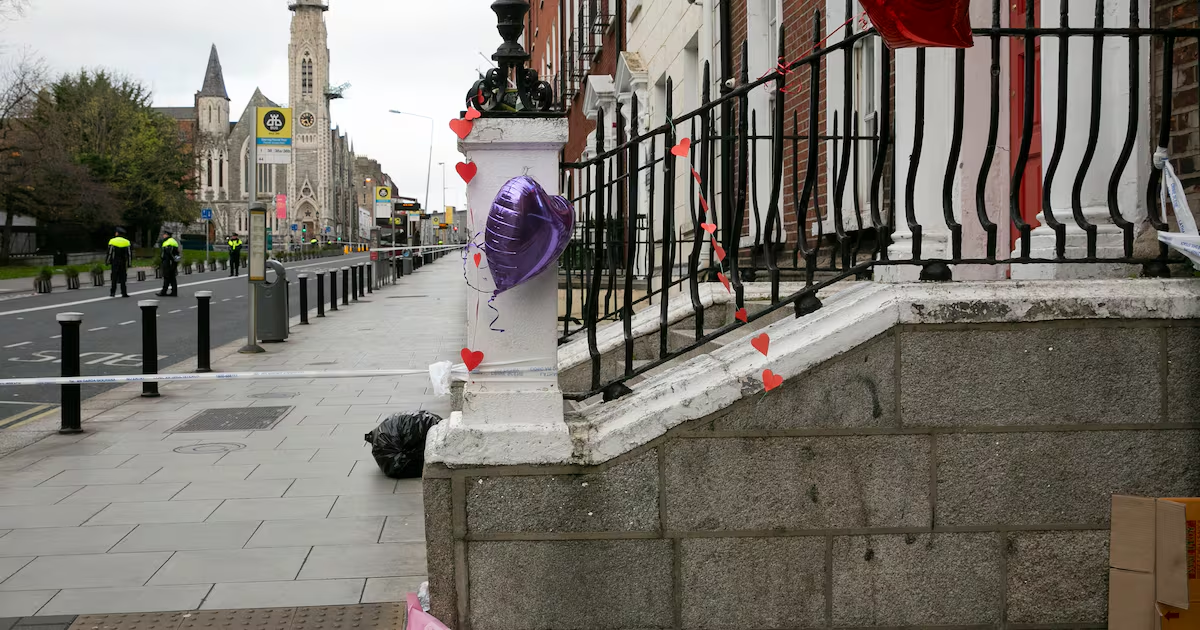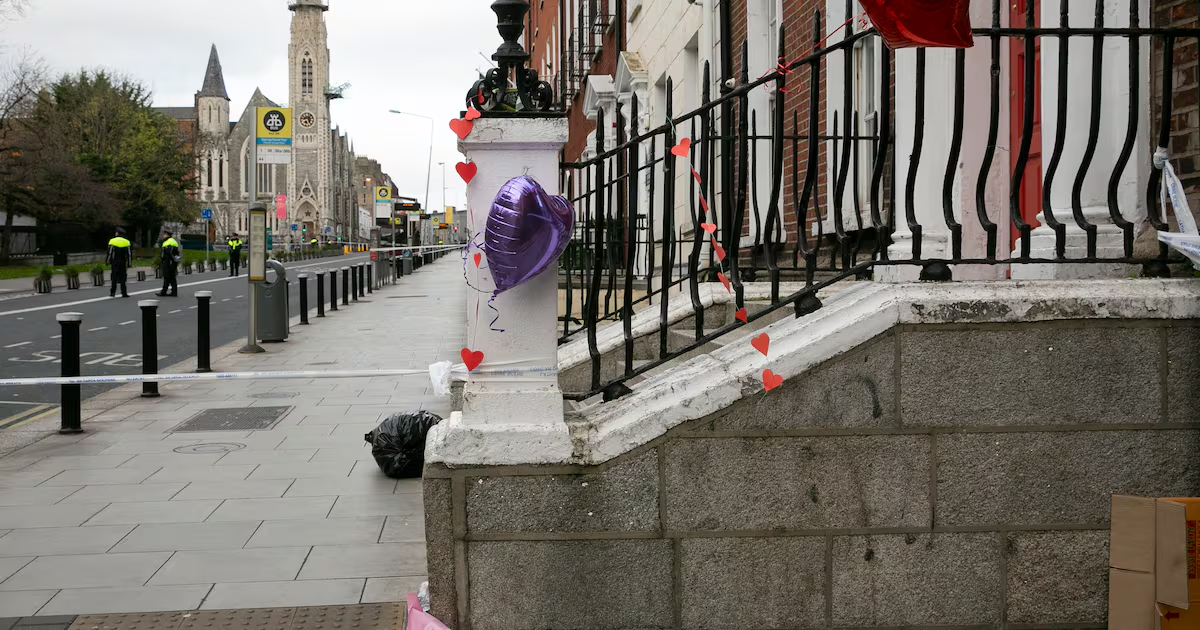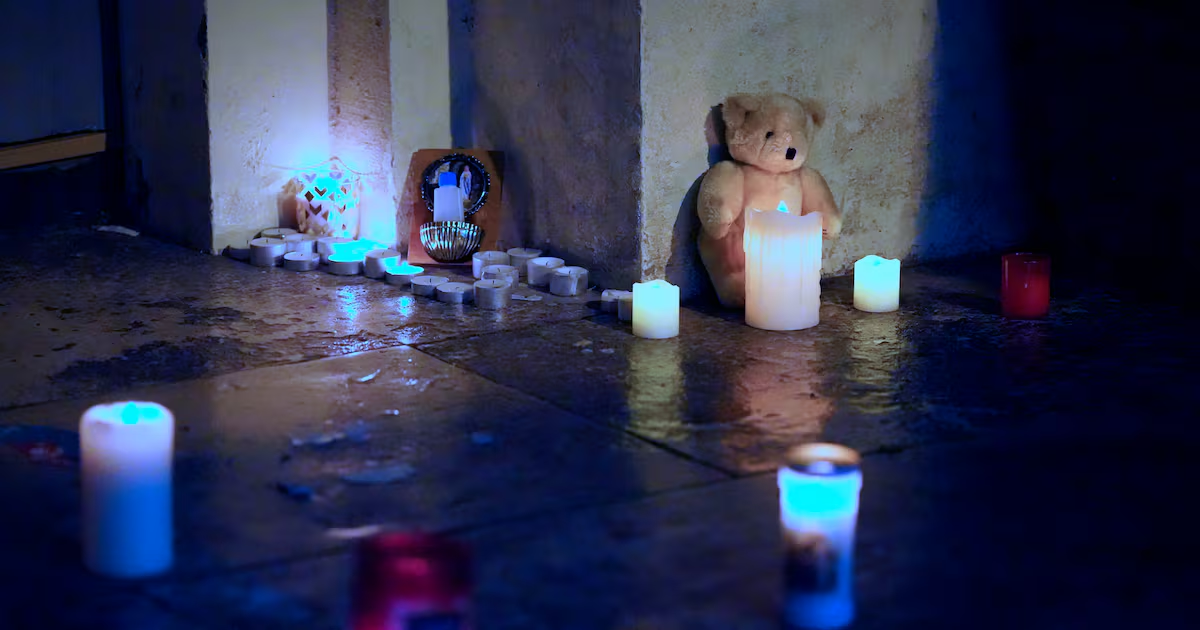
A mother whose daughter suffered severe injuries at Dublin’s Parnell Square in late 2023 wept when telling a Central Criminal Court jury about receiving a phone call saying her child had been stabbed.She worked just minutes away and ran to the scene, where she saw five members of the emergency services working on her then five-year-old, the woman said. She could see her daughter’s pink backpack and her pink shoes.Her child was taken to Temple Street hospital where she immediately underwent surgery.The woman said the first question she had asked the surgeon was: “Is she dead?” Her daughter suffered severe damage to her brain and is now non-verbal and in a wheelchair.While at the scene of the incident on November 23rd, 2023, she saw Riad Bouchaker being put into an ambulance.She was giving evidence on the first day of the trial of Bouchaker (52), a native of Algeria of no fixed abode, who has pleaded not guilty to charges of attempting to murder three children, two girls and a boy, on Parnell Square East on November 23rd, 2023. He has also denied assault causing harm to two other children and to a passerby, a French national, who intervened to assist, and a charge of assault causing serious harm to a care worker.He denies a further charge of producing an article capable of inflicting serious injury, a 36cm kitchen knife. When opening the trial for the prosecution, Karl Finnegan SC said its case is that Bouchaker’s actions at Parnell Square, including stabbing and jabbing with a knife, “targeting” young children and the need for members of the public to stop him, showed he intended to kill.Bouchaker had told gardaí he knew he had done something but he was sick and not in his right mind at the time and had no intention to kill anyone, counsel said. He had said he was angry about being refused a social welfare payment that day and had a knife.In her evidence, the seriously injured girl’s mother said her daughter had just turned five at the time of the events and was in junior infants at the school on Parnell Square. The children were normally taken about 1.30pm from the school to the after-school creche.On the date in question, she dropped her daughter off at the creche about 8.30am for school. It was a sports day and the child was wearing a jump suit, polo T-shirt and runners. Her workplace was nearby and she got a phone call at 1.45pm from the creche owner. She thought perhaps her child had a fall.Becoming tearful, she said the owner was in tears and said: “Oh my God, oh my God, […] has been stabbed, you have to come.”She asked where, and the owner said: “at the school, in front of the school”.The mother said she grabbed her things and ran towards the school. The area was cordoned off and there was a crowd of people. She could see ambulances and fire trucks and Garda cars. “I stopped breathing for a second but I kept running and I got there.”She told a Garda her name and was let through.She saw Bouchaker being put into an ambulance. She remembered what he looked like and how he was dressed.A Garda told her they were currently working on her daughter and she could see, just past the school entrance, five medical technicians and her daughter’s pink backpack and her pink shoes. “I stopped and let them work because I could not do anything for her at that moment.”About 10 to 12 minutes after she arrived, her daughter was put into an ambulance and taken to Temple Street hospital. She called her husband told him to come, and that their daughter had been stabbed. She also phoned her mother, told her what happened and to “start praying”.The woman’s husband arrived while their daughter was still in theatre. The medics were trying to control her blood loss and to restore life to her, she said.When the surgeon came to her, the first question she asked was: “Is she dead?”Her daughter had a wound in the right ventricle of her heart and was without oxygenation to her brain for about 40 minutes. This caused severe damage to her brain and the parents were told they “should be taking it, hour by hour”.Her daughter stayed in the ICU for about three weeks. She was heavily sedated but was not in an induced coma because of the need to understand the damage to her brain. She had suffered seizures and emergency heart surgery had to be performed.They knew the injury had caused the major damage to her motor skills, she said.Her daughter is now non-verbal, in a wheelchair, is learning how to swallow and is fed through a tube in her stomach. She can now answer yes and no through blinking. She has dystonia, a neurological condition that affects her muscle movement. She cannot go to the toilet by herself, has to take medication to fall asleep and, if she gets too hot or constipated, it is very severe and she needs to be sedated.In his opening address, Finnegan said the case concerned an incident that attracted a very considerable amount of public attention and commentary and the jury were all likely to have heard about it. They must put all of that, including media reports, out of their minds and must decide the case on the evidence, he said.As with any case, it was not to be decided on emotion, sympathy or outrage, it must he decided only on the evidence.The prosecution case was that a group of young schoolchildren were leaving their Gaelscoil on Parnell Square East about 1.30pm to go to a creche, the accused man approached them, produce a knife and began stabbing or attempting to stab.They would hear evidence from a care worker who intervened and was herself stabbed before people approached Bouchaker and he was restrained.The prosecution case was that he not only caused harm to, but intended to kill, three of the children, counsel said.They would hear the school day finished at 1.30pm and the care worker had counted 13 children and was preparing to move them from the school to the creche when the attack occurred.There was a lot of CCTV evidence, not just relating to the attack itself but also of the movements of Bouchaker that morning and leading up to the attack, counsel said.Bouchaker previously suffered from a benign brain tumour, and required brain surgery in 2021. During the intervention by members the public at Parnell Square, he suffered a further head injury and required hospitalisation for about a month, after which he was arrested, counsel said.As a result of his existing injury, and the one suffered at Parnell Square, he has an acquired brain injury affecting his ability to sustain attention and concentration, counsel said.Bouchaker has been found by the judge fit to stand trial, with accommodations including an interpreter.There is no suggestion he was suffering from a mental disorder at the time of the incident itself such that a defence of insanity would be available, counsel said.The care worker will say she saw a knife and saw him jabbing at the children, that she grabbed him from behind and pulled him back and shouted at him to get away from the children, counsel said. She subsequently realised she had been stabbed.The jury would also hear Bouchaker was treated in hospital before being arrested on December 20th, 2023.The case continues before Judge Tony Hunt and a jury.
Woman whose daughter suffered severe brain damage in Parnell Square stabbing wept while giving evidence
Riad Bouchaker, who denies charges including attempted murder, told gardaí he was ‘not in his right mind’ and did not intend to kill
1,252 words~6 min read