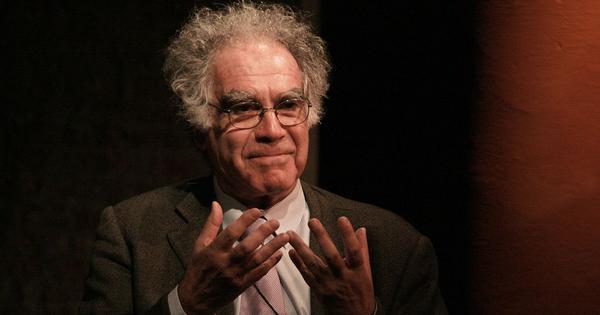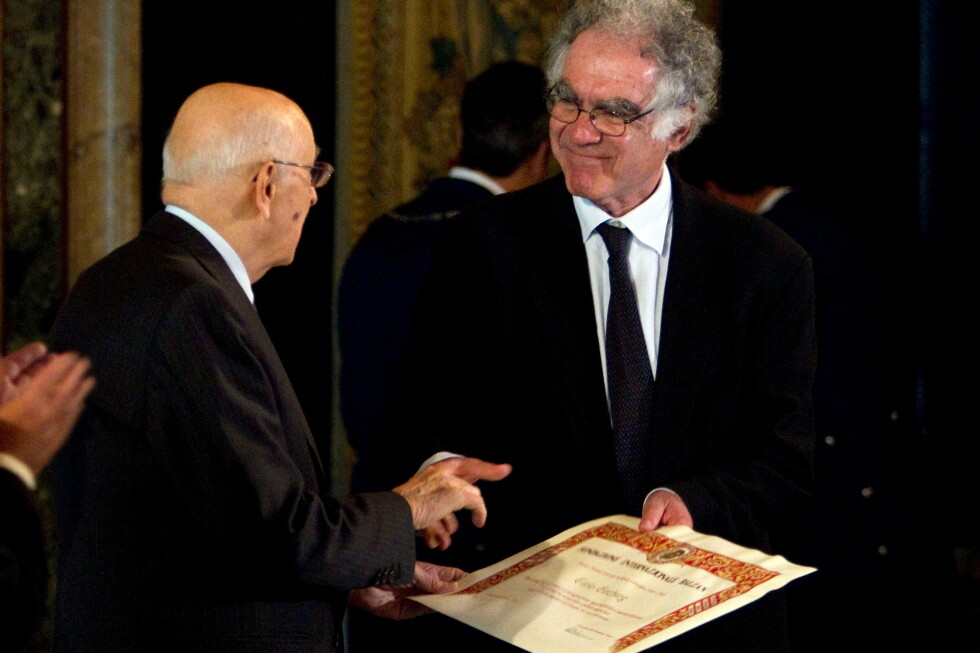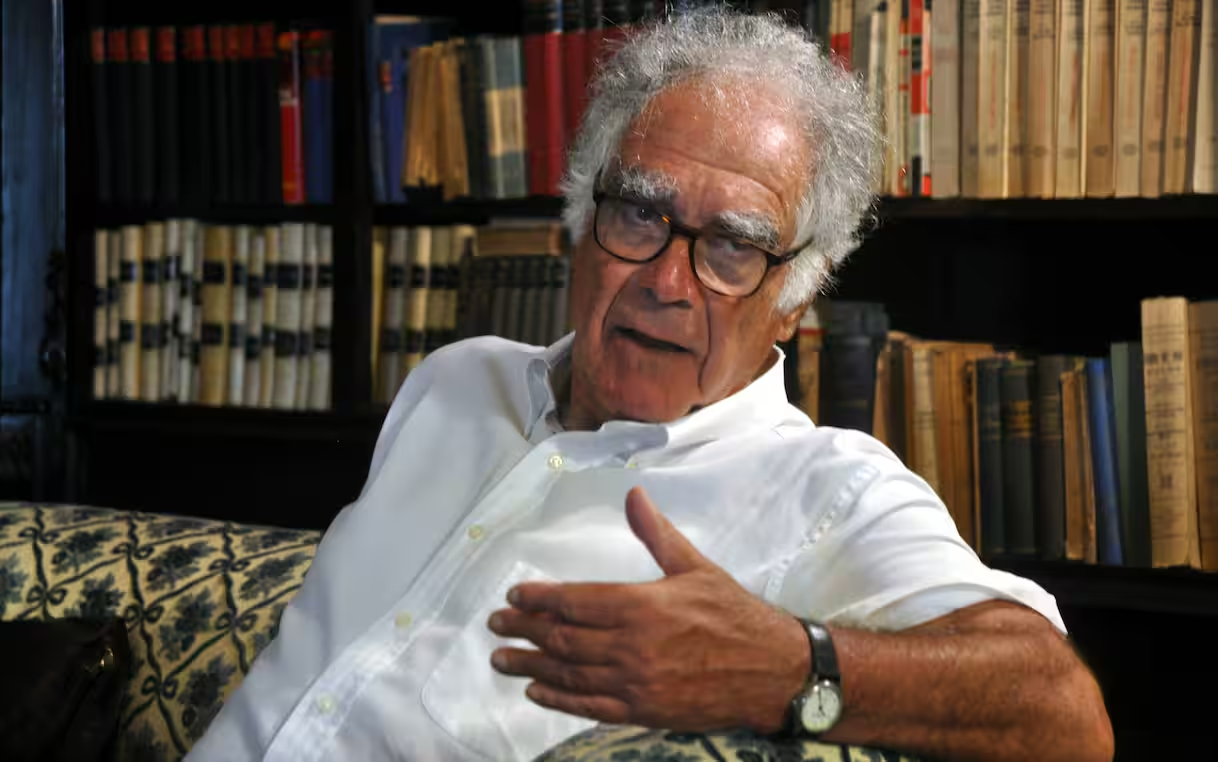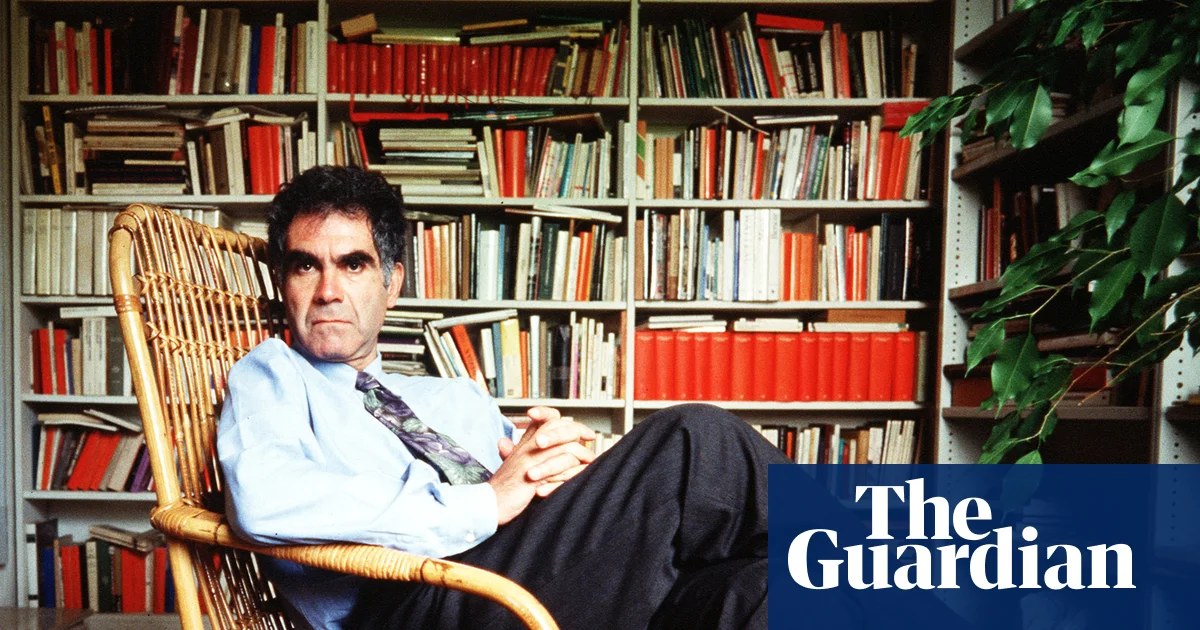
It would be no exaggeration to claim that the Italian historian Carlo Ginzburg, who has died aged 87, revolutionised the practice and understanding of history. In particular, in a series of books published in the 1970s – above all, The Cheese and the Worms: The Cosmos of a Sixteenth-Century Miller (1976) – he embraced a new field of study called microhistory, which challenged traditional ways of understanding the discipline of which he was part.Far from the overarching theoretical approaches of Marxism or liberalism, Ginzburg emphasised the edges, the marginalised, the detail rather than the bigger picture. The chance discovery of Inquisition trial documents in archives in Udine opened a way to an understanding of a society and culture through one individual previously ignored by history.Domenico Scandella, also known as Menocchio, was a miller from the Friuli region of north-east Italy, accused of heresy by the Catholic Inquisition for his unorthodox religious views. He was from the rural classes, but had an unusual level of literacy, and his worldview expressed what might be seen as a surprising level of tolerance for the time of other beliefs, which Ginzburg linked back to the books Menocchio reported he had read, and the way they had helped him understand and shape his world.The miller developed his own particular view of creation in which, in his words, “all was chaos, that is, earth, air, water, and fire were mixed together; and out of that bulk a mass formed – just as cheese is made out of milk – and worms appeared in it, and these were the angels”.One of the most extraordinary aspects of the story of Menocchio is how he stuck to these beliefs despite torture and the trials he was subjected to, making him also an example, in some ways, of resistance to power. He was eventually burned at the stake in 1599.Ginzburg was influenced by the cinematic techniques of Eisenstein, and constructed his book in a way that resembled a film more than a traditional monograph – with fast edits, vignettes, reflections on method, and divided into 62 short sections. Il Formaggio e i Vermi became an international bestseller, translated into 25 languages – the English version in 1980.Menocchio would have been ignored by most historians as irrelevant, at best an interesting footnote. Ginzburg overturned these preconceptions. The Cheese and the Worms became a manifesto for microhistory, a model for doing things differently. It opened with the quote: “In the past historians could be accused of wanting to know only about ‘the great deeds of kings’, but today this is certainly no longer true.” Ginzburg took us into a world which he had created himself.The book set Ginzburg on an academic and intellectual career that would take him to universities in the UK and the US, while also staying close to his Italian roots. He frequented his favourite library, the Archiginnasio in Bologna, with its beautiful courtyard and magnificent reading rooms, and could often be seen studying there, with his shaggy hair and formidable eyebrows poking above black-framed glasses, surrounded by paper and texts (his office also featured piles of books and notes all over the floor and desks).Ginzburg’s early family life was complicated and traumatic. His father, Leone, born in Odesa in 1909, was an academic and writer, a co-founder of the Italian publishing house Einaudi, and a resistance hero. Due to the antisemitic crackdown in Italy in the late 1930s, Leone was persecuted for his Jewish roots; he was also a trenchant anti-fascist, who had refused to take an oath of loyalty to the regime.Born in Turin just before the second world war, Carlo spent much of his early life in hiding in different parts of Italy with his mother, Natalia (nee Levi). In 1944 Leone was captured and tortured to death by the Gestapo in Rome. Natalia became one of the leading writers and intellectual figures in postwar Italy, and her work is currently enjoying a renaissance in translation.After school in Turin, Ginzburg went to the elite super-university the Scuola Normale Superiore in Pisa in the late 1950s, where he was part of a “golden” generation of future scholars and public figures, such as his friend the linguist Giulio Lepschy. Ginzburg also spent time at the Warburg Institute in London and was influenced by another great Italian historian, Arnaldo Momigliano, who was exiled in the UK from 1939.Ginzburg was appointed to a post at the University of Bologna, where he published his first book, The Night Battles: Witchcraft and Agrarian Cults in the Sixteenth and Seventeenth Centuries, in 1966 (under the Italian title I Benandanti), which also drew on the trial accounts of the Inquisition.In 1988 Ginzburg went to the University of California (UCLA), where he remained for 18 years, while also taking up visiting lectureships across the world. He returned to Italy in 2006, to the Scuola Normale, retiring from teaching four years later.His work burst out of disciplinary boundaries and took in art history (with his writings on Piero della Francesca) and philosophy, and was accompanied by influential reflections on historical method, the role of evidence, and the importance of clues and signs. He was interested in the silences and gaps as much as what could be touched or understood. His work prompted as many questions as answers.Ginzburg intervened in Italian political life on a number of occasions, although he was never a full-time activist. He later acknowledged that the radical shift in focus in his work in the 70s was connected to the political and cultural movements that proliferated in Italy in the period.Most notably, he campaigned for his friend Adriano Sofri, a leader of the far-left group Lotta Continua, who was accused, in 1988, of ordering the 1972 murder of a leading police officer in Milan. In his 1991 book, The Judge and the Historian, Ginzburg compared Sofri’s treatment to the witch trials he had studied in the past, and reflected on the similarities and differences between the roles of the historian and the judge.In later life, as he reflected on his work, in particular in the 50th anniversary edition of The Cheese and the Worms published earlier this year, Ginzburg started to see parallels between his father, persecuted and killed by the Nazis, and Menocchio, tortured for his beliefs and executed. As Anthony Pagden argued, in a review of The Night Battles, Ginzburg was “a highly sensitive and imaginative historian whose prose style reproduces much of his mother Natalia’s clarity and precision. He has been able, as few others would have been if presented with the same material, to make his historical characters live.”Ginzburg was married first to the historian Anna Rossi-Doria, with whom he had two daughters, Lisa and Silvia; the marriage ended in divorce. He is survived by his second wife, Luisa Ciammitti, and by his children.
Carlo Ginzburg obituary
Italian academic and author who challenged traditional approaches with his pursuit of microhistory
1,135 words~5 min read