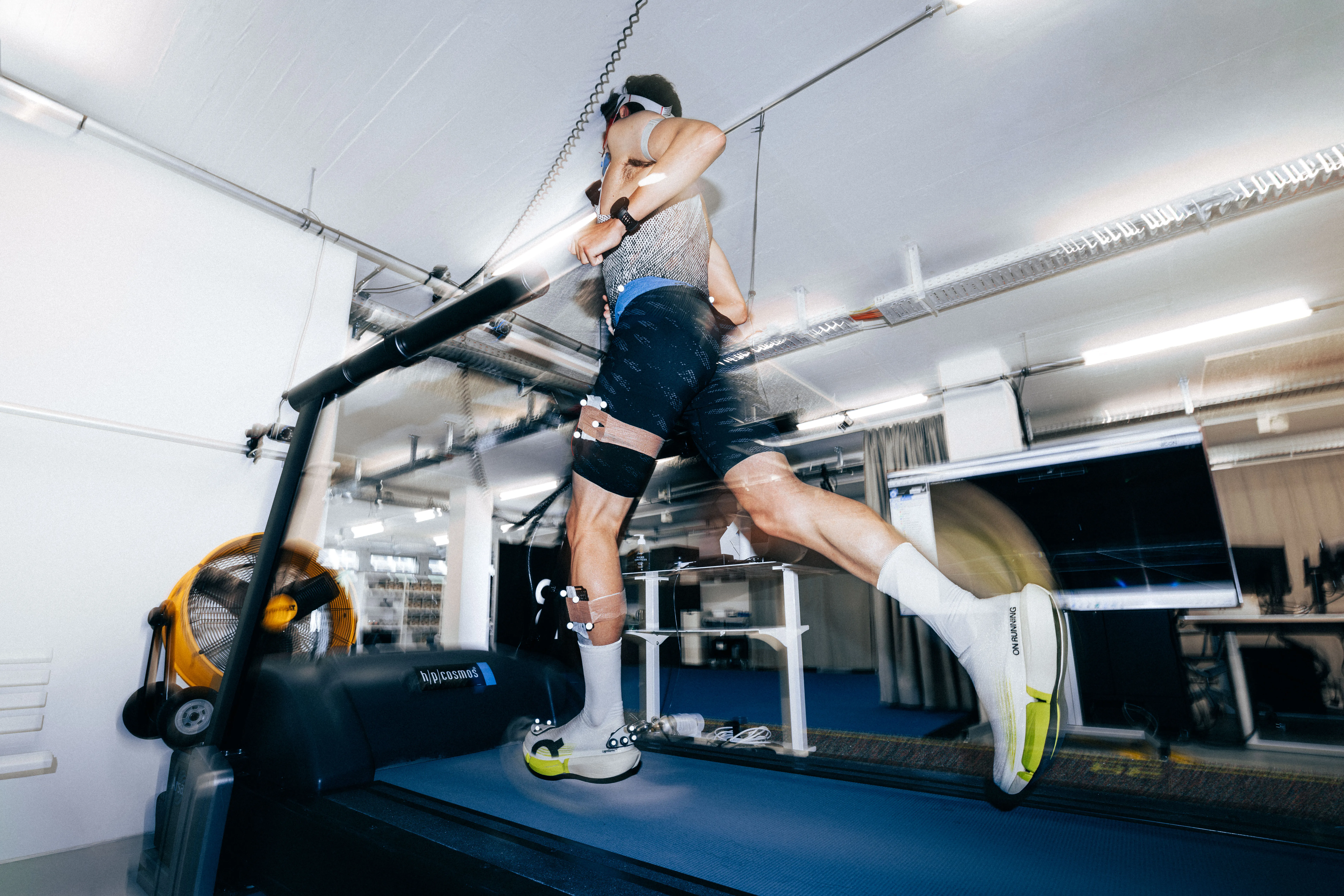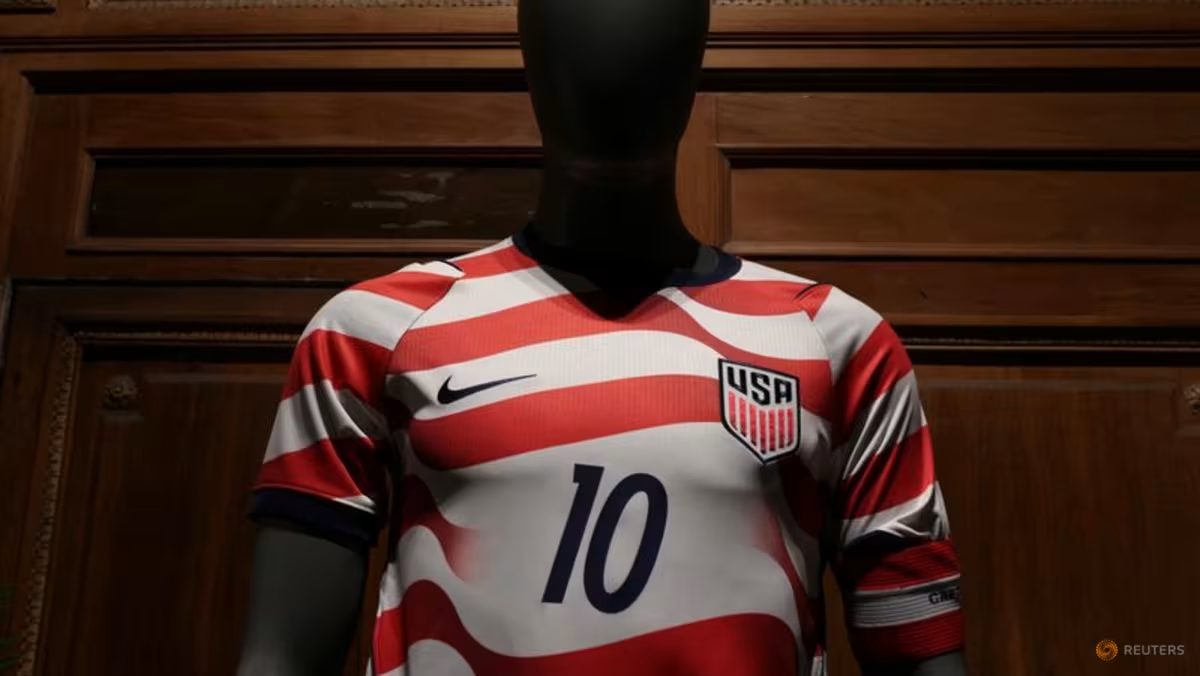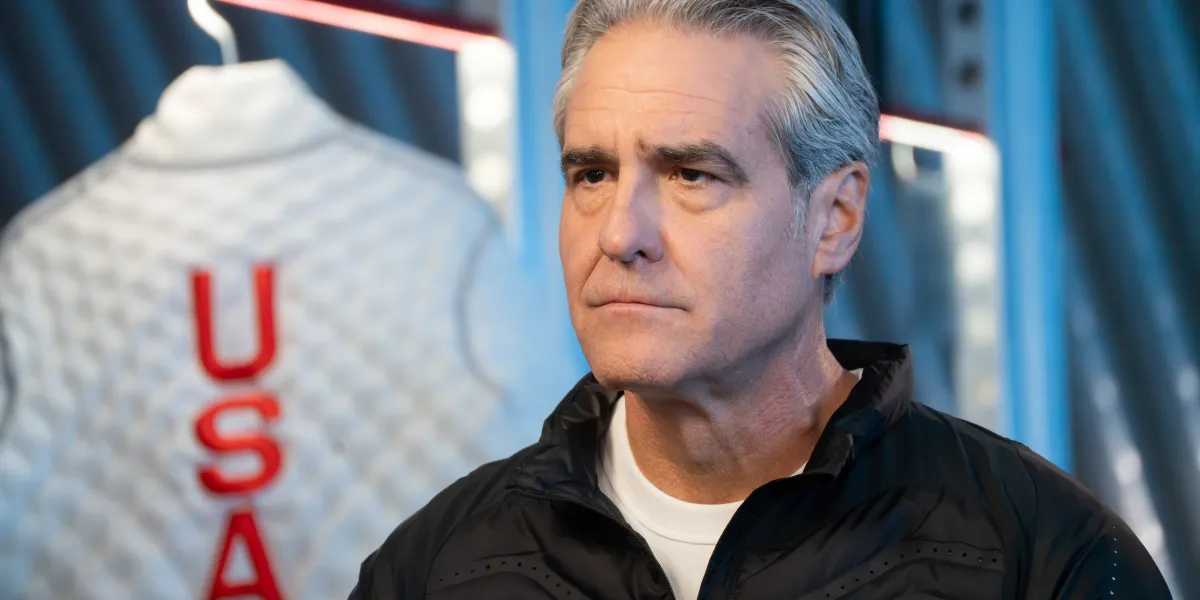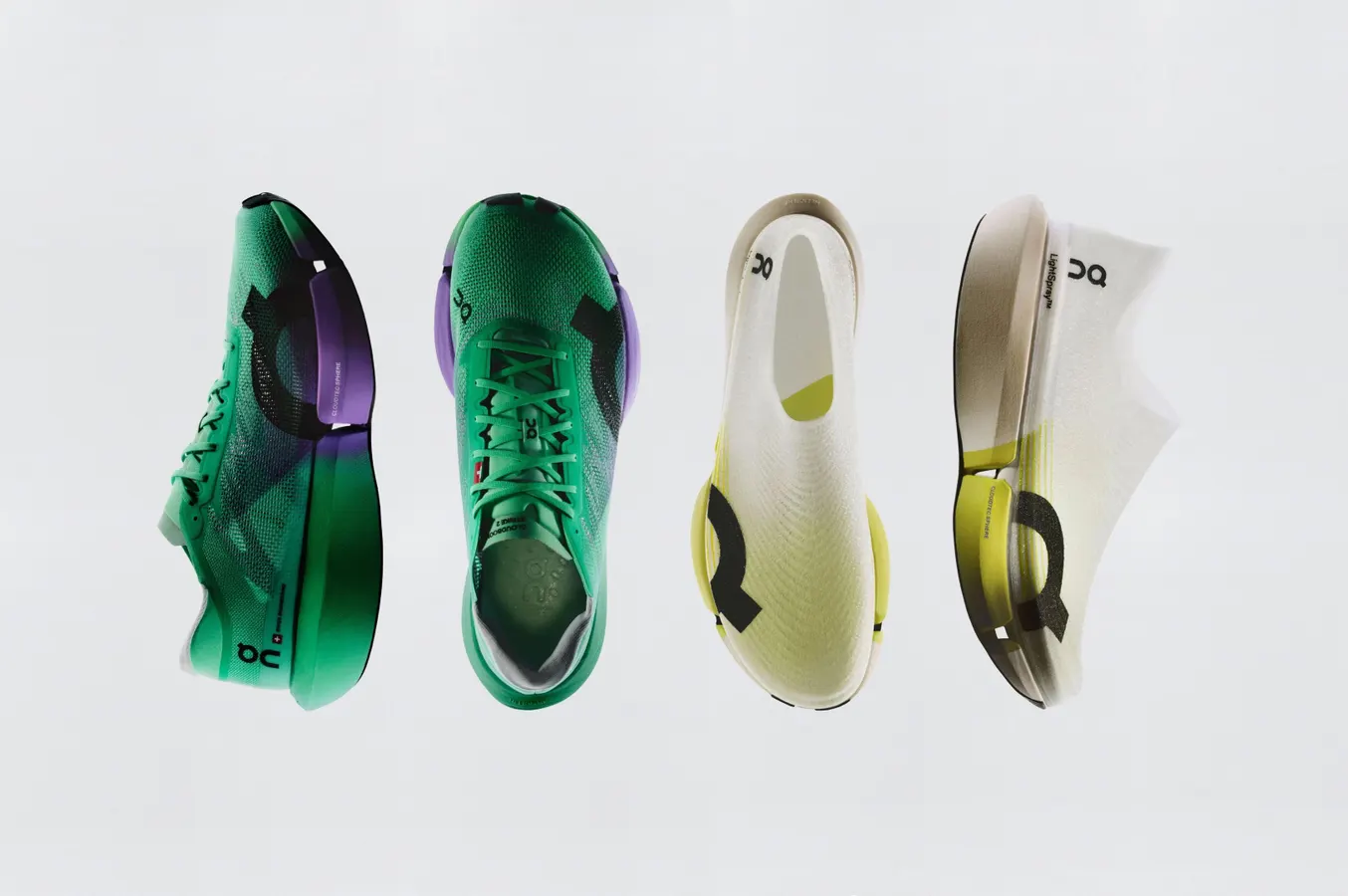
On has banked on innovation with its LightSpray technology (right) uppers lighter and simpler to manufacture.OnFor most of the past four decades, the global running footwear market appeared to belong to Nike. But while the sportswear giant remains the category leader by revenue, and the company is enjoying a FIFA World Cup boost for its soccer jersey sales, the momentum has shifted decisively away from Beaverton, Oregon.Among its competitors, Swiss challenger On and fellow performance specialist Hoka have rewritten the rules of the premium running market, winning over consumers through a ruthless pursuit of innovation rather than celebrity endorsements alone.The latest symbol of that disruption is On’s newly-launched LightSpray technology, which has moved from an elite athlete showcase to a commercially scalable platform. The laceless manufacturing process uses robotic arms to spray a single-piece upper directly onto the sole using a mixed plastic pellet that is spun into a kind of cotton candy, creating an exceptionally lightweight product.The latest LightSpray Cloudmonster 3 Hyper contains just eight components, weighs less than 7.5 ounces and represents one of the most radical manufacturing innovations the industry has seen in decades.For On, however, LightSpray is about far more than producing a faster marathon shoe for elite athletes. It represents the company's broader ambition to reinvent how footwear is designed and manufactured.MORE FOR YOU"What we’re doing now is on the bleeding edge of technology," On Co-CEO Caspar Coppetti said, with the long-term implications stretching well beyond performance. Automation creates the possibility of manufacturing much closer to end user customers, moving away from a concentration on Asian-based facilities."Our main manufacturing is currently in Korea and Vietnam, alongside smaller production facilities in Zurich. But automation means the opportunity to nearshore production, with plans for manufacturing nearer the end user, including in the U.S. and Europe. This also has a strong environmental benefit," he said, stressing that it could fundamentally reshape the economics of footwear manufacturing."That should mean faster and more agile supply chains and the ability to manufacture tighter inventory to avoid selling off-price. We don't have any off-price strategy and we don't manufacture for outlet," he added.Running Footwear Sector Paces UpIndeed, many major footwear brands have spent recent years clearing excess inventory through heavy discounting, hurting margins and diluting brand equity. On has instead built its strategy around premium pricing and disciplined supply.In the first quarter of 2026, On reported record sales of just over $1 billion, up 14.5% year-over-year, with gross margins reaching 64.2%. Asia-Pacific grew 44.4%, apparel rose 45.1%, and the company reaffirmed expectations for at least 23% constant-currency revenue growth during 2026.That momentum contrasts sharply with Nike, whose turnaround remains slower than investors hoped. The company has continued losing share in running as it works through inventory challenges and in particular weakness in China.Nike on Tuesday posted quarterly earnings and revenue that topped Wall Street expectations, despite another sales decline in its key China market. The company said its gross margin increased 8.9% during the quarter, largely thanks to an expected tariff refund of nearly $986 million.Nike posted net income of $1.07 billion compared with $211 million a year earlier and revenue climbed to $10.97 billion, down 1% from $11.1 billion in the prior-year. Nike’s revenue in North America, its largest market, climbed 3% to $4.83 billion but sales in Nike’s Greater China market dropped 12% to $1.3 billion.Elliot Hill CEO of Nike, is leading a turnaround strategy but China remains tough. (Photo by Tom Hauck/Getty Images)Getty ImagesOn a call with analysts, CEO Elliott Hill reiterated that the company is “fully committed to winning” the China market back. “Overall, the results aren’t there yet. We know we’re not living up to our full potential, particularly in Nike sportswear and Jordan streetwear, where sell through remains challenged, impacting both current discounting and future order books.”But consumer data increasingly reflects the changing competitive landscape. Running footwear continues to outperform broader athletic footwear, with Nike losing share while On, Hoka, New Balance and Adidas gain ground across U.S. retail channels.On Leans On InnovationCoppetti believes On’s current success reflects a broader redesign of the running shoe itself and the need to reimagine the offer."I think On and Hoka have changed the product. Our shoe is based on structural foam engineering," he said of a sole designed to absorb pressure but allow a strong push off.That engineering-first philosophy has helped both brands capture runners looking for measurable performance improvements rather than cosmetic updates. Hoka, owned by Deckers Brands, has become a powerhouse in its own right, growing sales 16% during fiscal 2026 to $2.59 billion and now accounting for almost half of Deckers' total revenue.On’s founders argue that innovation is the building block for the brand, with aesthetics and lifestyle then combined to “engineer an emotion around function and fashion," said Co-CEO David Allemann. "We believe that the leisure class has been followed by the movement class, where people want a mix of experiences, health and self-care."Fellow Swissman, Roger Federer, has also played a central role in broadening On’s appeal. As both an investor and collaborator, the retired tennis legend has helped On establish credibility outside running, while partnerships with luxury brands have allowed it to operate across multiple consumer segments. The next frontier appears to be apparel.On has prioritized athletic performance as a route to the wider running market.On"There is no end to the performance improvements we can strive for with the athletes," said On Founder Olivier Bernhard. “We work closely with them and every year we gain new insights. That also goes into apparel. Athletes like to look good too and I think this area offers a huge opportunity.”Historically, footwear brands have found apparel difficult to scale because consumers often mix brands, but On believes its premium positioning and growing retail footprint can change those purchasing habits, while it notes Asian consumers tend to lean into single brand outfits.But scale also carries the risk of the behemoth status that arguably is making the turnaround at Nike harder to achieve. And Bernhard insists that preserving the company’s entrepreneurial culture will prove just as important to its long-term success as maintaining its innovation pipeline.“I think we can keep our disruptor focus by keeping the same mindset around innovation and never accepting the status quo. What we’ll try to avoid is becoming a corporate brand.”
On Pushes Innovation Hard While Nike Finds Turnaround Tough Going
As Nike's turnaround shows some positive signs, rivals like On and Hoka continue to nip at its market share. Swiss-based On believes its new innovation will up the pace.
1,046 words~5 min read