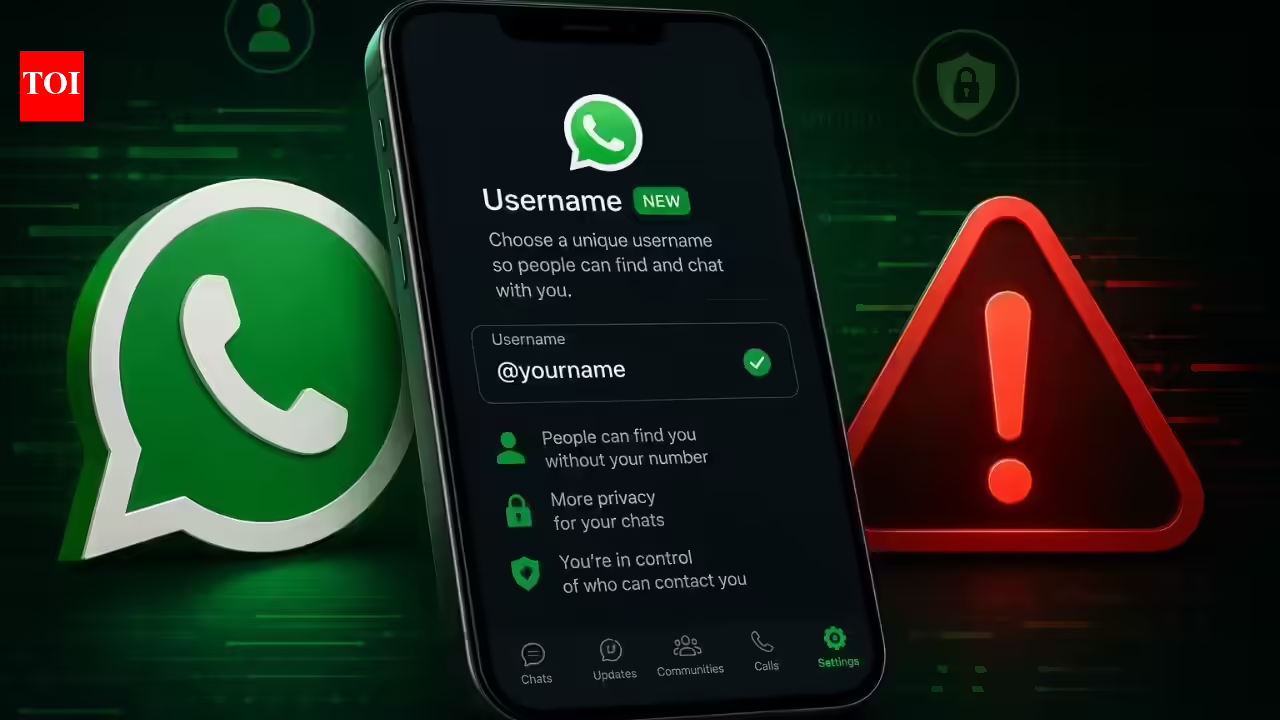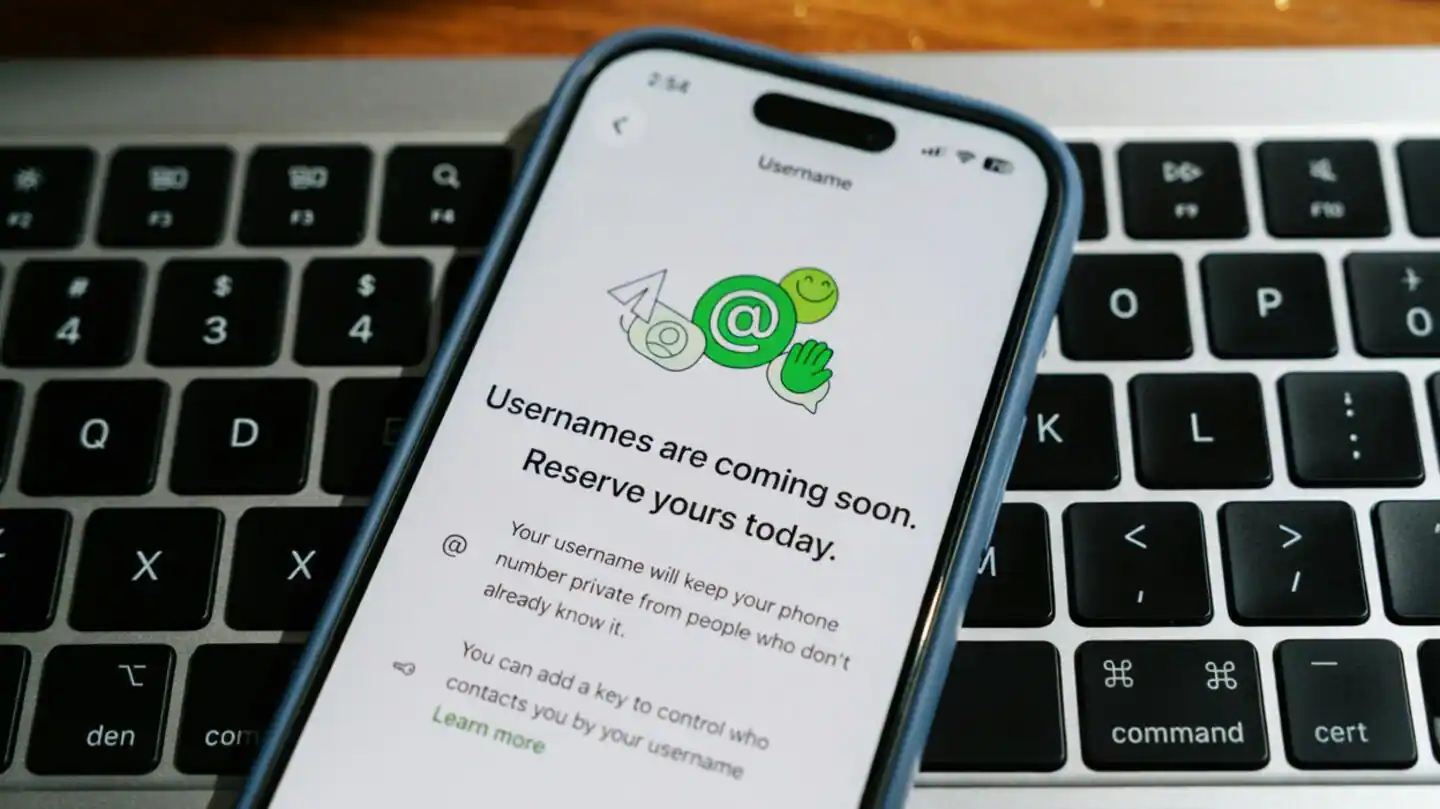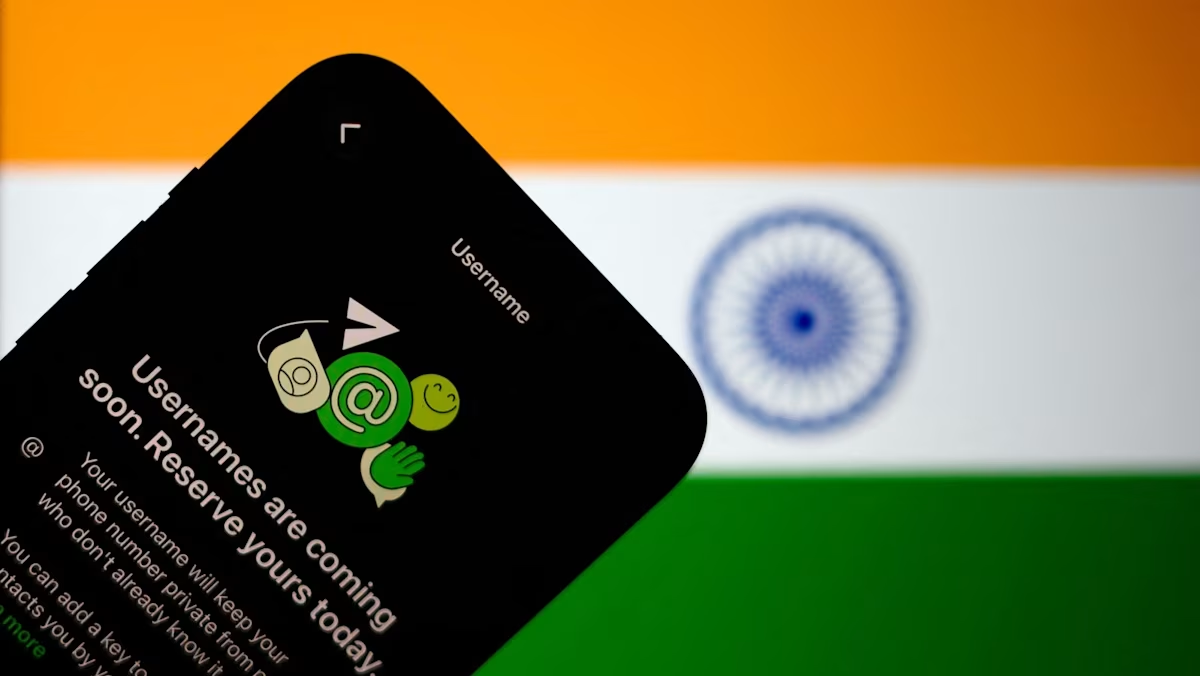
Think of your phone number as your home address. It is where the bank writes to you, where deliveries arrive, where old friends and total strangers alike can turn up at the door. Hand it to someone at a party, a marketplace, a community group, and you have given away far more than a way to chat. You have given them a thread that runs through your whole life.For seventeen years, WhatsApp made that address the price of entry. To message anyone new, you swapped numbers. That was the only way in.That changed on 29 June 2026, and the change is enormous. WhatsApp began letting its more than three billion users reserve a username, the first step toward a world where you can talk to a new contact the way you post a letter to a PO box — they reach you, but your home address stays private. The company calls it a move "designed to protect the privacy of your phone number." In most of the world it landed as an overdue gift. In India, home to around 500 million of those users and the largest market WhatsApp has, it landed like a lit match in a dry field.Key TakeawaysWhatsApp opened username reservations on 29 June 2026, letting its three billion users eventually message and be messaged while keeping their phone number private.India's IT ministry, MeitY, is examining the feature and weighing a formal notice to Meta, fearing a rise in impersonation and a loss of the accountability that phone numbers provide.The real friction: seven months ago India reclassified messaging apps as quasi-telecom entities and ordered them to lock accounts to the SIM — a regime built entirely on the phone number the new feature hides.Prominent legal voices are split — some call it a modest privacy tool that barely shields you from Meta, others warn it hands fraudsters a low-tech lure.WhatsApp has clarified that a phone number stays mandatory to register an account, so the number stays on file within Meta's systems — the username only hides it from new contacts.WhatsApp says built-in safeguards handle the risk: unlisted handles, reserved names for public figures, contact limits, and an optional second key.The dispute is the newest round of a five-year war between India and WhatsApp over traceability and encryption — the same argument in new clothes.What WhatsApp Actually ChangedStart with the mechanics, because the alarm makes sense only once you see what the feature does and, just as importantly, what it leaves alone.A username is an optional handle, three to 35 characters, that sits on top of your account. Once the feature reaches you, someone who knows your handle can start a conversation, and the part that matters is what they will see: the username alone, with the phone number kept out of sight. Your number stays behind the scenes, and WhatsApp has been explicit that it stays put: a phone number is still required to register an account, and it remains tied to login, verification and recovery, with anyone who already has it saved continuing to see it. The username hides the number from new contacts while keeping it firmly on the account. The PO box sits in front of the house; the house, and its address on file, is still there.Two things make this a genuine shift rather than cosmetic paint. WhatsApp arrives late to an idea rivals settled years ago — Telegram has offered username contact since 2013 and Signal since 2022, while WhatsApp leaned almost entirely on phone numbers from its 2009 start. And for the first time, a stranger, a classmate, a seller, a new neighbour can reach you while your number stays sealed. WhatsApp illustrated the appeal with a homely example: a parent who wants to join the group chat for a child's football team, yet feels a step too early handing a personal number to people they have only just met. For that parent, and for a woman posting in a local group, that seal is the whole point.The rollout is deliberate and slow. WhatsApp opened reservations first so the good handles get claimed early, and said only that the feature would spread gradually over the coming months, while keeping the exact timeline vague. Third-party trackers report a wave-by-wave launch reaching most of the world from September 2026, with a small set of countries going first. India sits outside that first wave, which is exactly why New Delhi still has room to act before the feature reaches Indian phones at scale.The Fear: Fake Names And Vanishing TrailsThe government's worry splits cleanly in two, and both halves are worth taking seriously.The first is impersonation. A scammer could register a handle a whisker away from a real bank, a real official, a real celebrity, and use the resemblance to trick people. Entrepreneur Ankur Warikoo captured the mood, warning on social media that the feature "could be a disaster" in a country already drowning in digital fraud unless the right anti-abuse systems are in place. The reference point haunting officials is Telegram, where lookalike handles have long greased scams.The alarm has heavyweight names attached to it. Paytm founder Vijay Shekhar Sharma warned on X that a verified username would soon be shadowed by unverified, similar-sounding ones ripe for impersonation. And Prof. Triveni Singh, a former IPS officer who built much of India's cybercrime-policing playbook, made the point that lands hardest: most cyber crime today begins with social engineering rather than sophisticated hacking. A convincing lookalike handle is exactly that kind of lure, and the simple lures are the ones that keep working.The second worry runs deeper, and it is about the trail. When every account wears a verified number, an investigator chasing a fraud or a piece of dangerous misinformation has a thread to pull. Hide that number behind a handle, the government fears, and the thread frays. A DoT official spelled out the nightmare in concrete terms, describing how a hidden number muddies the most basic question in any case — where the suspect even sits. "The larger issue is that it will become difficult for law enforcement agencies (LEAs) to determine whether the perpetrator is in India or overseas," the official said. "Tomorrow, someone could create a WhatsApp account using a +1 (US) number, use the NIA chief's photograph, adopt a similar username and make fraudulent calls. Earlier, if the number began with +91, we could at least initiate action. If the number isn't available, there is virtually no way to resolve it." The same official flagged a second drag on Indian cases — the wait for platform data. "WhatsApp does not provide data immediately, which makes investigations even more complicated," the official said, casting the hidden number as the deepening of an old headache rather than a fresh one.The government's stance is unyielding. "It is WhatsApp that has to worry, not us. Platforms must ensure their architecture is not used to create mischief," a senior official said. "If it is, the response will be calibrated but firm." Government sources drew the same hard line, telling reporters that WhatsApp "cannot go ahead unless they can assure and convince," and that New Delhi treats national security and public safety as red lines. Officials have signalled that a formal notice may follow, and that they are exploring legal routes to block the feature should the safeguards fall short.A note on precision, because the reporting is uneven. The most careful outlets describe the government as examining the feature and weighing a notice, and as "considering issuing a notice" to Meta. Some smaller sites have run ahead to say a notice has already been served. As of now, treat the formal notice as likely and imminent rather than confirmed.The Real Collision: A Rulebook Built On Your NumberHere is the part most coverage skims, and it is the key to the whole story. India is reacting to something specific: a feature that undercuts a building it just finished.Over the last year, the government laid a foundation, and it poured that foundation directly on the phone number. On 28 November 2025, the Department of Telecommunications, using the Telecommunications (Telecom Cyber Security) Rules, 2024, reclassified messaging apps including WhatsApp, Telegram and Signal as "Telecommunication Identifier User Entities" — any service, short of a licensed phone company, that uses a phone number to identify its users. In plain language, the government started treating chat apps a little like phone operators. Then it added a load-bearing rule: the apps must bind to the active SIM in your device, and their web and desktop versions must log you out every six hours and make you re-pair by QR code. Pull out your SIM, and the app is meant to stop. The whole design rests on the number being fixed, visible and inescapable, and it was built to fight "digital arrest" scams, where fraudsters pose as police over video calls. The penalties reflect how seriously the government takes it: fines up to Rs 50 lakh, possible criminal liability under Section 42 of the Act, and blocking of the app in India.Now read WhatsApp's feature against that blueprint. The government spent 2025 nailing the phone number down as the anchor of identity. WhatsApp spent 2026 building a way to slide it out of view. The government's own refrain, delivered by officials weighing the feature, is blunt. "Cybersecurity has to be built into systems from the design stage and cannot be treated as an afterthought," one official said, then widened the lens to the danger of scale itself: "When you have so much digital infrastructure, data gets centralised and the risk of disruption through cyberattacks also rises." From where they sit, the new feature knocks a hole in a wall their code assumed was solid. That is the true nerve this touches. The fraud talk is real, but the accountability fear is the one wired into a year of policy.The clash was years in the making. It is the latest brick in a longer structure.WhenWhat happenedFeb 2021India's IT Rules require large platforms to trace a message's "first originator" on court orderMay 2021WhatsApp sues in the Delhi High Court, arguing traceability breaks encryption; the case is still liveMay 2023India bans 14 encrypted messaging apps in Jammu and KashmirNov 2025DoT reclassifies chat apps as quasi-telecom entities and orders SIM bindingJun 2026WhatsApp opens username reservations, letting users hide their phone numberJul 2026MeitY examines the feature and weighs a notice to MetaInside WhatsApp's SafeguardsMeta's answer is that its PO box was built with locks the critics keep forgetting. Look at the design, and the Telegram comparison starts to wobble.For one, the handles stay unlisted. Usernames run on a strict zero-discovery model: hidden from search, kept out of any directory, reachable only by someone who already knows your exact handle. That alone rules out the casual trawling that powers a lot of open-platform abuse. On top of it sits a second lock. An optional username key — a short PIN — means people can contact you only if they have both the handle and the code, and WhatsApp caps how many new people one account can approach while its systems detect and block abuse patterns. One industry expert compared the design to a Zoom call, where a room number is useless until you also hold the passcode. And the impersonation fear is met head-on at the door: WhatsApp holds back usernames for high-profile people, celebrities, public figures and government entities, the digital equivalent of a post office reserving certain box numbers for the town hall and the bank so those handles stay beyond an impostor's reach.Set beside Telegram, whose handles are openly searchable, WhatsApp's version is the more tightly policed of the two. The platform India fears its feature will imitate is, on this measure, the more exposed one.The Case For CalmNow the other side, because sober voices argue the alarm is overblown, and their reasoning deserves airtime.The sharpest rebuttal is that a WhatsApp username is a weaker key than a phone number rather than a stronger one. As Dhruv Garg, a technology-policy lawyer with the Indian Governance and Policy Project, told ThePrint, a username only ties you within Meta's own apps — someone with just your handle might link you across WhatsApp, Instagram and Facebook, and the trail stops there, whereas a phone number opens far more of your life. His verdict deflates the drama: the feature is "just adding another layer over a phone number," and the privacy risk would have been far worse had WhatsApp swung the other way, from anonymous handles toward forced numbers.There is a human dividend, too, and it points the opposite way from the fraud story. Garg tied the feature directly to the harassment women face, where someone lifts a number from a group chat and keeps calling even after being blocked — a username shuts that route. A privacy tool that protects the most harassed users is a strange thing to cast purely as a gift to criminals.And the trail the government worries about stays warm. WhatsApp has clarified that a phone number remains mandatory to register, so every account still carries one, bound to it for recovery and available to law enforcement on a valid order; the feature hides the number from new contacts, rather than erasing it from Meta's records. The DoT official's fear keeps a real edge — that number may be foreign, hidden at first glance, and slow to prise loose — yet the raw material for an investigation survives. Which raises an awkward question New Delhi would rather sidestep.Where The Legal Minds LandAsk the lawyers who live in this territory, and the picture turns properly three-dimensional — because the sharpest legal critique of the feature attacks it from a direction the government has missed.Apar Gupta, a lawyer and the founder-director of the Internet Freedom Foundation, one of India's most prominent digital-rights voices, reads the feature as real but modest. Speaking to The Federal, he called it a basic shield for identity protection whose security benefits, in his words, "remain limited." His deeper worry runs the opposite way from New Delhi's. The feature leaves Meta's own cross-app profiling untouched, Gupta observed, and even nudges users to link their Instagram handles — so a tool sold as privacy quietly tightens Meta's grip on who you are across its apps. The government frets that the feature hides you from the state; Gupta's point is that it barely hides you from Meta.Dhruv Garg holds both truths at once, which is what makes his read useful. He sees the real upside for the harassed, and he names spoofing as his first concern in the same breath. That balance is the honest position: the feature is smaller than its fans claim and safer than its critics fear.Others bring the law-enforcement lens. Kanishk Gaur, who runs the cybersecurity firm Athenian Tech, argues that genuine protection against impersonation would demand real identity verification — passports matched to a live face — rather than a handle anyone can pick, and that a reserved-name list only goes so far. Cybersecurity specialist Jitendra Jain framed the whole thing more bluntly, calling privacy a double-edged sword: the same wall that shields an ordinary user shields a fraudster too.Step back, and several of these experts converge on a structural complaint that outlasts the username row. India keeps meeting each new feature with emergency blocking orders under ageing laws, rather than building the modern, independent regulatory machinery — the kind Europe assembled in its Digital Markets Act and Digital Services Act — that would set clear rules before a feature ships. Firefight the crisis of the week, the argument runs, and the architecture stays broken. It is a lawyer's verdict on a policymaker's habit, and it recasts the whole dispute: the real gap is less this feature than the settled rulebook to judge it by.Two Ministries, One Grey AreaThe government's hand is complicated by two things it would rather keep quiet: whose job this is, and whether the law even reaches the feature.Start with turf. The SIM-binding regime belongs to the Department of Telecommunications, under the Telecom Act. The username examination is being run by MeitY, under the IT Act's rules for online intermediaries. Two ministries, two statutes, one feature that straddles both — a structure that makes clean, decisive action harder and helps explain why the response so far is a careful "examining" rather than a ban.Then the harder problem: reach. The Telecom Cyber Security Rules were written to force a bond between the app and the SIM. The username feature keeps that bond — your number is still required to register, still tied to recovery — and merely hides the number from strangers who message you. Whether hiding a number from new contacts breaches a rule about binding to a SIM is a genuinely open question, and one a court could read in Meta's favour. That gap is why the government's warning that it may block the feature reads less like a finished legal case and more like leverage — pressure to win design concessions before the rollout reaches India.The Fight Is Five Years OldThe fury is old ground. Strip away the word "username" and you find an argument India and WhatsApp have been having since 2021.That year, Rule 4(2) of India's IT Rules told large social-media platforms to enable identification of the "first originator" of a message on a court order under Section 69 of the IT Act — in effect, to be able to stamp a traceable mark on messages and follow them back to whoever sent them first. WhatsApp refused, and went to court. It challenged the rules in the Delhi High Court as the compliance deadline passed in May 2021, arguing that traceability would force it to break the end-to-end encryption — the scrambling that keeps a message readable only to sender and recipient — and that case, resting on the rights to privacy and free speech under Articles 19 and 21 of the Constitution and the Supreme Court's landmark 2017 Puttaswamy privacy judgment, is still unresolved.The government's position has held firm across the years: it says it respects privacy, seeks originator information only for grave offences touching sovereignty, security or public order, and holds that fundamental rights carry limits. Back in 2021, the then Union law and IT minister Ravi Shankar Prasad, a senior advocate by training, tried to defuse the encryption fight by calling the whole debate misplaced. The government, he insisted, "does not wish to track all messages," and finding a way to honour privacy "through encryption or otherwise" was the platform's problem to solve. Five years on, that same argument sits unresolved, now aimed at a username instead of a forwarded message. The pattern of pressure has been consistent too, including the 2023 ban on 14 encrypted messaging apps in Jammu and Kashmir. Every round circles the same drain: the state wants to see who is behind a message; the platform says seeing that far would break the very thing that keeps everyone safe.What Happens NextWatch four things. Whether MeitY hardens "examining" into a served notice. Whether the DoT, which actually owns the SIM-binding rules, steps in formally. Whether the government pushes for India-only carve-outs, as it did when it softened parts of the SIM mandate after industry pushback. And whether the global rollout reaches India before New Delhi extracts concessions on impersonation controls.The likeliest outcome is negotiation rather than a ban. India is home to roughly 500 million WhatsApp users, its single biggest market, and Meta has every commercial reason to bend rather than break — as it signalled by engaging on the SIM-binding rules instead of walking away from the country.So the feature that was meant to do something small and kind — let you keep your address to yourself — has landed on the fault line of the hardest question in Indian tech policy. Who gets to know who you are. WhatsApp has just moved that line, quietly, for three billion people. India, having spent a year cementing it in place, has noticed. And the argument that began in a courtroom in 2021 is about to be had all over again, this time over a username.FAQWhat is the WhatsApp username feature?It is an optional handle that lets people message you on WhatsApp while your phone number stays hidden. Reservations opened on 29 June 2026, with a wider rollout later in the year. Your number stays linked to the account for login and recovery; the username simply hides it from new contacts.Why is the Indian government concerned about it?MeitY fears two things: that scammers will register lookalike usernames to impersonate banks, officials or celebrities, and that hiding phone numbers will make it harder to trace who is behind fraud or misinformation. The feature also cuts against India's recent rules that anchor messaging identity to the phone number.Has India actually banned or blocked the feature?So far, the government has held back from any ban. As of now it is examining the feature and weighing a formal notice to Meta, and officials have said they may explore blocking it if safeguards prove inadequate. Reports that a notice has already been served remain inconsistent.Does the username hide my number from everyone?It hides your number from new contacts who reach you by username. People who already have your number saved will still see it, and WhatsApp still keeps your number on file for registration, verification, recovery and lawful requests.How does WhatsApp stop impersonation and abuse?Handles stay unlisted, so someone must know your exact handle to contact you. WhatsApp reserves usernames for public figures and government bodies, limits how many new people an account can approach, offers an optional PIN, and says its systems detect and block abuse.What are India's SIM-binding rules for messaging apps?Under rules enforced from November 2025, apps such as WhatsApp, Telegram and Signal must stay bound to the active SIM in your device, and their web and desktop versions must log you out every six hours. The rules aim to curb fraud, with penalties up to Rs 50 lakh and possible blocking.What do legal experts say about it?Views split. Internet Freedom Foundation founder Apar Gupta calls the privacy benefit limited and warns it still feeds Meta's cross-app profiling. Technology lawyer Dhruv Garg sees a real upside for harassed users while naming spoofing as a risk. Several experts argue India needs modern regulation, in place of emergency blocking orders under old laws.Is this connected to WhatsApp's older dispute with India?Yes. Since 2021, India's IT Rules have required large platforms to trace the "first originator" of a message on court order. WhatsApp sued in the Delhi High Court, arguing this breaks encryption. That case is still live, and the username row is the newest chapter of the same fight over traceability.end of article
Why India Fears WhatsApp Usernames Could Fuel Online Fraud
WhatsApp is letting three billion people swap their phone number for a username. India spent the last year building an anti-fraud rulebook on the opposite idea — and now the two are on a collision course. The feature sounds purely good: stop handing strangers your personal number. But New Delhi fears it erases the trail investigators follow, and it lands seven months after India ordered messaging apps to bind themselves ever tighter to your SIM. Here is the full picture — what changed, why the g...
3,790 words~17 min read