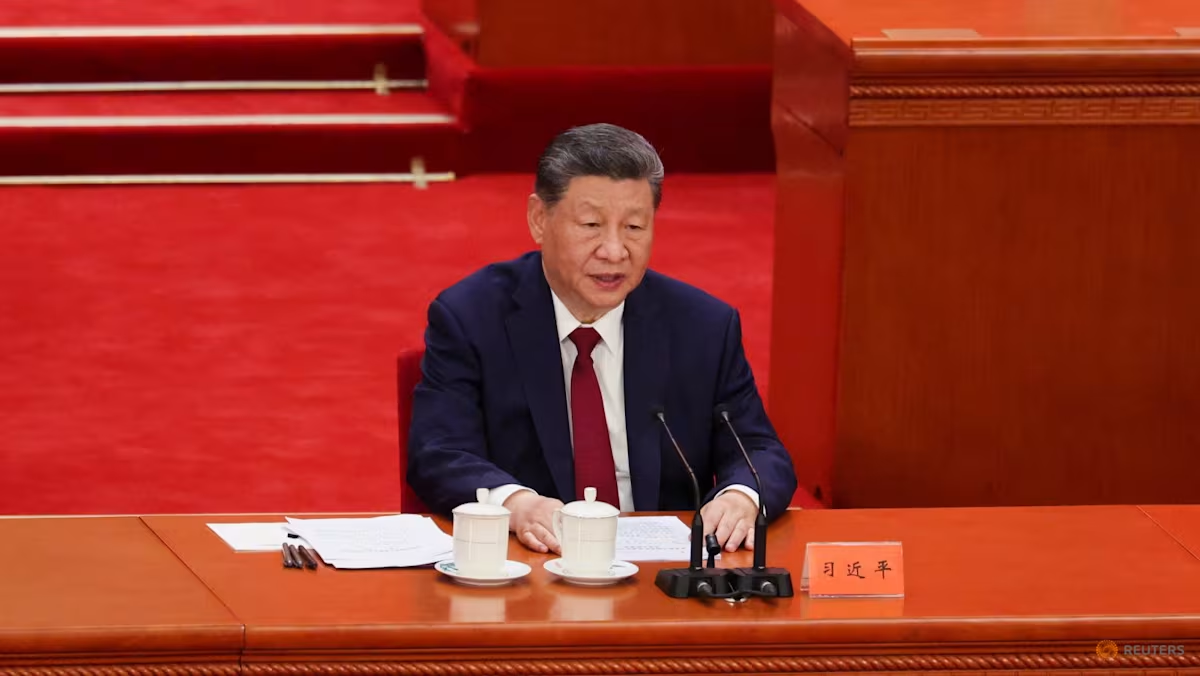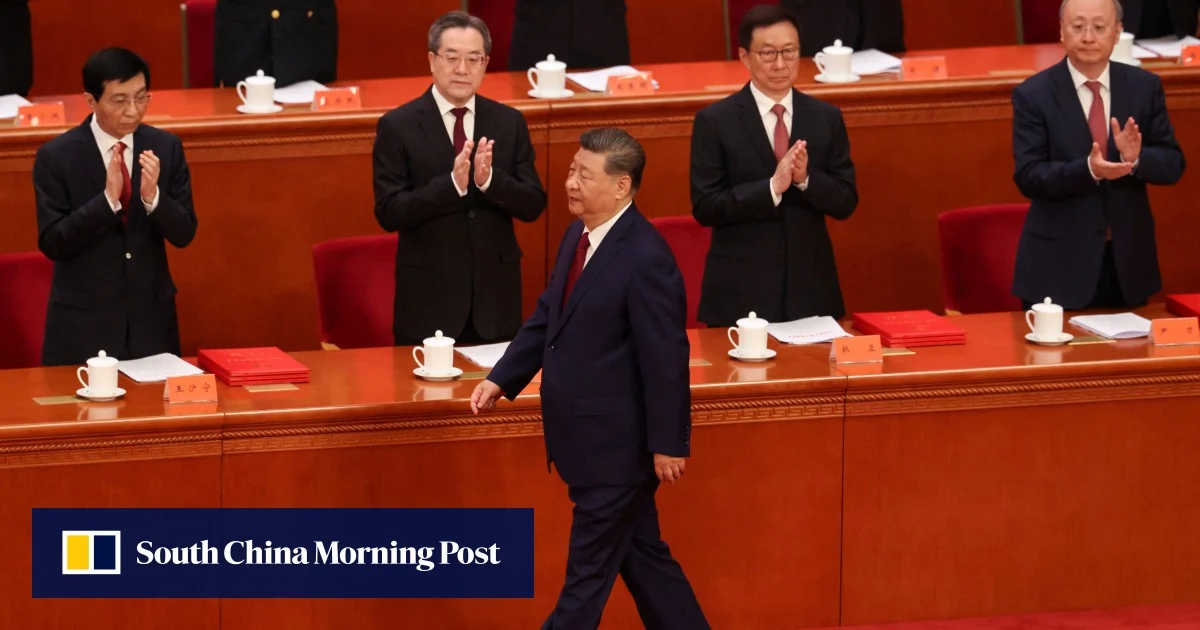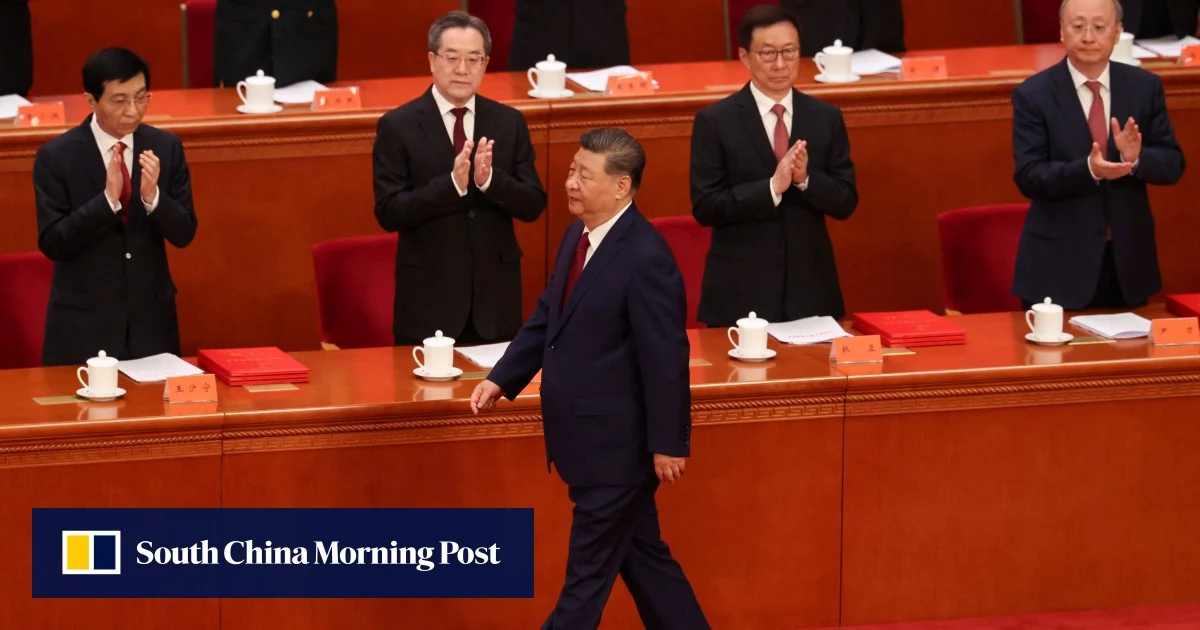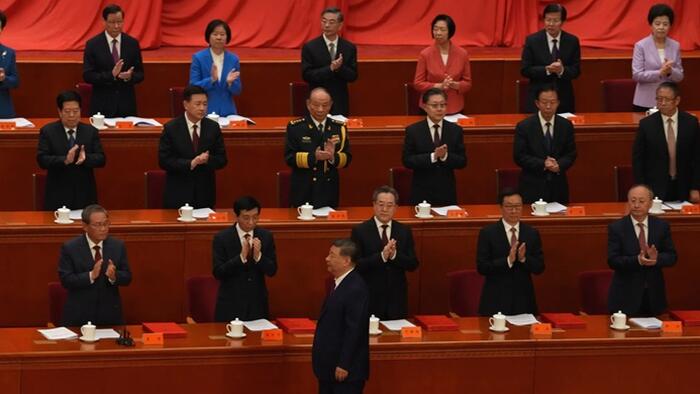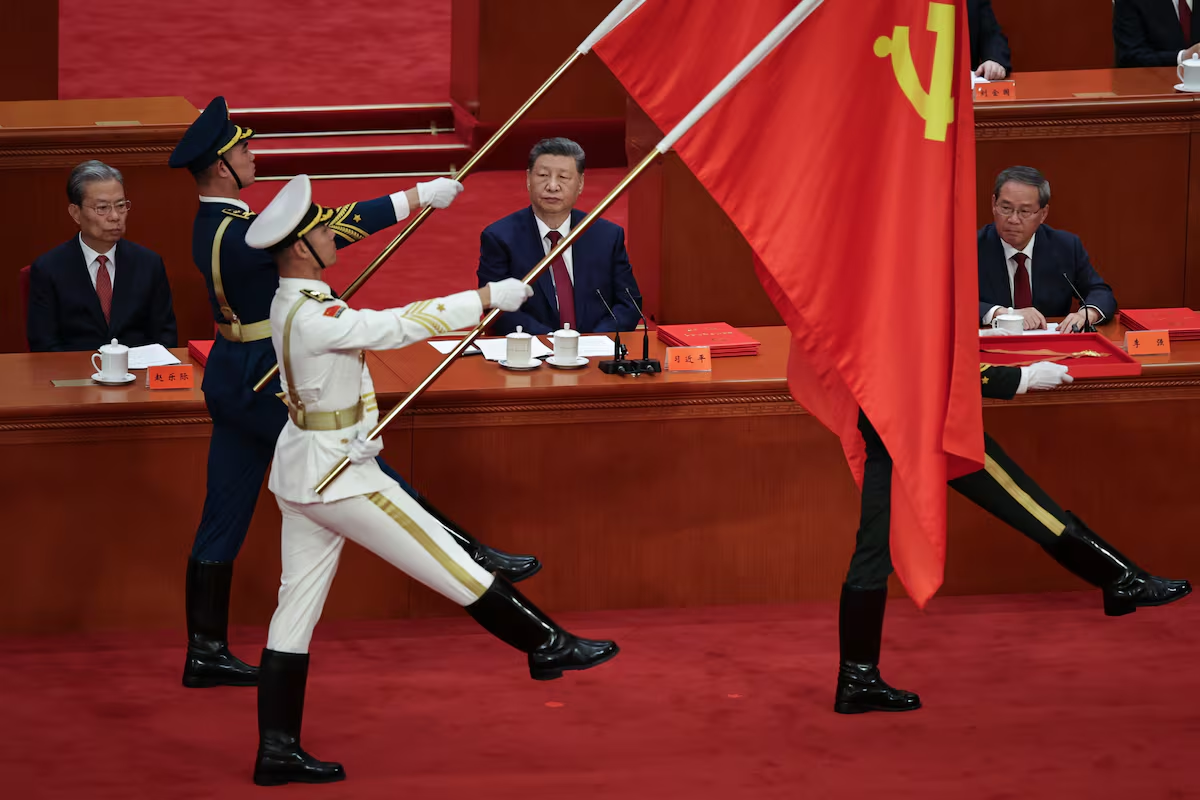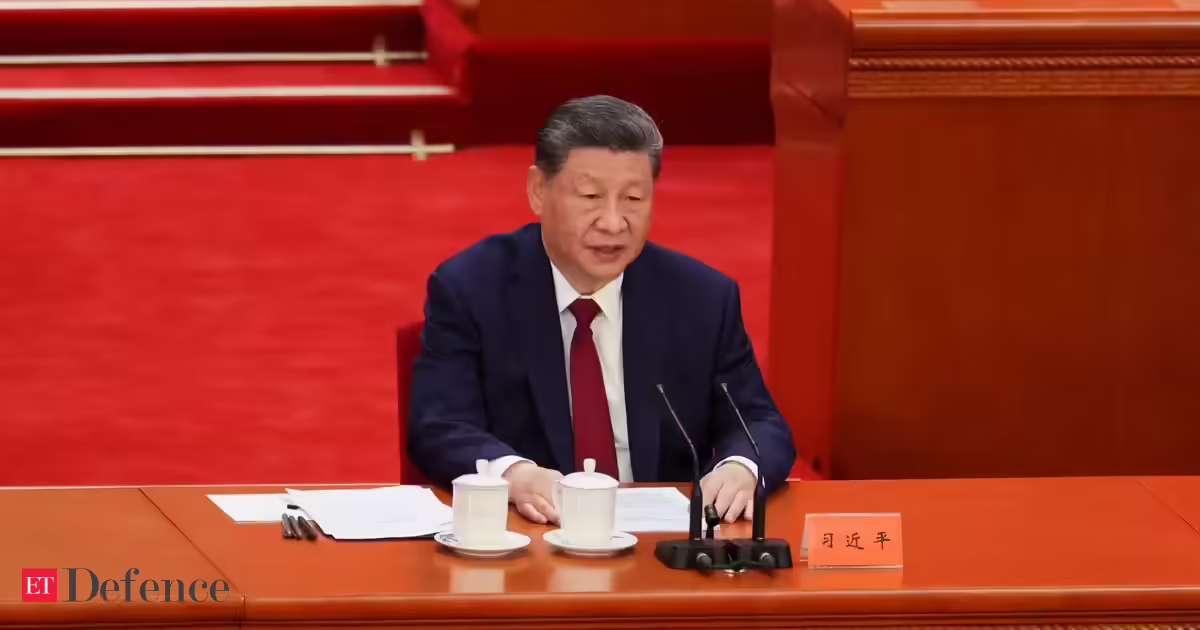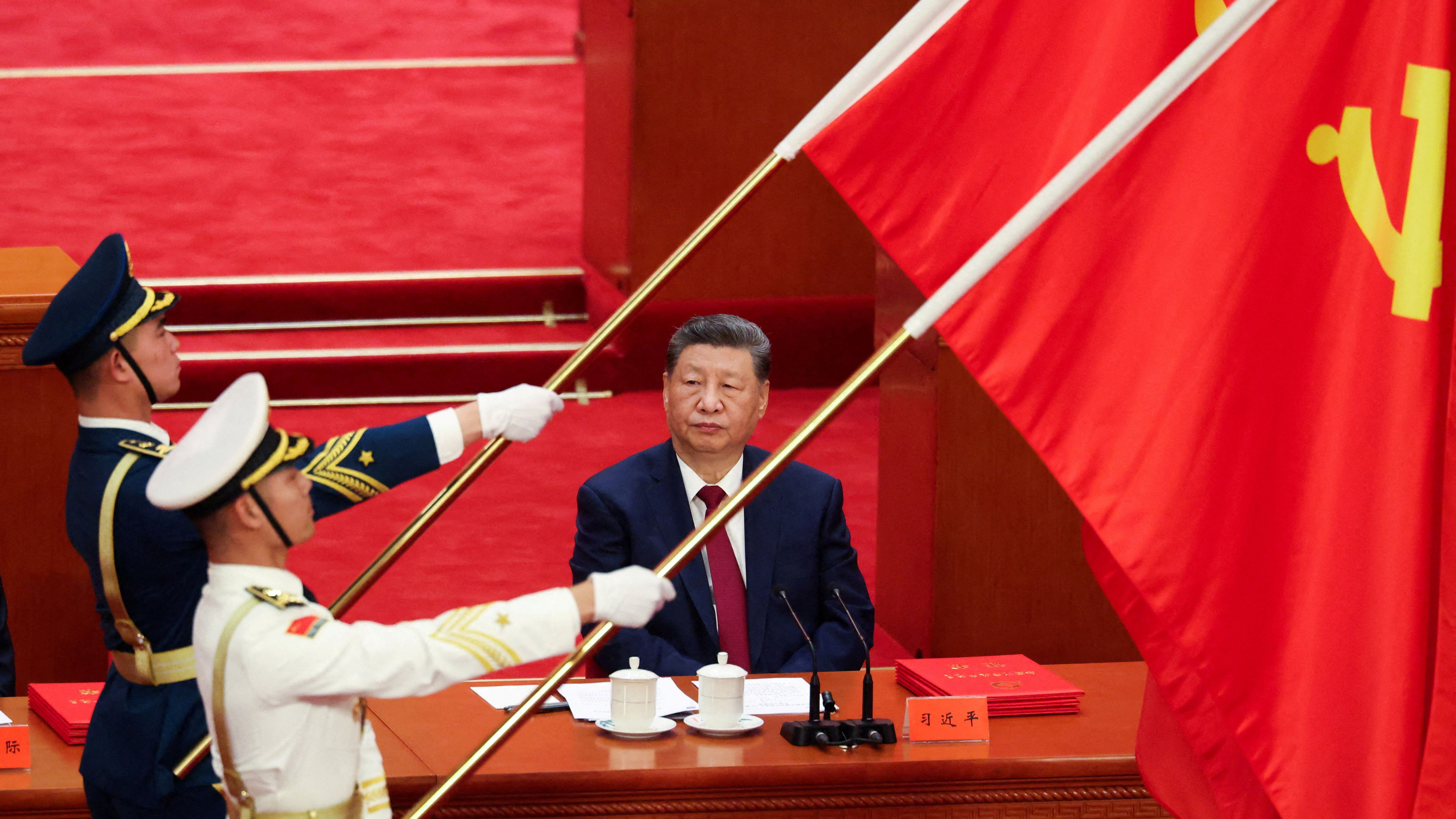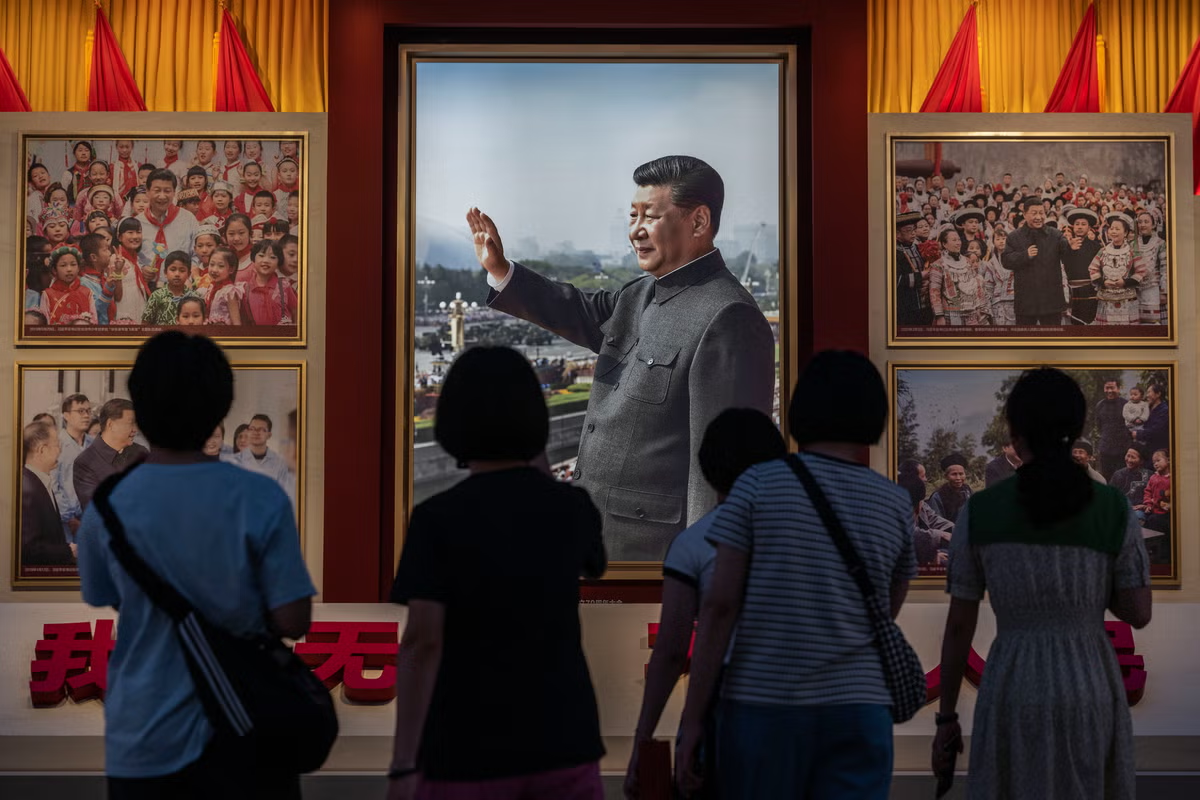
Chinese leader Xi Jinping warned that the world was entering a “new period of turbulence” and called on the ruling Communist Party to prepare Beijing for prolonged competition.In a 40-minute speech marking the 105th anniversary of the party’s founding, Mr Xi, the country’s most powerful leader since Mao Zedong, called on its leaders and members to prepare for “high winds, rough seas, even perilous storms” as the world had entered "a new period of turbulence and transformation". He warned that Beijing was entering a period in which "strategic opportunities coexist with risks and challenges" and "uncertainty and unpredictable factors are increasing". So, he urged party workers to "strengthen confidence and continue the struggle".Mr Xi, the party’s general secretary, didn’t mention the specific opportunities or risks, but appeared to be referring to geopolitical tensions like the US–China rivalry, the wars in the Middle East and eastern Europe, trade disputes, technological competition, and economic uncertainty.At home, analysts say, slower economic growth and demographic decline pose major challenges to the world's second-largest economy.A boy runs past a portrait of Xi Jinping as he visits the Museum of the Communist Party on the 105th anniversary of its founding (Getty)Mr Xi hailed the party's 105-year record of overcoming challenges as proof of its ability to steer China through a more uncertain world.He said the party’s key qualities, including its pursuit of truth, close ties with the people, willingness to struggle, and commitment to self-reform, were behind its success."The reason the Communist Party of China has been able to continuously create glory over 105 years of struggle, and the reason history and the people have chosen the Communist Party, fundamentally lies in the outstanding qualities our party possesses that no other political party or political force can match," Mr Xi said.He said such qualities were the "key code" behind "why the Communist Party can succeed".People say an oath of loyalty in front of a flag of the Communist Party of China (Getty)Mr Xi also reiterated Beijing’s position on reunifying Taiwan with mainland China. "We must thoroughly implement the party's overall strategy for resolving the Taiwan question in the new era, uphold the one-China principle and the 1992 Consensus,” he added, “and firmly advance the cause of national reunification.”Beijing claims the island as its sovereign territory, a contention that Taipei rejects.The Chinese leader also reaffirmed Beijing's commitment to the "one country, two systems" framework governing Hong Kong and Macau.Mr Xi said Beijing would continue to uphold the principles of "Hong Kong people administering Hong Kong" and "Macau people administering Macau" with a high degree of autonomy, while insisting that both special administrative regions be governed by "patriots".People say an oath of loyalty in front of a flag of the Communist Party of China on the 105th anniversary of its founding in Beijing on 1 July 2026 (Getty)Mr Xi’s call to prepare for an even more challenging time comes as Beijing navigates an increasingly unstable global landscape, one that, according to a report by Asia Group published on Tuesday, also creates strategic opportunities for China. The report says China is the principal beneficiary in Asia of the US-Israeli war against Iran, weathering the disruption to the flow of oil and gas through the Strait of Hormuz better than regional competitors while strengthening its geopolitical position.Before Iran closed the critical waterway in response to the US-Israeli attack, the report stated, roughly 80 per cent of the oil and 90 per cent of the natural gas rolling through it was headed for Asian markets, as was a significant share of other critical commodities. The researchers mapped China, India, Japan, and South Korea for economic and political repercussions of the crisis and found that China was the clear winner of the war in the Middle East. It was because China was better prepared for the disruption after building large strategic oil stockpiles and investing heavily in renewable energy, reducing its vulnerability to supply shocks.“With 1.4 terawatts of operating renewable capacity already online and a reported 90-110 days of crude import cover in reserve, China weathered the initial shock better than any regional peer,” the report said. “Ultimately, Beijing views the pain points not as existential threats, but as challenges to be managed and even opportunities to be exploited.”
Xi Jinping says China must prepare for ‘perilous storms’ threatening world
Chinese leader reaffirms Beijing’s goal of reunifying Taiwan in speech marking 105 years of ruling Communist Party
707 words~3 min read