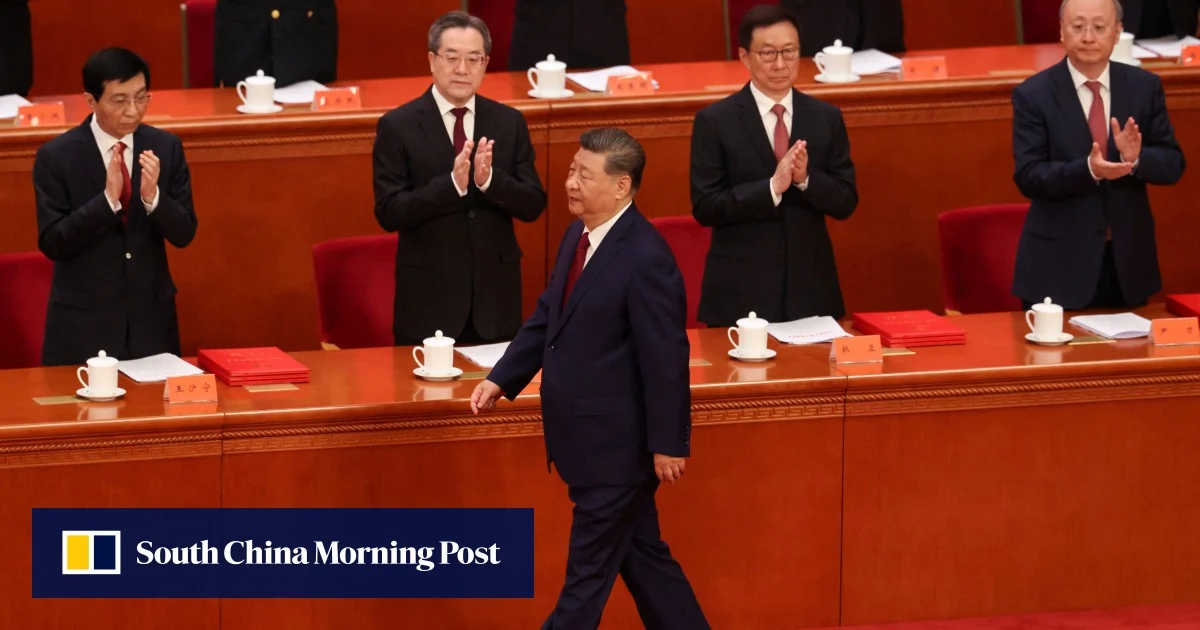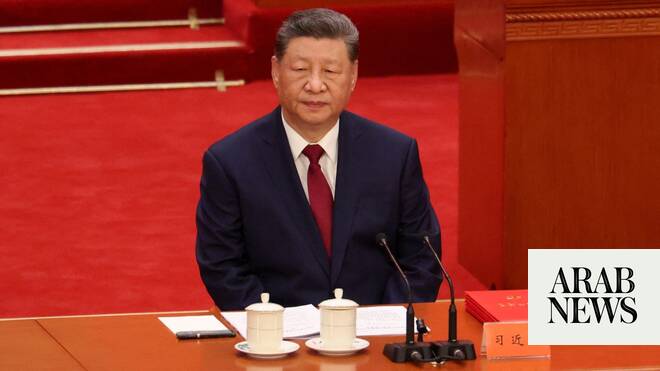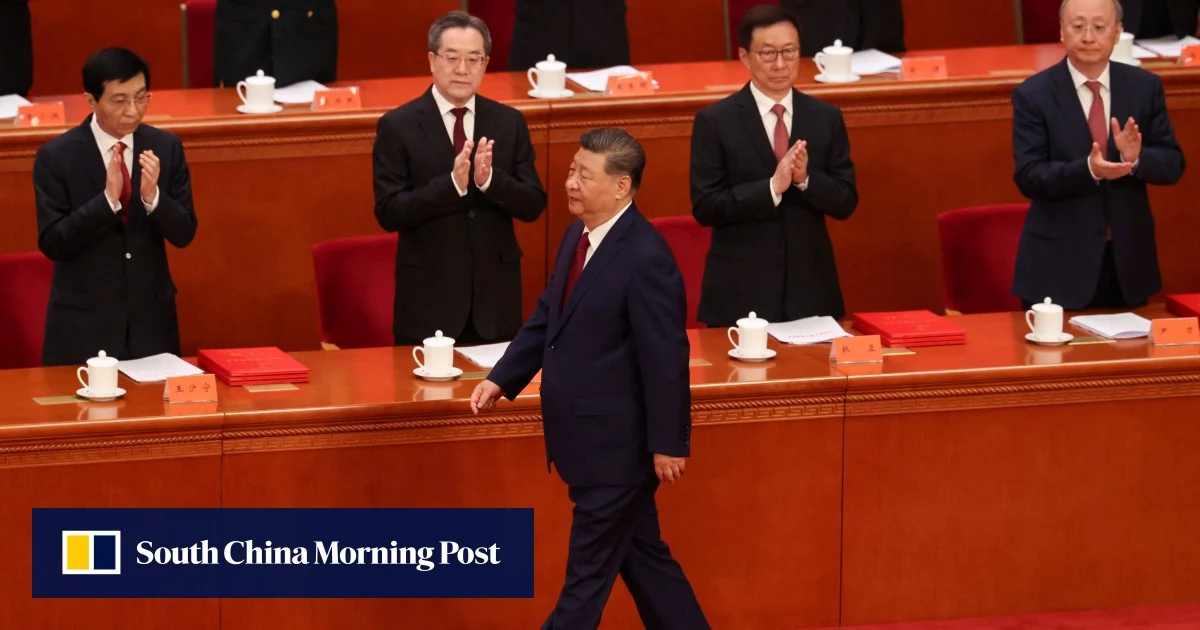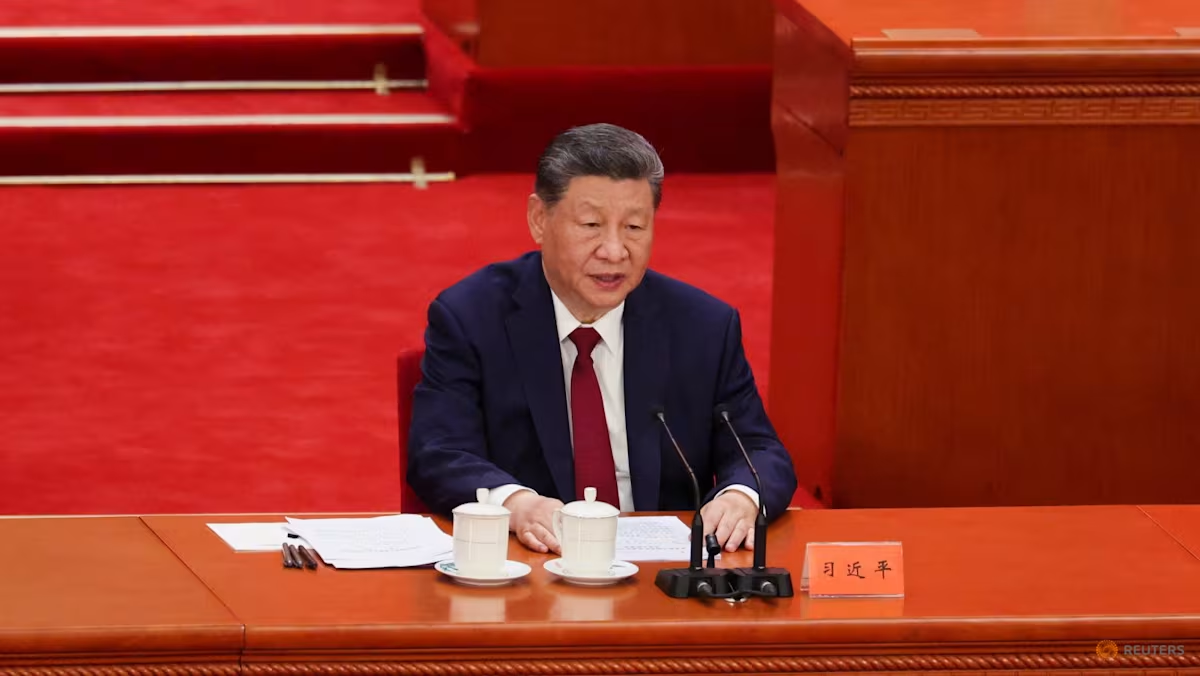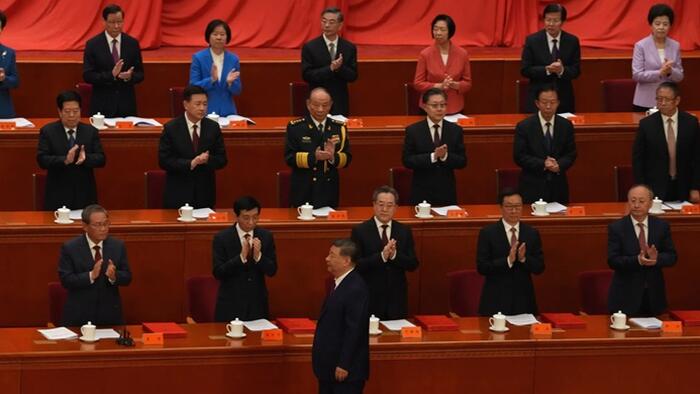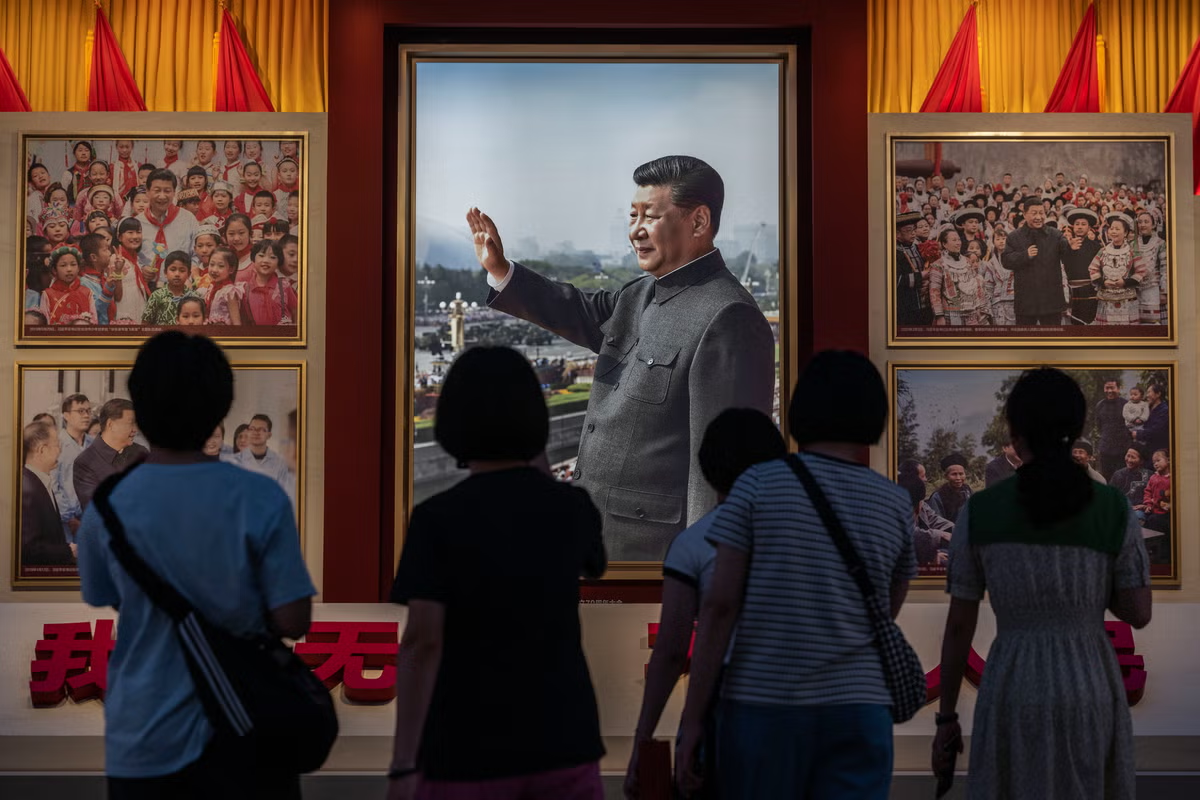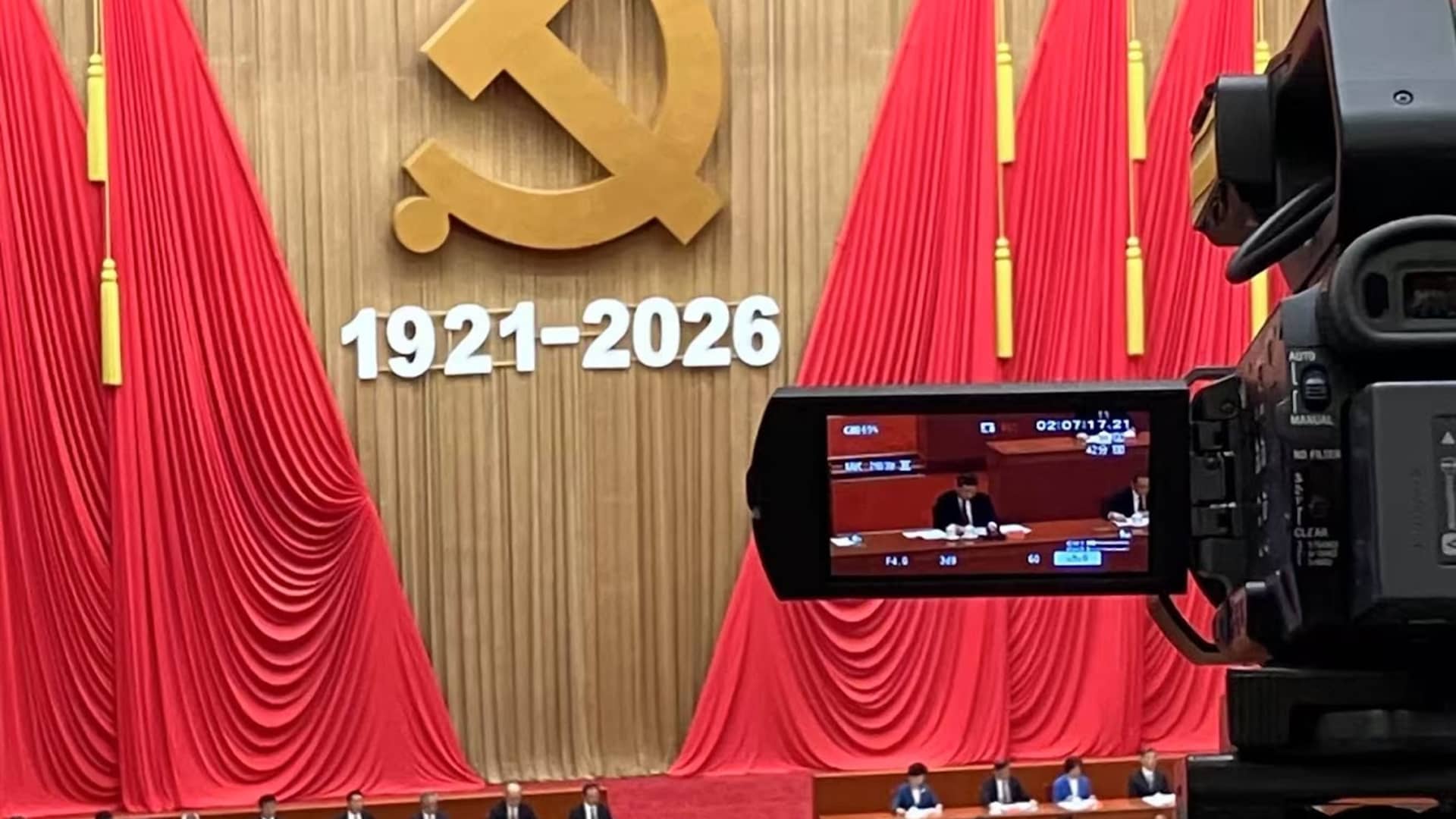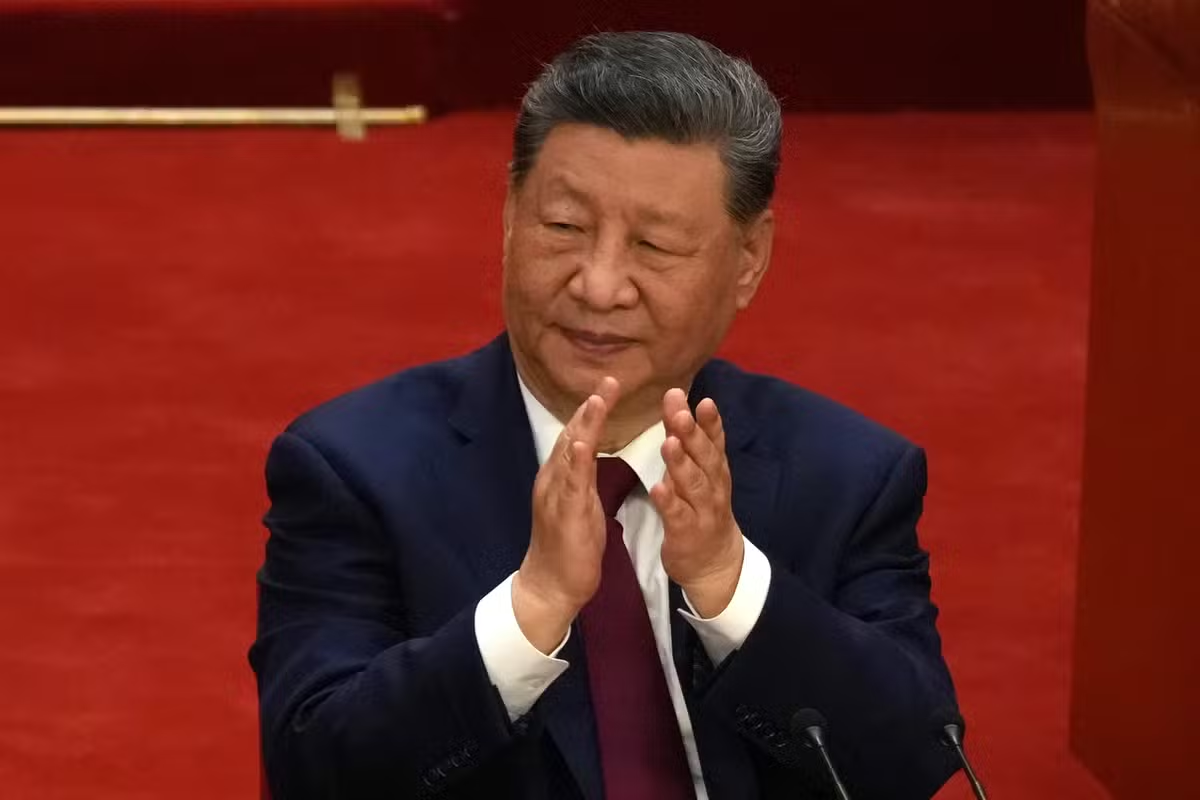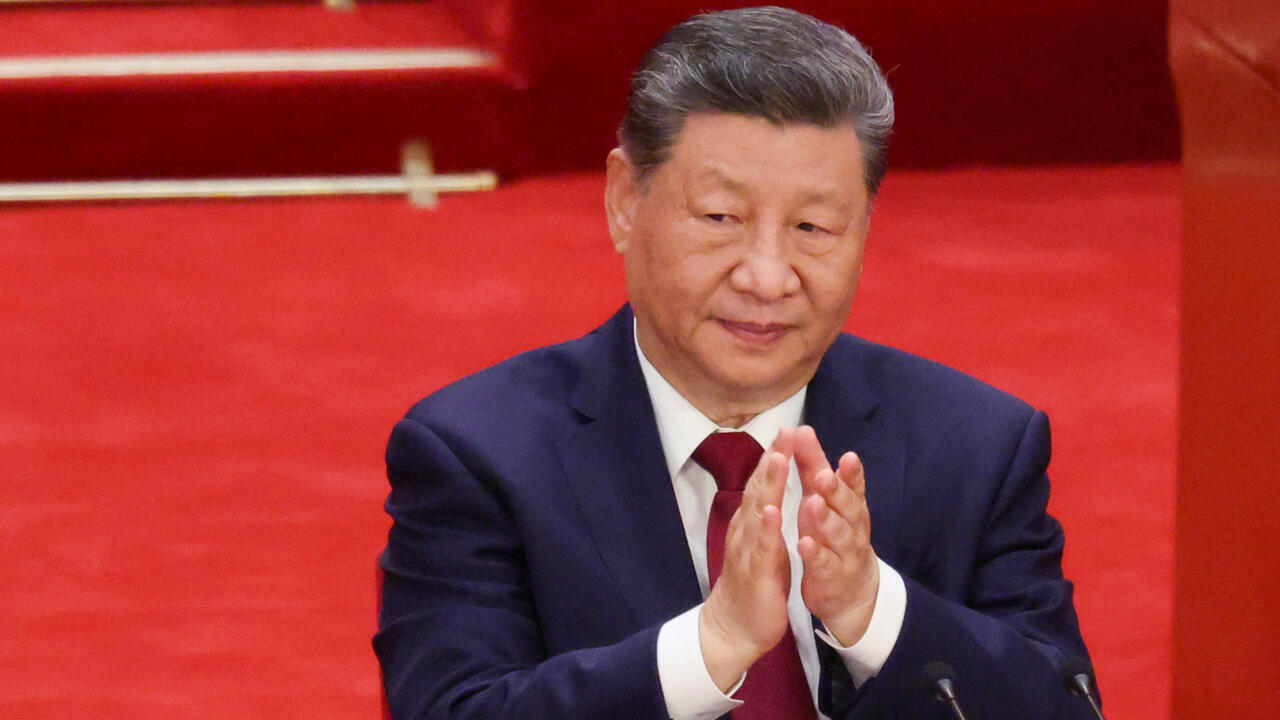
When Xi Jinping addressed an event at the Great Hall of the People on Wednesday to mark the 105th anniversary of the founding of the Chinese Communist Party, he stressed its history of “unremitting struggle” and warned against arrogance and complacency. But his dominant tone was one of confidence, not only in the party’s achievements and its position but in its future as the central actor in China’s story.“No matter how strong the enemy, how perilous the road, or how severe the challenge may be, our party has always been utterly dauntless and never flinched, inspiring the people of the whole country to advance continually from victory to victory with an iron will that stands firm and unmoved however the storms may strike,” he said.The last time Xi made a speech about the party on its anniversary was at a centenary celebration on Tiananmen Square in 2021 when he struck a defiant note, declaring that the time when China could be bullied and abused by others was gone forever. But Xi and the party were facing into some stormy weather at home and abroad. Few predicted they both would emerge in as strong a position as they occupy today.China’s zero-Covid policy was successful throughout 2020 and 2021 with strict controls, testing and quarantine effectively suppressing the spread of the virus while the economy continued to function at a high level. But as the virus mutated, measures such as the three-month lockdown of Shanghai in the spring of 2022 were intrusive, disruptive and ultimately inadequate. The policy collapsed at the end of that year, setting off a surge of infections for which the health service was inadequately prepared.The anticipated post-Covid economic bounce failed to materialise as domestic demand and consumer confidence continued to struggle under the burden of China’s years-long property market slump. Youth unemployment reached record levels as millions of graduates left higher education every year to enter an increasingly bleak job market.Internationally, Joe Biden’s administration maintained most of Donald Trump’s coercive policies towards China and added some of its own, restricting the sale of advanced semiconductors and trying to rally an “alliance of democracies” to counter what it saw as an axis of autocracies that included Beijing, Moscow, Tehran and Pyongyang. Relations with the European Union, already bruised by the mutual imposition of sanctions connected to the treatment of the Uyghur minority in Xinjiang, took a nosedive after Vladimir Putin’s full-scale invasion of Ukraine in February 2022 when China offered economic and diplomatic support to Russia.As Xi faces into the last year of his third, five-year term as China’s leader, the party has more than 101 million members. If you add members of the Communist Youth League, the number rises to almost 200 million. The Central Commission for Discipline Inspection disciplined a record 983,000 party members in 2025, as Xi’s anti-corruption drive remains in full swing.Those purged include some of the most senior figures in the party and much of the military leadership, heightening speculation about sweeping personnel changes at next year’s party congress. Most of the seven-member standing committee of the politburo, the top leadership in the party, are too old to serve another five-year term.There is no sign that Xi is preparing to relinquish his own leadership roles and the removal of term limits means he can serve for another five years at least. But if the figures immediately below him are replaced, the party leadership will undergo a dramatic, generational transformation.Most of the current leadership belong, like Xi, to a generation that was shaped by the experience of the Cultural Revolution, which saw chaos unleashed by Mao Zedong for almost a decade. The next generation of leaders will remember little that happened before the death of Mao and the reform and opening up that followed under Deng Xiaoping.In his speech on Wednesday, Xi stressed the party’s enduring commitment to Marxism “as a powerful ideological weapon for transforming both the subjective and the objective world”. But he also acknowledged the fact that it owes its enduring monopoly on power in China to its readiness to move with the times and adapt accordingly.“It actively recognises, responds to and seeks change, forging ahead with determination; it ensures that all its work reflects the character of the times, follows underlying laws, and is rich in creativity; and it leads the country and the nation forward in the logic of history’s advance and in the current of the era’s development, making it a worthy vanguard of the times and backbone of the nation,” he said.
Chinese Communist Party may bet set for a dramatic transformation but Xi’s grip on power as strong as ever
Leader signals willingness to move with the times, but removal of term limits leaves Xi well placed to stay in power
754 words~3 min read