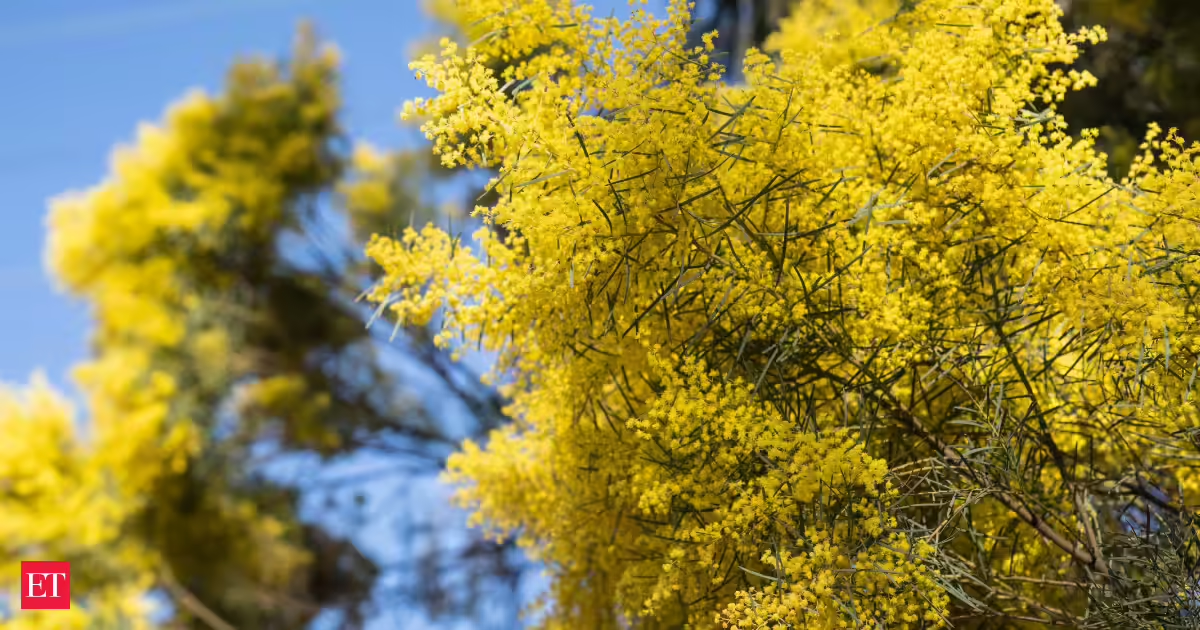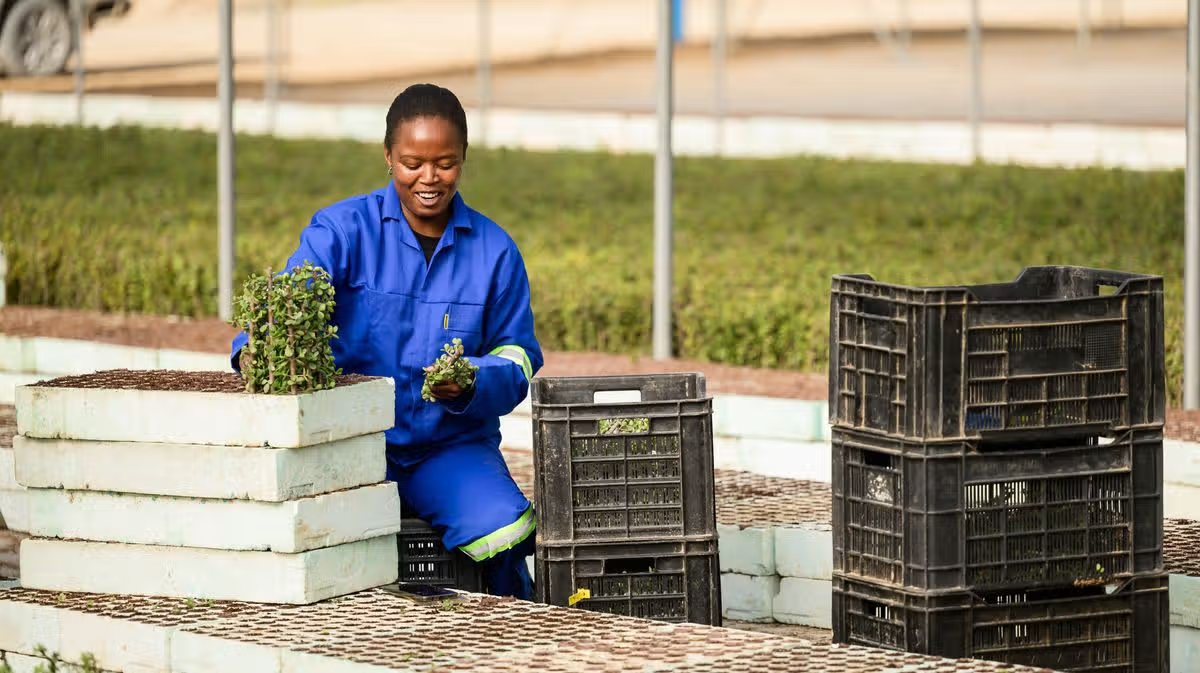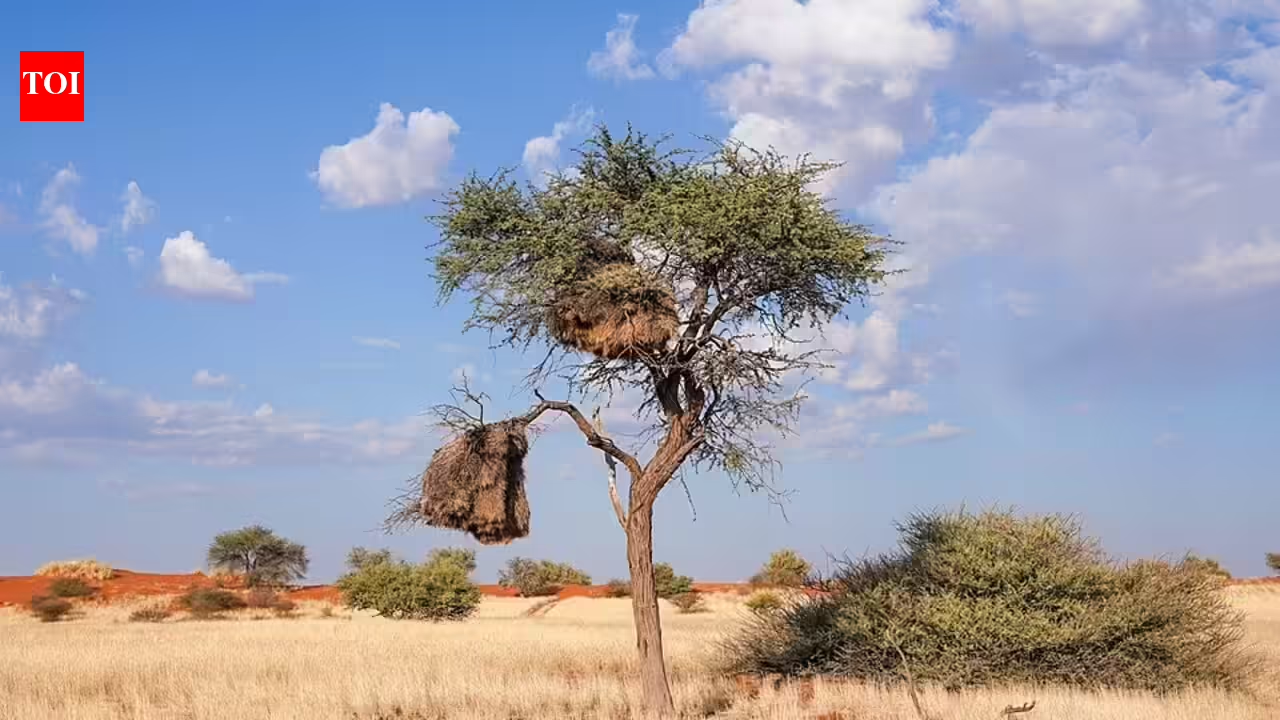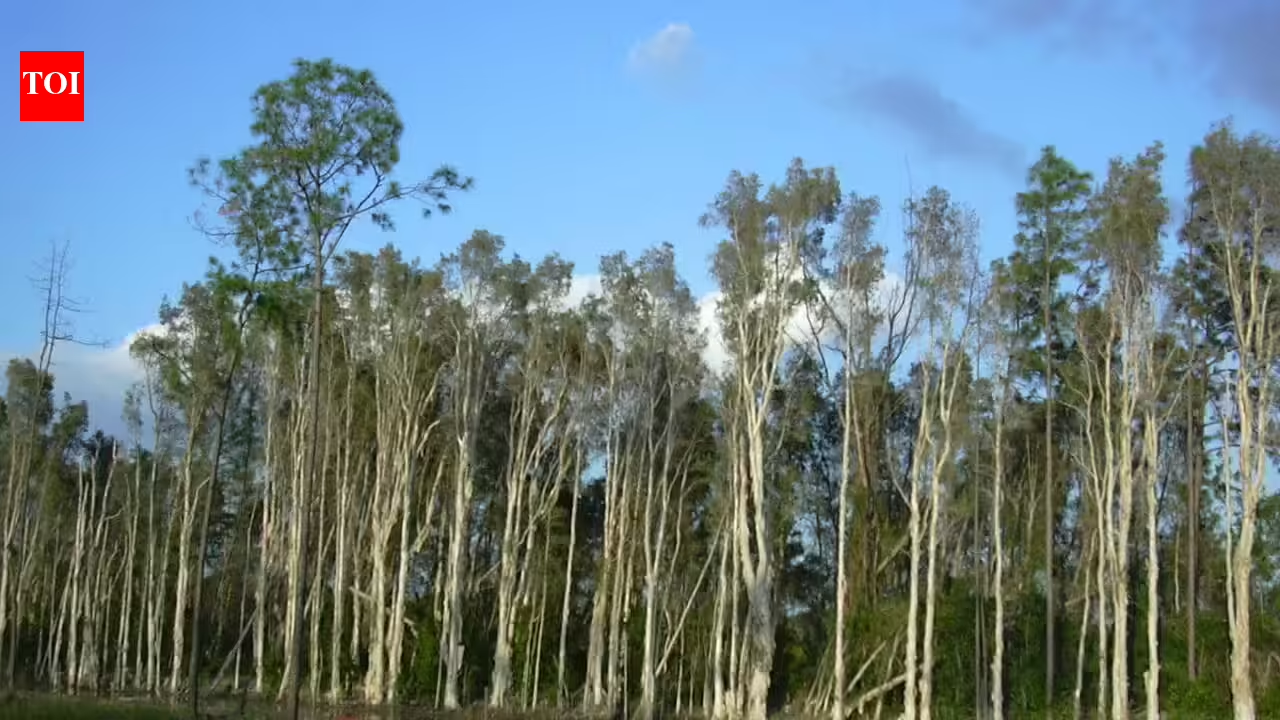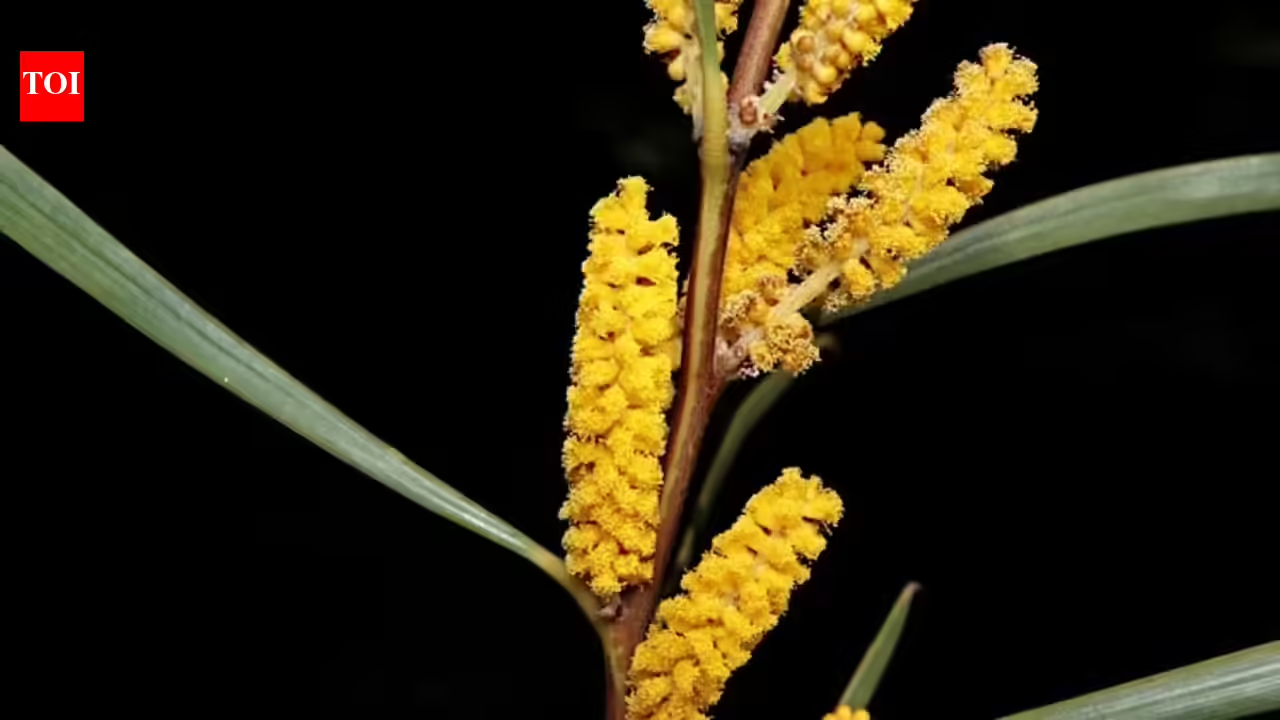
South Africa faces a severe water crisis stemming from Australian trees introduced over a century ago. These invasive species, now widespread, consume vast amounts of water, significantly reducing river flow and impacting communities. Image Credit: Wikimedia CommonsAcross South Africa, an environmental crisis began with a plan over a century ago. By bringing in fast-growing trees from Australia to stop shifting sand dunes and supply wood for a growing nation, early managers accidentally upset a delicate natural balance. Today, those same imported trees have spread far beyond their original boundaries, quietly turning into a major threat that overruns local plants and shrinks the country's precious water supply.This severe environmental shift has been carefully detailed in a study published under the title Invasive Alien Trees and Water Resources in South Africa: Case Studies of the Costs and Benefits of Management. The review suggests that these non-native trees draw heavily on local water resources. By tracking how these aggressive plants spread through mountain catchments and river pathways, the investigators found that the foreign trees consume far more water than the native vegetation they replace. This intense thirst is causing a noticeable drop in the daily streamflow of vital rivers, directly impacting the communities and farms that rely on that water every day. The study compares four representative catchments — the Sonderend, Keurbooms, Upper Wilge and Sabie-Sand — and reports that invasion had already affected about 44%, 54%, 2% and 23% of them respectively, with corresponding natural-flow losses of roughly 7.2%, 22.1%, 6.0% and 9.4%, respectively. It also warns that if control is delayed, the projected flow reductions could climb to 41.5%, 95.5%, 25.1% and 22.3% respectively, with some catchments reaching full canopy cover within about 26 to 30 years.The massive thirst drying up local river systemsTo fully understand why these imported Australian acacias are such incredibly damaging invaders, it helps to look at the unique way they grow compared to local plants. In the rocky mountain catchments of South Africa, the native vegetation consists mostly of low-growing shrubs like fynbos, which have evolved to survive perfectly well on minimal water. These local plants keep the soil stable without draining the deep moisture reserves of the earth. When the tall Australian trees were introduced, they brought a completely different survival strategy to the landscape, growing much larger and developing deep, aggressive root systems that reach far down into the groundwater.The extensive historical data shared in the study explain that these non-native trees form incredibly thick, crowded canopies over large areas of land. Because they keep their leaves all year round and have a much larger surface area than local shrubs, they lose massive amounts of water to the air through evaporation. The research notes that when these trees take over a riverbank, they pull water straight out of the stream and the surrounding soil, leaving less water to flow down into reservoirs and municipal supply lines.This constant water loss adds pressure in a country that already faces water scarcity and regular droughts. As the dense stands of acacia crowd out the diverse local flora, they also leave the ground covered in thick leaf litter that can alter the natural quality of the soil. When heavy rains finally hit the area, the altered ground cover can change how the earth absorbs water, leading to increased soil erosion and worse flooding risks along the mountain streams. The loss of the original plant diversity means that the entire ecosystem becomes less resilient, making it harder for local wildlife to find food and shelter.A new study details how these aggressive trees, with their deep roots and dense canopies, are drying up vital water sources. Large-scale clearing efforts are underway, proving that ecological decisions have long-lasting consequences for water security. Image Credit: Wikimedia CommonsA massive national effort to clear the advancing green invasionThe findings have reshaped how the nation manages its natural resources. For a long time, land managers viewed the spreading trees as a minor aesthetic issue or a local inconvenience rather than a major threat to infrastructure. However, the realisation that these invasive plants are actively reducing the volume of available water by millions of cubic meters every year led to the creation of large-scale environmental clearing programs. These national initiatives combine social development goals with conservation work by hiring thousands of local workers to cut down the invading forests.According to the study, the financial benefits of removing these thirsty trees far outweigh the high costs of running the clearing projects. Field teams are sent into rugged, mountainous terrain to manually chop down mature acacias and treat the stumps to prevent them from growing back. By systematically clearing the riverbanks and mountain catchments, these programs can help fynbos recover and may improve local water flow over time.This ongoing effort highlights the long-term impacts of shifting natural habitats. By showing that a forestry decision made in the nineteenth century can evolve into a major modern water security crisis, the study reminds us that manipulating ecosystems always brings unexpected challenges. Recognising the importance of native water pathways encourages conservationists to think carefully about which plants they introduce.
South Africa in the late 1800s planted millions of Australian acacias to stabilise sand dunes, but today scientists say they're draining rivers and replacing native ecosystems
Across South Africa, an environmental crisis began with a plan over a century ago. By bringing in fast-growing trees from Australia to stop shifting sand dunes and supply wood for a growing nation, early managers accidentally upset a delicate natural balance.
848 words~4 min read