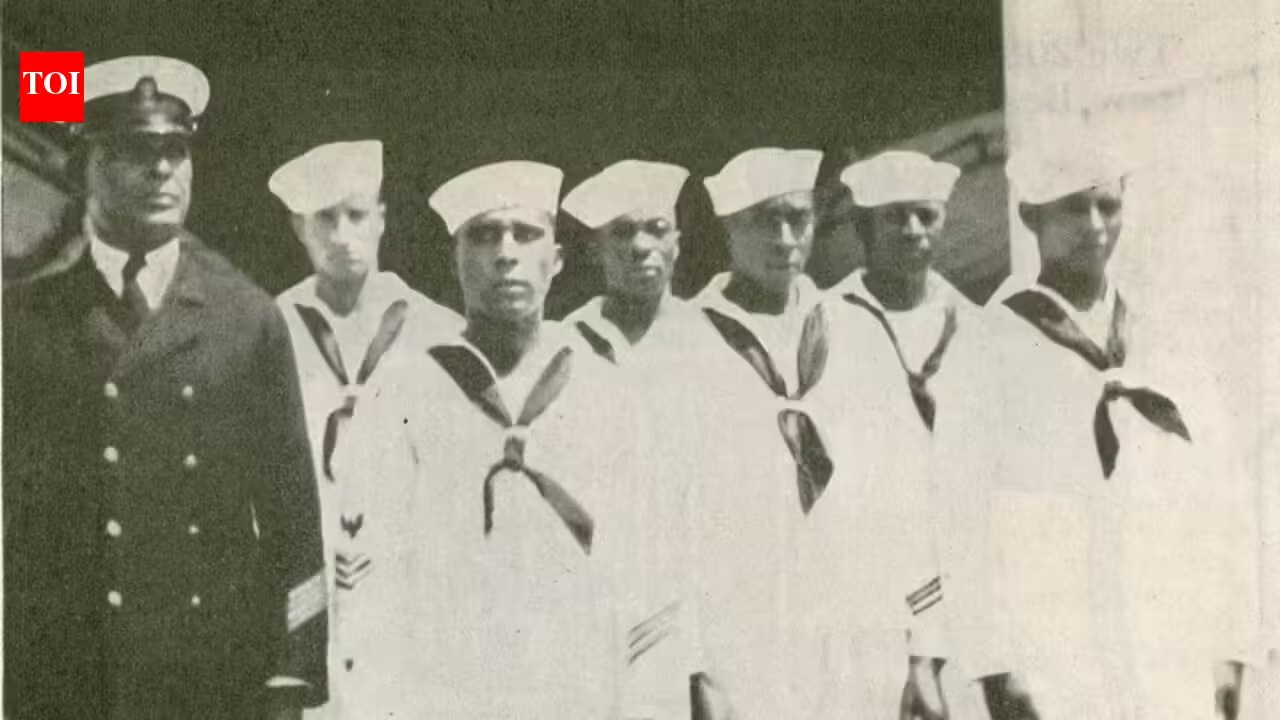
A forgotten chapter of American heroism has resurfaced, detailing an extraordinary 1896 water rescue by an all-Black crew of surfmen on North Carolina's Outer Banks. Image Credits: Wikimedia CommonsWhen people picture historic maritime rescues, they often imagine a scene of cinematic adventure. We picture massive, state-of-the-art metal cutters slicing through towering ocean swells, modern radar systems tracking storm paths with mathematical precision, and rescue teams outfitted in high-tech flotation gear working with the latest communication tools. Traditional accounts of seafaring history have often emphasised industrial might and mechanical power. The common belief is that early lifesavers stood little chance against a furious hurricane unless they had complex, heavy equipment and massive structural support from the mainland.But looking closer at the coast of North Carolina reveals a different story of human courage and skill. Tucked away along the shifting barrier islands of the Outer Banks is a long-forgotten story of an extraordinary water rescue that occurred just three decades after the American Civil War. In an era defined by deep social divisions and intense racial prejudice, an all-Black crew of surfmen stood as the thin line between life and death on a desolate strip of sand. Using rowboats, ropes, and local knowledge of Atlantic currents, these men risked their lives to save strangers from the ocean.This remarkable piece of history has been brought back to light in a podcast published on Atlas Obscura, under the title Podcast: The Black Surfmen Behind One of the Greatest Water Rescues Ever. The article details how these forgotten heroes operated out of the Pea Island Life Saving Service station under the leadership of Richard Etheridge, a former enslaved man who became the first Black keeper in the service. By exploring the unique challenges of guarding a region known globally as the Graveyard of the Atlantic, the journalists described how this crew carried out a rescue so dangerous they had to improvise to save lives.The podcast recounts that the Pea Island crew had to improvise when the storm had stripped away the beach, making it impossible to set the anchor for a standard Lyle-gun rescue. Instead of rowing out, Etheridge chose a beach-apparatus approach, and then a last-minute human relay, with two men lashed together carrying the line to the E.S. Newman — a risky tactic that helped save the ship’s crew.Braving a furious hurricane without standard equipmentTo fully understand why the actions of the Pea Island crew were so legendary, it helps to examine the extreme conditions they faced on a terrible night in October of 1896. A hurricane was battering the coast, bringing heavy rain, strong surf, and flooding to the low-lying barrier islands. Driven off course by the fierce winds, a three-masted schooner named the Newman ran aground on a sandbar just a few miles from the station. The ship was breaking apart in the pounding surf, and the crew on board was trapped on the rapidly sinking vessel with absolutely no way to reach the shore.The Atlas Obscura report says the storm was so violent that the lifesavers’ main rescue tools were unusable. Under normal conditions, surfmen would use a specialised beach apparatus to fire a heavy rope out to a stranded ship, allowing the victims to be pulled ashore one by one in a canvas seat. However, the churning floodwaters and unstable mud flats made it impossible for Etheridge and his men to transport their heavy gear through the storm. Realising that waiting for the weather to clear could cost the shipwrecked crew their lives, the keeper decided to attempt a manual rescue.Instead of relying on machinery, two elite surfmen volunteered to tie heavy lines directly around their own waists and swim straight out into the churning, debris-filled breakers. They battled the powerful undertow and crashing waves to reach the side of the broken schooner, physically securing the passengers and carrying them through the treacherous water back to the safety of the beach. By repeating the rescue through the night, the crew saved everyone on board.Facing a brutal hurricane and lacking standard equipment, these men, led by former enslaved person Richard Etheridge, risked their lives using rowboats and ropes to save an entire ship's crew. Image Credits: Wikimedia CommonsShifting from a forgotten past to modern recognitionThe practical insights gained from looking back at this historic event show how easily profound acts of heroism can be swept away by the passage of time. Despite the feat, the men of Pea Island received no immediate national medals or official commendations during their lifetimes. Because of the systemic biases of the late nineteenth century, their historic achievement was largely ignored by mainstream historical texts, and the station itself was eventually decommissioned, and the story faded into obscurity for nearly a century.According to the Atlas Obscura discussion, it took decades of dedicated work by independent researchers and family descendants to finally correct the official record. In the late twentieth century, the United States Coast Guard formally recognised the historic excellence of the Pea Island surfmen, posthumously awarding the prestigious Gold Lifesaving Medal to Etheridge and his entire crew. This recognition helped bring wider attention to the contributions of early American lifesavers.This story is a reminder of how easily important history can be forgotten. By showing that the rescue was carried out by individuals who faced major societal barriers, the report highlights a neglected part of our past. Recognising the crew’s work encourages readers to look deeper into shared history and the early development of rescue services.
A Black crew on North Carolina’s Outer Banks pulled off an 1896 storm rescue so daring it helped reshape lifesaving history, and then vanished from memory
When people picture historic maritime rescues, they often imagine a scene of cinematic adventure. We picture massive, state-of-the-art metal cutters slicing through towering ocean swells, modern radar systems tracking storm paths with mathematical precision, and rescue teams outfitted in high-tech flotation gear working with the latest communication tools.
911 words~4 min read