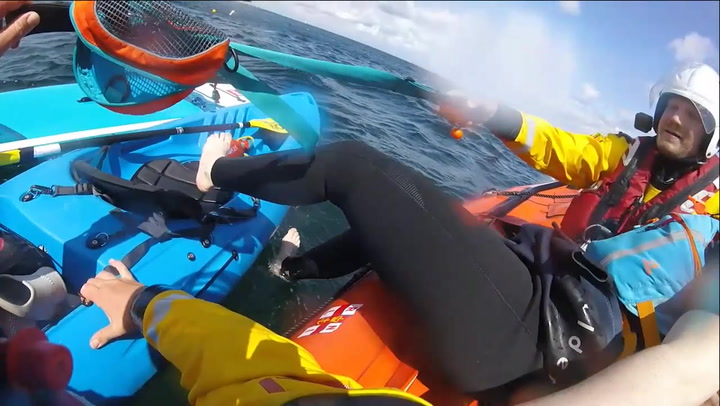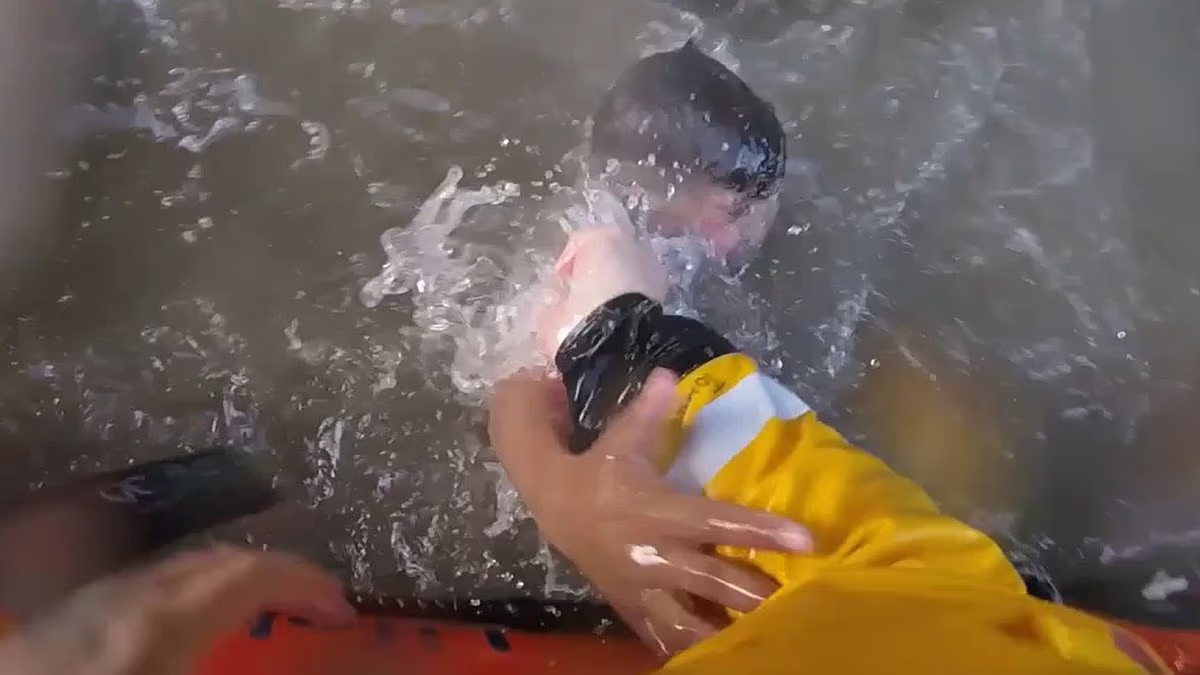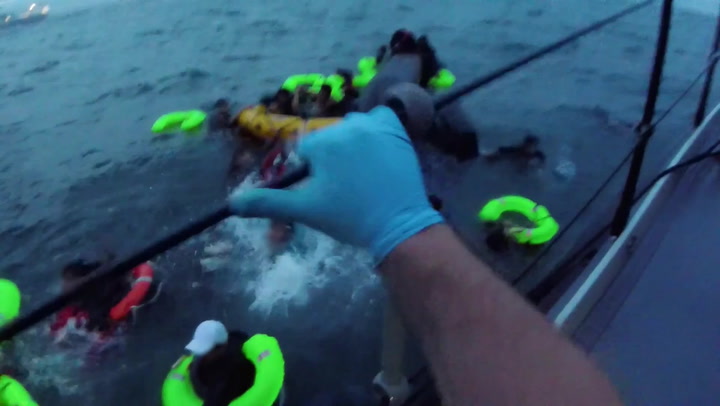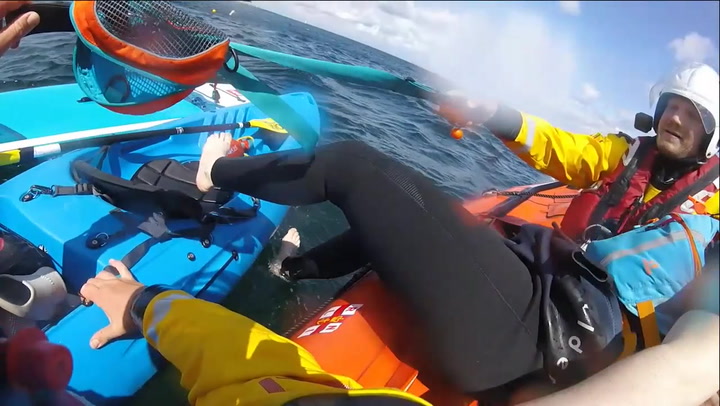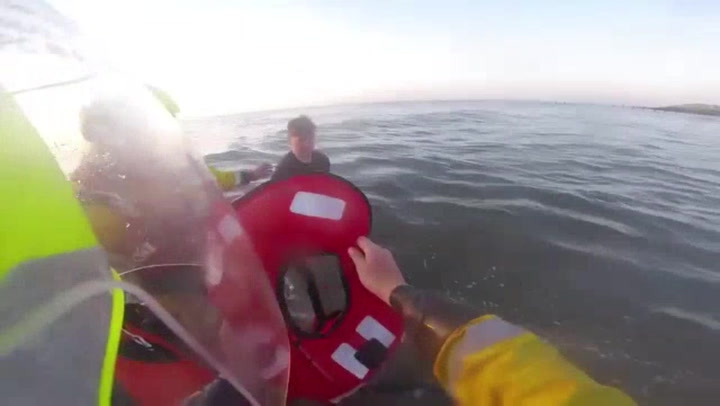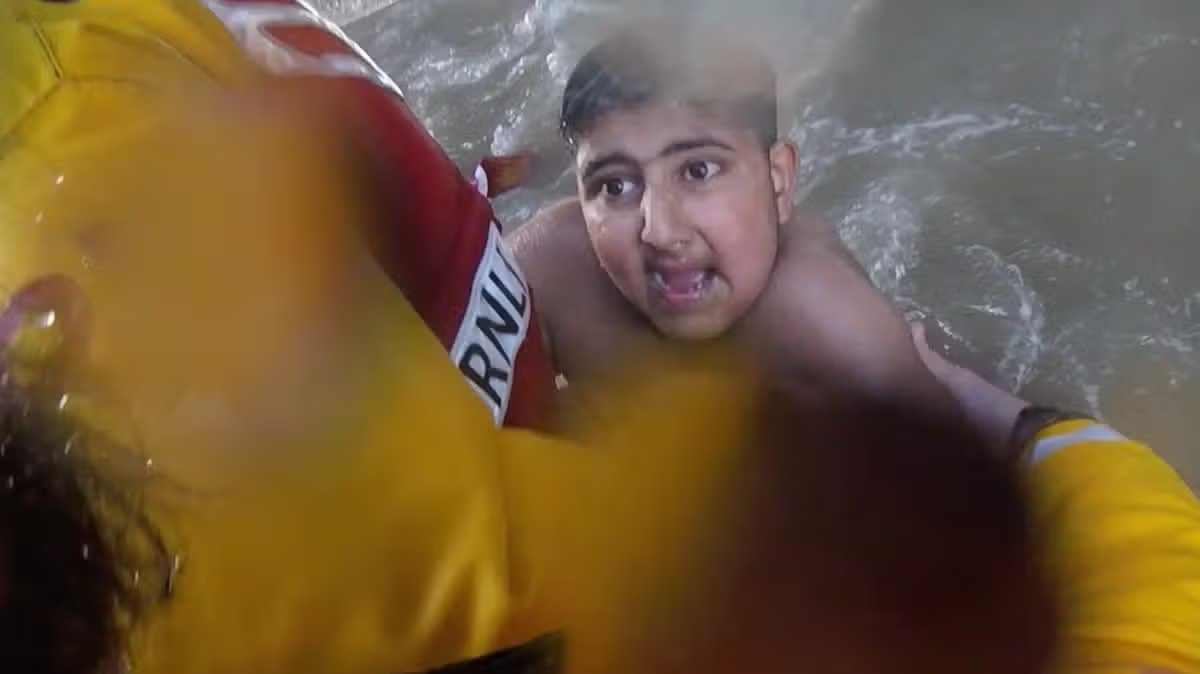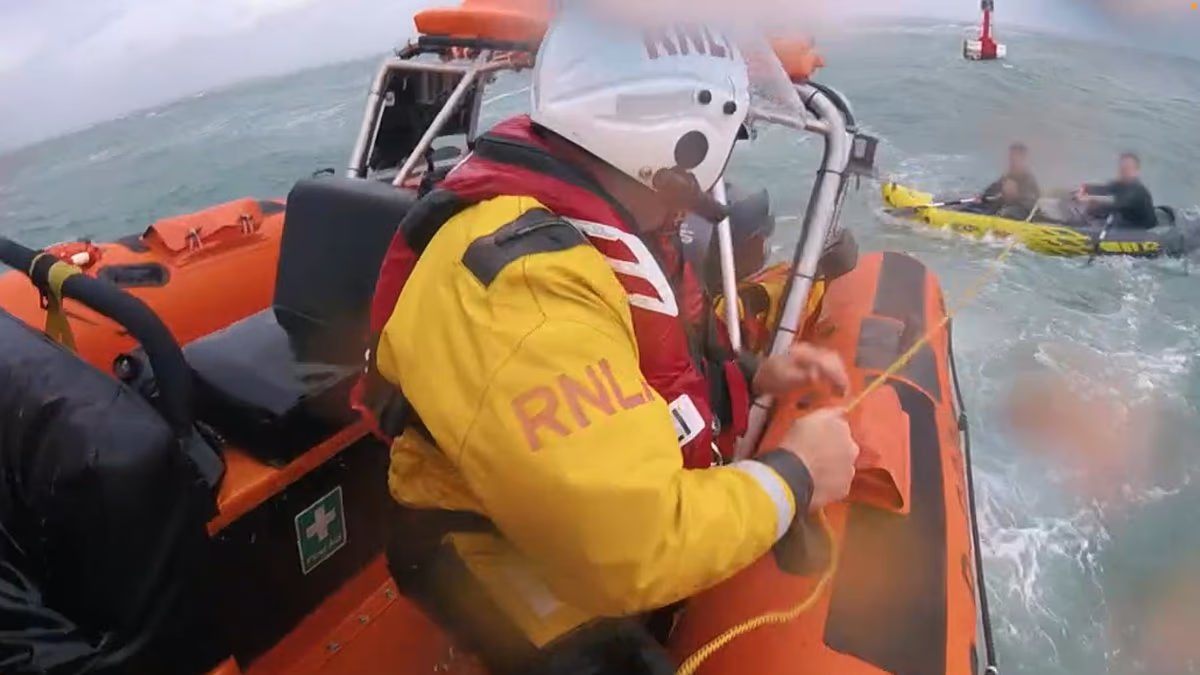
This is the dramatic moment RNLI rescuers tried to save missing kayakers who had found themselves stranded miles out to sea. Lifeguards from the Royal National Lifeboat Institution charity's station in Portaferry, County Down, rushed to the two boaters' aid when the disaster struck. Their brave rescue efforts were shown in a recent episode of the BBC programme Saving Lives At Sea, which documents the activities of crews nationwide. The tense instalment saw six of the volunteer rescuers in the small Northern Irish town head out in the station's lifeboat to save the paddlers.Their inflatable vessel had been blown a whopping nearly three miles out from the shore on Kilclief Beach amid huge 50mph winds. The kayakers were luckily able to make an emergency call to the station on a mobile phone to say the conditions meant they could not make it back to shore alone. But with the area's coastguard helicopter out on another job, the base's single lifeboat was left to tackle this one alone. The shocking footage shows wind, rain, huge choppy waves and incredibly poor visibility - which were also hampering the rescue mission. This is the dramatic moment (pictured) RNLI rescuers tried to save missing kayakers who had found themselves stranded miles out to sea Lifeguards from the Royal National Lifeboat Institution charity's station in Portaferry, County Down, rushed to the two boaters' aid when the disaster (pictured) struckThe show's voiceover notes: 'With the sea state worsening and the light starting to fade, the crew have to weigh up how much longer they can keep searching.'One crew member, named Rusty, later explains in a confessional interview: 'I think in those conditions, if you put the boat in the wrong place at the wrong time, we are all going to be in a big load of trouble. 'It wasn't the fact that we were going to just give up and leave them or anything else but I felt a huge burden nearly, to make sure that everybody got home, all six of us, all in one piece.' Indeed, clips of the rescue itself show the crew beginning to lose hope - when one of them, named George, suddenly cries: 'I can see them, nine o'clock, our nine o'clock!' He explains his thinking at this moment later in the programme, in his own confessional: 'I see something which looks like two persons but I was not sure.' One of his fellow crew members, named Dave, adds: 'It was just a fleeting glimpse of them.'Rusty weighs in: 'When George spotted them, I think we were all amazed. [The kayakers] were a long way away from where they ever started.' Thankfully, when the lifeboat pulled up to the kayak, both paddlers were onboard. Their brave rescue efforts (pictured) were shown in a recent episode of the BBC programme Saving Lives At Sea, which documents the activities of crews nationwide The tense instalment (pictured) saw six of the volunteer rescuers in the small Northern Irish town head out in the station's lifeboat to save the paddlers Clips of the rescue itself (pictured) show the crew beginning to lose hope - when one of them, named George, suddenly cries: 'I can see them, nine o'clock, our nine o'clock!' One had previously been jettisoned from the boat amid the enormous waves, raising fears for their safety in the freezing November water. Rusty says: 'That was the big thing, to know that they were both together. That was a big relief, that was huge. It was nearly a miracle.' The crew soon throw them a life raft and bring them to safety. Dave says: 'I was actually gobsmacked that they'd managed to stay in there, in the kayak, in those conditions. They looked vulnerable.' Rusty recalls: 'They were pale, they were cold, they were shaking, they were upset, relieved, so many emotions.' Both kayakers were showing signs of hypothermia so the rescuers called for an ambulance to meet them back at the shore. But thankfully, paramedics soon gave them the all clear.The crew regularly face such difficult rescues, with the programme noting Portaferry is situated at the mouth of the Strangford Lough coastal inlet - 'one of the most challenging and dangerous patches of water in Ireland'. The shocking footage (pictured) shows wind, rain, huge choppy waves and incredibly poor visibility - which were also hampering the rescue mission The kayakers' inflatable vessel (pictured) had been blown a whopping nearly three miles out from the shore on Kilclief Beach amid huge 50mph winds Both boaters (pictured) were showing signs of hypothermia so the rescuers called for an ambulance to meet them back at the shore. But thankfully, paramedics gave them the all clear The RNLI is a charity and most of its lifeboat crews are unpaid volunteers (pictured, the rescue mission)Rusty notes at the start of the episode: 'It is ferocious. 'The tides run at speeds of eight to nine knots. It creates standing waves at the very entrance and when you get wind against tide, it's like a washing machine.'Yeah, it's not a place for the faint-hearted.' Of the specific day the kayakers got into trouble on, Dave says: 'It was gusting at a force eight, force ten, which can make things very challenging...'To get told it was an inflatable kayak, it would make me think, "How much trouble are they in in those conditions?"' Rusty emphasises: 'In those conditions, if you're heading south, you know it's going to be a life and death situation.' In fact, it had been questioned whether the lifeboat would even be given the go ahead to launch itself, given the high winds and rough seas. Dave says: 'I would be lying if I said I wasn't nervous because I had a fairly good idea of the conditions we may be facing.'But there's people out there who need our help. They're in an extremely dangerous situation.' The RNLI is a charity and most of its lifeboat crews are unpaid volunteers. The organisation operates more than 400 lifeboats from its 238 stations across the country.
Dramatic moments RNLI tries to save kayakers stranded miles at sea
Lifeguards from the Royal National Lifeboat Institution charity's station in Portaferry, County Down, rushed to the two boaters' aid when the disaster (pictured) struck.
1,007 words~5 min read