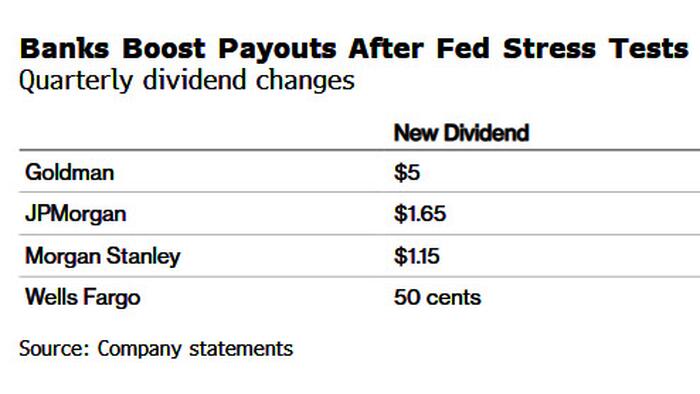
The Federal Reserve’s latest bank stress test confirmed that all 32 major U.S. banks can withstand a severe recession scenario, withstanding over $708 billion in hypothetical losses while maintaining lending capacity. This development has significant implications for bank dividends and buyback plans, as several major institutions, including JPMorgan Chase and Goldman Sachs, announced increased capital returns following the release. The stress test results, which indicated minimal capital decline, suggest stability in the banking sector, allowing banks to proceed with share buybacks and dividend hikes. Notably, these results will not alter capital requirements for large banks, as current stress capital buffers are suspended until 2027.
Key Takeaways
The Fed’s stress test results suggest U.S. banks are resilient, able to absorb significant losses while maintaining lending.
Market participants appear to interpret the results as supportive of increased dividends and share buybacks by major banks.
Stability in bank capital may indicate a hold in Fed interest rates, influencing market pricing toward a no-change scenario.