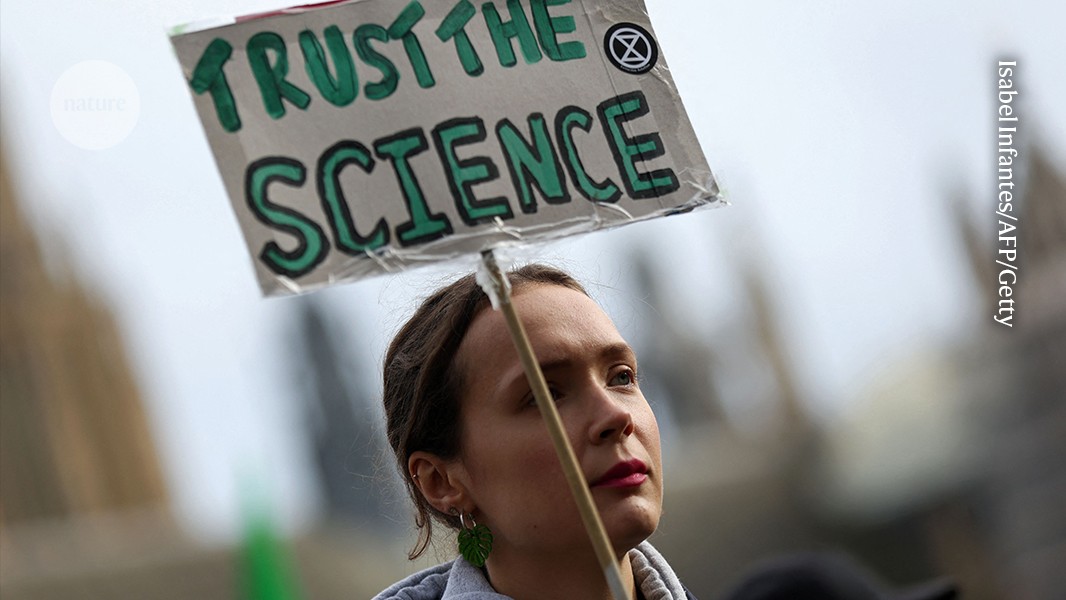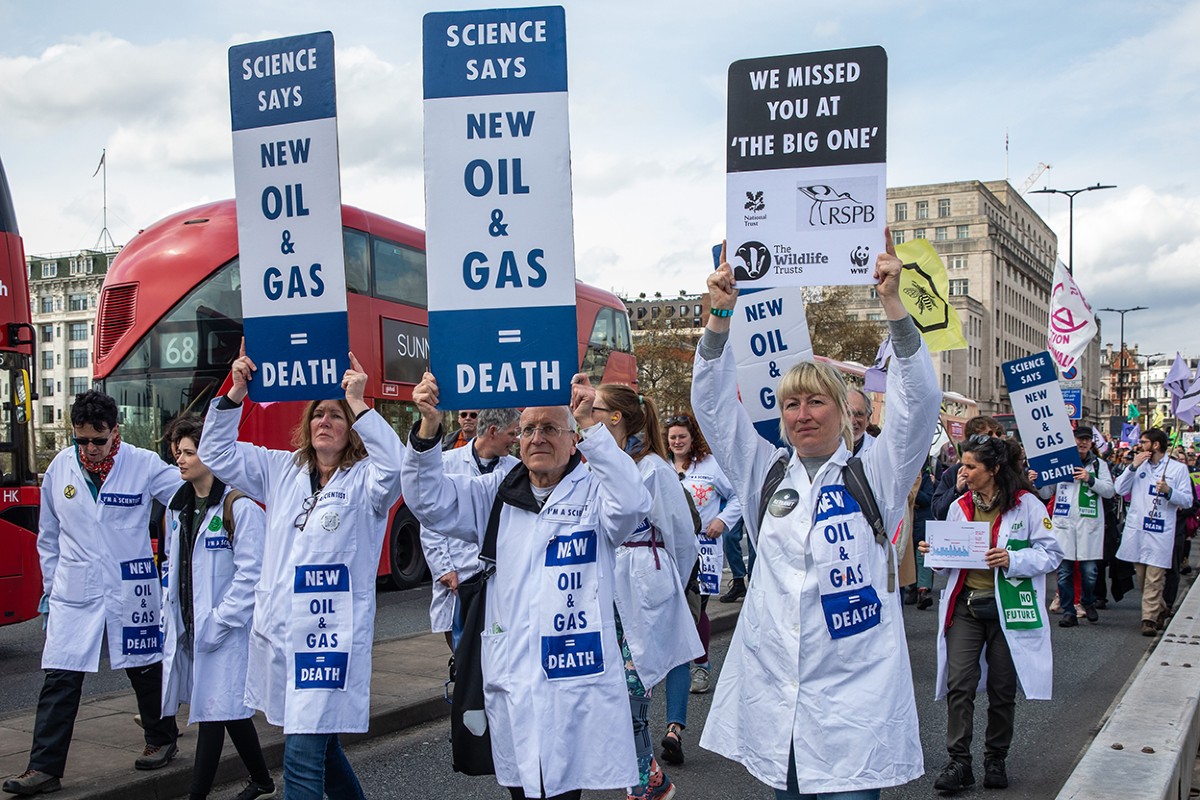
From the United States to Europe to Brazil, there is a pervasive sense that trust in science has collapsed.The complex truth about trust in scienceA UK survey1 published in January found that only 40% of people think that science information they hear is “generally true”. Another global poll showed that 70% of people believe at least one false or unproven claim, such as that the risks of childhood vaccines outweigh the benefits2.In the United States, President Donald Trump and his administration are using the idea that science is not trustworthy as one reason to cut research budgets, reject evidence-based medical advice and exert unprecedented political control over research. “Over the last 5 years, confidence that scientists act in the best interests of the public has fallen significantly,” said Trump in an executive order last year.Even the Vatican is voicing concern. This September, a meeting at the Pontifical Academy of Sciences will examine how “the crisis of trust in science has become a pressing issue”.But is trust in science really that weak? Researchers studying this have reached some surprising conclusions. From a global perspective, public trust in science and scientists is high, they say. One of the largest studies3, which surveyed nearly 72,000 people across 68 countries in 2022–23, reported a “moderately high” average trust score of 3.6 out of 5. “The idea that there’s a generalized, pervasive lack of trust in science and experts is just completely unfounded in my mind,” says David Bersoff, head of research at the Edelman Trust Institute, a think tank in New York City.Six ways to put the public at the heart of science and policyBut trust has dropped in certain groups, notably among Republican-leaning people in the United States. And research in the United Kingdom shows that the proportion of people who have “a lot” of trust in science tends to be lower among politically right-leaning groups than those on the left. “Trust in science is politicized and becoming more so,” says sociologist Gordon Gauchat at the University of Wisconsin–Milwaukee. In many countries, people are also increasingly questioning definitive evidence on divisive issues such as vaccines, partly because scientific information is being drowned out online.Researchers say this is a problem because it undermines support for urgent policies — such as ones that tackle climate change — and because it can lead to personal decisions that harm health, such as shunning vaccines or medical treatments. “When science rejection leads to loss of life, that’s concerning,” says Natalia Zarzeczna, who studies people’s beliefs at the University of Essex in Colchester, UK.Pandemic problemsConcerns about trust in science have simmered for years, but they exploded during the COVID-19 pandemic, when misinformation flourished and vocal groups questioned recommendations — such as vaccination and face masks — that research suggested could save lives.How FAIR data are helping to build trust in scienceIn June 2022, as the pandemic waned, researchers Niels Mede and Viktoria Cologna put a call out on Twitter (now known as X) for people interested in surveying trust in science. Their tweets blew up — and before long they had a team of about 240 people, an international project called TISP (Trust in Science and Science-Related Populism) and the 68-country survey. “It got quite some attention,” says Mede, who is now at Wageningen University & Research in the Netherlands and co-led the study with Cologna, now at the Swiss Federal Institute of Aquatic Science and Technology in Dübendorf.The online survey asked 12 questions about scientists’ competence, integrity, openness and benevolence, which are different dimensions of trust. This aimed to address criticism that surveys about trust in science in general are simplistic, because ‘trust’ and ‘science’ are broad terms. The team combined the results into a scale of trustworthiness, from 1 (very low) to 5 (very high). The 3.6 global average largely fits with earlier global surveys suggesting that trust in science is high (see ‘Solid support for science’).Source: Ref. 3.The TISP analysis showed some regional variation. Trust was relatively high in some African countries, including Nigeria and Kenya, and low in Russia and some nations that were part of the former Soviet Union, such as Kazakhstan. (Mede says that high trust in some places, such as certain African nations, might be because people view scientists more favourably than governments that are seen as corrupt.) The United States ranked in the top third, and China near the middle.Other data show that trust in scientists is high relative to that in other professions. A 28-country survey4 run by the Edelman Trust Institute in 2025 found that 76% of respondents trusted scientists, a proportion on a par with teachers (73%) and well above that for journalists (54%) and government leaders (49%). “Probably a lot of other sectors and professions would like to be in science’s shoes,” says Gideon Skinner, head of political research at market-research firm Ipsos in London, which has conducted international surveys that also show scientists in the top tier of trusted professions (see ‘Trust in professions’).Source: Ipsos Global Trustworthiness index 2024.Kathleen Hall Jamieson, a specialist in science communication at the University of Pennsylvania in Philadelphia, argues that there’s “a rhetoric of science in crisis”, rather than an actual one — and that it’s nothing new. She traces the idea back to the widening recognition by scientists and the media in the 2010s, that many results in biomedicine and psychology could not be reproduced, a situation often portrayed as a ‘reproducibility crisis’.But data and experts largely point in the same direction. “Scientists are still regarded as quite trustworthy,” sums up Eileen Yam, who directs science and society research at the Pew Research Center in Washington DC. Or at least, that’s “the glass half-full rendering”, she says.Fractures in trustThe glass half-empty view, however, has data to support it, too. In a survey of people living in Britain, published in April5, 84% of respondents said they had at least some trust in science. But the proportion who trusted science “a lot” dropped from 63% in 2020 to 34% — one of the “emerging fractures” in trust that the study identified.One of the most prominent changes is taking place in the United States. Here, data collected by the General Social Survey (GSS) from 1973 to 2024 show that, overall, the proportion of people with some or a great deal of confidence in the scientific community remained stably high (above 80%) over 50 years6. But the proportion with a great deal of confidence declined sharply in 2022 (see ‘US confidence in science’).Source: General Social Survey.This drop is part of a wider loss of trust in civic institutions, rather than being unique to science, research indicates7. A survey8 by the Pew Research Center shows that the proportion of people with confidence in scientists to act in the public’s interest fell from 87% in 2020 to 73% in 2023. But confidence in police officers, business leaders and elected officials similarly fell over this time.“There are trend lines down in science, but those look very much like the trend lines in other institutions,” says Jamieson. “There’s an institutional crisis that is being reflected in science.”Dicing the data further reveals a growing political divide in the United States. Pew Research figures8 show that the proportion of people who self-identify as Republicans or Republican-leaning and who have confidence in scientists fell from 85% in 2020 to 65% in 2025. Democrats’ confidence barely budged, from 91% to 90%. The GSS data suggest the political divide emerged around 2005–10 (see ‘Political polarization in science’).Source: General Social Survey.James Druckman, a political scientist at the University of Rochester in New York, has studied this split. He argues that it’s partly explained by people in demographic groups that have, for decades, had relatively lower trust in science (particularly religious people) moving towards the Republican party and higher trusters (especially those with university degrees) moving towards the Democrats6. “They re-sorted,” he says.But that’s not the only explanation for the polarization in the United States: politicians have fuelled it, too. Gauchat says that, starting in the mid-1990s, some politicians “realized they could mobilize groups of people” in the United States who were becoming critical of higher education in part because of its high cost. They helped to power the populist view that scientists, other academics and their institutions are part of an intellectual elite, “making them the villains”, who do not represent the views of ordinary citizens, says Gauchat.Scientists should recognize their own political biases to build public trustThe pandemic accelerated and amplified the partisan divergence, say researchers, as some people grew sceptical of regulations on COVID-19 vaccines, face masks, lockdowns and other measures that science suggested could limit infections, while politicians fanned the flames of science distrust. Jamieson argues that often people object to policies that stem from science rather than the science itself. “If your ideology says we shouldn’t be regulated, and the implication of the science is [that] politicians put regulation on the table, it’s going to be easy for people to say, ‘I don’t like that’,” she says.The threat now, say researchers, is that the Trump administration is using science scepticism to justify drastic cuts to research and the undermining of evidence-based interventions such as vaccines. “They’re saying, we’re going to destroy these things, because this whole institution is not trustworthy,” Druckman says.‘Staggering’ number of people believe unproven claims about vaccines, raw milk and more
Have people stopped trusting science? The data tell a surprising story
Some say there’s a global crisis of trust — but research reveals where the real problems lie.
1,554 words~7 min read