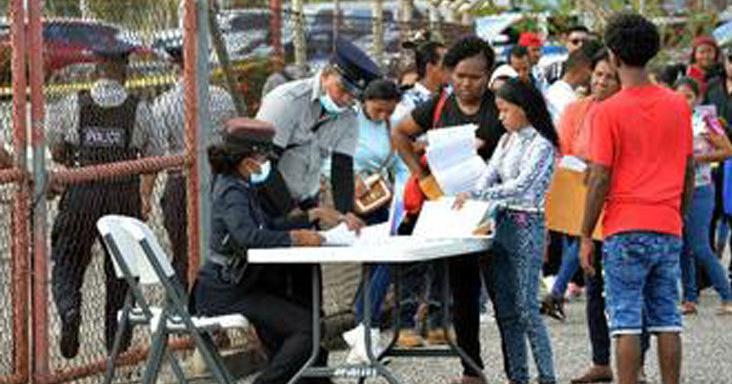
MIGRANT and human rights advocate Sofia Figueroa-Leon has criticised the Government’s explanation for delays in processing migration and residency applications, saying it is unfair to migrants who have already complied with the law.Speaking with the Express by telephone yesterday, Figueroa-Leon was responding to comments made by Minister of Homeland Security Roger Alexander, who said processing had been delayed because people were entering Trinidad and Tobago illegally in an attempt to benefit from the registration exercise.Alexander said: “That has gone quite well, but the delay has been because of what I met there, our porous borders, that persons were trying to sneak in the back door and come to be registered when the process was taking place as if they were here the whole time.”Figueroa-Leon dismissed the explanation.“It makes absolutely no sense,” she said, arguing that migrants who had already registered should not be penalised because others entered the country illegally.“If other migrants are coming in, what does that have to do with the migrants who are already here, who went through the process of applying online and attended the appointments they were given? One has absolutely nothing to do with the other.”She said if the Government were struggling to manage the process, it should address those issues without delaying applications from people who had followed the rules.“If they are incapable of doing the job, that is another story. But if new migrants are coming in by sea, then do what you have to do as the authority. By all means, process the people who did what they were told in order to get themselves legally documented in Trinidad and Tobago.”Figueroa-Leon said administrative challenges should not be borne by migrants.“I don’t know what the setback is. If they don’t have enough staff, that is not the migrants’ problem. They did what they were told. They want to be here legally. That’s why they all flocked to register, because they want to do things correctly.”She said the Government now had a responsibility to complete the process. “The migrants did their part, so now it is for the Government to do its part. It’s not fair, and it does not look professional. You can’t just turn around and say everything is on hold because new migrants are coming in. That is not a serious response. The migrants fulfilled their responsibility. The ball is now in the Government’s court.”Meanwhile, coordinator of the Romaine Migrant Support Group Angie Ramnarine said it was not surprising that migrants would encourage relatives to come to Trinidad and Tobago once the registration exercise was announced. She said securing the country’s borders remained the Government’s responsibility.“Those who are already registered are encouraging their family to come. So the Government needs to do what it has to do to prevent other migrants from coming in, instead of punishing the migrants who have already registered. If you are carrying out an exercise like this, you also have to protect the borders,” Ramnarine said.One migrant who completed the registration process also described Alexander’s comments as unfair. Gabriela Alvarado, 40, said she and her family had lived in Trinidad and Tobago for years and had complied with every requirement.“I don’t like to comment on this kind of stuff, but I have to say that I have been living here for years. I didn’t just come here yesterday. I stood in the long lines, I filled out the online forms and I had my $700 ready to pay. My family has done everything by the book, but we have been waiting. So it is unfair,” Alvarado said.The Trinidad and Tobago Migrant Registration Framework recorded nearly 30,000 total submissions from individuals spanning over 60 nationalities during Phase 1 of its application this year.Venezuelan nationals make up the vast majority of these applicants, with children accounting for more than half of the total registered group. The regularisation framework provides approved applicants with legal status to live and work in the country, but this legal protection is temporary and carries an official expiration deadline set for September 2026.After the online portal’s closure, many undocumented individuals who missed the deadline due to system errors or a lack of clear information actively pleaded with authorities for a final extension to register.Civil society organisations have also raised serious concerns over a lack of transparency from national security officials, citing instances where migrants seeking information at immigration offices were issued deportation letters instead of appointment updates.
Advocate slams Govt’s delay explanation
MIGRANT and human rights advocate Sofia Figueroa-Leon has criticised the Government’s explanation for delays in processing migration and residency applications, saying it is unfair to migrants who have already complied
734 words~3 min read