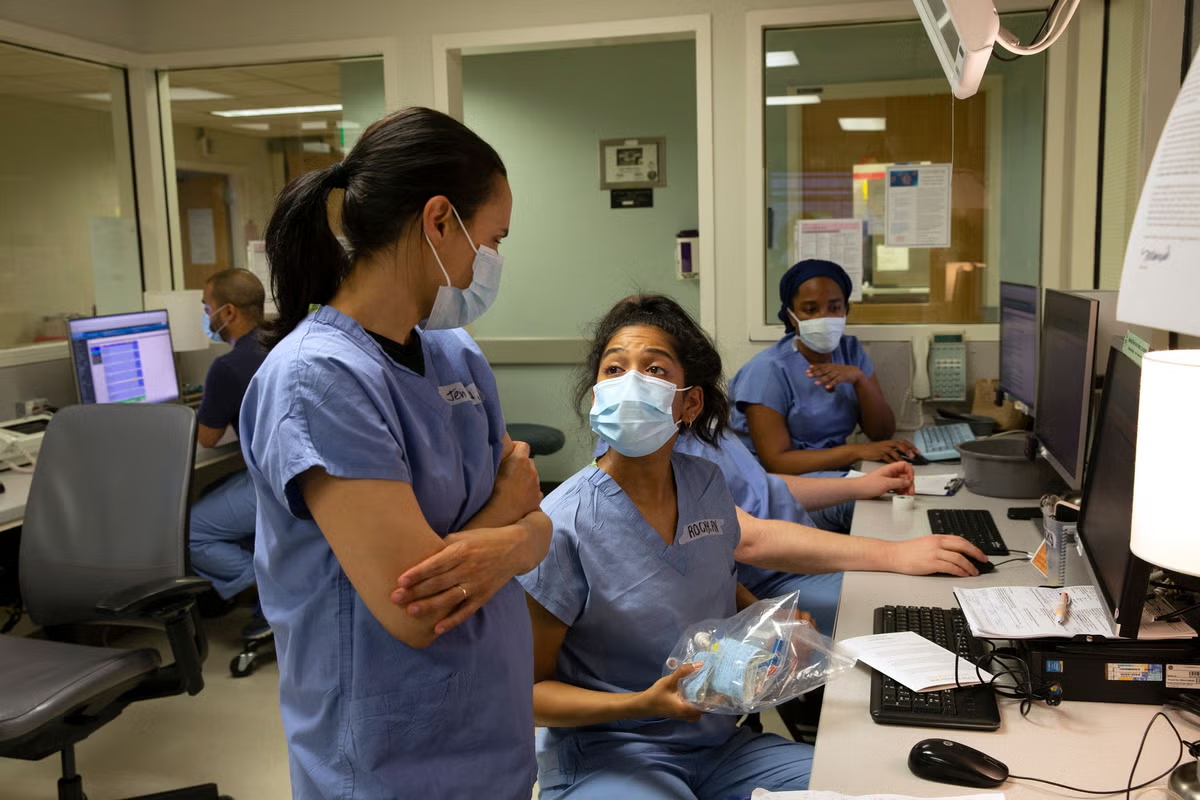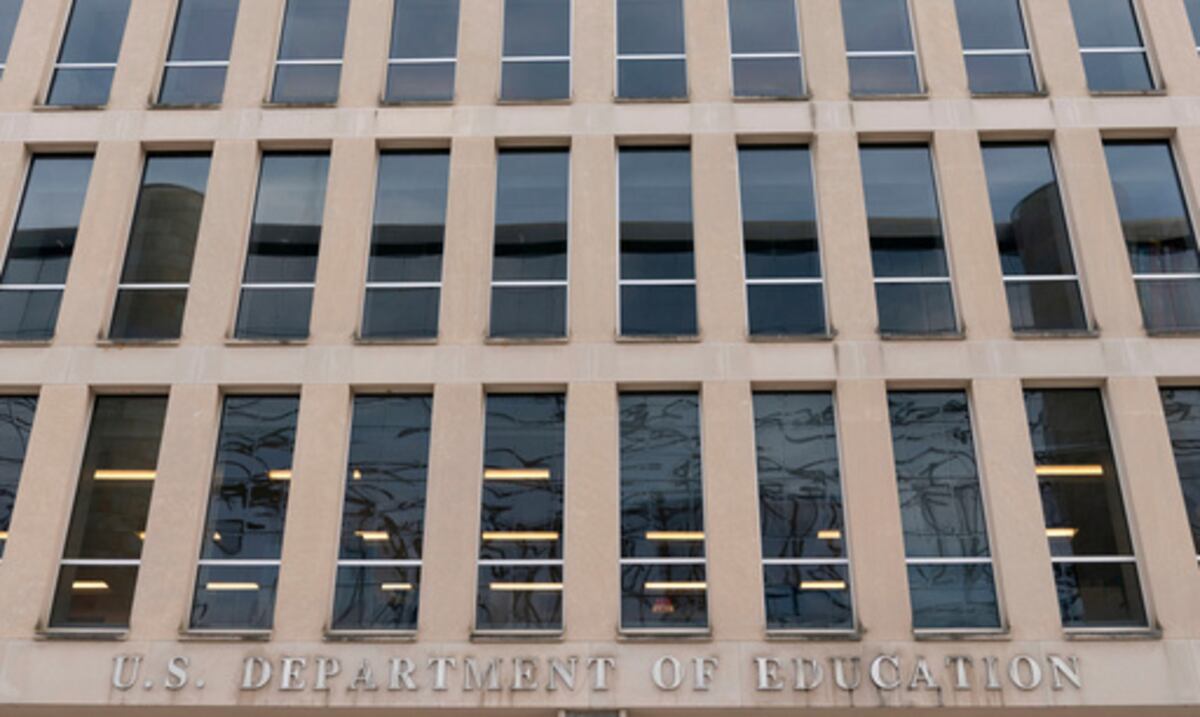
The Education Department has revised its list of graduate programs whose students are eligible for higher federal loan limits. While nursing students are among those who stand to benefit, the department's approach is likely to add confusion to an already muddled situation.gettyAfter U.S. District Judge Beryl Howell issued an order last week temporarily staying an attempt by the Trump administration to limit how much graduate students could borrow based on their field of study, the U.S. Department of Education has issued a revised rule that more than doubles the number of what it will consider to be “professional ” programs.Although department officials insist that the new list represents only a temporary expansion, the revision means that students pursuing graduate degrees in nursing, occupational therapy, physician assistant studies and several psychology subfields will become eligible — for the time being — for higher federal student loan amounts. BackgroundWith her order, U.S. District Judge Beryl Howell stayed a U.S. Education Department’s rule, set to go into effect July 1, that would have excluded nursing and several other healthcare-related graduate programs from a designation of “professional degrees."The rule was challenged in two lawsuits brought by plaintiffs representing various categories of graduate students, including nurse practitioners and physician assistants. The Education Department promulgated the rule in April defining the terms “professional student” and “graduate student” after Congress had enacted new, separate federal loan limits for those categories of students in the One Big Beautiful Bill Act, passed last year.The limits are based on the type of program in which students are enrolled. “Professional students” may borrow up to $50,000 in federal loans per year, with a $200,000 aggregate limit, while students in graduate programs are eligible for a maximum of only $20,500 in federal student loans per year, with a $100,000 aggregate limit. Previously, graduate students were allowed to borrow as much as it cost them to attend their educational program.MORE FOR YOUIn its initial rule, the Education Department identified “professional students” as individuals enrolled in one of these 11 degree programs: pharmacy, dentistry, veterinary medicine, chiropractic, law, medicine, optometry, osteopathic medicine, podiatry, theology and clinical psychology. It excluded post-baccalaureate nursing degrees along with several other allied health advance degrees and additional graduate programs.The New List of Professional ProgramsThe department’s revised list released Monday makes a number of changes. It removes some degrees such as Theology/Theological Studies and Pharmaceutical Studies from the list of professional programs, meaning those students will now face lower federal loan limits. But it adds several more to the list of professional programs, including programs preparing anesthesiologist assistants, physician associates/assistants, athletic trainers, occupational therapists, physical therapists, speech pathologists, registered nurses, nurse anesthetists and DNP nurse practitioners. Students in those programs will now become eligible for the higher loan limits, at least throughout the duration of the court’s stay of the rule’s initial program designations. Altogether, the new list covers 29 programs now designated as professional in nature. Those programs, along with their Classification of Instructional Programs (CIP) Code, can be found here.Confusion Is LikelyIn its notification, the Education Department said it disagreed with Judge Howell’s order and that it was “confident” that its original professional degree definition is lawful and that it will continue to defend it. Nonetheless, it also agreed, that during the length of the Court’s preliminary stay, it would use the new list of professional programs for administering the statutory loan limits. “These interim administrative designations are provided solely to facilitate implementation of the Court’s order and may change as litigation in the case proceeds,” added the department. The rule establishing the loan limits takes effect today.The department also issued an additional piece of guidance that’s been overlooked in several press accounts, although it’s almost certain to create additional frustration and disarray. It advised universities that “during the pendency of the ongoing litigation, institutions may wish to consider, for programs now temporarily classified as awarding professional degrees pursuant to the Court’s order, limiting loan amounts to the graduate-level caps to mitigate potential disruption to student borrowers resulting from changes in program classification that may arise from the ongoing litigation.”The end result of that head-scratcher could be that a nursing student attending one university might be allowed to take out $50,000 per year in federal loans to help pay for her education, while a student in the identical type of program at a different university would be limited to $20,500 in federal loans. Think of it as policy by roulette wheel. In an email, David Kafafian, COO of the talent-acquisition platform Clasp, told me, “It’s genuinely useful that the Department drew the line at the CIP level rather than leaving schools to guess. And it’s also great to see these advanced clinical roles treated as the professionals patients already believe they are, even if only for now.” However, he added, "we also shouldn't skip over the reality that students keep getting caught in the middle of an ever-changing federal loan program, and that ultimately, borrowing more isn't a long term solution. It keeps tuition high, reduces ROI, and piles more long-term stress onto students. If we actually want to fix the math on these programs, the answer is employers stepping in to fund them — not a federal loan cap that moves with the next court ruling." While the department’s new program designations come as good news to several categories of students in the short turn, it’s also likely to lead to long-term confusion and further litigation. It’s a stop-gap, seemingly arbitrary, maneuver that leaves many graduate students in financial limbo. Meanwhile, the bigger issue remains — the One Big Beautiful Bill loan caps are now in effect, affecting the education financing of hundreds of thousands of graduate students.
After Court Loss, Education Department Raises Loan Limit For More Programs
Following a federal court order, the Education Department issued a revised rule expanding the list of "professional programs" eligible for higher federal student loans.
951 words~4 min read