When Klarna chose New York over Europe for its stock market listing, it highlighted a challenge Brussels has been trying to solve for years: Europe's fastest-growing companies often look across the Atlantic for deeper pools of capital.
As the EU seeks to build its own AI champions, strengthen its defence industry and keep more high-growth companies raising money at home, one question remains: why does a bloc with €37tn in household savings still struggle to finance its own fastest-growing businesses?
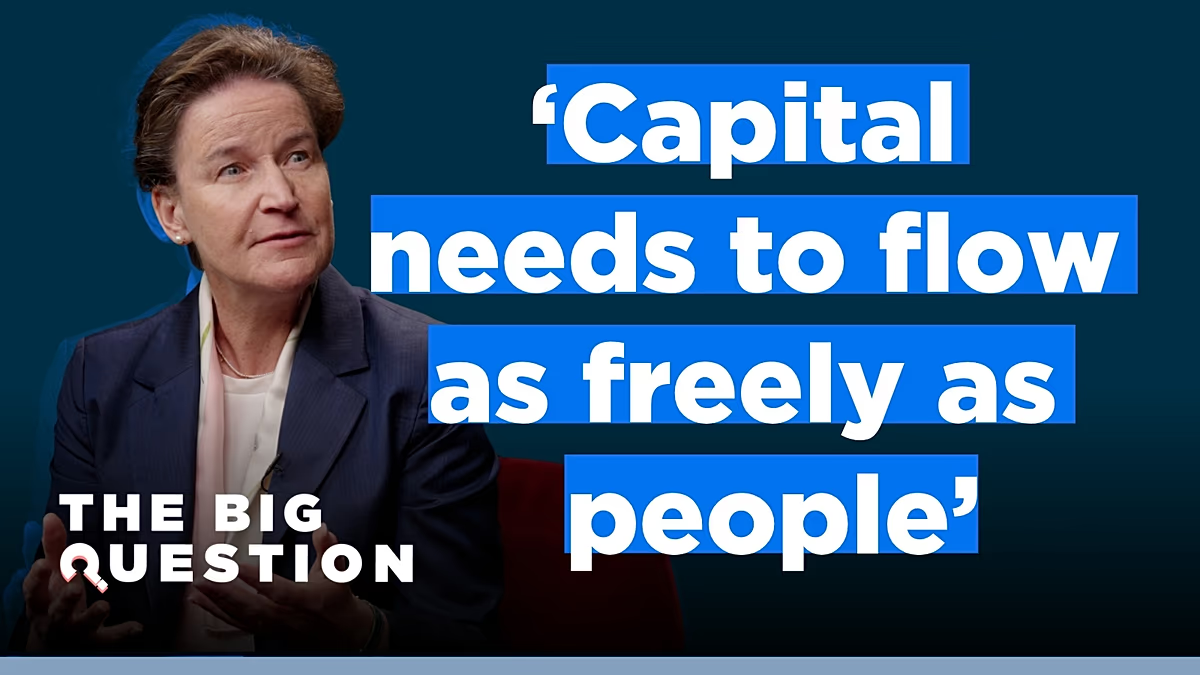
Now the European Union has stepped up efforts to reform its capital markets, aiming to make capital flow more freely across the bloc.
Policymakers are pursuing incremental reforms, including greater supervisory alignment, but a fully unified capital market is likely to take many years, as member states struggle to agree on key technical details, slowing the process.
The competitiveness challenge